Dobrogeni (Rest at Pașa Câșla)
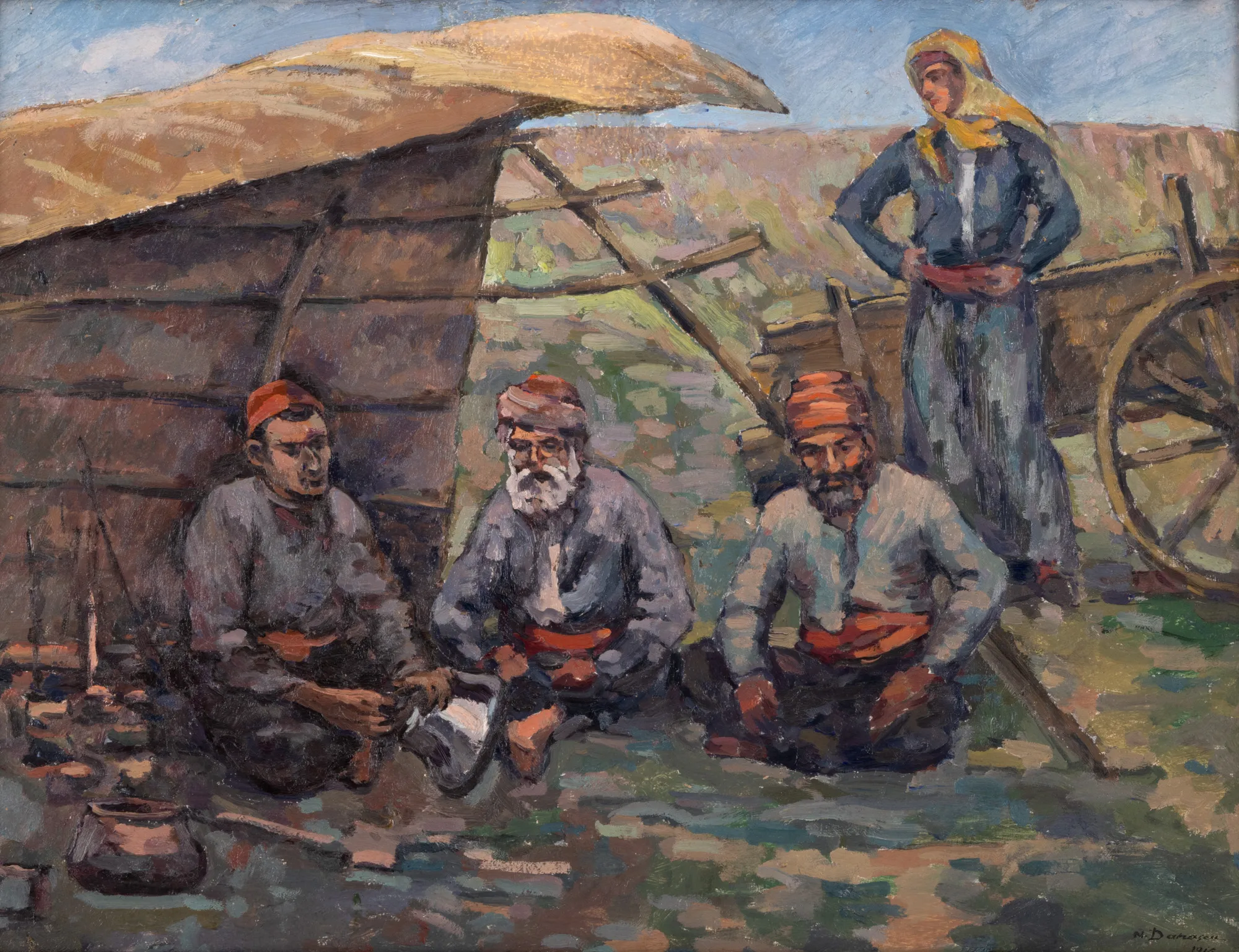
Dobrogeni (Rest at Pașa Câșla)
Description
Nicolae Dărăscu often created works inspired by his travels through Dobrogea and the Danube Delta. The composition belongs to his period of artistic maturity in the 1920s, when he frequently depicted scenes of Eastern and Dobrogean life, as well as landscapes with nomadic characters. The work depicts a few figures taking a rest in a nomadic-looking settlement. The characters are arranged around a field area that may suggest a brief stop during a journey. The scene is inspired by the multicultural universe of Dobrogea, including Tatars, Turks, and other local populations that Nicolae Dărăscu observed and studied during his numerous travels in the early decades of the 20th century, especially after 1919, when he discovered Balchik and the Dobrogean region. During this artistic maturity period, mainly between 1920 and 1940, the painter developed a personal visual language characterized by free, synthetic, and expressive brushstrokes influenced by Impressionism, which he had encountered during his studies in Paris. The atmosphere of the scene is calm and peaceful, with the nomadic settlement suggested by the presence of a straw hut, a background cart, and simple resting objects—elements that emphasize the provisional
Sizing
Width 60, Height 46
Signature
signed and dated bottom right, in black, "N. Dărăscu, 1916"
Dating
1916
Medium
oil on cardboard
Location
Artmark românia
Research information
The work participated in the "N. Dărăscu" Exhibition, Museum of Art of the Socialist Republic of Romania, 1966, Bucharest, catalog number 36.