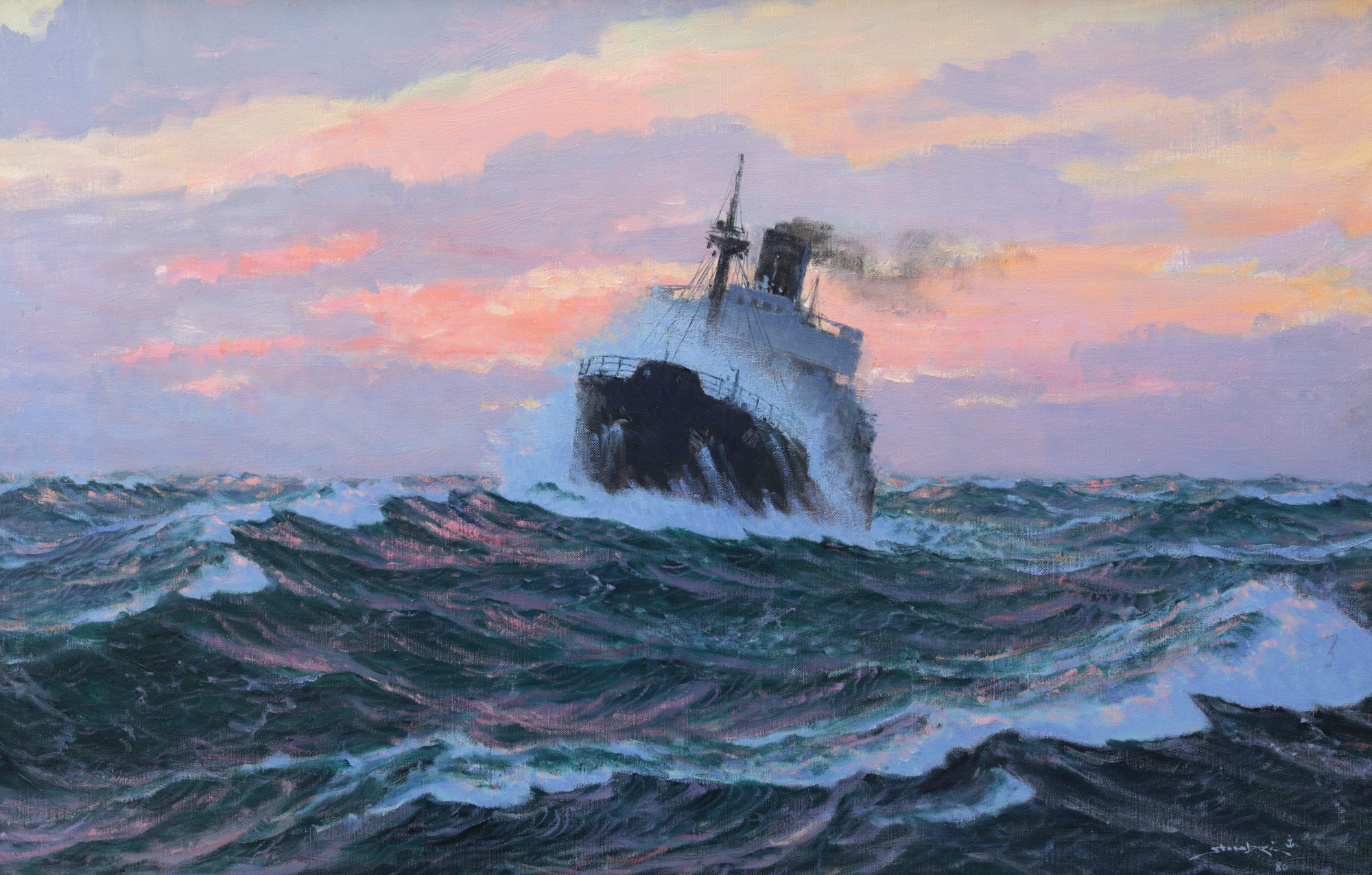
The photos of the lot are informative and indicative, and cannot provide a highly detailed view of the object from all angles. We recommend a careful physical inspection of the lot before bidding.
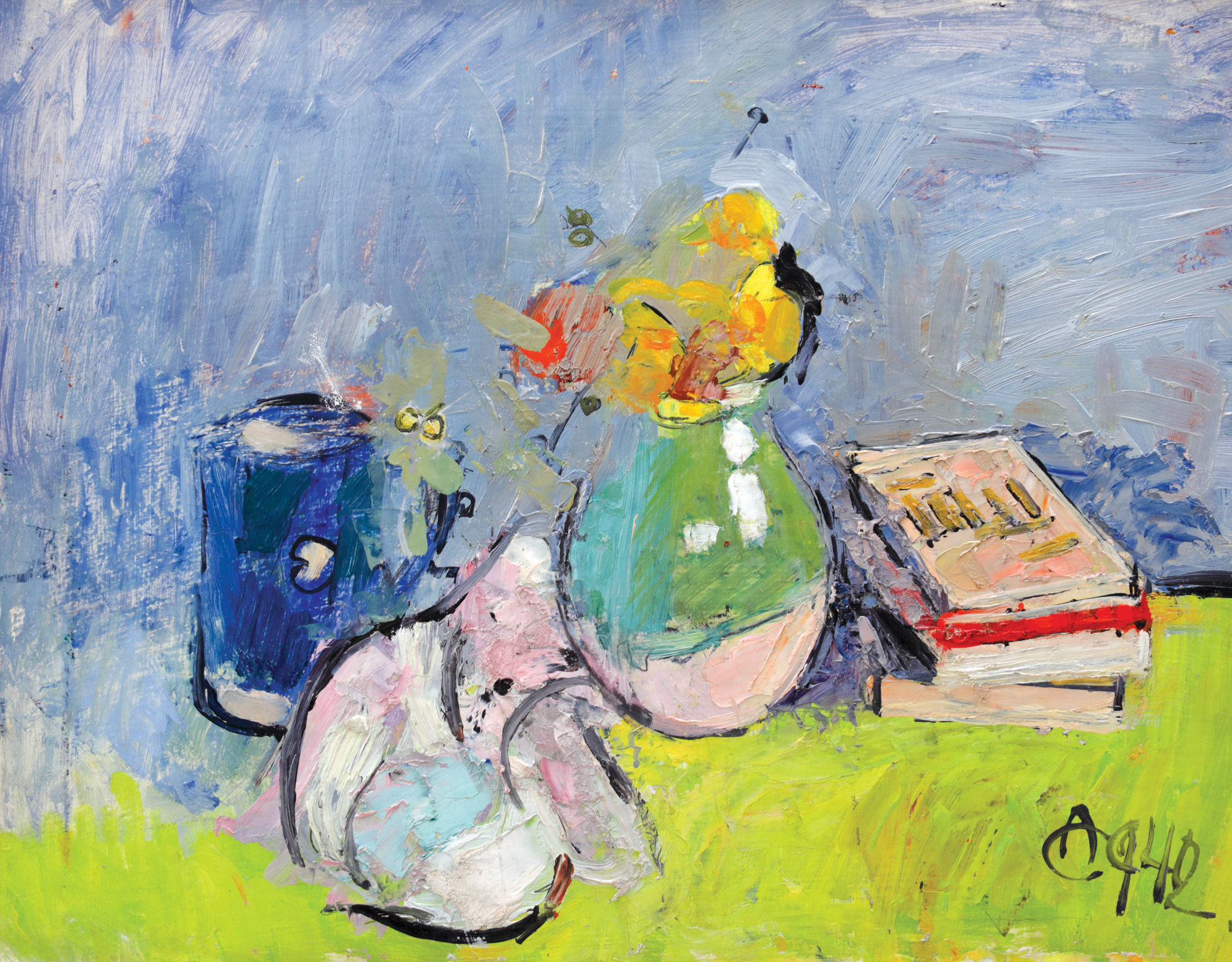
oil on cardboard, 50 x 61 cm, signed and dated bottom right, in grey, "AC, (1)942"
Alexandru Ciucurencu’s mature work, known for its vivid, exuberant colours, started in stark contrast with the works from his first period of creation, being profoundly influenced by the brown nuances promoted by his teacher, G.D. Mirea. In the summers spent in Baia Mare, Ciucurencu declared that he was surprised by the expressive palette of the painters from Maramureș and amazed by the chromatic juxtapositions they proposed. In 1930, the artist left behind his native lands and headed for Paris. The fervour of one of the most reputed European artistic capitals of the past century definitely broadened the horizon of his imagination and offered him new possibilities for visual expression. In the capital of France, Ciucurencu discovered Hieronymus Bosch, Boticelli, Matisse, Picasso, Braque, or Cézanne. The contact with Paris mediates, in addition to the Romanian painter's encounter with universal art, the acquisition of a more significant pictorial refinement. His works always start from reality, regardless of the manner in which they end up being created. He borrowed from Cézanne's Cubism in highly reduced quantities, and from Matisse he assumed the value of line and colour in his work. As a successor of Post-Impressionism, he took on some of the traits associated with this movement: the autonomy of colour and the use of vivid nuances, but he did not shy away from introducing black into his works. His skills as a drawer are revealed to us especially in the contours through which the artist defined the represented subjects. Ciucurescu perfectly mastered the science of matching lines and harmonising colours. Often described as a "colourist", Alexandru Ciucurencu considered himself a follower of painters who also paid particular attention to colour: Luchian, Ressu, Lhote, and Pallady. He could work with the set of values which he acquired under the guidance of André Lhote: he distributed light gradually, following the logic of reality, and masterfully distributed chromatic effects. Ciucurencu excelled especially in still lifes. In this pictorial genre, the artist remained known for his penchant for warm and intense tones, the knowledge of melodic organization of the composition and the possibility of rendering chromatic combinations in lyrical rhythms. Ciucurencu admired the flowers painted by his predecessors, especially Luchian. He drew inspiration from the artist's work, yet the style in which his flowers are represented rather emphasize the colour scheme, whilst the shape is given a secondary importance. Some accents of white, pink or yellow are identified in the execution of the flowers, and the sinuous black line completes the profile of the illustrated objects. The obsession for colour never left him, yet he directed his attention towards achieving a compositional harmony by joining together lights, shades and contrasts. (D.C.)
For clarifications regarding the bidding procedure, hammer price costs, guarantee, payment, and collection terms for the winning lot, we recommend carefully reading/re-reading the Bidding Regulations.
For additional information regarding the lot and the auction, please contact the Art Consultants Department.
By choosing "Accept all cookies" you agree to the use of cookies to help us provide you with a better user experience and to analyse website usage. By clicking "Adjust your preferences" you can choose which cookies to allow. Only the essential cookies are necessary for the proper functioning of our website and cannot be refused
Cookie settings
Our website stores four types of cookies. At any time you can choose which cookies you accept and which you refuse. You can read more about what cookies are and what types of cookies we store in our Confidentiality Policy.
are necessary for technical reasons. Without them, this website may not function properly.
are necessary for specific functionality on the website. Without them, some features may be disabled.
allow us to analyse website use and to improve the visitor's experience.
allow us to personalise your experience and to send you relevant content and offers, on this website and other websites.