
The photos of the lot are informative and indicative, and cannot provide a highly detailed view of the object from all angles. We recommend a careful physical inspection of the lot before bidding.
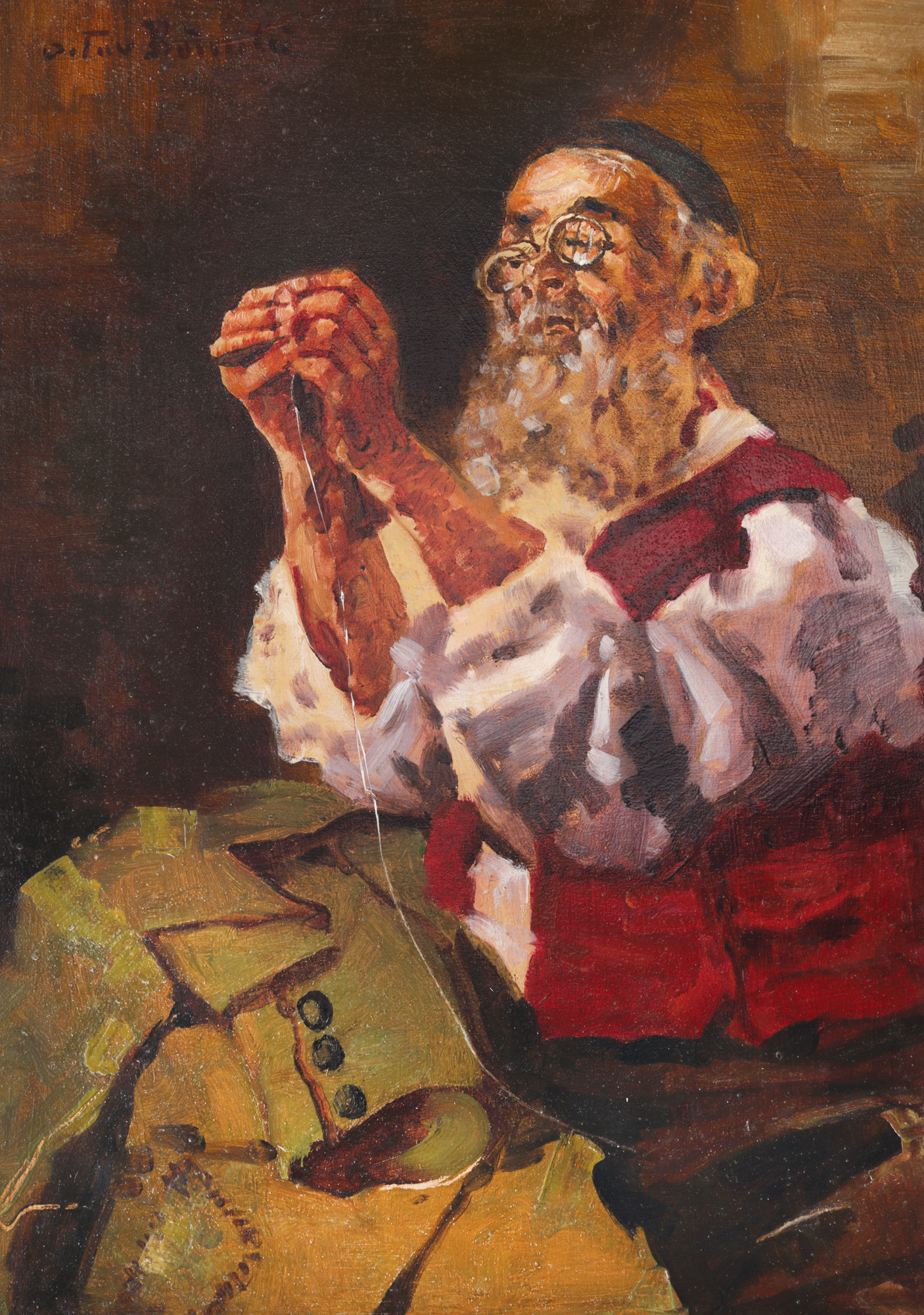
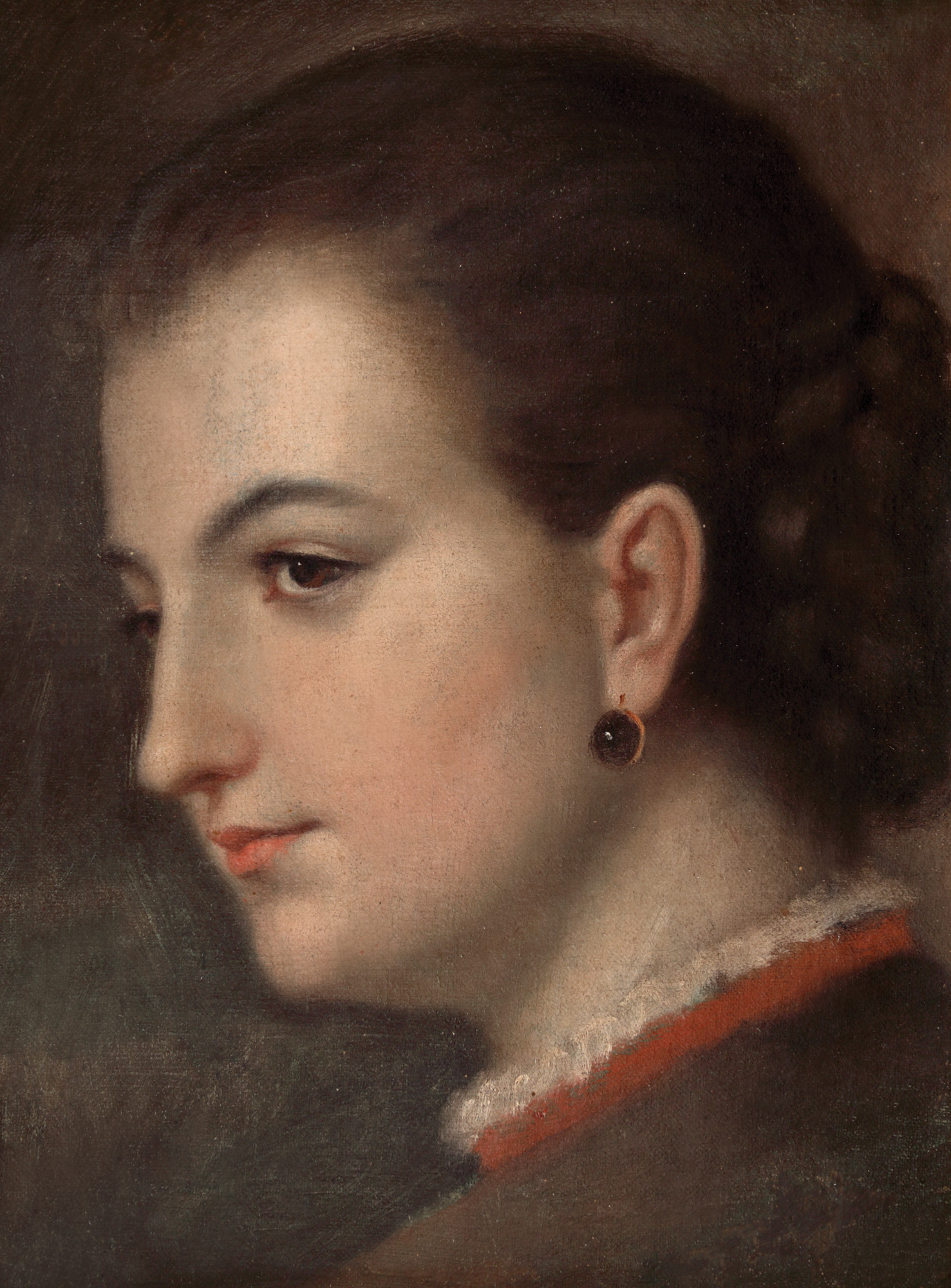
oil on plywood, 70.5 x 50 cm, signed upper left, in brown, "Octav Băncilă"
Research information
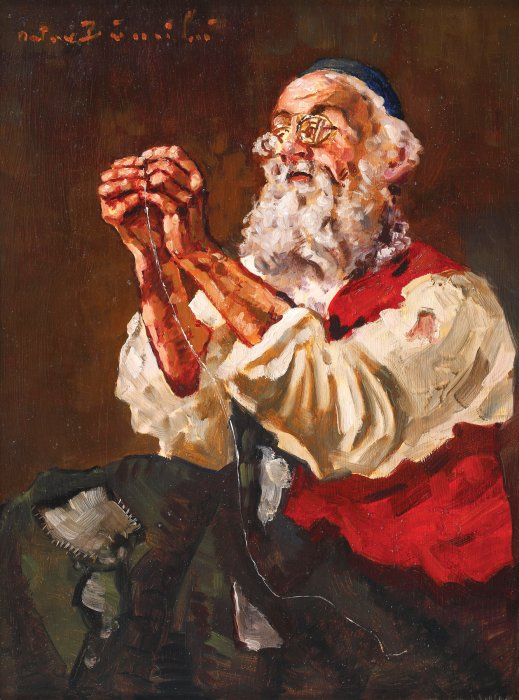
A version of the work can be found in the collection of the IaÈi Art Museum.
Having a limited set of themes, painter Băncilă most often spotlights themes such as the 1907 moment - marked by the Peasants’ Revolt, the theme of the worker protesting against war, and also subjects such as flowers, nudes, landscapes, still lifes, or portraits the latter being an interest expressed during his final creation period. This repertoire also includes the theme of the Jews, noted in his work starting from the year 1900, when he was at Iași, around the Târgul Cucului neighbourhood, where he roamed quite often, in search of interesting subjects. He treated the theme of the Jews almost to the end of his work (often repeating the same subjects), the most important works dating from the period 1907-1916, considered to be his pinnacle. From this period, we note works such as "The Council", "Old Clothes", "The Rag Picker", "The Assembly", "The Cobbler", "The Money Changers", "Old Itzik the Money Lender", "Prayer", "Clerk Type", "Kol Nidre", or "The Old Tailor". Painted in 1913, the work "The Old Tailor" continues the subject of the "The Rag Picker", created in 1908, who, this time, with a more vivacious attitude, less burdened by the years passed, pushes one hand up against the other to manage to get the thread through the needle, so as to mend a coat torn by his dramatic times. Resumed at a later time (as he used to do with certain themes), the work adopts more lively colours, with softer and more detailed strokes compared to the dark mood and the dramatic strokes of the first one, drawing on the great theme of the Jews captured by painter Băncilă in the years 1907-1916, a period that inspired some of his most realistic works.
For clarifications regarding the bidding procedure, hammer price costs, guarantee, payment, and collection terms for the winning lot, we recommend carefully reading/re-reading the Bidding Regulations.
For additional information regarding the lot and the auction, please contact the Art Consultants Department.
By choosing "Accept all cookies" you agree to the use of cookies to help us provide you with a better user experience and to analyse website usage. By clicking "Adjust your preferences" you can choose which cookies to allow. Only the essential cookies are necessary for the proper functioning of our website and cannot be refused
Cookie settings
Our website stores four types of cookies. At any time you can choose which cookies you accept and which you refuse. You can read more about what cookies are and what types of cookies we store in our Confidentiality Policy.
are necessary for technical reasons. Without them, this website may not function properly.
are necessary for specific functionality on the website. Without them, some features may be disabled.
allow us to analyse website use and to improve the visitor's experience.
allow us to personalise your experience and to send you relevant content and offers, on this website and other websites.