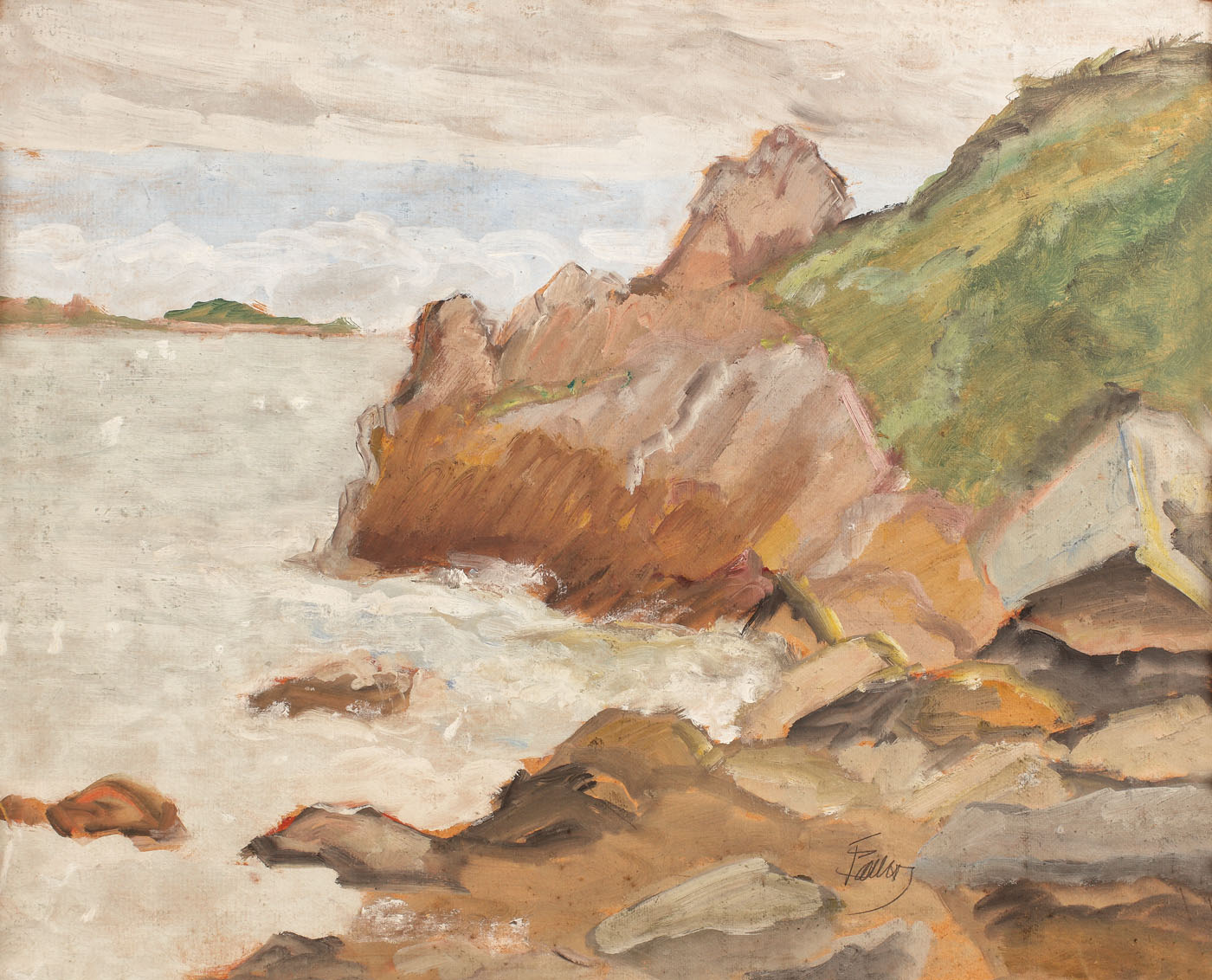

77. Coast in Brittany [1925-1935]

1871, Iaşi - 1956, Bucureşti

Estimate

EUR 8.000 - 12.000

Sold

EUR 8.000

Session

Wed, 23 May 2018 19:30

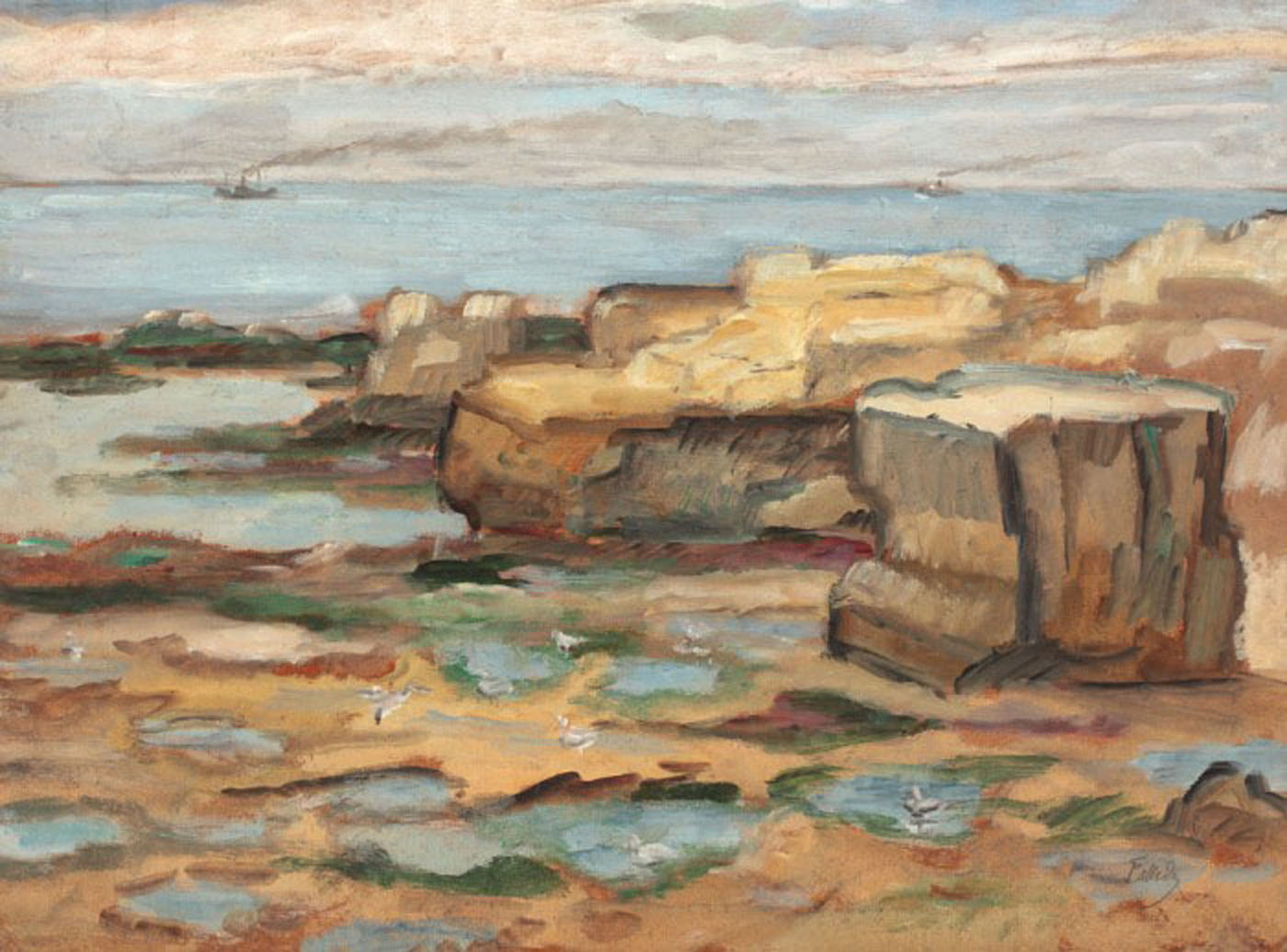
For Theodor Pallady, landscape was the occasion of a novel interpretation of the things he saw, which was revealed by the special tone ruling over these compositions. Whether they are early or late works, whether they are landscapes from the country, oils from Bucium or drawings from Bucharest, or paintings from France, with the delightful Paris or Provence vedutas, Pallady revealed himself before views that told of his own universe. Out of the most expressive imagination we can easily extract the cycle of the works depicting in such a personal manner the north of France, with its Brittany that attracted a good many Romanian traveller painters. Pallady is perhaps one of the first Romanian artists who reached this region of France, after the itineraries of Nicolae Grigorescu in the second half of the 19th century, our painter becoming familiar with the shores of Brittany as early as 1894. It was the period when Pallady conscientiously attended the painting classes in Gustave Moreau’s studio at the Paris School of Fine Arts. With his good friend Nicolae Grant, another painter of noble origin, he discovered, by foot or by bicycle, the coasts of the north and the region of Finistère, which they painted in a series that covered over 10 years. The vedutas captured views of Pléneuf-Val-André, Bréhat Island and Pont-Aven, places that returned for years in the artist’s imagination. The landscapes that Theodor Pallady practised in the northern regions were not only focused on his attraction for the marine environment, particularly as the Impressionist element did not mean much to him. Under such conditions, Pallady managed to integrate works that capture mostly seascapes in a landscape whole where we can see urban views, beaches, architectural elements or the Brittany harbours (e.g. Douarnenez). Besides, all this attraction for the areas close to the ocean or to a marine culture can be found in the other pursuits and travels of the artist. Whether we speak of Provence and the harbour cities in the south and southeast of France, or we speak of his trips to Spain, Pallady manages to impress the same subtle notes, in neutral tones, in the background, with which he accustoms us irrespective of the place he paints. It is precisely in this “phobia” of the zenith, of the strong, raw tones or of the abundant light that we uncover the mystery of Pallady’s absence from Balchik, a place that held no particular attraction for him. (I.P.)

References

JIANU, Ionel, "Pallady", Ed. Căminul Artei, Bucureşti, 1944
ŞORBAN, Raoul, "Theodor Pallady", Ed. Meridiane, Bucureşti, 1975

Dimensions

width 60 cm, height 49 cm, custom 60x49

Description

oil on cardboard, signed lower right, in pencil, "T. Pallady"

Research information

Opera este reprodusă în albumul "Pallady". Alexandru Cebuc, Monitorul Oficial, București, 2008 la pag. 114. Opera este reprodusă în "Singularitate și reconstrucție imaginară. Pictori români în Bretania", Doina Păuleanu, Ed. Arcade, București, 2010 la pag. 121.

Dating

1925-1935

ADDITIONAL INFORMATION

For clarifications regarding the bidding procedure, hammer price costs, guarantee, payment, and collection terms for the winning lot, we recommend carefully reading/re-reading the Bidding Regulations.

For additional information regarding the lot and the auction, please contact the Art Consultants Department.

Similar lots