The photos of the lot are informative and indicative, and cannot provide a highly detailed view of the object from all angles. We recommend a careful physical inspection of the lot before bidding.
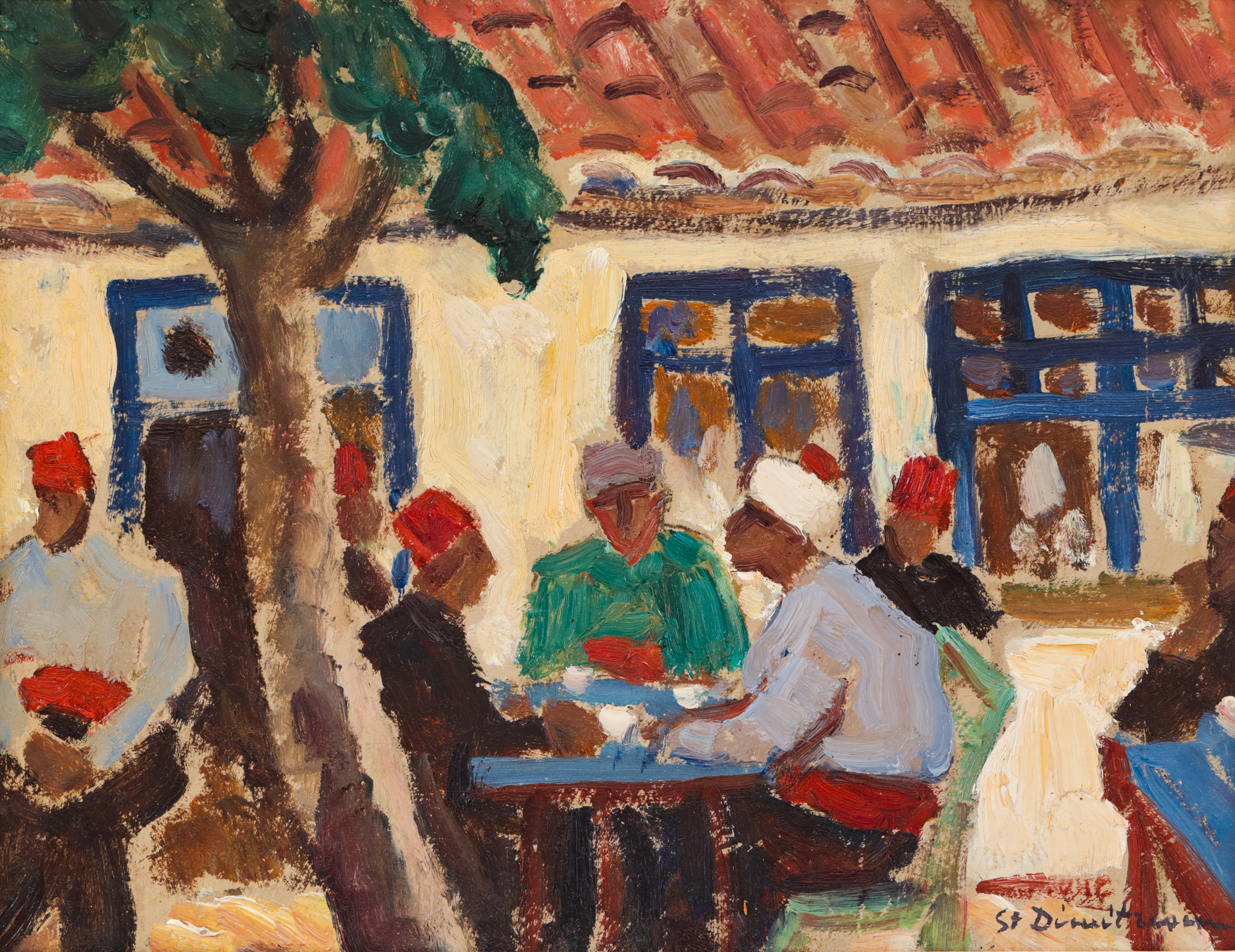
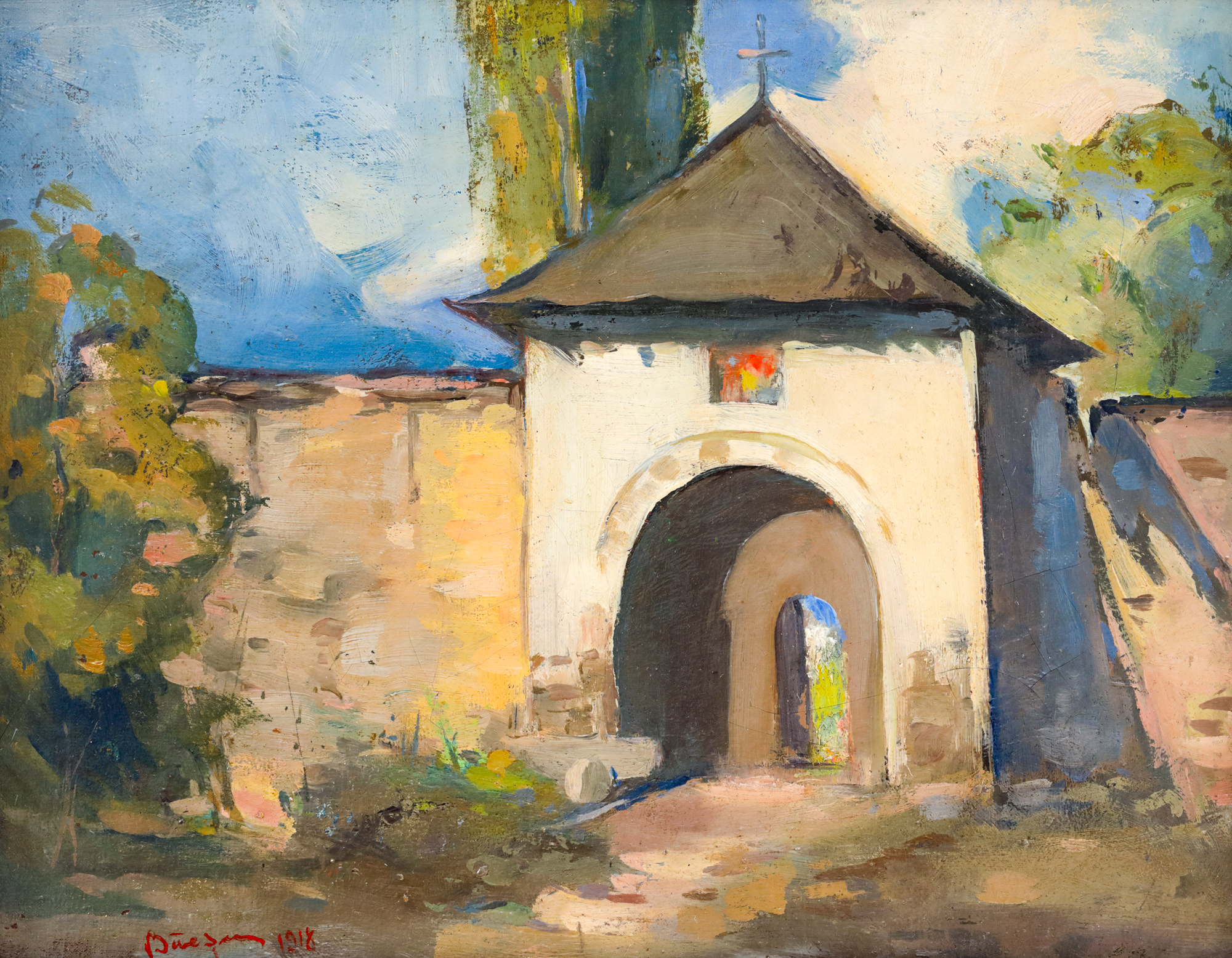
oil on cardboard, 23 x 29.5 cm, signed bottom right, with black, "St. Dimitrescu"
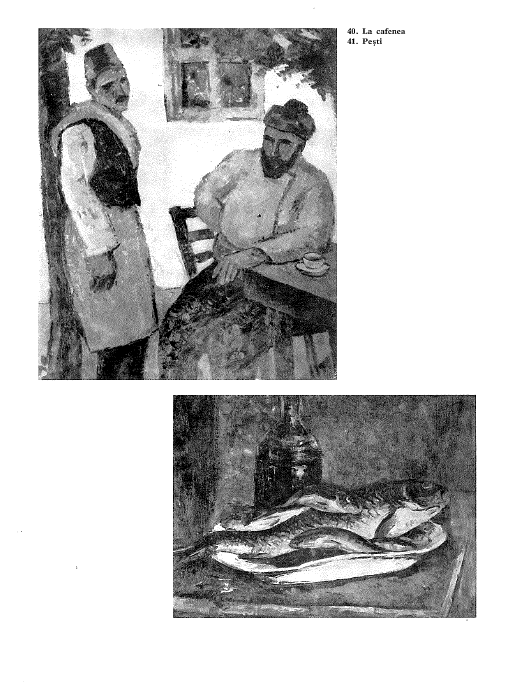
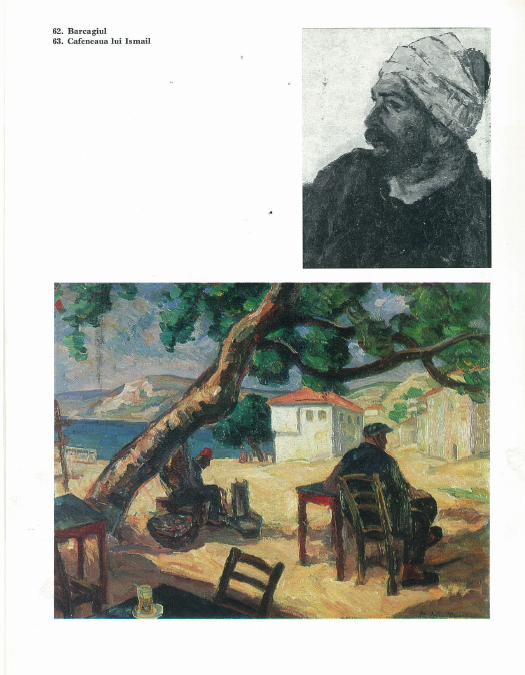
The artist often captures the world of the village or the local color of Dobrogea, portraits of Turks, peasants, or workers. In portraits, he focuses more on deciphering the complexity of the inner turmoil of his protagonists, giving them neutral or sometimes meditative expressions. Portraiture also allows him to assert himself as a draughtsman. The sketched characters blend harmoniously with the artist's chromatic decisions. His musical pursuits are transcribed into harmonious chromatic rhythms, with powerful accents, in clear contrasts. Through color, Dimitrescu highlights both shadow and light, as well as form and modeling. He also pays particular attention to the clothing of his characters and the accessories they receive. His interest in social issues and the undeniable interest in human psychology are remarked both in genre scenes or portraits, and in landscapes. During his studies in Paris, the sap of Cézanne's creation was to be imprinted on the canvas of the Romanian painter, whose predilection for rigorous plasticity was undeniable. The artist creates a whole series dedicated to the Tatars from Mangalia, Techirghiol, or Balcic, seascapes, and Dobrogea streets. Starting from the belief that the artist can learn in any situation, Dimitrescu uses travels at home and abroad as vital benchmarks in the search for the meaning of his creation. In compositions with characters, he focused his attention particularly on the Romanian peasant, but his canvases are also rich in appearances of the Tatars from the Dobrogea area. The oriental nonchalance in the artist's works enhances the monumental presence of the protagonists, caught in simple and well-calculated gestures. Dimitrescu possesses a perfect power of analysis and synthesis simultaneously, so he will surprise, through the lines that describe faces and silhouettes, the humanity and the ethnic factor of his models. He will penetrate the subconscious of his protagonists and will be attracted, undoubtedly, by the exoticism and picturesque of Dobrogea. In the canvases painted here we will especially find people gathered around tables, in the unusual atmosphere of terraces and cafes. A keen observer, the artist will be able to reproduce, through the ports and customs of the characters, the local atmosphere. The period 1927-1933 turned out to be prolific in the economy of his creation. Dimitrescu spends his time preferably near the coast and borrows the strong and imposing shades of the Fair for his works. The perspective he transcribes into painting is visibly narrowed, the artist enjoying the plenitude of the live panorama and filling his canvases with cutouts limited to a specific subject. Some of his most colorful compositions come from Balcic - "Ismail's Cafe", where sunny strokes predominate, or "Mamut's Bakery", where the artist bets on decorative plasticity. Thus, Dimitrescu's painting remains a milestone in the economy of Romanian art, deeply rooted in traditions and customs.
For clarifications regarding the bidding procedure, hammer price costs, guarantee, payment, and collection terms for the winning lot, we recommend carefully reading/re-reading the Bidding Regulations.
For additional information regarding the lot and the auction, please contact the Art Consultants Department.