The photos of the lot are informative and indicative, and cannot provide a highly detailed view of the object from all angles. We recommend a careful physical inspection of the lot before bidding.
The photos of the lot are informative and indicative, and cannot provide a highly detailed view of the object from all angles. We recommend a careful physical inspection of the lot before bidding.
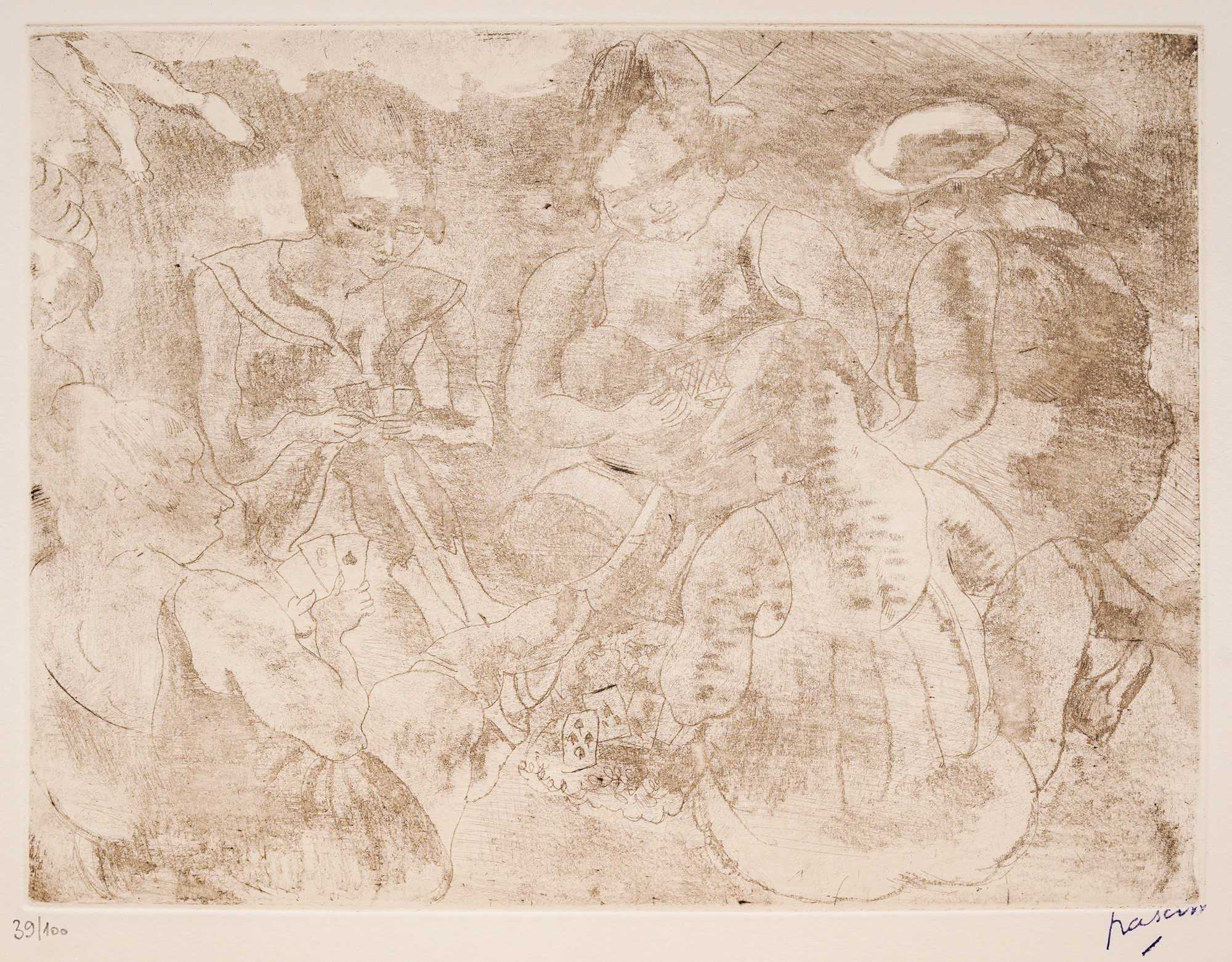
The work of Georgi Papazov has always attracted great interest from collectors and state museums. He is a recognized member of the international Paris School, alongside the well-known Jules Pascin. Papazov did not receive a systematic academic art education. He studied at the Technical School of Architecture and Park Design in Prague from 1913 to 1918. In 1918, he attended a private painting school run by Hans Hofmann in Munich. He lived in Berlin between 1921 and 1923, where he made his first contacts with major contemporary artists. In 1924, he settled in Paris.
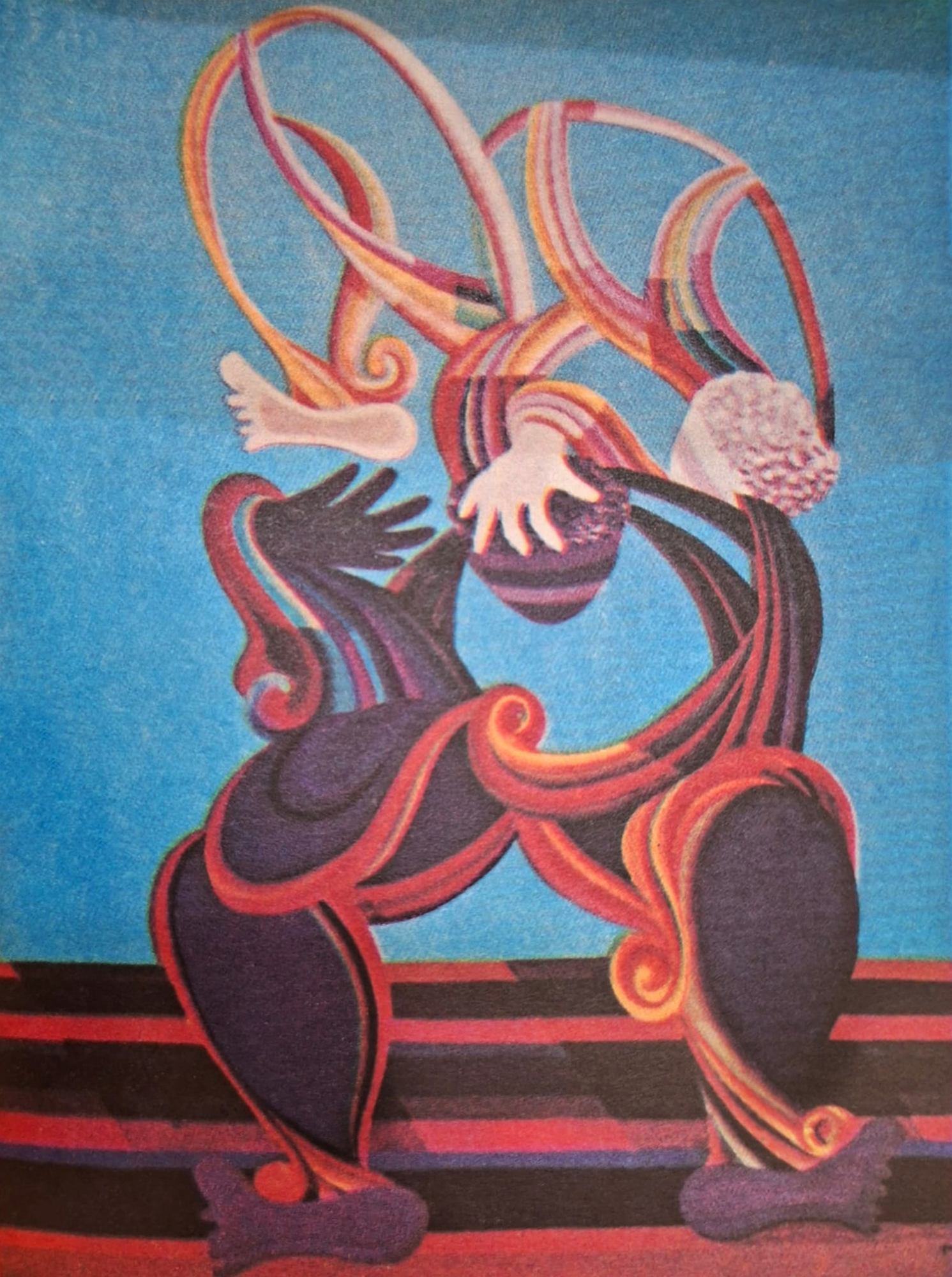
Georgi Papazov is one of the pioneers of abstract Surrealism. He remained an unaligned member of the Surrealist movement, although he was one of its precursors and among its brightest representatives. In the early period of his work (1924–1929), Papazov developed a distinctive visual language driven by the subconscious mind of the artist. He participated in the first group exhibitions of the Surrealists in Paris in 1925, alongside Hans Arp, Max Ernst, Paul Klee, André Masson, Joan Miró, and others.
During his second period (1930–1950), he worked with geometric forms — triangles and cones — which served as allegories of the human soul. In his mature period, the artist returned once again to figurative painting. His artistic legacy is closely associated with the Surrealist movement and represents an innovative contribution to modern art. He is also the author of six autobiographical books. Throughout his life, Georgi Papazov remained strongly connected to Bulgaria, where he organized four solo exhibitions in 1919, 1928, 1934, and 1935. He died in Vence, France, in 1972.
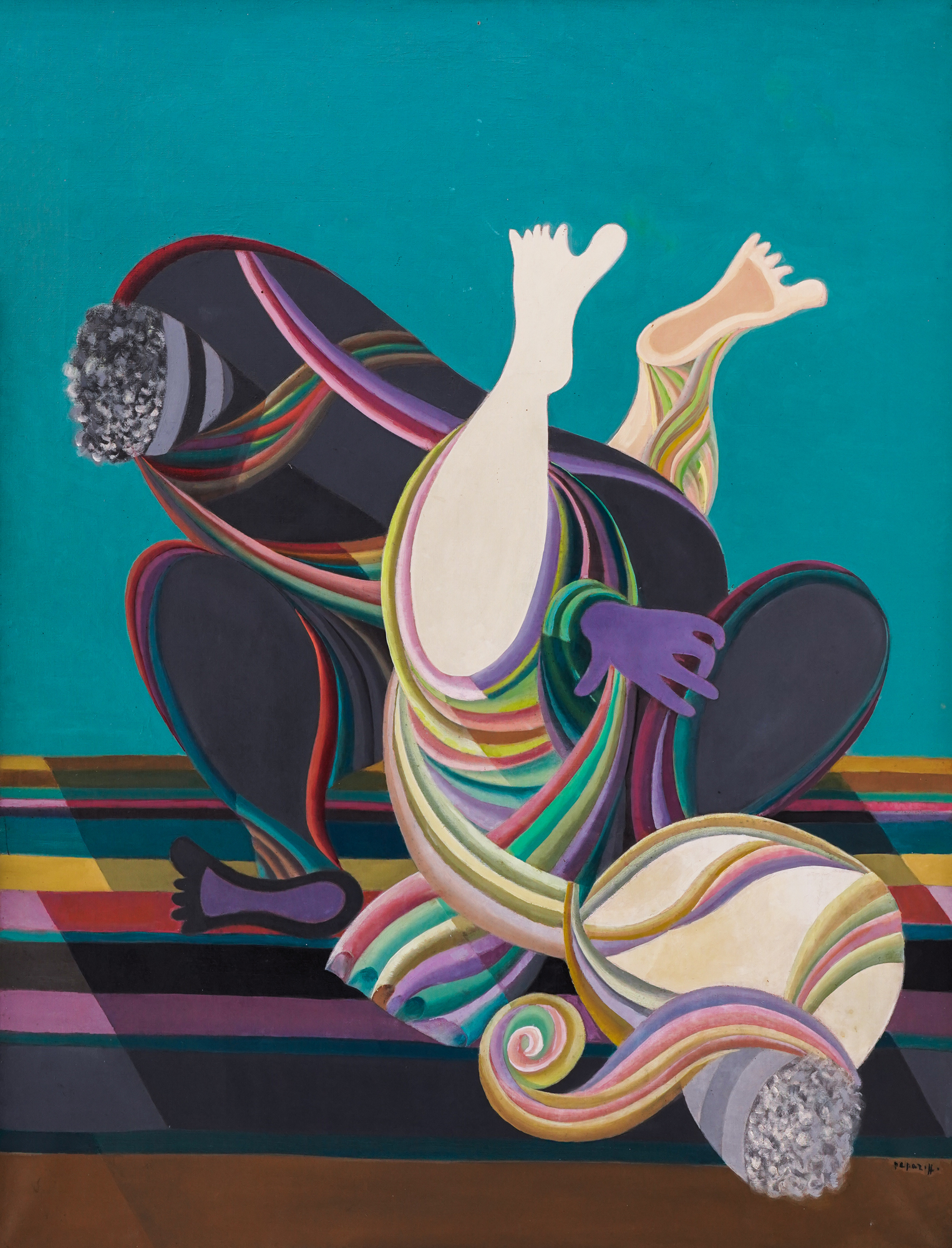
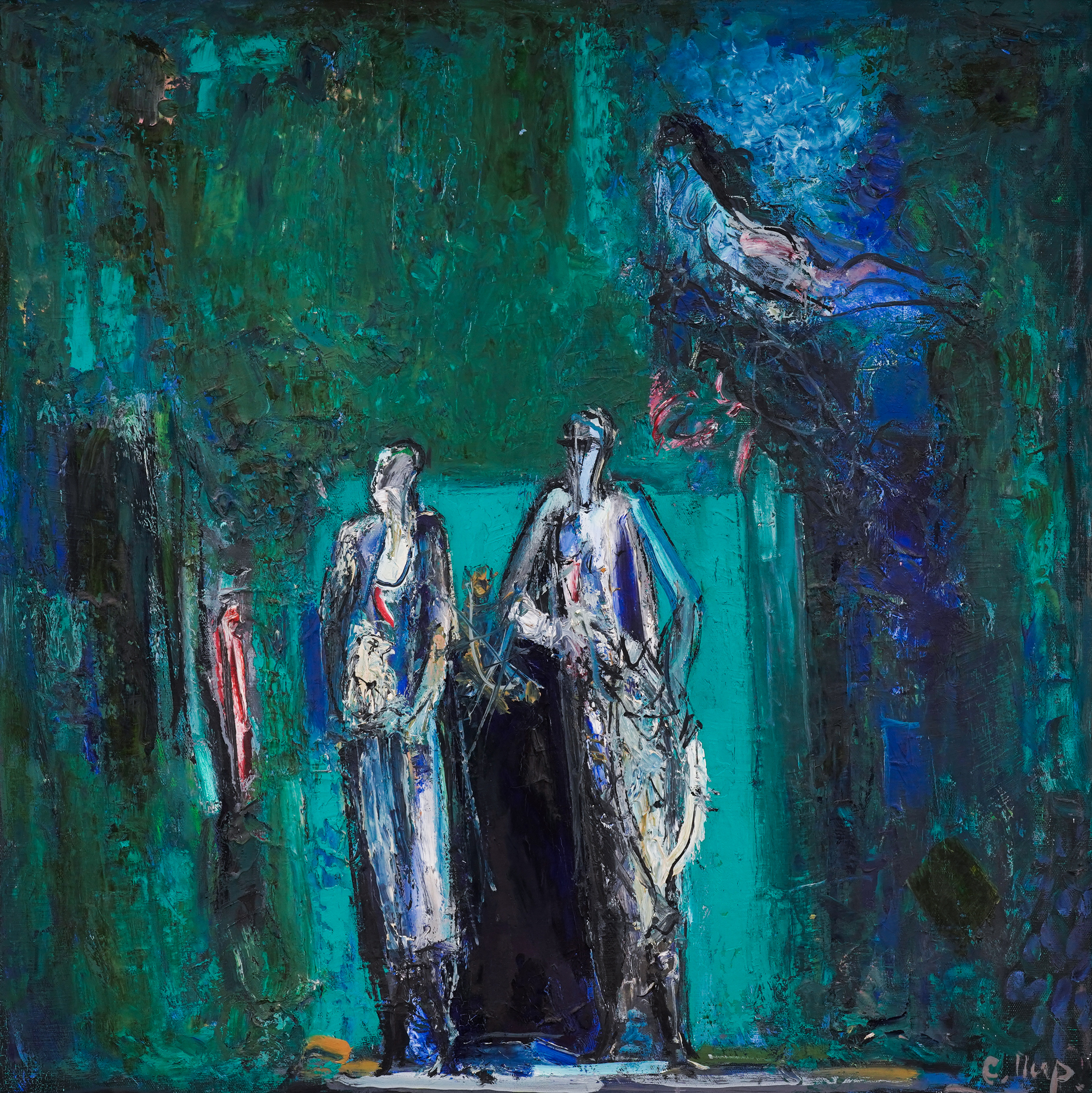
The painting “The Gladiators” is stylistically attributed to the mature period of the artist’s work. This large-scale piece represents an abstract composition characteristic of his style.
In the central part of the painting, set on a ground of parallel colored lines, two stylized human figures are depicted engaged in combat. One is rendered in a light local tone and resembles a female figure. The other is constructed in dark gray-blue tones and resembles a male figure. The bodies are developed through parallel linear structures in soft pastel tones. The composition can be interpreted symbolically — as a gladiatorial struggle between the light and dark principles within us, between masculine and feminine, between good and evil.
The painting captivates with its rich coloration and balanced contrasts. The figures are placed in an abstract space against a flat blue background. The colored ground creates an exceptionally dynamic effect. This dynamism is further enhanced by the movement of the intertwined bodies, their unusual poses, and the chromatic contrasts.
In terms of color, “The Gladiators” contains all the characteristics of Georgi Papazov’s world-famous style — contrast between warm and cool tones, placement of colored figures on a dense background, and geometrization of forms. However, here there is no complete geometrization of the human body into cones and cylinders. The lighting is not directly directed onto the objects to produce reflective, polished surfaces.
The work is emblematic of the artist’s mature period because it marks a return to figurative painting, to human presence, to a softer treatment of color, and to an overall harmonious visual impact, despite the contrasts.
The composition has an extremely modern character, not only for the time in which it was created, but also today. With its monumental scale, artistic qualities, and representative style, “The Gladiators” can be considered a masterpiece within the oeuvre of Georgi Papazov.
(S.N.)
Dimensions
width 89 cm, height 116 cm, custom 116 × 89 cm
Description
oil on canvas, signed bottom right, in black, "papazoff"
Research information
The work participated in the exhibition "Exposition Papazoff", Galerie Francoise Tournie, Paris, June 8 - July 8, 1978.
Lot.notes
titled and dated on the back, in black, "Les Gladiateurs, 1956"
Dating
1956
ADDITIONAL INFORMATION
For clarifications regarding the bidding procedure, hammer price costs, guarantee, payment, and collection terms for the winning lot, we recommend carefully reading/re-reading the Bidding Regulations.
For additional information regarding the lot and the auction, please contact the Art Consultants Department.
Detalii
The work of Georgi Papazov has always attracted great interest from collectors and state museums. He is a recognized member of the international Paris School, alongside the well-known Jules Pascin. Papazov did not receive a systematic academic art education. He studied at the Technical School of Architecture and Park Design in Prague from 1913 to 1918. In 1918, he attended a private painting school run by Hans Hofmann in Munich. He lived in Berlin between 1921 and 1923, where he made his first contacts with major contemporary artists. In 1924, he settled in Paris.
Georgi Papazov is one of the pioneers of abstract Surrealism. He remained an unaligned member of the Surrealist movement, although he was one of its precursors and among its brightest representatives. In the early period of his work (1924–1929), Papazov developed a distinctive visual language driven by the subconscious mind of the artist. He participated in the first group exhibitions of the Surrealists in Paris in 1925, alongside Hans Arp, Max Ernst, Paul Klee, André Masson, Joan Miró, and others.
During his second period (1930–1950), he worked with geometric forms — triangles and cones — which served as allegories of the human soul. In his mature period, the artist returned once again to figurative painting. His artistic legacy is closely associated with the Surrealist movement and represents an innovative contribution to modern art. He is also the author of six autobiographical books. Throughout his life, Georgi Papazov remained strongly connected to Bulgaria, where he organized four solo exhibitions in 1919, 1928, 1934, and 1935. He died in Vence, France, in 1972.
The painting “The Gladiators” is stylistically attributed to the mature period of the artist’s work. This large-scale piece represents an abstract composition characteristic of his style.
In the central part of the painting, set on a ground of parallel colored lines, two stylized human figures are depicted engaged in combat. One is rendered in a light local tone and resembles a female figure. The other is constructed in dark gray-blue tones and resembles a male figure. The bodies are developed through parallel linear structures in soft pastel tones. The composition can be interpreted symbolically — as a gladiatorial struggle between the light and dark principles within us, between masculine and feminine, between good and evil.
The painting captivates with its rich coloration and balanced contrasts. The figures are placed in an abstract space against a flat blue background. The colored ground creates an exceptionally dynamic effect. This dynamism is further enhanced by the movement of the intertwined bodies, their unusual poses, and the chromatic contrasts.
In terms of color, “The Gladiators” contains all the characteristics of Georgi Papazov’s world-famous style — contrast between warm and cool tones, placement of colored figures on a dense background, and geometrization of forms. However, here there is no complete geometrization of the human body into cones and cylinders. The lighting is not directly directed onto the objects to produce reflective, polished surfaces.
The work is emblematic of the artist’s mature period because it marks a return to figurative painting, to human presence, to a softer treatment of color, and to an overall harmonious visual impact, despite the contrasts.
The composition has an extremely modern character, not only for the time in which it was created, but also today. With its monumental scale, artistic qualities, and representative style, “The Gladiators” can be considered a masterpiece within the oeuvre of Georgi Papazov.
(S.N.)
ADDITIONAL INFORMATION
For clarifications regarding the bidding procedure, hammer price costs, guarantee, payment, and collection terms for the winning lot, we recommend carefully reading/re-reading the Bidding Regulations.
For additional information regarding the lot and the auction, please contact the Art Consultants Department.
Dimensions
width 89 cm, height 116 cm, custom 116 × 89 cm
Description
oil on canvas, signed bottom right, in black, "papazoff"
Research information
The work participated in the exhibition "Exposition Papazoff", Galerie Francoise Tournie, Paris, June 8 - July 8, 1978.
Lot.notes
titled and dated on the back, in black, "Les Gladiateurs, 1956"