
129. Stopover [1914]
The photos of the lot are informative and indicative, and cannot provide a highly detailed view of the object from all angles. We recommend a careful physical inspection of the lot before bidding.
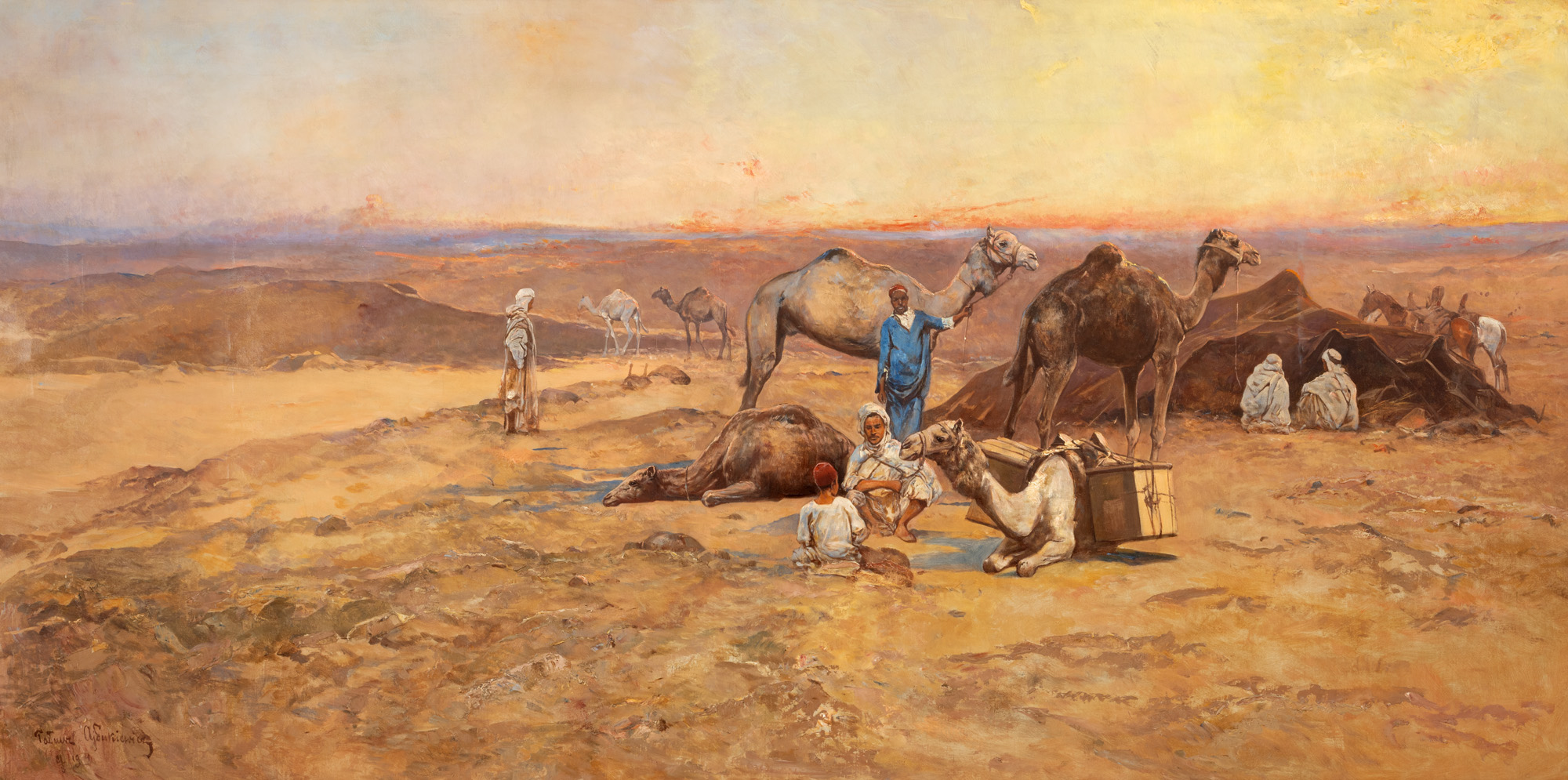
129. Stopover [1914]
1852, Wieliczka - 1916, Cracovia
Estimate:
EUR 15.000 - 25.000
Not sold
ulei pe pânză, 81 x 158 cm, signed and dated bottom left, with brown, "Tadeusz Adjukiewicz, 21.8.1914"
Tadeusz Ajdukiewicz, a recognized Polish artist in the 19th and early 20th centuries for his aristocratic portraits, as well as military scenes. A follower of realism, keen observer and master in authentic depiction of reality, he studied in the workshop of Józef Brandt, a Polish artist famed for his battle scene paintings. Ajdukiewicz also became noted for his orientalist scenes from the 1880s onwards after coming into contact with the Near East. Later he will be invited to Constantinople by Sultan Abdul Hamid II himself, but his pilgrimages will also take him to St. Petersburg, Sofia, and even to Bucharest, at the invitation of King Carol I.
Orientalist painting became important and gained popularity mainly in the 19th century, especially during the Romantic Period (around 1800–1850), and continued even after the end of the 19th century. The rise of orientalist painting is due to several factors such as colonial expansion: European colonialism expanded to the Middle East, North Africa, and Asia. This created curiosity and fascination in Europe for the cultures and landscapes of these regions. Then there were the romantic artists who were attracted by themes of adventure and mystery associated with the "East" in the European imagination. Orientalist subjects were popular in art academies and official salons in France and Britain, prompting many artists to adopt the style in order to gain recognition.
Like Eugène Girardet - a French orientalist painter, Ajdukiewicz adopted the theme of the desert and Bedouin tribes. Nomadic Arabs or Bedouins are desert dwellers, keenly observed in the environment they master the most. Forming nomadic tribes mainly in the Arabian Peninsula and North Africa, they move according to the season and raise goats and camels, they are recognized for their artistic talents, being known as poets or composers. They will be a recurring subject in orientalist art, particularly in the 19th century. As we find in this work, Bedouins were often included in desert landscapes, reinforcing drama and mystery. Camels, tents and oases are prominently present elements, surrounded by caravans among dunes and tents at sunset, outlining a reality different from the European imaginary. The brown shades induce the viewer with the idea of connecting with the ground, returning to origins. Characters merge with the desert, and only towards the center we have a splash of color that may underline the character's status (as a leader), or it is the artist's desire to center the activity in the artwork.
This artwork is dated 1914 and is one of his last works, the artist will die in 1916 during the First World War. The composition follows the artist's specific style found in works from around the 1890s, such as “Meeting in the desert” or “Arab caravan”.
For clarifications regarding the bidding procedure, hammer price costs, guarantee, payment, and collection terms for the winning lot, we recommend carefully reading/re-reading the Bidding Regulations.
For additional information regarding the lot and the auction, please contact the Art Consultants Department.
SESSION
Similar lots
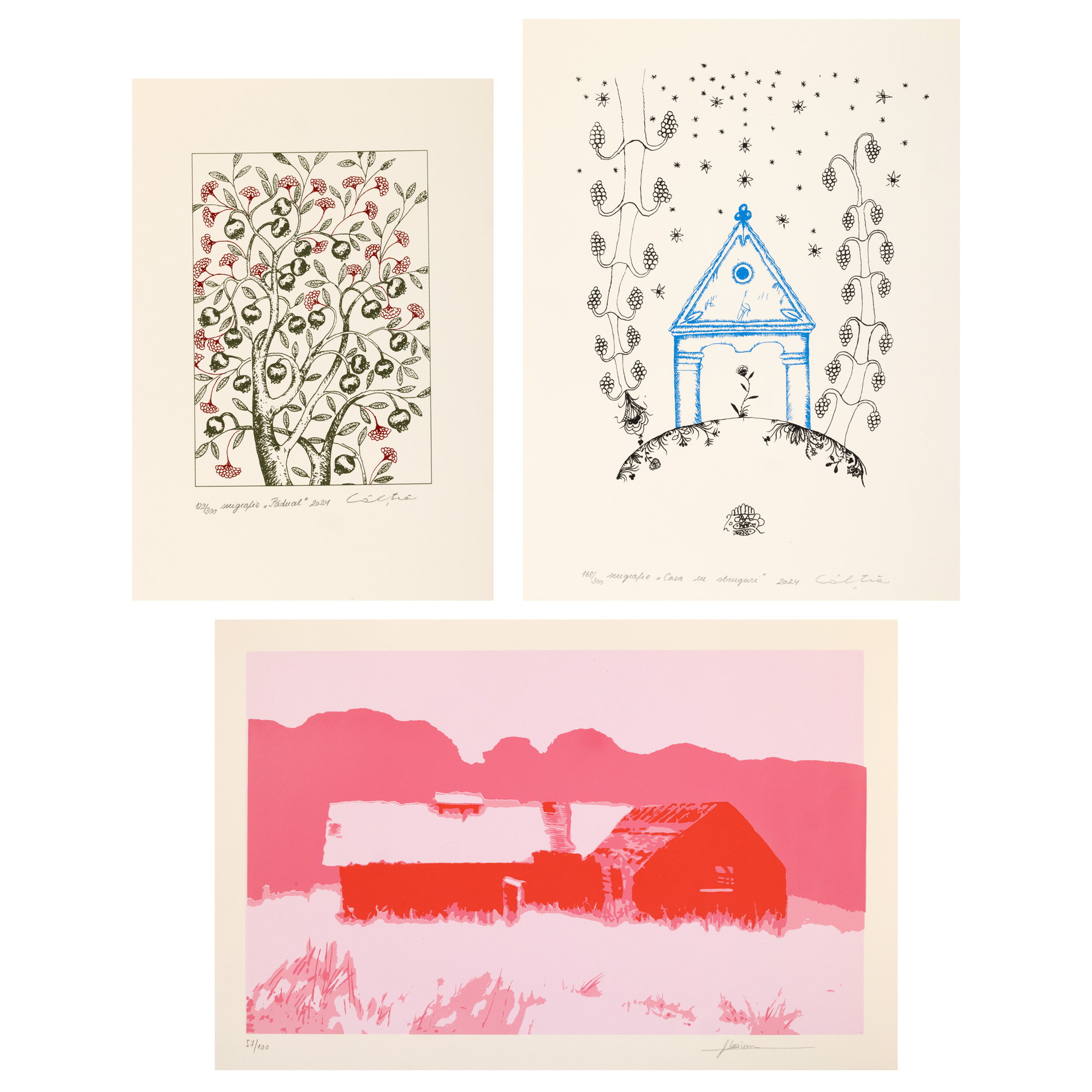
26. Lot consisting of three serigraphs: "House with grapes", "Hawthorn" and "Cabin on Mount Baiului"
Starting price:
EUR 600
Sold
EUR 600