
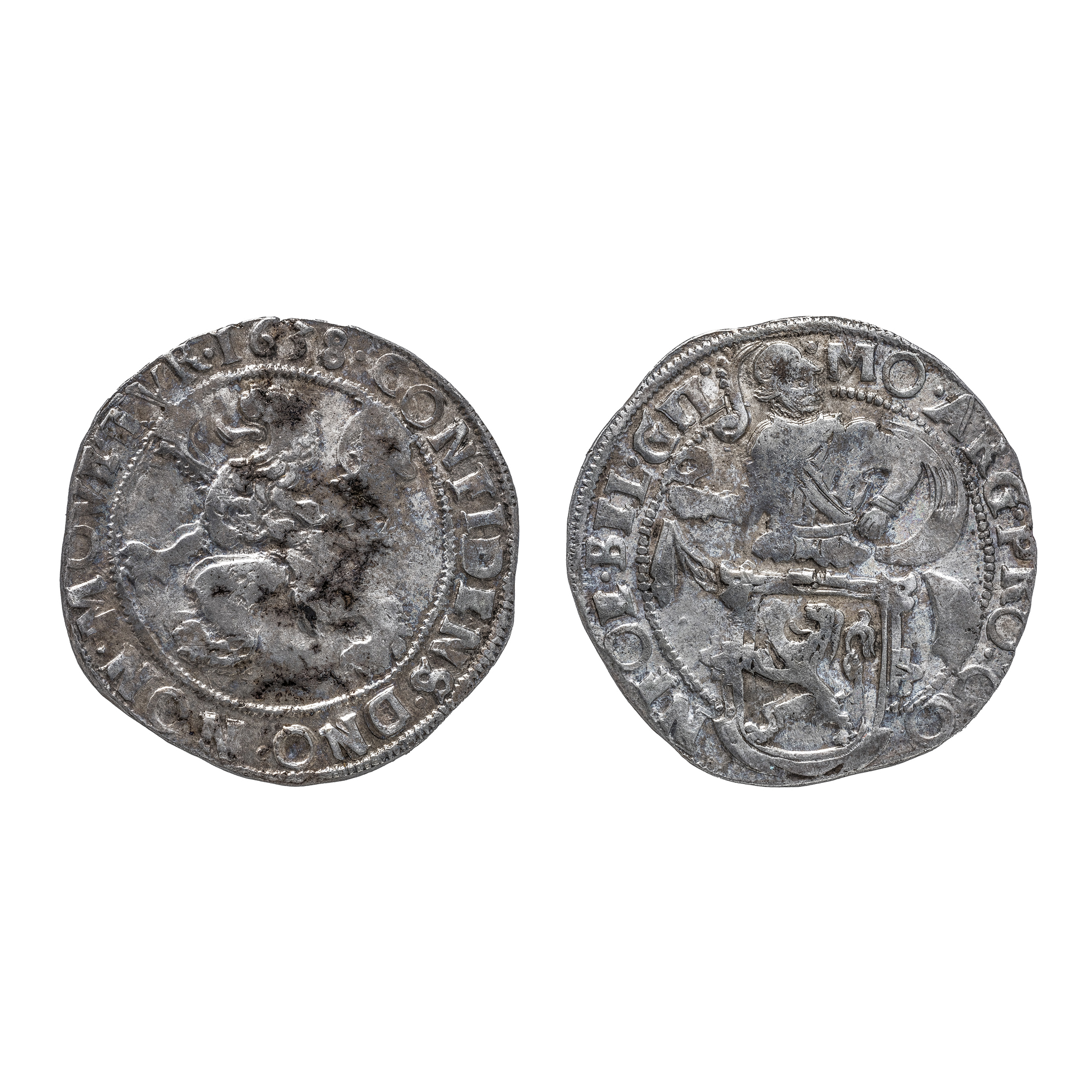
35. Leeuwendaalder Coin (ancestor of the Romanian Lei), Gelderland, Netherlands, 1638, silver
Starting price
EUR 150
Sold
EUR 400
Session
Tue, 24 June 2025 18:00
Dimensions
custom d=41 mm
Description
750 silver
ADDITIONAL INFORMATION
For clarifications regarding the bidding procedure, hammer price costs, guarantee, payment, and collection terms for the winning lot, we recommend carefully reading/re-reading the Bidding Regulations.
For additional information regarding the lot and the auction, please contact the Art Consultants Department.
Detalii
ADDITIONAL INFORMATION
For clarifications regarding the bidding procedure, hammer price costs, guarantee, payment, and collection terms for the winning lot, we recommend carefully reading/re-reading the Bidding Regulations.
For additional information regarding the lot and the auction, please contact the Art Consultants Department.
Similar lots
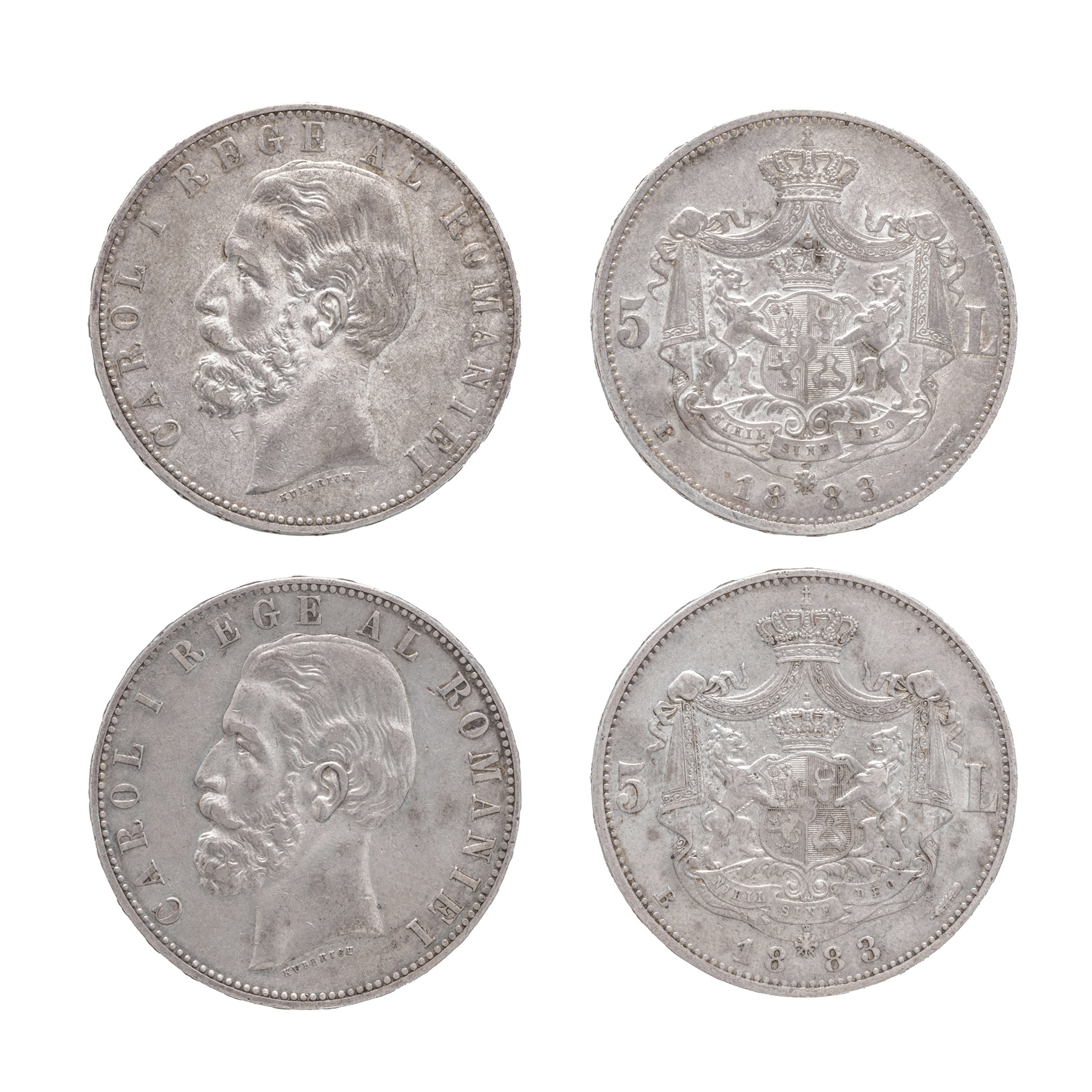
51. Pair of 5 Lei coins 1883, silver, variant with diamond at crown