

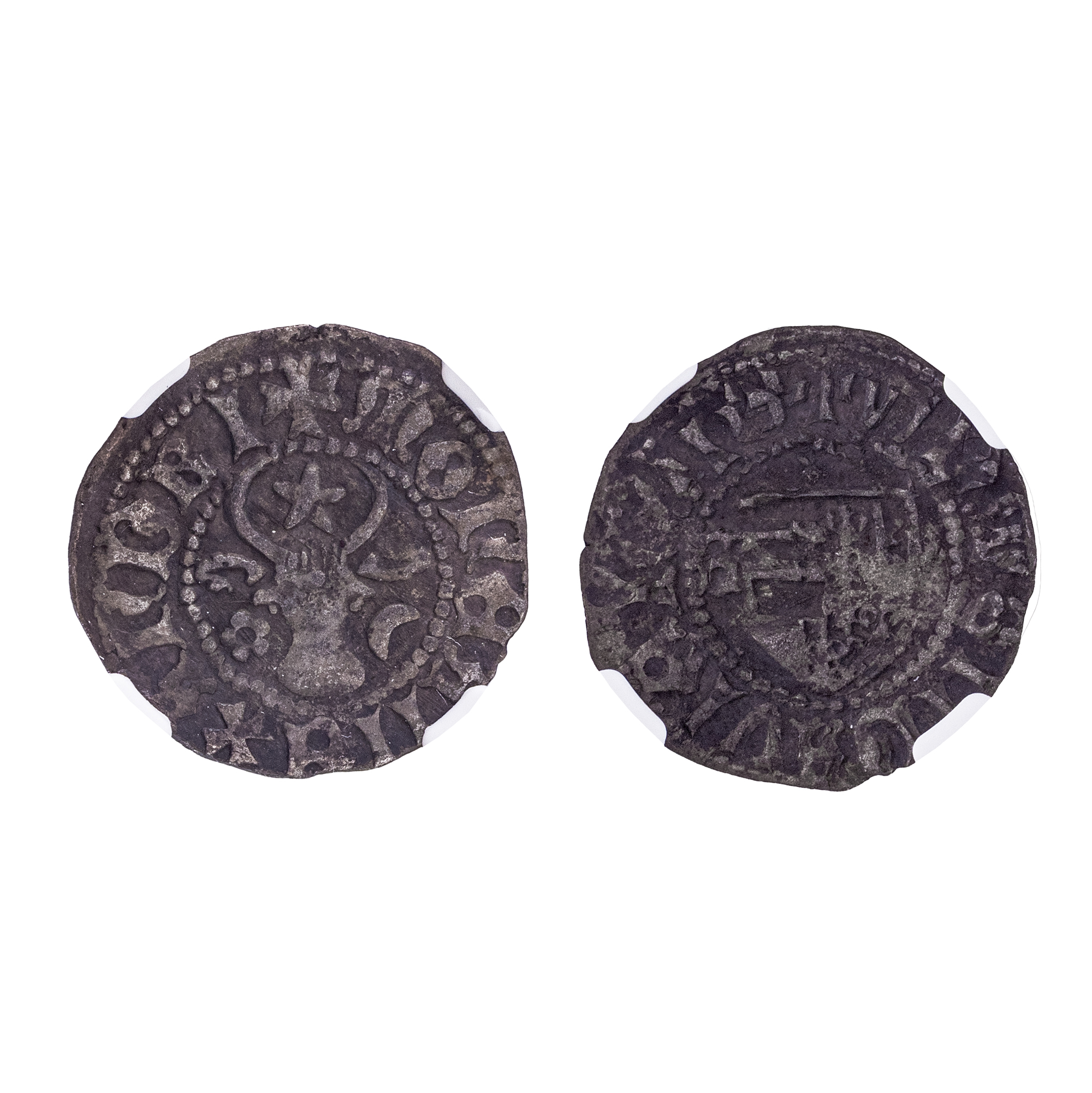
94IT. Double Gros Coin, Alexander the Good, Moldova, 1400-1432, Silver
The photos of the lot are informative and indicative, and cannot provide a highly detailed view of the object from all angles. We recommend a careful physical inspection of the lot before bidding.
94IT. Double Gros Coin, Alexander the Good, Moldova, 1400-1432, Silver
Starting price:
EUR 250
Sold
EUR 250
silver, d=23 mm
Obverse: + MONEALEXANDRI: Ox head with a star between the horns, to the right a rosette and to the left a half-moon. Reverse: + WDMOLDAVIENSIS; Split shield: I three bars, II seven lily flowers 4/3. Above the shield is a rosette with five globules.
Alexander the Good, ruler of Moldova between 1400 and 1432, played an essential role in the consolidation of the medieval Moldovan state and its development on multiple fronts - political, economic, administrative, and religious. His reign, one of the longest and most peaceful in the history of Moldova, provided the country with the necessary stability to organize and prosper.
On the political front, Alexander the Good managed to maintain a balance between the great neighboring powers - the Kingdom of Poland, the Kingdom of Hungary, and the Ottoman Empire - through a skilled policy of alliances and diplomacy. He concluded important treaties with the king of Poland, securing military support and recognition of his rule in exchange for a formal tribute. Thus, Moldova was spared major conflicts and was able to consolidate its institutions.
Administratively, Alexander the Good organized an efficient system of country management, strengthening the authority of the ruler and his officers. He established the princely chancellery, where numerous documents were issued in the Slavonic language, a sign that Moldova was transforming into a centralized state, with a well-organized administration.
Economically, he supported the development of trade, granting privileges to merchants from important cities such as Lviv, Liov, or Brasov. He encouraged monetary circulation, strengthened control over customs, and favored the appearance of fairs, which led to a period of economic prosperity.
Religiously, Alexander the Good was a defender of Orthodoxy and a supporter of the Church. He acknowledged the authority of the Patriarchate of Constantinople, established the Metropolis of Moldavia in Suceava, and founded numerous churches and monasteries. This concern for spiritual life strengthened the cultural and religious identity of Moldova.
For clarifications regarding the bidding procedure, hammer price costs, guarantee, payment, and collection terms for the winning lot, we recommend carefully reading/re-reading the Bidding Regulations.
For additional information regarding the lot and the auction, please contact the Art Consultants Department.
SESSION
Similar lots
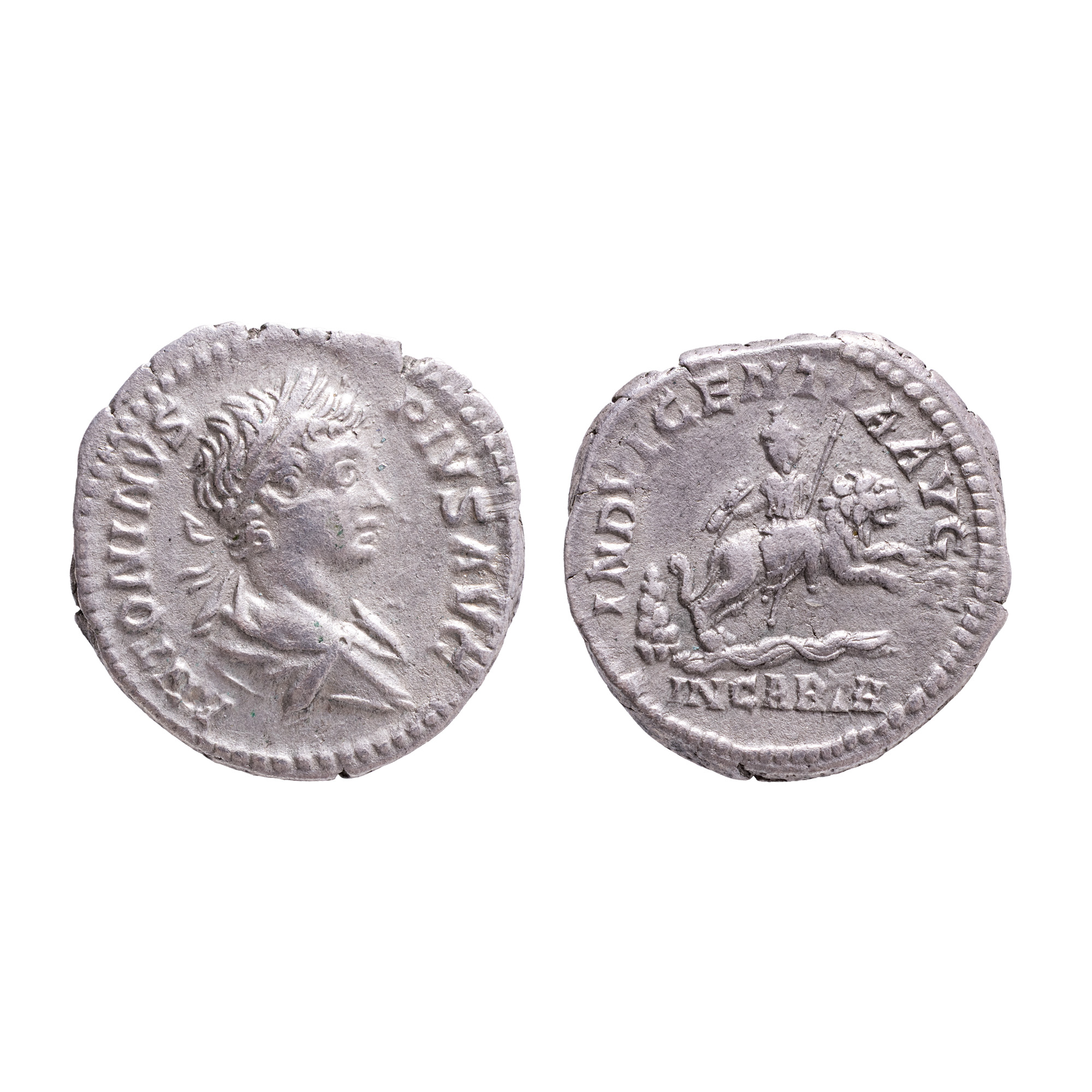
80F. Denarius Coin, Caracalla, Dea Caelestis Type, 198-217 AD, Silver
Starting price:
EUR 200
Not sold
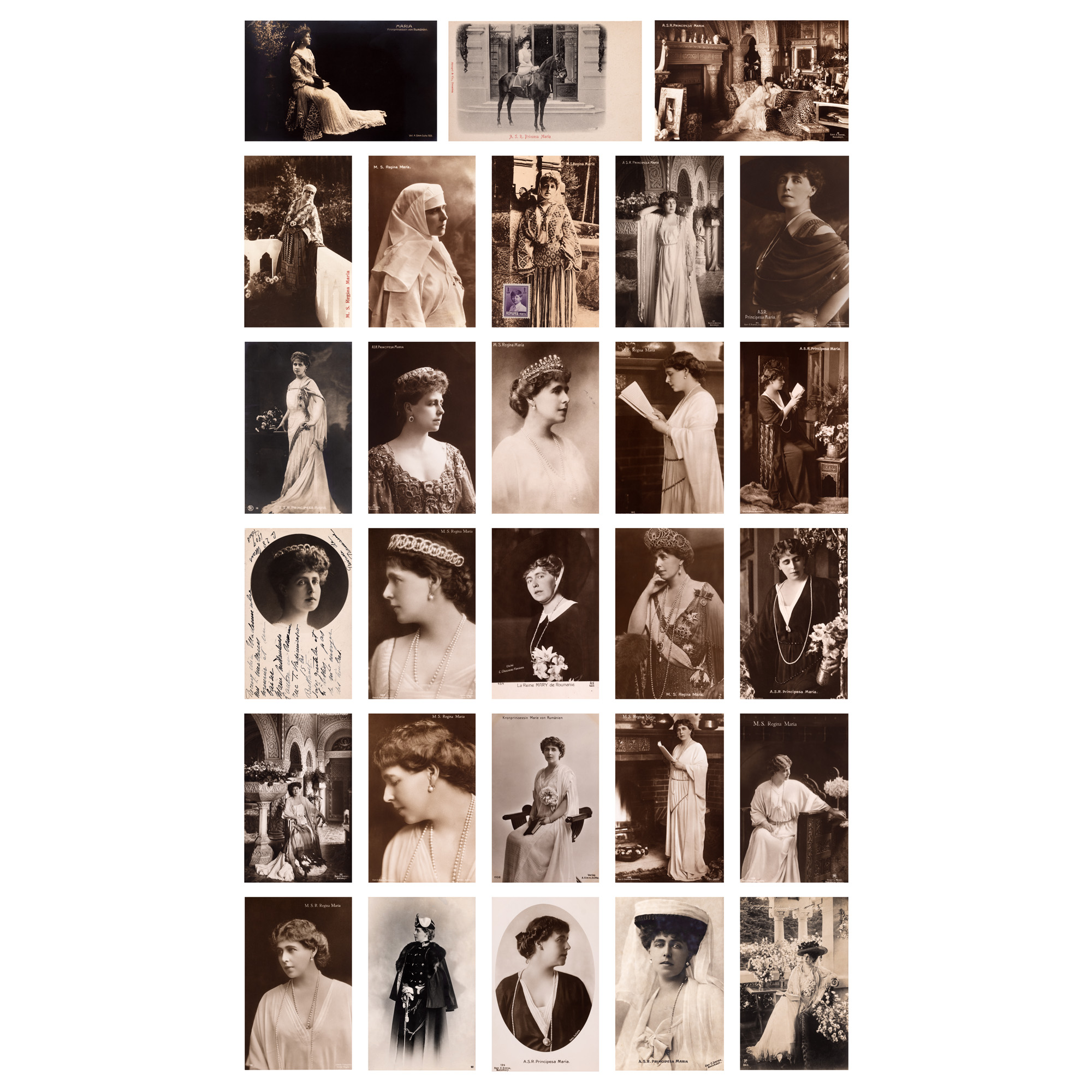
15. Splendid lot consisting of 28 photographic postcards illustrating Queen Maria, various Romanian and foreign publishers, approx. 1916-1930
Starting price:
EUR 200
Sold
EUR 900