
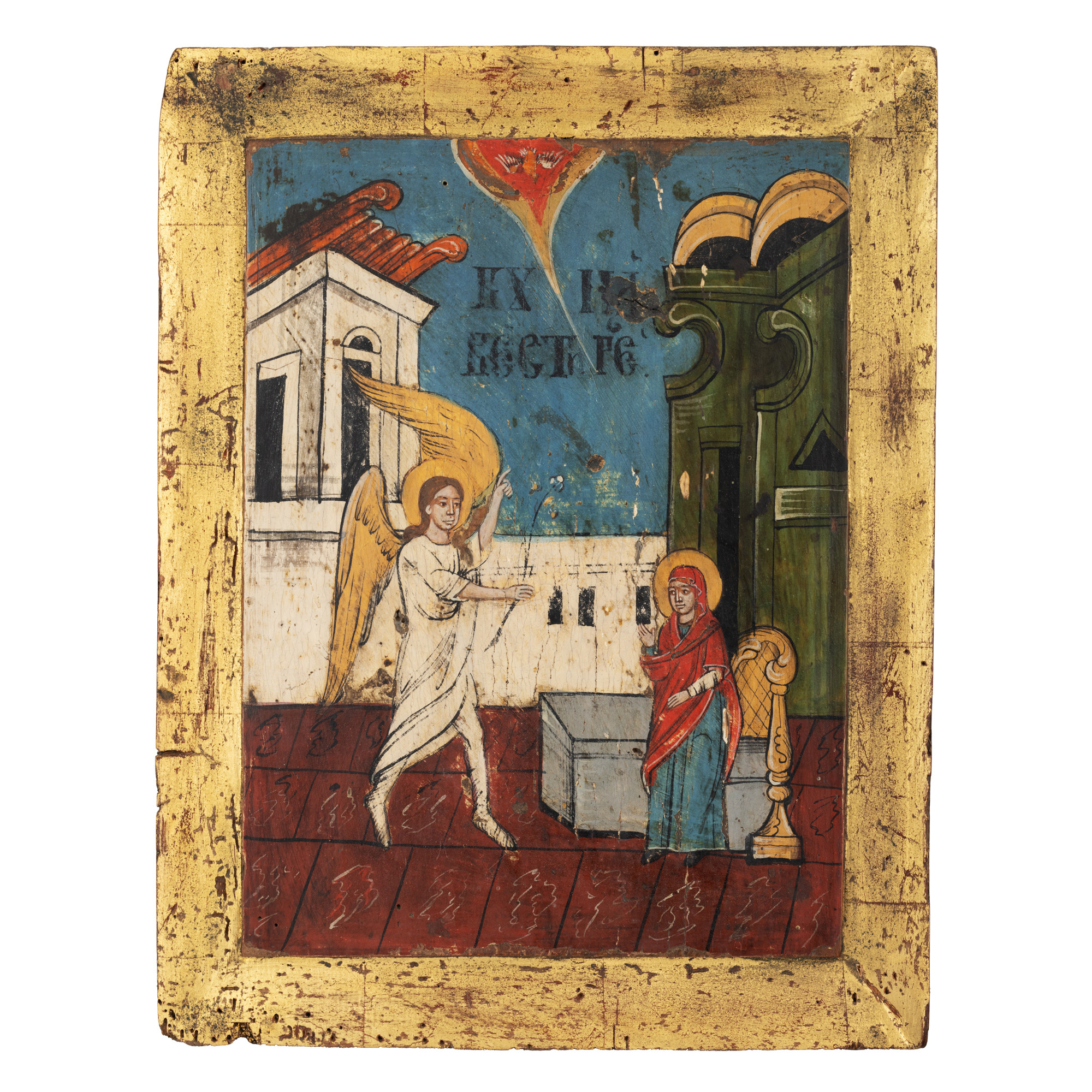
86. Icon on wood, "Annunciation", possibly painted by Simon Oprovici from Craiova, last decades of the 18th century, rare piece
Начална цена
EUR 200
Продадено
EUR 350
Сесия
Чет, 26 юни 2025 18:00
Размери
width 25.5 cm, height 31.5 cm
Описание
tempera pe lemn
Информация от изследване
Simion Oprovici (also known as Simon Zugrav Oprovici from Craiova, Simon Zugraf ot Craiova, Simon Zugraf, Simon Zugrav from Belgrade) was a mural painter and iconographer, originally from Wallachia, from Craiova, active in the last three decades of the 18th century, in the southern parts of Transylvania. His painting is within the spirit of the post-Brâncovenesc tradition, the artist proving talent and skill in creating compositions. He arrives in Transylvania, probably through his connections with painters from the outskirts of Sibiu, where he also created his earliest known and preserved works. His icons have a personal note, through the manner of treating faces and the plasticity of their relief. He settled in Transylvania from the last decade of the 18th century, in Alba Iulia.
ДОПЪЛНИТЕЛНА ИНФОРМАЦИЯ
За разяснения относно процедурата по наддаване, разходите при спечелване, условията за гаранция, плащане и вземане на спечеления лот, препоръчваме внимателно четене/препрочитане на Правилника за наддаване.
За допълнителна информация относно лота и търга, моля свържете се с Отдела на арт консултантите.
Detalii
ДОПЪЛНИТЕЛНА ИНФОРМАЦИЯ
За разяснения относно процедурата по наддаване, разходите при спечелване, условията за гаранция, плащане и вземане на спечеления лот, препоръчваме внимателно четене/препрочитане на Правилника за наддаване.
За допълнителна информация относно лота и търга, моля свържете се с Отдела на арт консултантите.
Размери
width 25.5 cm, height 31.5 cm
Описание
tempera pe lemn
Информация от изследване
Simion Oprovici (also known as Simon Zugrav Oprovici from Craiova, Simon Zugraf ot Craiova, Simon Zugraf, Simon Zugrav from Belgrade) was a mural painter and iconographer, originally from Wallachia, from Craiova, active in the last three decades of the 18th century, in the southern parts of Transylvania. His painting is within the spirit of the post-Brâncovenesc tradition, the artist proving talent and skill in creating compositions. He arrives in Transylvania, probably through his connections with painters from the outskirts of Sibiu, where he also created his earliest known and preserved works. His icons have a personal note, through the manner of treating faces and the plasticity of their relief. He settled in Transylvania from the last decade of the 18th century, in Alba Iulia.
Алтернативни лотове
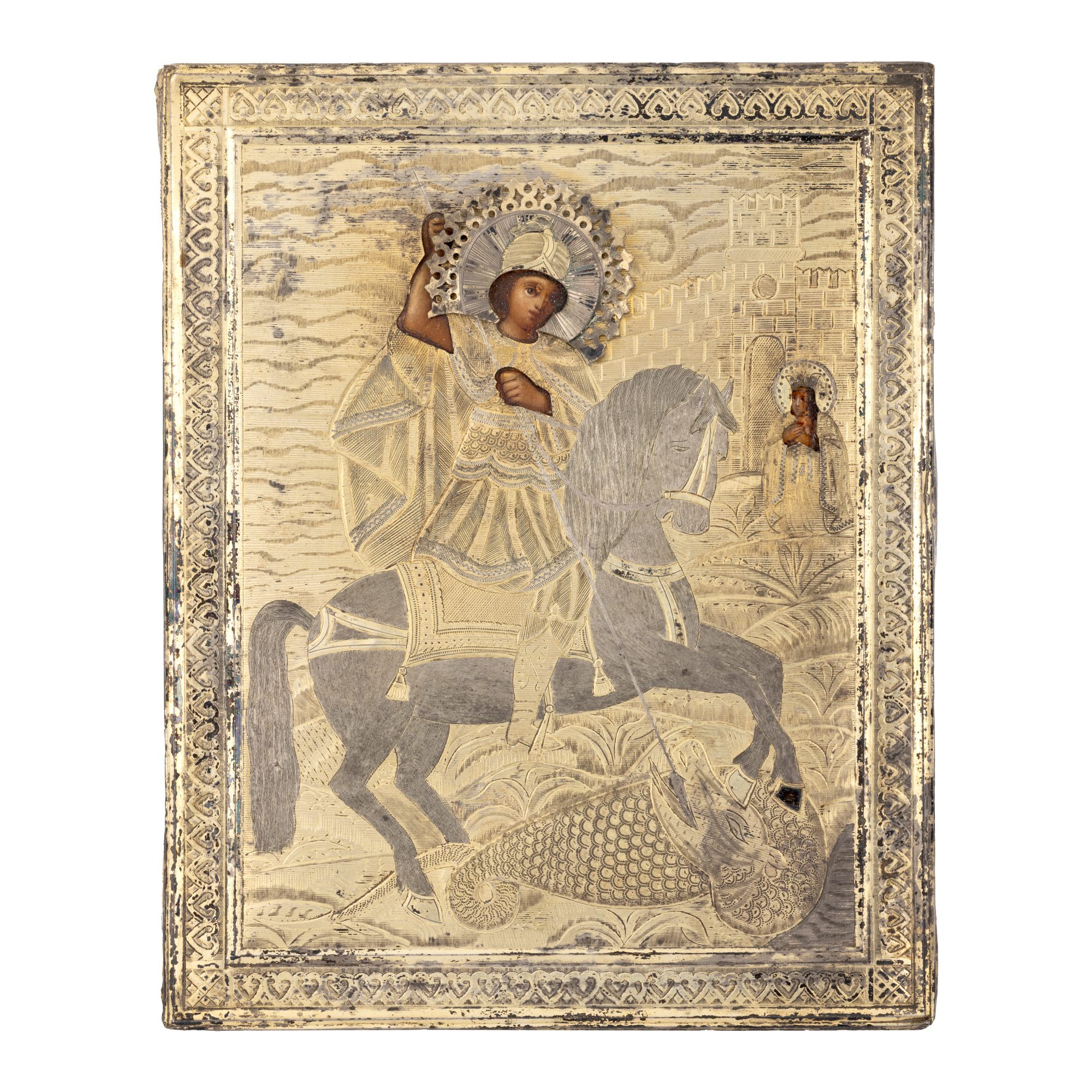
138. Icon on wood, with silver-gilt revetment, "Saint George slaying the dragon", Russian school, 1890-1908