
Снимките на лота са с информативен и илюстративен характер и не могат да предоставят изключително детайлен изглед на обекта от всички ъгли. Препоръчваме внимателен оглед на лота на място, преди да направите наддаване.
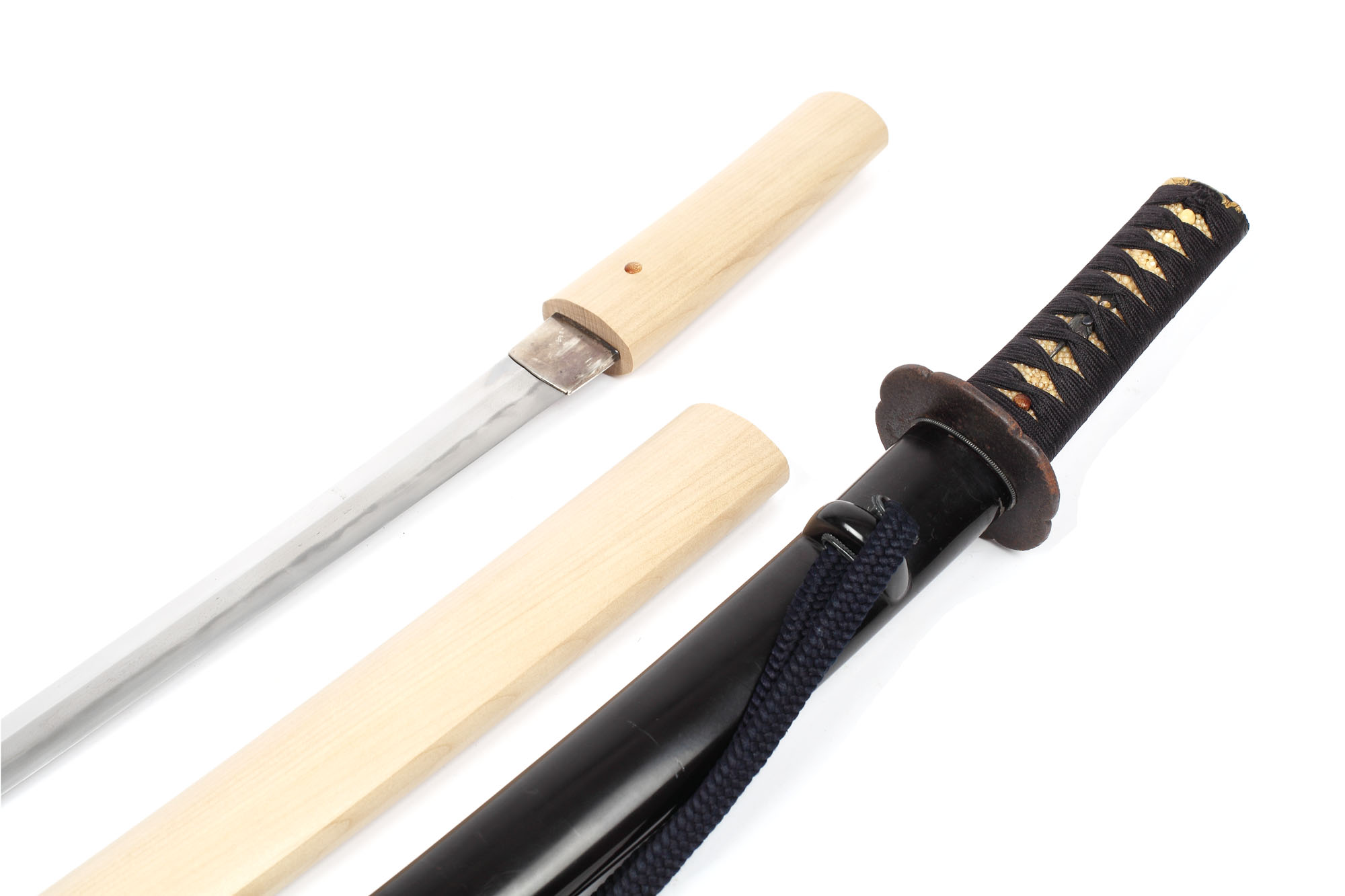
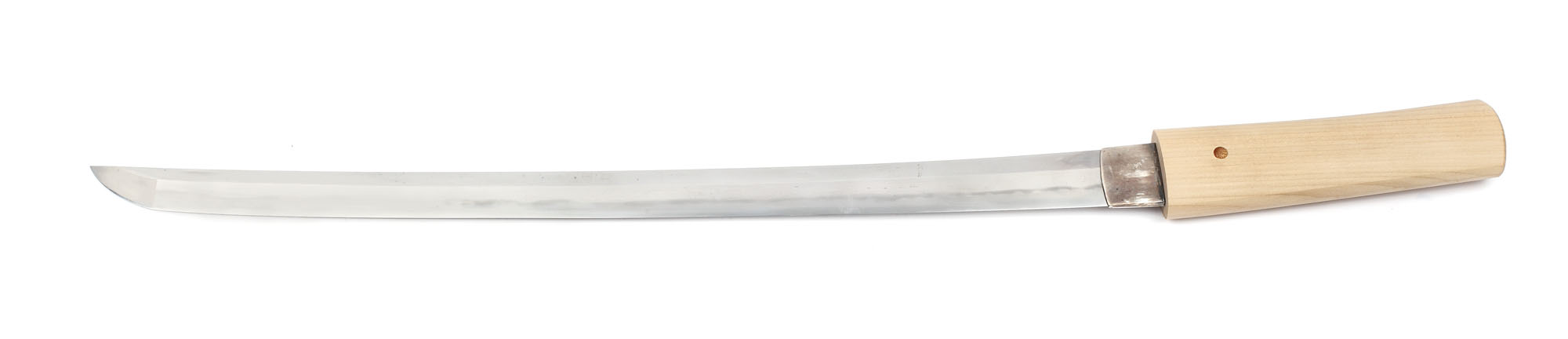
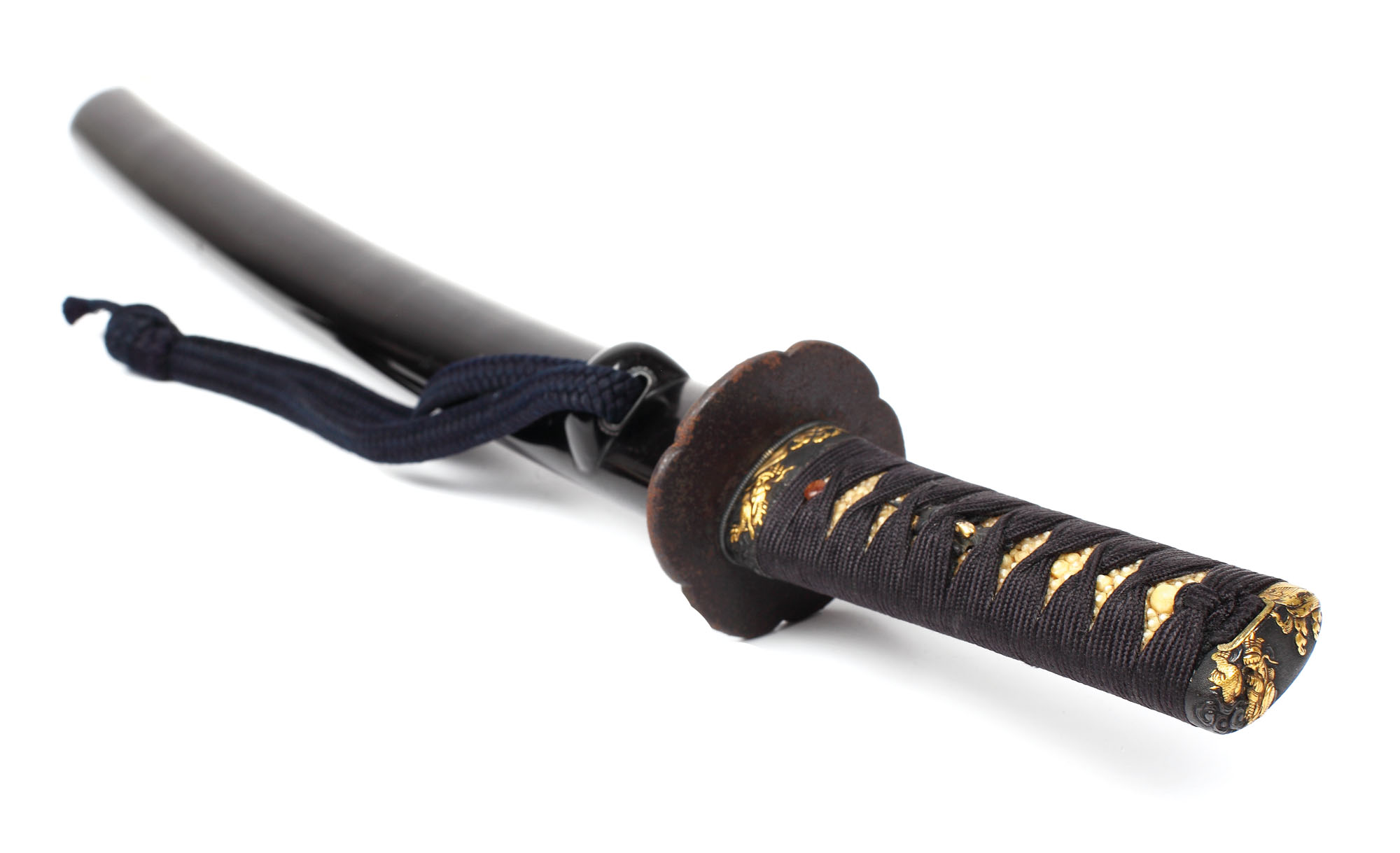
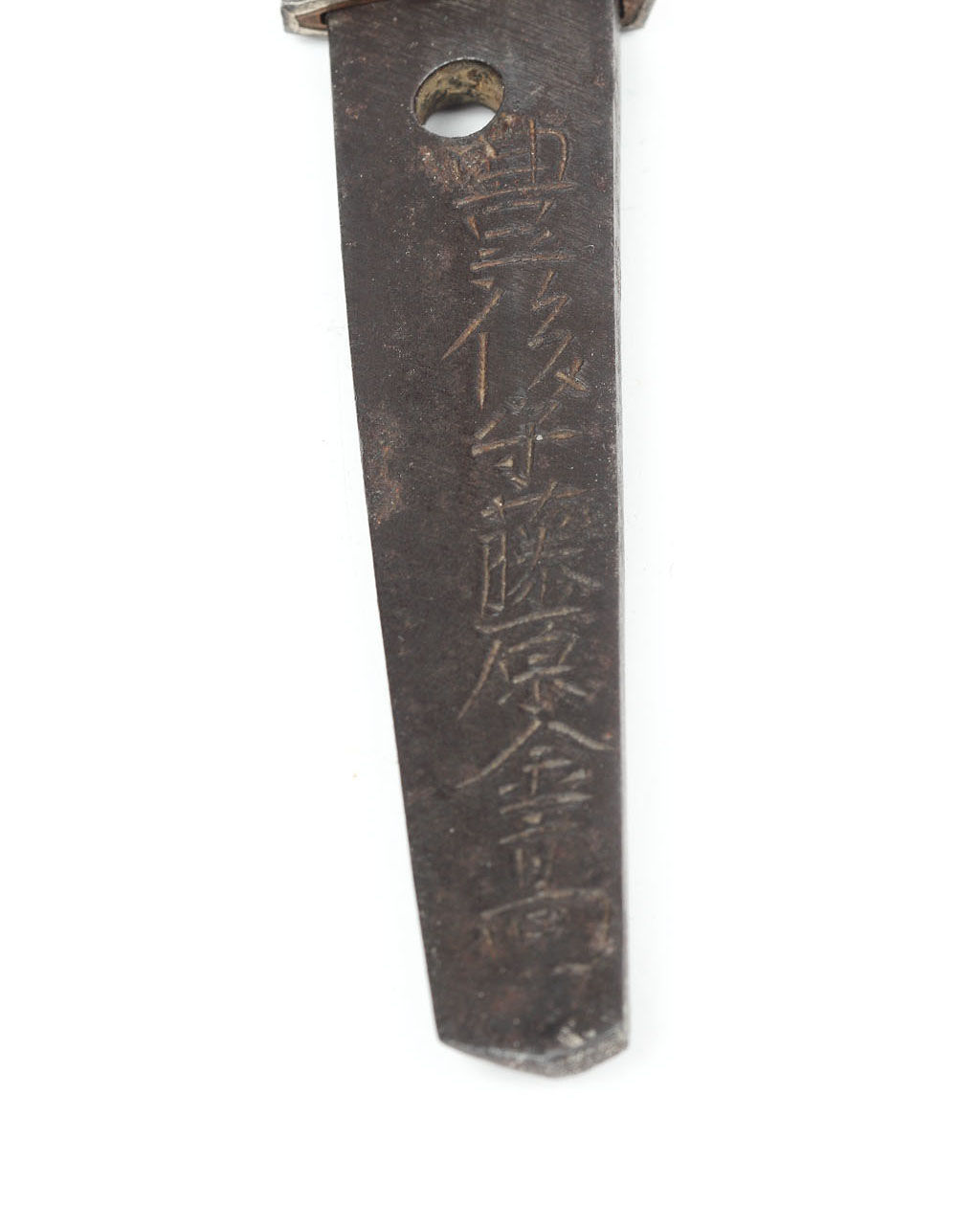
31. Kanetaka Wakizashi, Kanbun period, 1661, with Oshigata and NBTHK certificate
Начална цена
Pretul de pornire si cel estimat nu sunt preturi de vanzare efective
EUR 2.300
Продадено
Pretul de pornire si cel estimat nu sunt preturi de vanzare efective
Authentic Japanese shinogi-zukuri type Wakizashi dating back to 1661, early Kanbun period (1661-1673), signed Bungo Kami Fujiwara Kanetaka. Used as secondary swords in feudal Japan, Wakizashi blades completed, together with a Katana, the war equipment of a samurai (daishō). Wakizashi swords were used in melee combat in a Japanese specific combat style called Niten Ichi-ryū, which entailed the use of both swords, Katana and Wakizashi. After the end of the fight, Wakizashi swords were used to behead the dead enemies. These swords were also used by the samurai in seppuku rituals, observing their honour code, bushido. The active edge of the blade has a refined nie deki hamon, a result of the differential tempering process. The tip of the blade, kissaki, also has an impressive boshi, an extension of the blade's hamon. The inactive edge of the blade has a mune worked almost to perfection. Slightly curved, with a tori-sori curvature that is wider in the middle, and quite long, of the shinogi-zukuri type, the blade is mounted between two silver foils called habaki. The blade is kept in the shirasaya, the wooden mounting where it was stored when it was not used by the noble samurai in combat. When the samurai left for war, the blade was moved into the koshirae, which included a handle (tsuka) and a scabbard (saya). This blade is complemented by an authentic koshirae of the Edo period. Like any koshirae, this one contains several distinctive elements: the handle is covered with shagreen, then wrapped in a black silk band (tsuka-ito), which binds at the middle two ornamental pieces called menuki, in flower shape. The guard (tsuba) is plain, made of mokko perforated iron; the scabbard (saya) is made of black, lacquered wood, decorated with a sageo.
Описание
steel
ДОПЪЛНИТЕЛНА ИНФОРМАЦИЯ
За разяснения относно процедурата по наддаване, разходите при спечелване, условията за гаранция, плащане и вземане на спечеления лот, препоръчваме внимателно четене/препрочитане на Правилника за наддаване.
Authentic Japanese shinogi-zukuri type Wakizashi dating back to 1661, early Kanbun period (1661-1673), signed Bungo Kami Fujiwara Kanetaka. Used as secondary swords in feudal Japan, Wakizashi blades completed, together with a Katana, the war equipment of a samurai (daishō). Wakizashi swords were used in melee combat in a Japanese specific combat style called Niten Ichi-ryū, which entailed the use of both swords, Katana and Wakizashi. After the end of the fight, Wakizashi swords were used to behead the dead enemies. These swords were also used by the samurai in seppuku rituals, observing their honour code, bushido. The active edge of the blade has a refined nie deki hamon, a result of the differential tempering process. The tip of the blade, kissaki, also has an impressive boshi, an extension of the blade's hamon. The inactive edge of the blade has a mune worked almost to perfection. Slightly curved, with a tori-sori curvature that is wider in the middle, and quite long, of the shinogi-zukuri type, the blade is mounted between two silver foils called habaki. The blade is kept in the shirasaya, the wooden mounting where it was stored when it was not used by the noble samurai in combat. When the samurai left for war, the blade was moved into the koshirae, which included a handle (tsuka) and a scabbard (saya). This blade is complemented by an authentic koshirae of the Edo period. Like any koshirae, this one contains several distinctive elements: the handle is covered with shagreen, then wrapped in a black silk band (tsuka-ito), which binds at the middle two ornamental pieces called menuki, in flower shape. The guard (tsuba) is plain, made of mokko perforated iron; the scabbard (saya) is made of black, lacquered wood, decorated with a sageo.
ДОПЪЛНИТЕЛНА ИНФОРМАЦИЯ
За разяснения относно процедурата по наддаване, разходите при спечелване, условията за гаранция, плащане и вземане на спечеления лот, препоръчваме внимателно четене/препрочитане на Правилника за наддаване.