
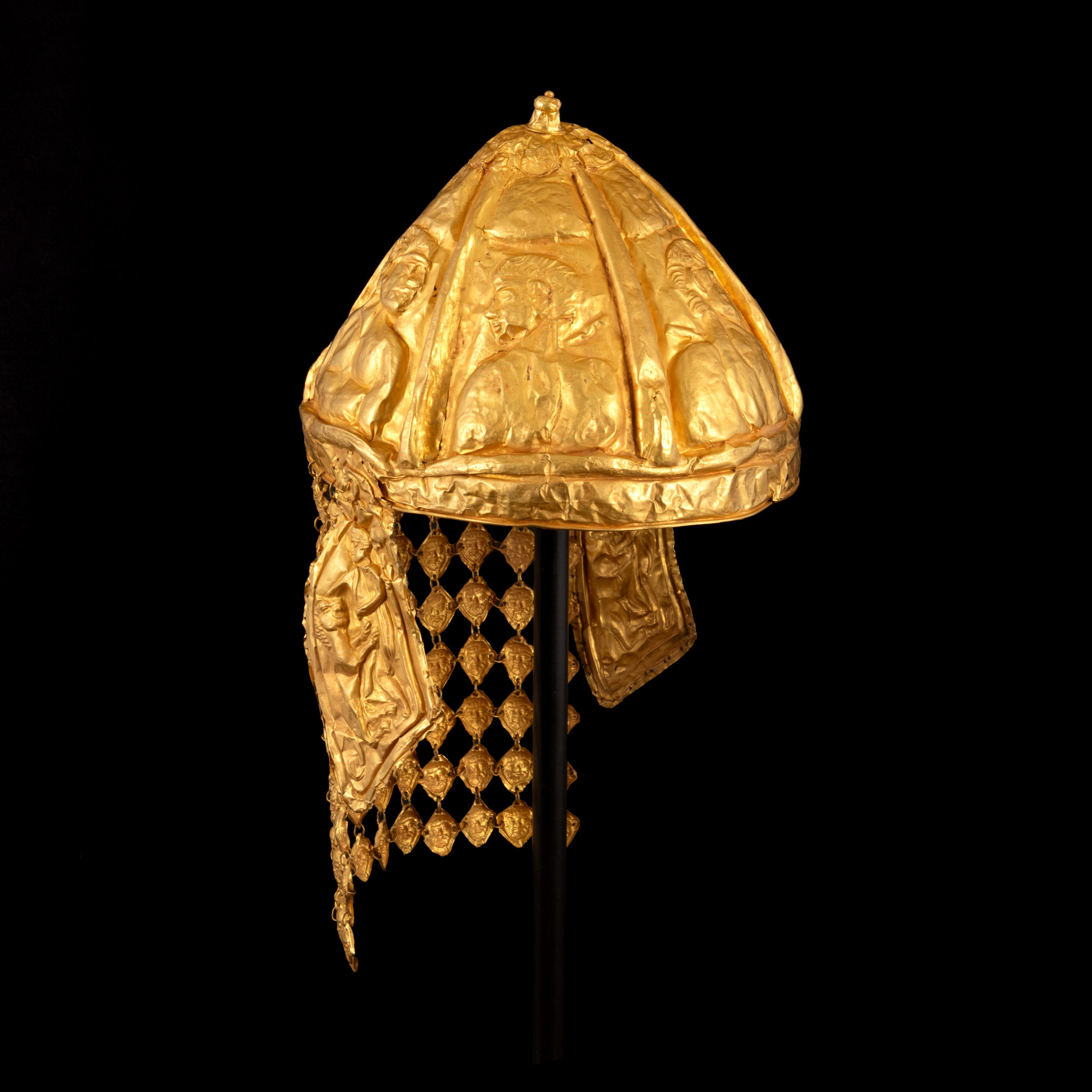
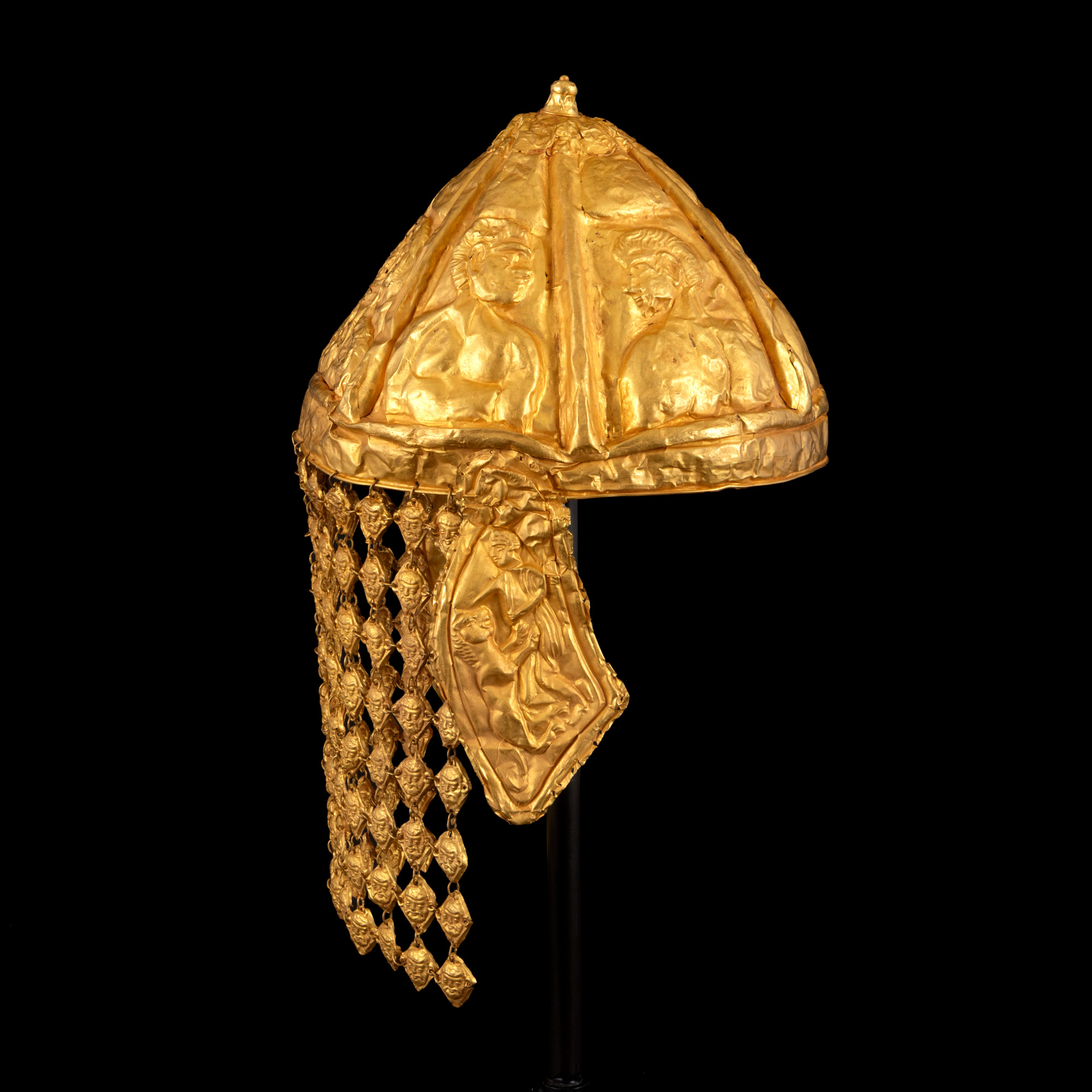
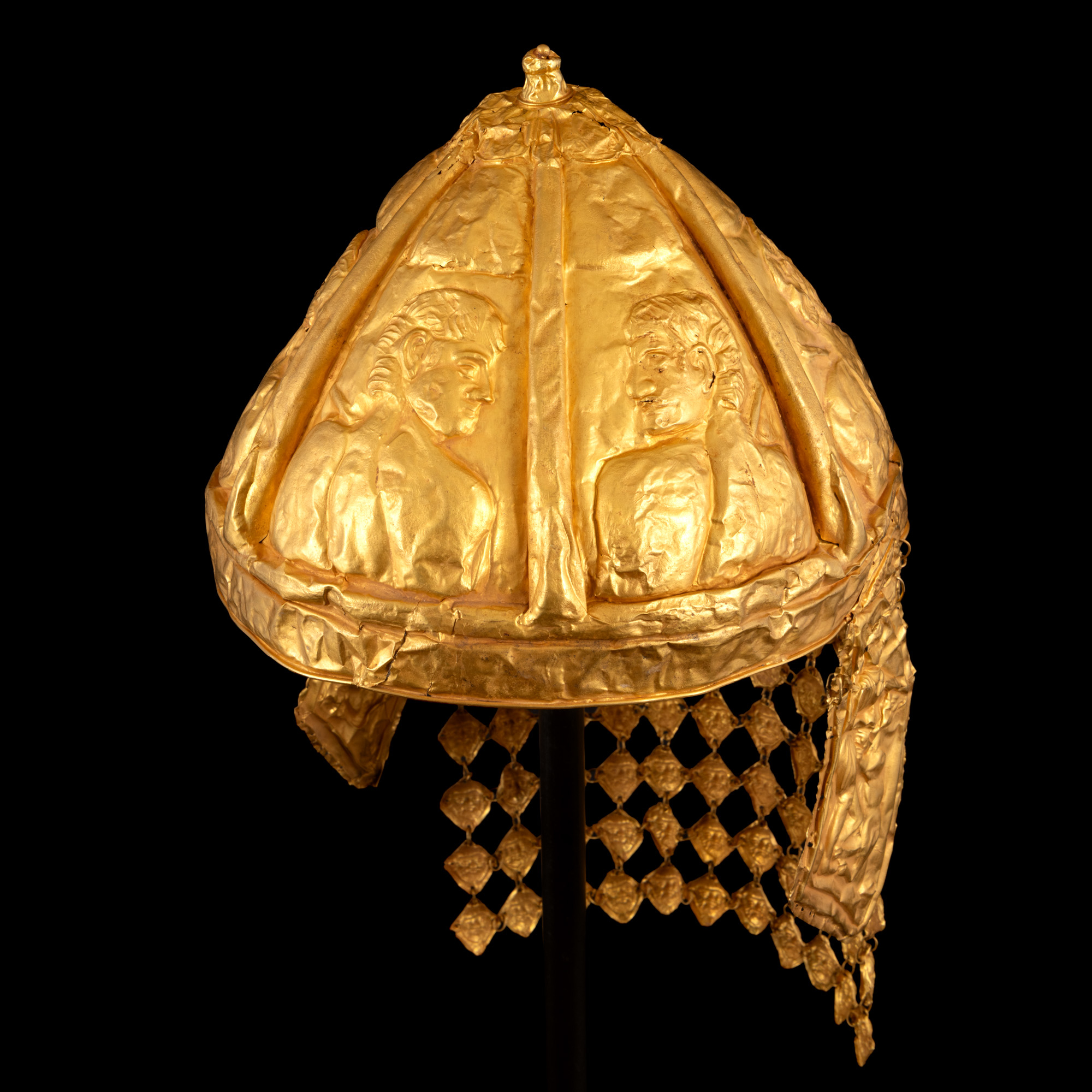
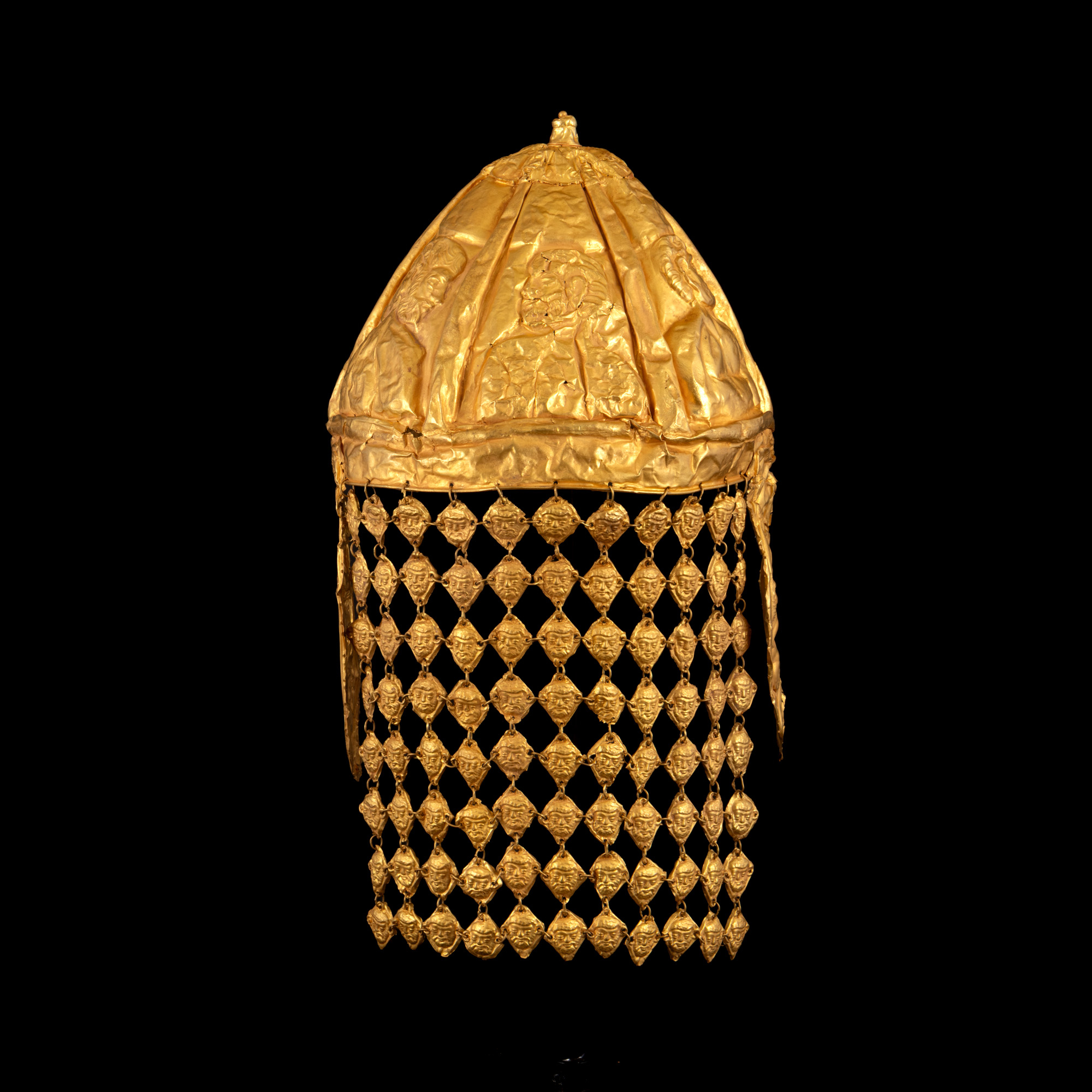
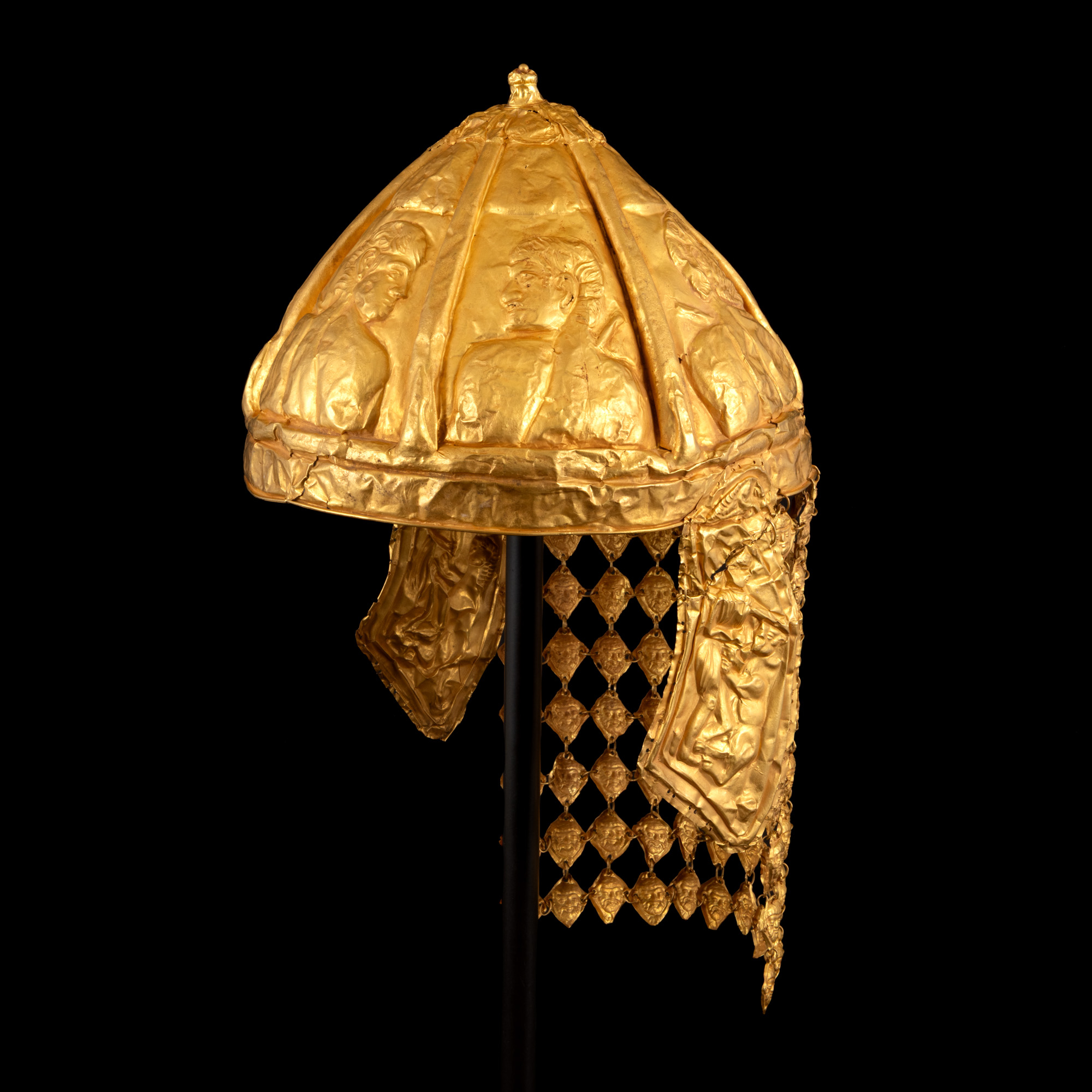
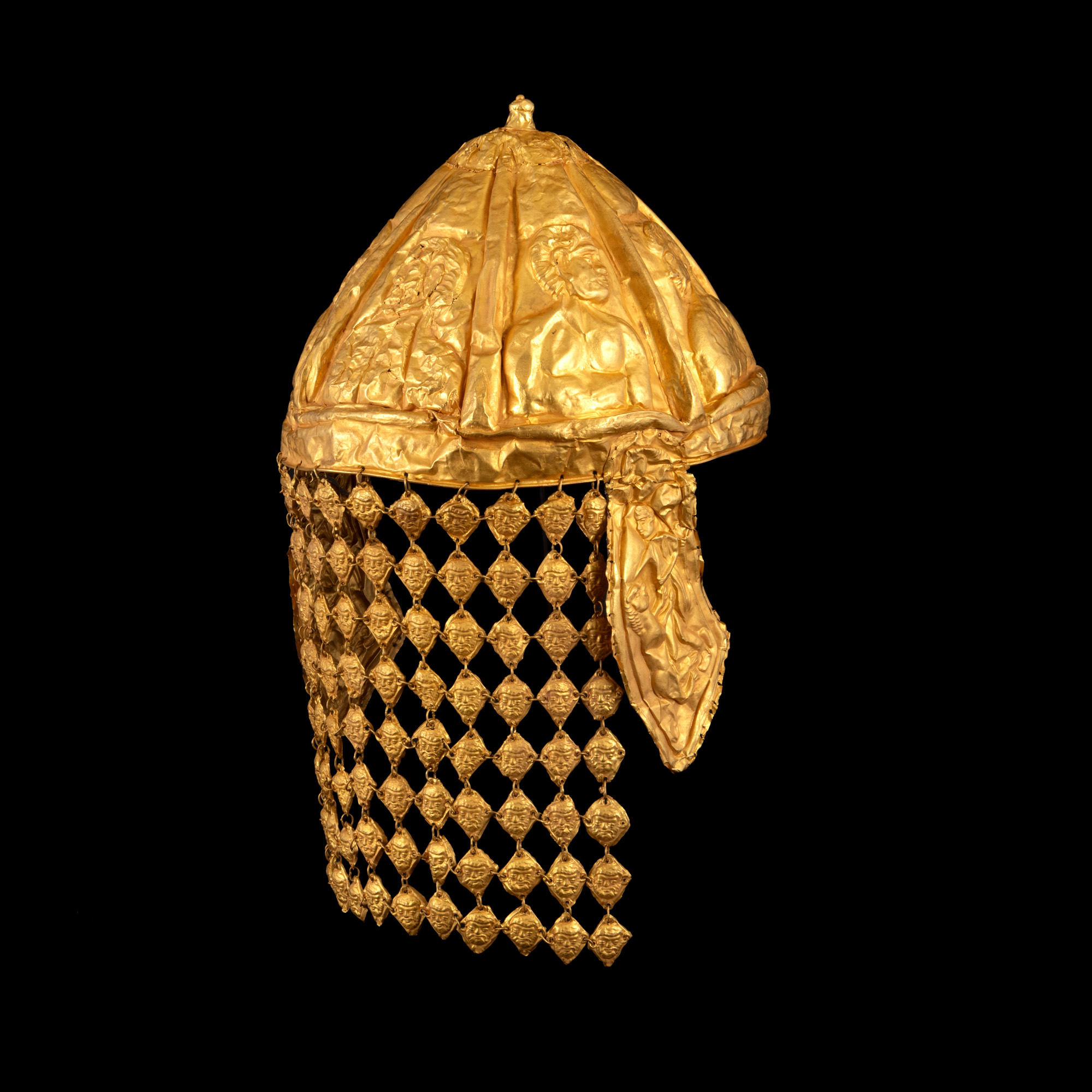
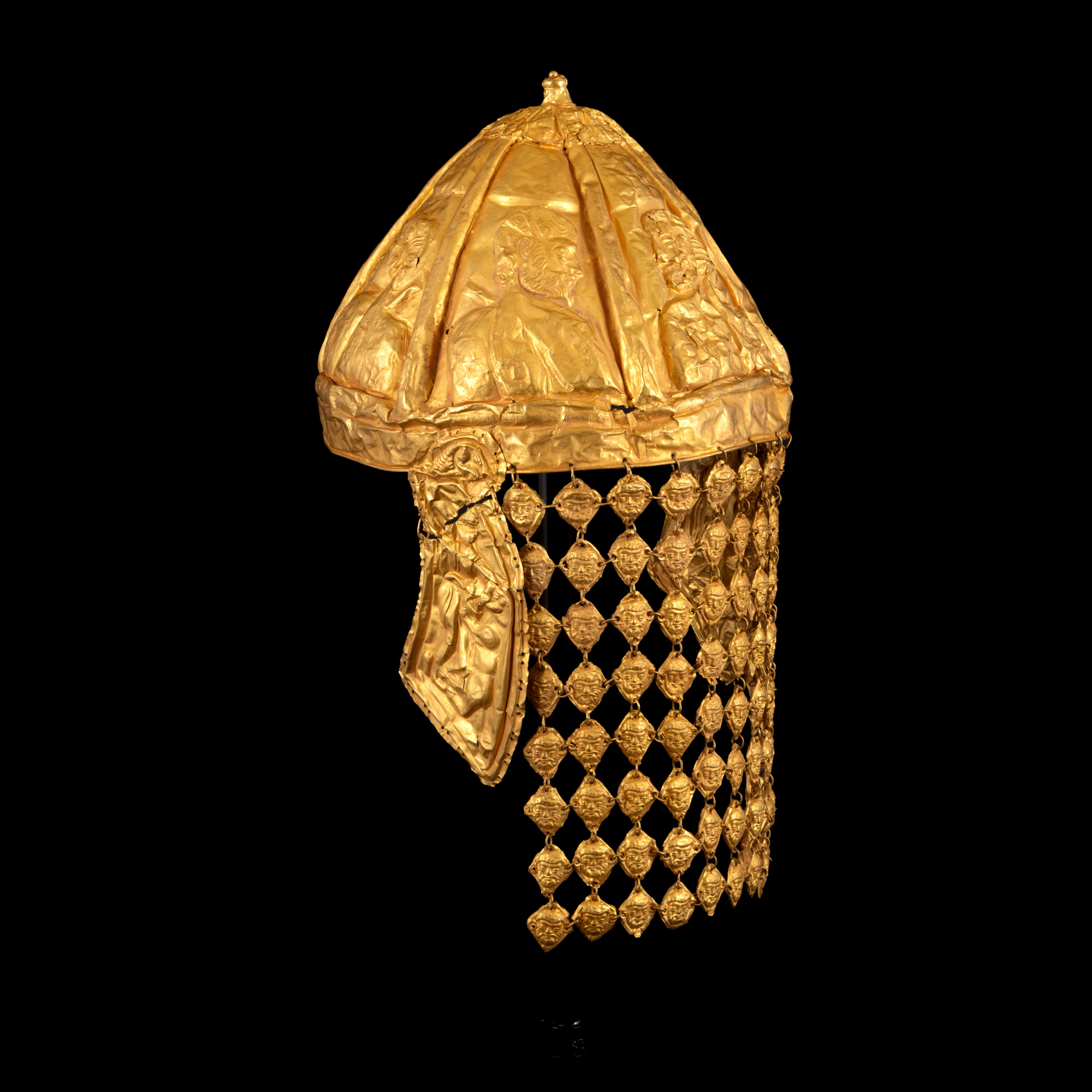
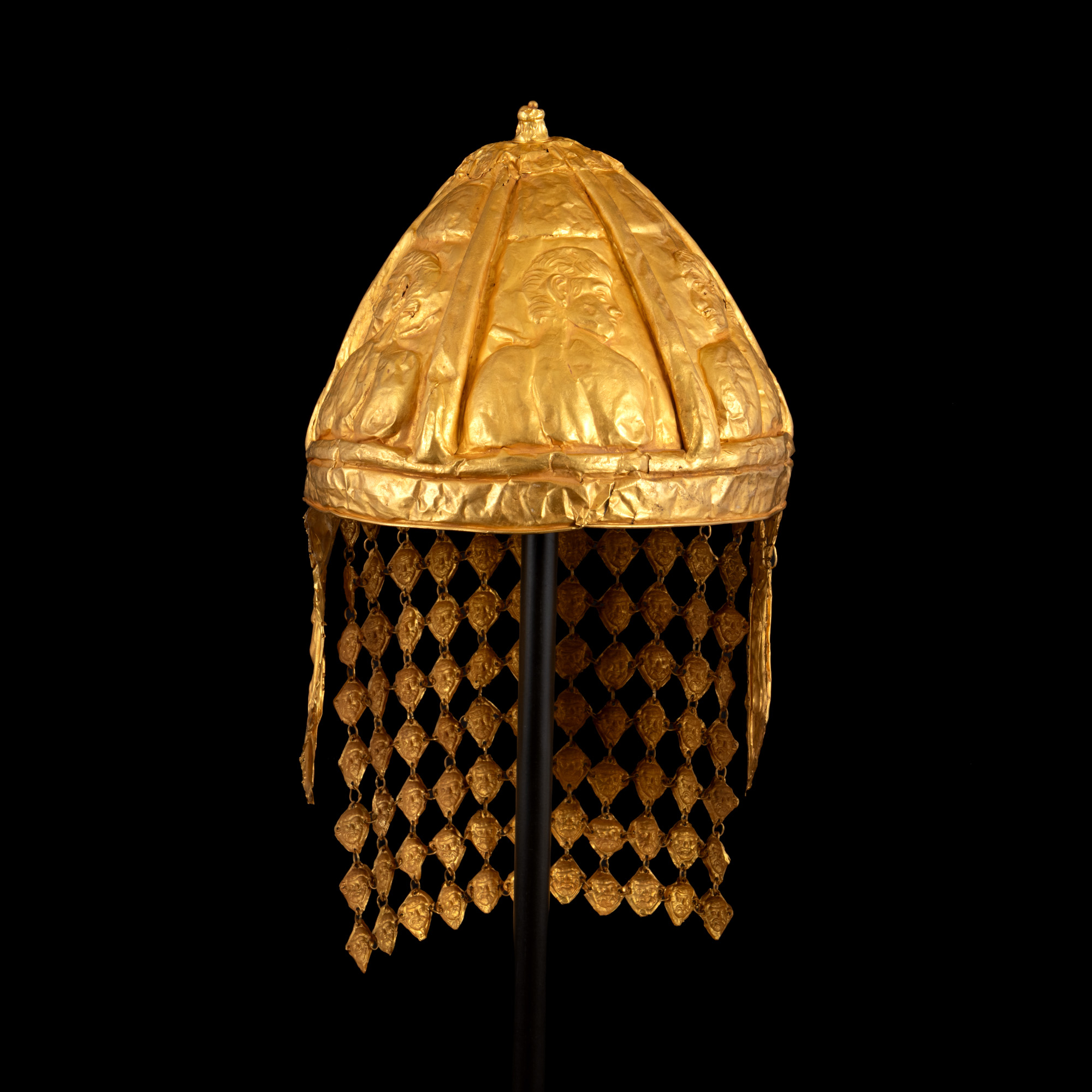
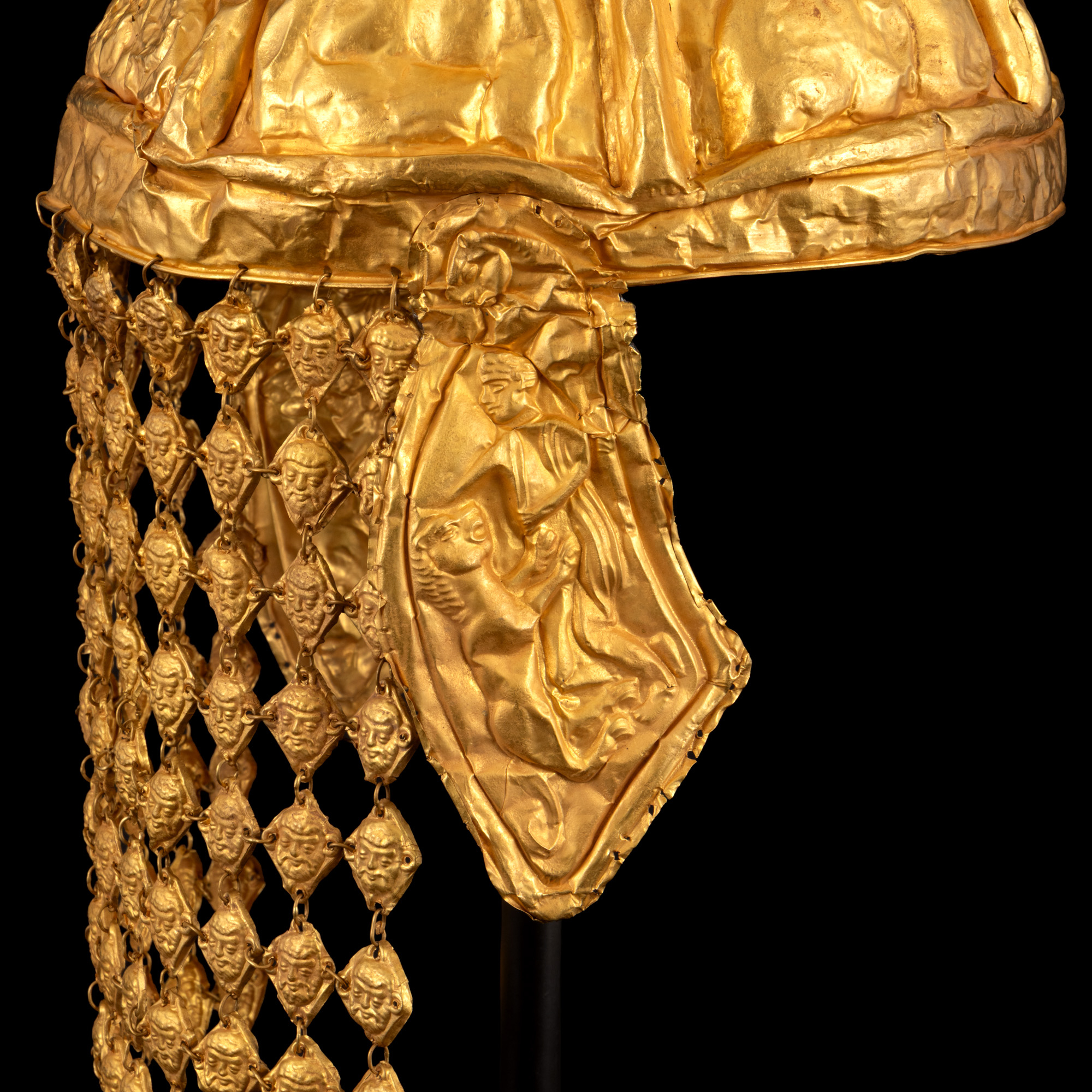
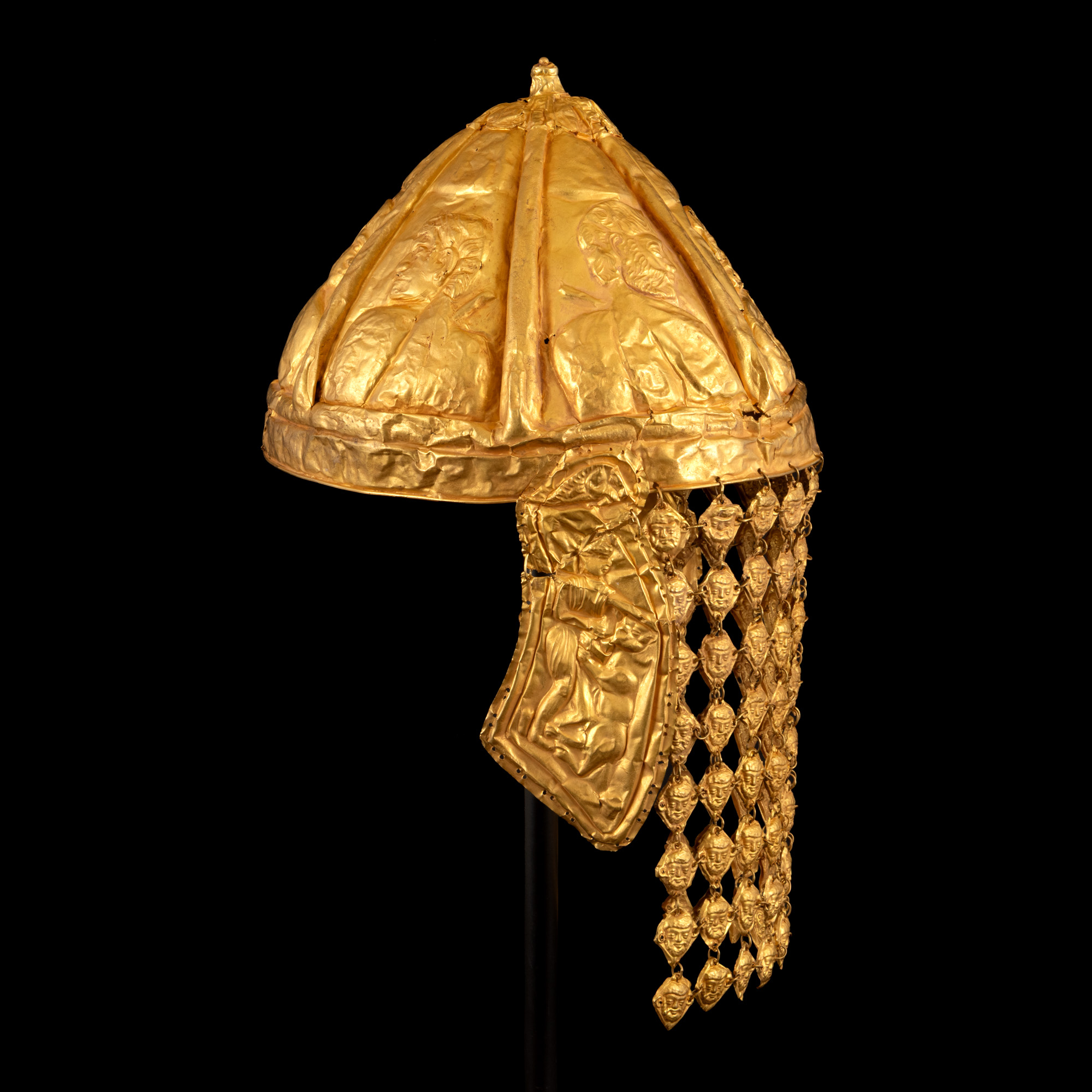
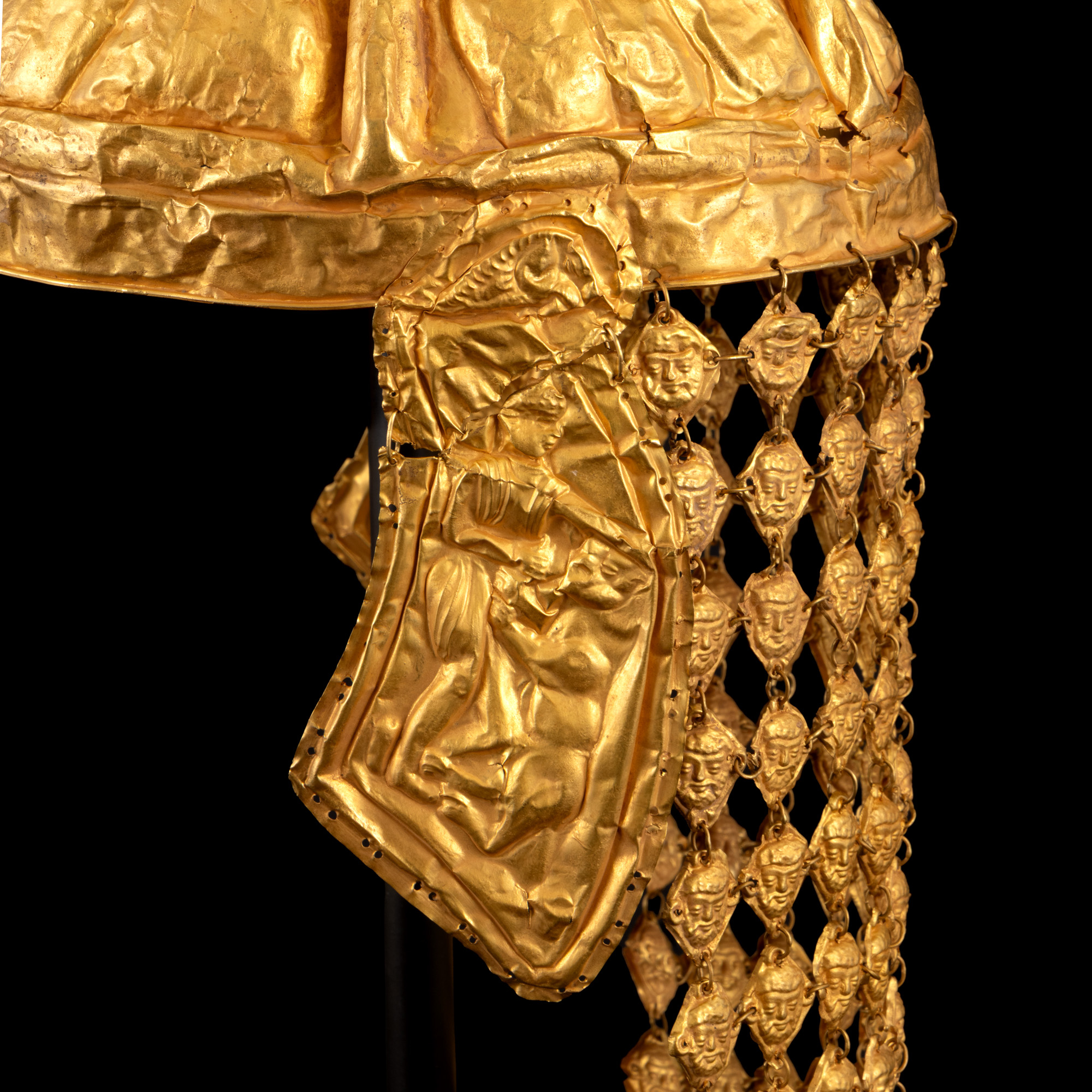
9. "Helmet with heroes" or "Hungarian helmet". Exceptional ceremonial helmet, made of 23k gold, Eurasian steppe (Black Sea basin), possibly Hellenistic, probably made starting from the 4th-2nd century BC, unique, comes from the collection of Dr. István Zelnik.
Начална цена
EUR 25.000
Продадено
EUR 115.000
Сесия
Вто, 31 март 2026 18:00
Препратки
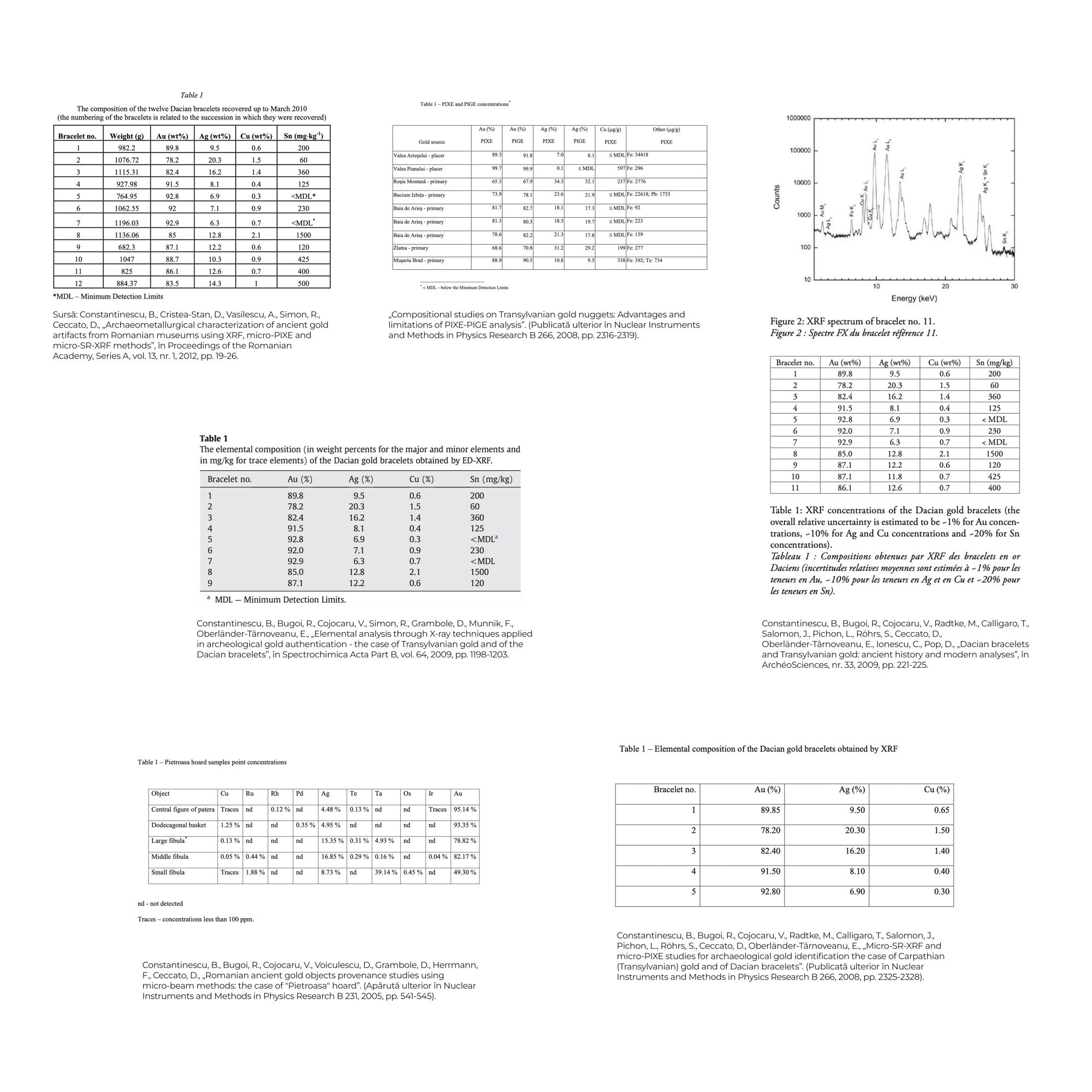
Oberländer-Târnoveanu, E., Oanță-Marghitu, R., et al. (coord.), "The Ancient Gold and Silver of Romania (Exhibition Catalog)", Conphys Publishing House, Râmnicu Vâlcea, 2014. Miclea, I., Florescu, R., "Transylvanian Treasures", Meridiane Publishing House, Bucharest, 1979. Spânu, D., "The Dacian Treasures. Creation in Precious Metals from Pre-Roman Dacia", Simetria Publishing House, Bucharest, 2012. Berciu, D., "Thracian-Getic Art", Archaeology Library series, Academy Publishing House of the Socialist Republic of Romania, Bucharest, 1969. Treister, Mikhail Y., "Hammering Techniques in Greek and Roman Jewellery and Toreutics", Colloquia Pontica series 8, Brill, Leiden-Boston, 2001. Gramatopol, Mihai, "Dacian and Roman Art and Archaeology", Sport-Turism Publishing House, Bucharest, 1982. Vasilescu, A., "The Art of the Dacians", Meridiane Publishing House, Bucharest, 1968. Popescu, G. C., et al., "Archaeometallurgical Characteristics of the Ancient Gold Artifacts from Romanian Territory", in Romanian Journal of Mineral Deposits, 2011. Davidescu, Mișu, "The Treasure of Hinova", Sport-Turism Publishing House, Bucharest, 1989. Rustoiu, Aurel, "Warriors and Prestigious Artisans in Pre-Roman Dacia", Mega Publishing House, Cluj-Napoca, 2002. Constantinescu, B., Bugoi, R., Cojocaru, V., Simon, R., Grambole, D., Munnik, F., Oberländer-Târnoveanu, E., "Elemental Analysis Through X-ray Techniques Applied in Archaeological Gold Authentication - The case of Transylvanian Gold and of the Dacian Bracelets", in Spectrochimica Acta Part B, vol. 64, 2009, pp. 1198-1203. "Project PN-II-ID-PCE-2011-3-0078. Archaeometallurgical Studies on Dacian Gold and Silver Using High-Performance X-Ray Spectrometry. Synthetic Scientific Report for the Period October 2011 - October 2016", National Institute of Physics and Nuclear Engineering "Horia Hulubei", 2016. Constantinescu, B., Cristea-Stan, D., Vasilescu, A., Simon, R., Ceccato, D., "Archaeometallurgical Characterization of Ancient Gold Artifacts from Romanian Museums Using XRF, Micro-PIXE and Micro-SR-XRF Methods", in Proceedings of the Romanian Academy, Series A, vol. 13, nr. 1, 2012, pp. 19-26. Constantinescu, B., Bugoi, R., Cojocaru, V., Radtke, M., Calligaro, T., Salomon, J., Pichon, L., Röhrs, S., Ceccato, D., Oberländer-Târnoveanu, E., Ionescu, C., Pop, D., "Dacian Bracelets and Transylvanian Gold: Ancient History and Modern Analyses", in ArchéoSciences, nr. 33, 2009, pp. 221-225. Constantinescu, B., Bugoi, R., Cojocaru, V., Voiculescu, D., Grambole, D., Herrmann, F., Ceccato, D., "Romanian Ancient Gold Objects Provenance Studies Using Micro-beam Methods: The case of "Pietroasa" Hoard". (Later in Nuclear Instruments and Methods in Physics Research B 231, 2005, pp. 541-545). Constantinescu, B., Bugoi, R., Cojocaru, V., Radtke, M., Calligaro, T., Salomon, J., Pichon, L., Röhrs, S., Ceccato, D., Oberländer-Târnoveanu, E., "Micro-SR-XRF and Micro-PIXE Studies for Archaeological Gold Identification the case of Carpathian (Transylvanian) Gold and of Dacian Bracelets". (Later in Nuclear Instruments and Methods in Physics Research B 266, 2008, pp. 2325-2328). Bugoi, R., Cojocaru, V., Constantinescu, B., Calligaro, T., Pichon, L., Röhrs, S., Salomon, J., "Compositional Studies on Transylvanian Gold Nuggets: Advantages and Limitations of PIXE-PIGE Analysis". (Later in Nuclear Instruments and Methods in Physics Research B 266, 2008, pp. 2316-2319).
Размери
weight 278 g
Описание
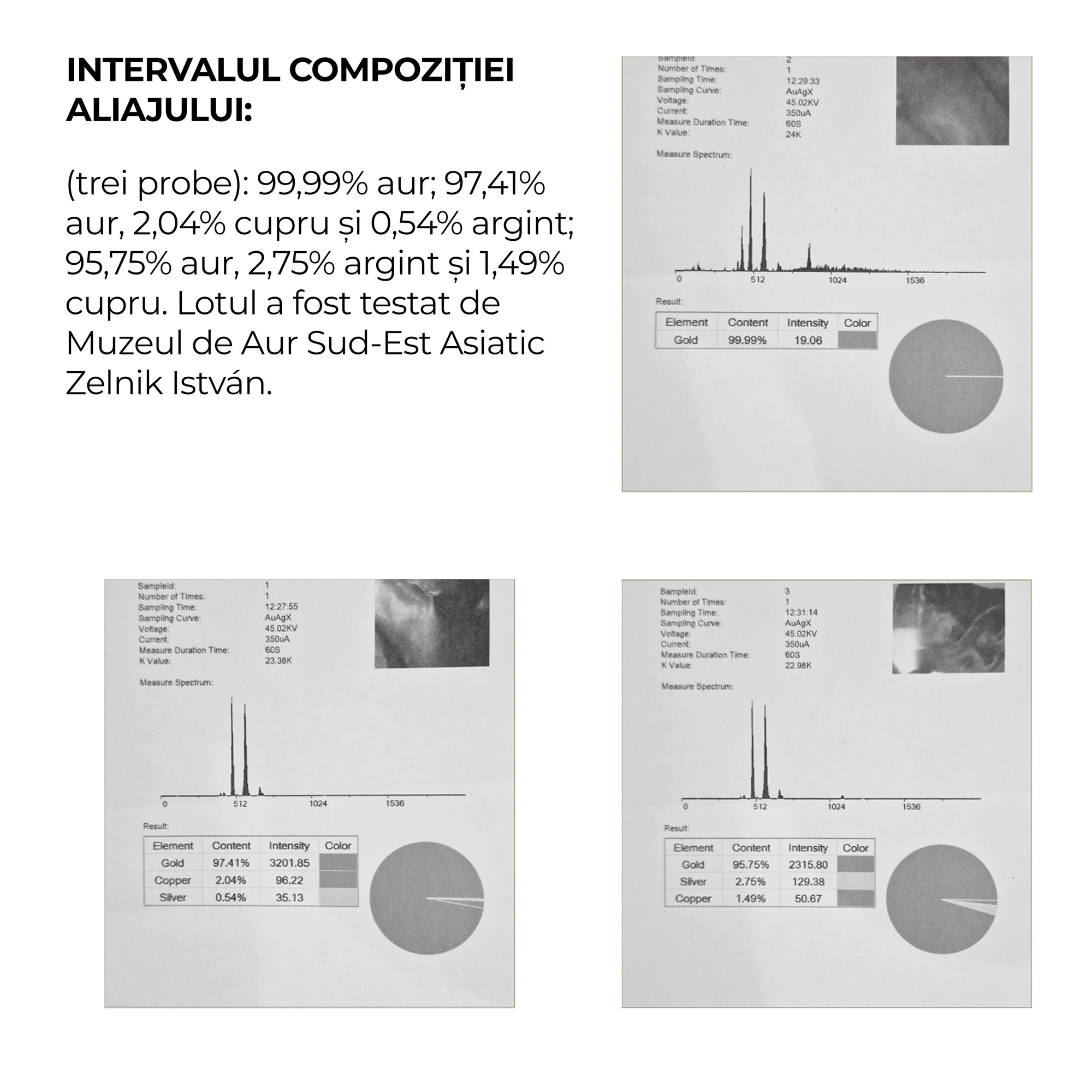
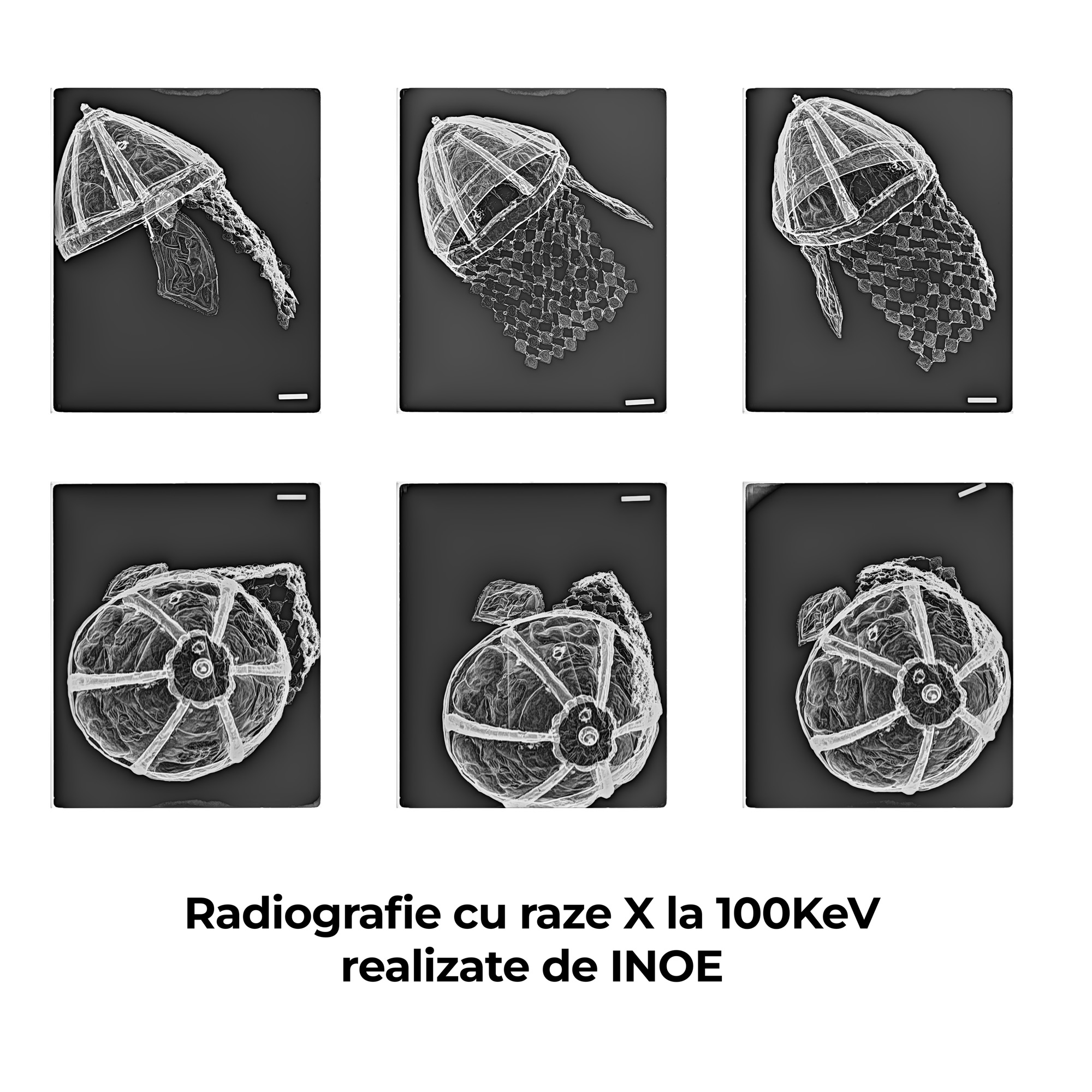
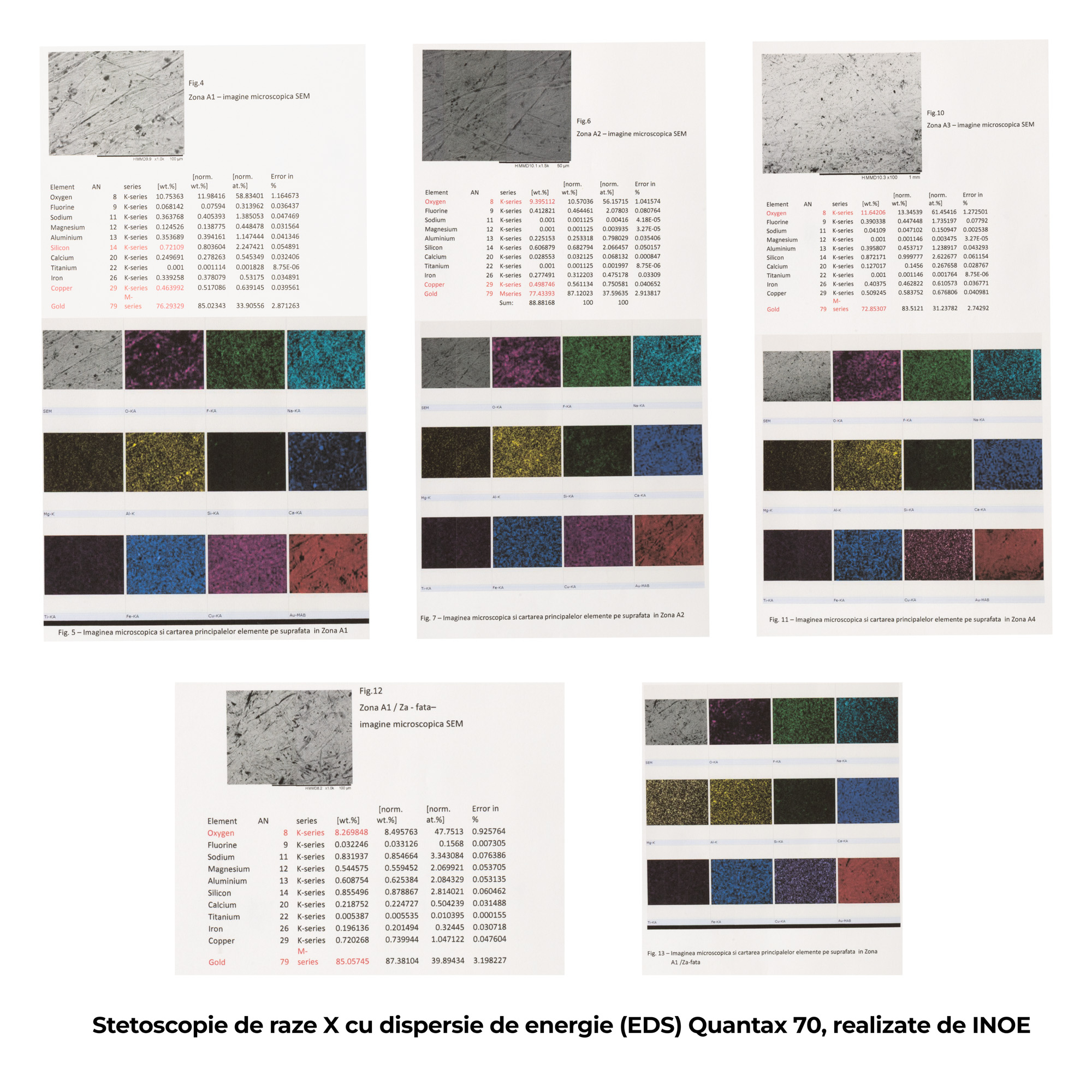
beating, chasing, chiselling; measurements made by Zelnik István Southeast Asian Gold Museum: 99.99% gold; 97.41% gold, 2.04% copper and 0.54% silver; 95.75% gold, 2.75% silver and 1.49% copper; measurements made by EDF type INOE: 39.18% - 85.05% gold; 0.46% - 1.11% copper
Информация от изследване
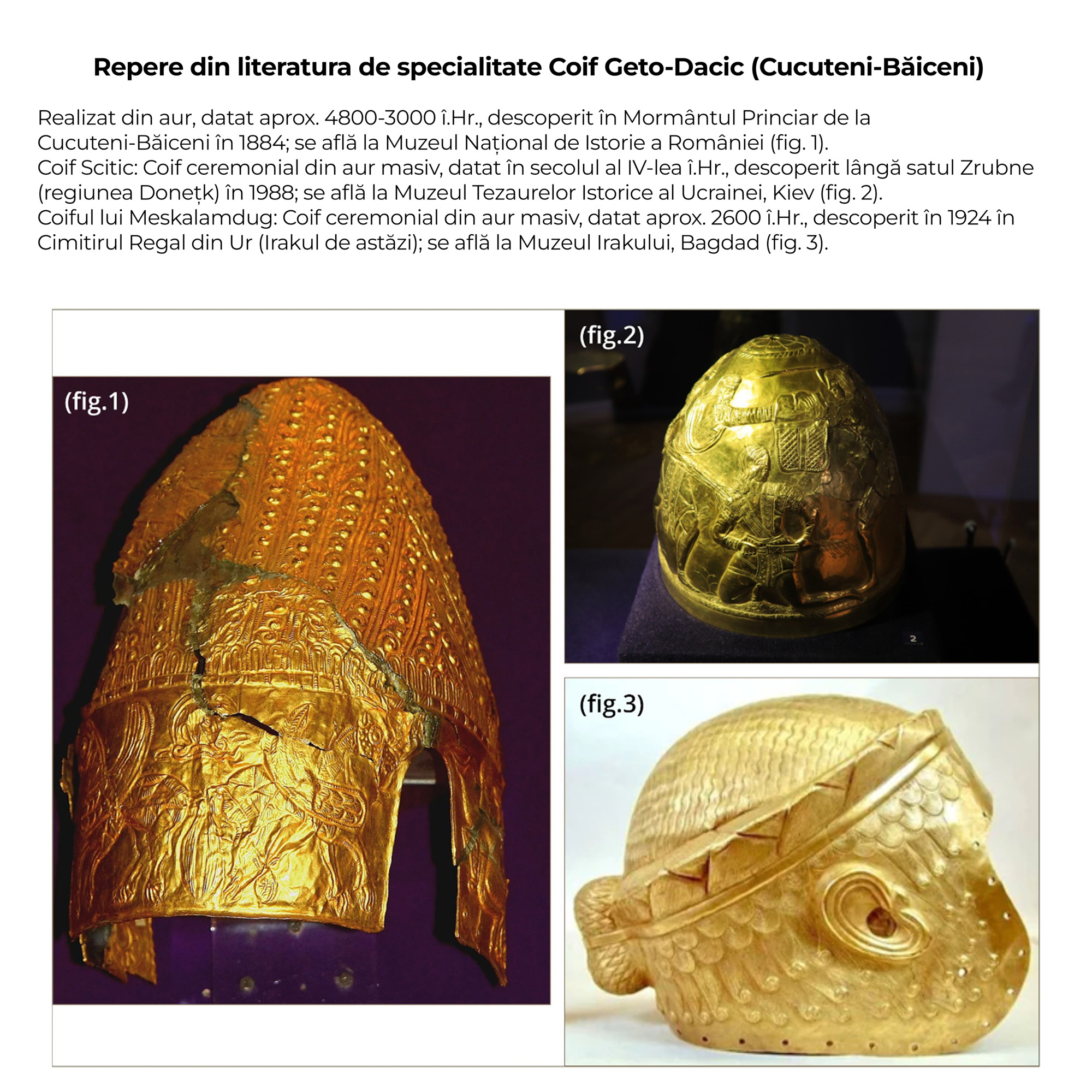
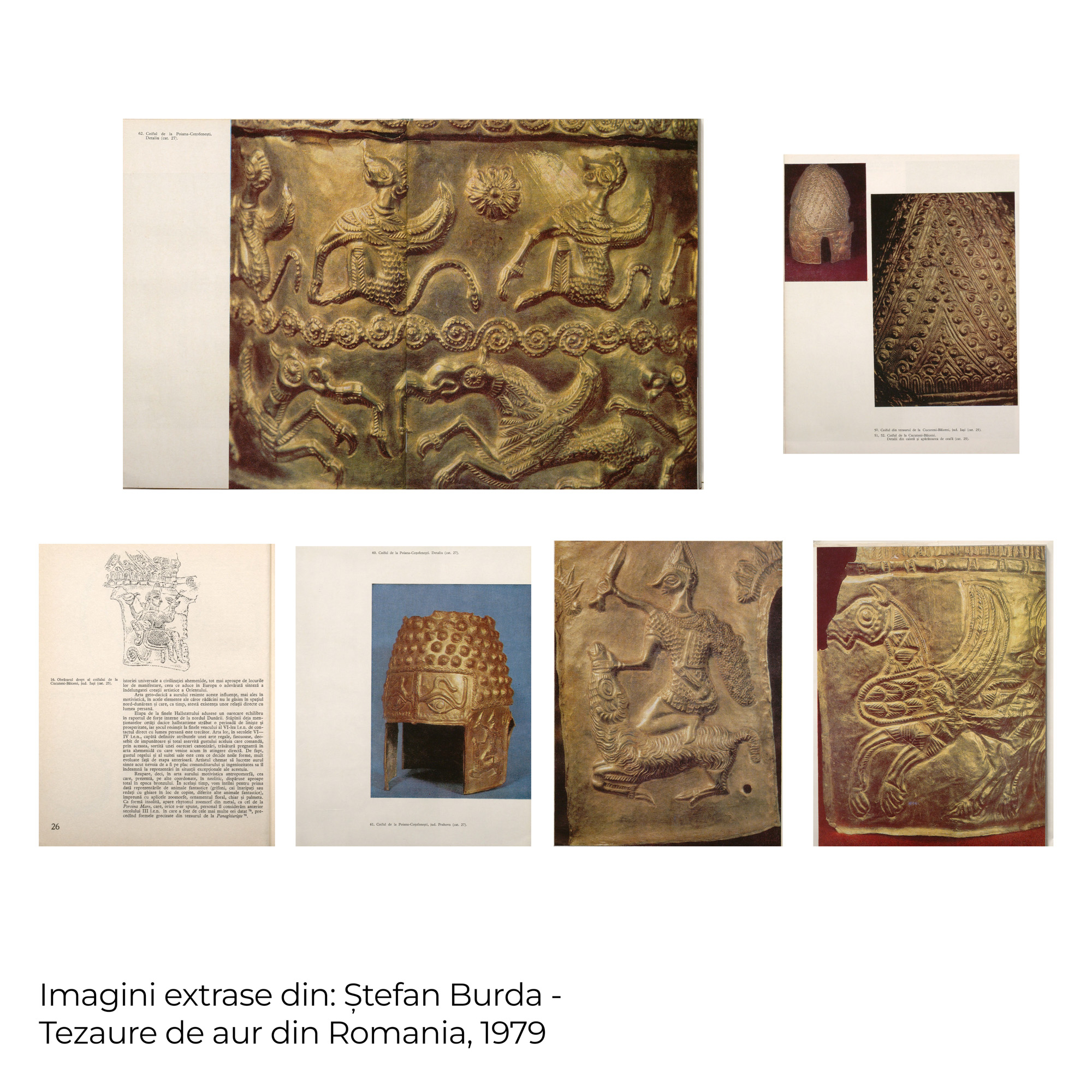
Gold helmets were frequently deposited in tombs as funerary offerings destined for the elites or dedicated to deities in sacred spaces. Having too fragile a structure to function as defensive armor, they served a ritualistic role, symbolizing rank and divine protection. A reference is precisely the gold helmet from Coțofenești, dated around 400 BC, discovered in 1929. Subsequent archaeological investigations have established that the artifact was not part of a treasure or funerary ensemble, but was associated with a native Getae-Dacian or north Thracian settlement. The Thracians occupied a strategic position at the western end of the Eurasian steppe, facilitating contact with nomadic populations, such as the Scythians, whose military prowess and animal art significantly influenced Thracian culture. Simultaneously, Thracian elites maintained commercial and cultural exchanges with the Greek colonies of Pontus Euxinus, fusing Hellenic motifs with local ritual traditions. The Coțofenești helmet, through its repoussé technique ornamentation and symbolic imagery, reflects this cultural convergence — articulating the link between the Scythian space of the steppes and the Mediterranean sphere. An additional parallel can be drawn with the massive gold Scythian helmet (4th century BC), preserved in Kiev. Like the Coțofenești piece, this represented a ceremonial emblem of the coercive power of the elites. Both artifacts underline the Eurasian tradition of depositing prestige items as offerings, highlighting the interactions between Scythian nomads and settled Getae-Dacian communities in the Balkans. This tradition originates in the Gold Helmet of Meskalamdug (c. 2600 BC), discovered in the Royal Cemetery of Ur. Although separated by more than two millennia, the use of gold helmets as regalia underscores a symbolic continuity of power in Eurasia. While the Thracian and Scythian exemplars emerge in specific cultural settings, they participate in a legacy of insignia of power initially articulated in Mesopotamia and subsequently transmitted throughout the ancient world. In the opinion of Prof. univ. dr. Carol Căpiță, assuming this helmet was constructed in stages, probably the first phase was that of the skullcap, datable (on stylistic grounds) between the 4th-1st century BC - most likely a parade function piece - possibly decorated with a horse's tail, presenting clear analogies in the Scythian world, especially in southern Ukraine and Crimea (although horse-tail-decorated helmets appear from the Bronze Age). Then, the piece is remodeled by attaching the cheek pieces (from another helmet, probably produced by the same workshop, since the fastening holes on the cheeks are not found on the lower edge of the skullcap); this is when the helmet most likely becomes a funerary piece. At some point (probably starting from the 18th century), the piece is put back into circulation - large collections of Scythian antiquities begin to be established starting with Peter the Great - and ends up in a specialized context (private collection or, most likely, at an antiquities dealer). Now the neck protector is added, and this to adapt it to the prevailing helmet style of the time (Central Asian style, of Mongol inspiration); the adaptation is made with the help of antique pieces that the owner at the time had access to (hence the hypothesis that it would be a dealer or a collector). The piece becomes unique precisely through its very illustrative history with regard to the appreciation of ancient pieces. The helmet seems to be one of the pieces that incorporate a specific set of mentalities related to the excellence of objects that define the status of the hero or leader. Both in the Central Asian and in the Nordic horizon, one of the marks of the hero is that he possesses weapons that have their own history: the sword was once wielded by a hero from past times, the armor was worn by another in a now legendary battle; the hero has his qualities, but these are potentiated by the objects he wears and thus assures him a special genealogy etc. Likewise, the leader manifests his rights of authority through the possession and display of pieces that attest his position in a genealogy that reaffirms his legitimacy. Therefore the helmet, at first glance, possibly for parade or ceremony, seems to be made up of 3 parts namely skullcap, cheek pieces and neck guard. The appliques of the dorsal part, in relation to the shape of the skullcap, seem to be early, preliminarily datable in the 2nd-1st century BC, while the cheek pieces seem to have been added later to the architecture of the helmet. These do not indicate a real functionality, given their immobility (which might suggest their possible reuse from an older helmet). The hypothesis of its use for parade purposes is debatable, relative to the fragility of the helmet, but it is possible that it could have been reinforced on a support skin. The manufacturing technique is the beating and chiseling of the gold foil, including for the hammering of the decorative scenes that adorn the helmet - armed hunters/heroes, possibly caught in ritual fights with lions (but possibly also with wolves/bears). The represented iconography suggests Hellenistic origin, but possibly barbarized, the helmet/parts of the helmet could have been made in a workshop of a secondary Hellenistic locality (or in an artistic manner of a later period, synthesizing). It should be noted that certain typological analogies for the cheek pieces and for the dorsal guard could point towards the Hellenistic environment in the Bactrian area of Central Asia, while the skullcap finds a reference point among the helmets of the Kushan Empire, which replaced the Bactrian kingdom as a regional power, but a precise location of the helmet's making and a precise periodization of the stages of its construction and decoration has not been possible, given the scarcity of gold landmarks with which it can be compared. Based on the analysis and results of other similar investigations carried out by Romanian researchers, only the Băiceni-Cucuteni helmet is characterized, in places, by a gold title that reaches a maximum of 95%. Finally, both the cultural attribution and the chronology remain hypothetical, in the absence of documented analogies. This is not atypical, given the extreme rarity of golden helmets and the sporadic documentation of artifacts from the Eurasian steppes. The preservation, stylistic rigor, and uncompromising accuracy of execution argue for considerable antiquity. However, in the absence of direct comparanda, a precise attribution - both chronologically and geographically - cannot yet be definitively formulated.
ПРОИЗХОД
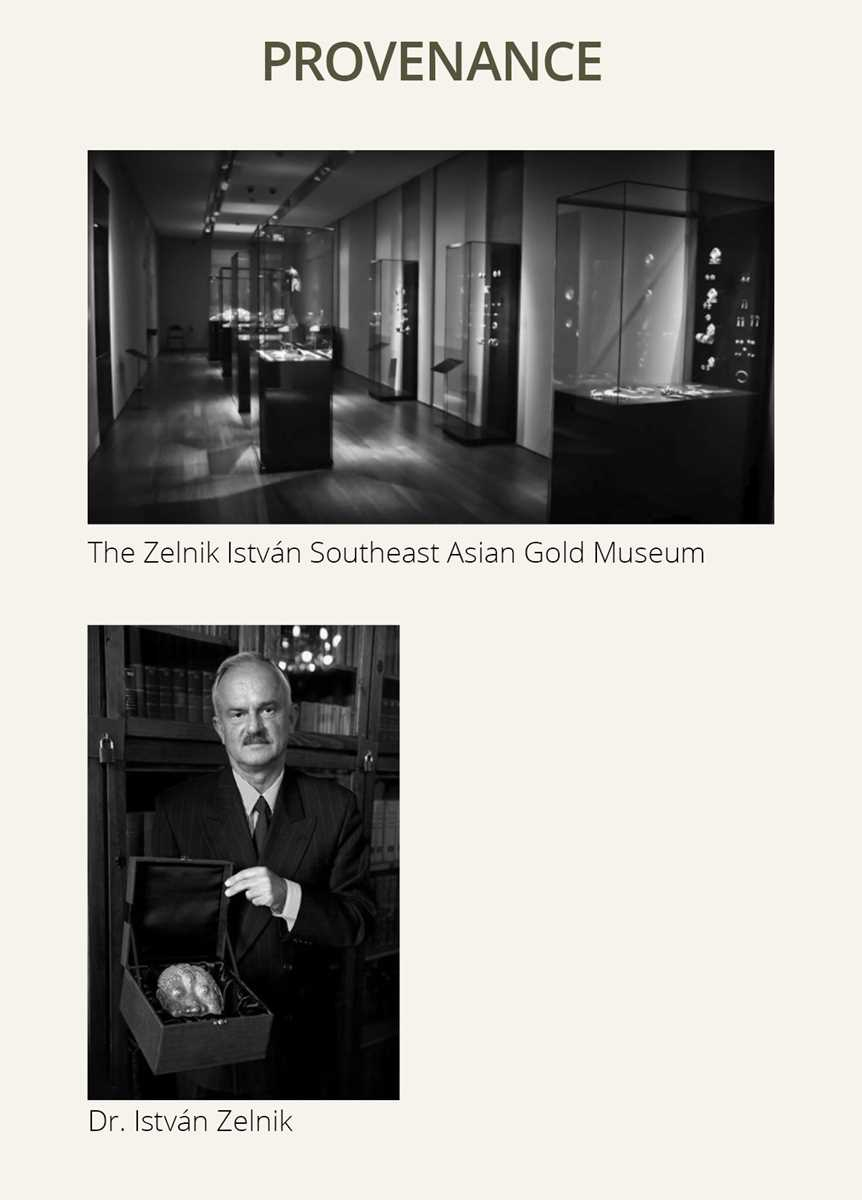
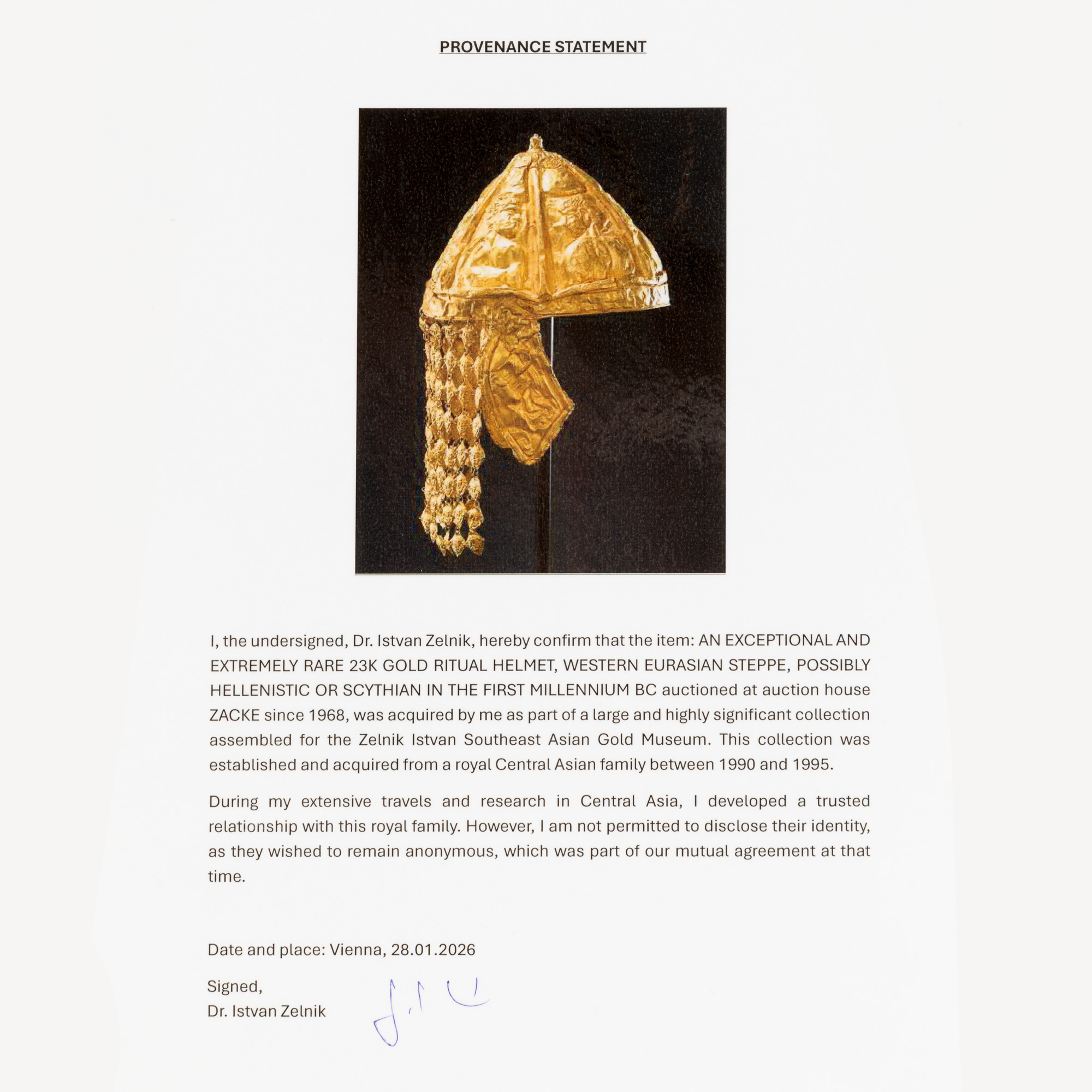
1970s, Iran. A royal family from Central Asia, which would have purchased from Iran (approx. 1970-1990), according to the statement of Dr. István Zelnik. Dr. István Zelnik's collection (1990/5-2011). The Heritage of the "István Zelnik" Collection Museum (2011-2014). Private foundation established specifically for selling some objects from the museum's heritage (2014-2025). Dr. István Zelnik, former high-ranking diplomat and president of the Research Institute on the South and South-East Asian Region, from Hungary. Dr. Zelnik is one of the most important European collectors of Asian art and antiques, representing the second generation of a family with a tradition in collecting. His museum once housed one of the largest private collections of gold artifacts from Asia, and his name is known among specialists and specialized institutions.
ДОПЪЛНИТЕЛНА ИНФОРМАЦИЯ
За разяснения относно процедурата по наддаване, разходите при спечелване, условията за гаранция, плащане и вземане на спечеления лот, препоръчваме внимателно четене/препрочитане на Правилника за наддаване.
За допълнителна информация относно лота и търга, моля свържете се с Отдела на арт консултантите.
Detalii
ДОПЪЛНИТЕЛНА ИНФОРМАЦИЯ
За разяснения относно процедурата по наддаване, разходите при спечелване, условията за гаранция, плащане и вземане на спечеления лот, препоръчваме внимателно четене/препрочитане на Правилника за наддаване.
За допълнителна информация относно лота и търга, моля свържете се с Отдела на арт консултантите.
Препратки
Oberländer-Târnoveanu, E., Oanță-Marghitu, R., et al. (coord.), "The Ancient Gold and Silver of Romania (Exhibition Catalog)", Conphys Publishing House, Râmnicu Vâlcea, 2014. Miclea, I., Florescu, R., "Transylvanian Treasures", Meridiane Publishing House, Bucharest, 1979. Spânu, D., "The Dacian Treasures. Creation in Precious Metals from Pre-Roman Dacia", Simetria Publishing House, Bucharest, 2012. Berciu, D., "Thracian-Getic Art", Archaeology Library series, Academy Publishing House of the Socialist Republic of Romania, Bucharest, 1969. Treister, Mikhail Y., "Hammering Techniques in Greek and Roman Jewellery and Toreutics", Colloquia Pontica series 8, Brill, Leiden-Boston, 2001. Gramatopol, Mihai, "Dacian and Roman Art and Archaeology", Sport-Turism Publishing House, Bucharest, 1982. Vasilescu, A., "The Art of the Dacians", Meridiane Publishing House, Bucharest, 1968. Popescu, G. C., et al., "Archaeometallurgical Characteristics of the Ancient Gold Artifacts from Romanian Territory", in Romanian Journal of Mineral Deposits, 2011. Davidescu, Mișu, "The Treasure of Hinova", Sport-Turism Publishing House, Bucharest, 1989. Rustoiu, Aurel, "Warriors and Prestigious Artisans in Pre-Roman Dacia", Mega Publishing House, Cluj-Napoca, 2002. Constantinescu, B., Bugoi, R., Cojocaru, V., Simon, R., Grambole, D., Munnik, F., Oberländer-Târnoveanu, E., "Elemental Analysis Through X-ray Techniques Applied in Archaeological Gold Authentication - The case of Transylvanian Gold and of the Dacian Bracelets", in Spectrochimica Acta Part B, vol. 64, 2009, pp. 1198-1203. "Project PN-II-ID-PCE-2011-3-0078. Archaeometallurgical Studies on Dacian Gold and Silver Using High-Performance X-Ray Spectrometry. Synthetic Scientific Report for the Period October 2011 - October 2016", National Institute of Physics and Nuclear Engineering "Horia Hulubei", 2016. Constantinescu, B., Cristea-Stan, D., Vasilescu, A., Simon, R., Ceccato, D., "Archaeometallurgical Characterization of Ancient Gold Artifacts from Romanian Museums Using XRF, Micro-PIXE and Micro-SR-XRF Methods", in Proceedings of the Romanian Academy, Series A, vol. 13, nr. 1, 2012, pp. 19-26. Constantinescu, B., Bugoi, R., Cojocaru, V., Radtke, M., Calligaro, T., Salomon, J., Pichon, L., Röhrs, S., Ceccato, D., Oberländer-Târnoveanu, E., Ionescu, C., Pop, D., "Dacian Bracelets and Transylvanian Gold: Ancient History and Modern Analyses", in ArchéoSciences, nr. 33, 2009, pp. 221-225. Constantinescu, B., Bugoi, R., Cojocaru, V., Voiculescu, D., Grambole, D., Herrmann, F., Ceccato, D., "Romanian Ancient Gold Objects Provenance Studies Using Micro-beam Methods: The case of "Pietroasa" Hoard". (Later in Nuclear Instruments and Methods in Physics Research B 231, 2005, pp. 541-545). Constantinescu, B., Bugoi, R., Cojocaru, V., Radtke, M., Calligaro, T., Salomon, J., Pichon, L., Röhrs, S., Ceccato, D., Oberländer-Târnoveanu, E., "Micro-SR-XRF and Micro-PIXE Studies for Archaeological Gold Identification the case of Carpathian (Transylvanian) Gold and of Dacian Bracelets". (Later in Nuclear Instruments and Methods in Physics Research B 266, 2008, pp. 2325-2328). Bugoi, R., Cojocaru, V., Constantinescu, B., Calligaro, T., Pichon, L., Röhrs, S., Salomon, J., "Compositional Studies on Transylvanian Gold Nuggets: Advantages and Limitations of PIXE-PIGE Analysis". (Later in Nuclear Instruments and Methods in Physics Research B 266, 2008, pp. 2316-2319).
Размери
weight 278 g
Описание
beating, chasing, chiselling; measurements made by Zelnik István Southeast Asian Gold Museum: 99.99% gold; 97.41% gold, 2.04% copper and 0.54% silver; 95.75% gold, 2.75% silver and 1.49% copper; measurements made by EDF type INOE: 39.18% - 85.05% gold; 0.46% - 1.11% copper
Информация от изследване
Gold helmets were frequently deposited in tombs as funerary offerings destined for the elites or dedicated to deities in sacred spaces. Having too fragile a structure to function as defensive armor, they served a ritualistic role, symbolizing rank and divine protection. A reference is precisely the gold helmet from Coțofenești, dated around 400 BC, discovered in 1929. Subsequent archaeological investigations have established that the artifact was not part of a treasure or funerary ensemble, but was associated with a native Getae-Dacian or north Thracian settlement. The Thracians occupied a strategic position at the western end of the Eurasian steppe, facilitating contact with nomadic populations, such as the Scythians, whose military prowess and animal art significantly influenced Thracian culture. Simultaneously, Thracian elites maintained commercial and cultural exchanges with the Greek colonies of Pontus Euxinus, fusing Hellenic motifs with local ritual traditions. The Coțofenești helmet, through its repoussé technique ornamentation and symbolic imagery, reflects this cultural convergence — articulating the link between the Scythian space of the steppes and the Mediterranean sphere. An additional parallel can be drawn with the massive gold Scythian helmet (4th century BC), preserved in Kiev. Like the Coțofenești piece, this represented a ceremonial emblem of the coercive power of the elites. Both artifacts underline the Eurasian tradition of depositing prestige items as offerings, highlighting the interactions between Scythian nomads and settled Getae-Dacian communities in the Balkans. This tradition originates in the Gold Helmet of Meskalamdug (c. 2600 BC), discovered in the Royal Cemetery of Ur. Although separated by more than two millennia, the use of gold helmets as regalia underscores a symbolic continuity of power in Eurasia. While the Thracian and Scythian exemplars emerge in specific cultural settings, they participate in a legacy of insignia of power initially articulated in Mesopotamia and subsequently transmitted throughout the ancient world. In the opinion of Prof. univ. dr. Carol Căpiță, assuming this helmet was constructed in stages, probably the first phase was that of the skullcap, datable (on stylistic grounds) between the 4th-1st century BC - most likely a parade function piece - possibly decorated with a horse's tail, presenting clear analogies in the Scythian world, especially in southern Ukraine and Crimea (although horse-tail-decorated helmets appear from the Bronze Age). Then, the piece is remodeled by attaching the cheek pieces (from another helmet, probably produced by the same workshop, since the fastening holes on the cheeks are not found on the lower edge of the skullcap); this is when the helmet most likely becomes a funerary piece. At some point (probably starting from the 18th century), the piece is put back into circulation - large collections of Scythian antiquities begin to be established starting with Peter the Great - and ends up in a specialized context (private collection or, most likely, at an antiquities dealer). Now the neck protector is added, and this to adapt it to the prevailing helmet style of the time (Central Asian style, of Mongol inspiration); the adaptation is made with the help of antique pieces that the owner at the time had access to (hence the hypothesis that it would be a dealer or a collector). The piece becomes unique precisely through its very illustrative history with regard to the appreciation of ancient pieces. The helmet seems to be one of the pieces that incorporate a specific set of mentalities related to the excellence of objects that define the status of the hero or leader. Both in the Central Asian and in the Nordic horizon, one of the marks of the hero is that he possesses weapons that have their own history: the sword was once wielded by a hero from past times, the armor was worn by another in a now legendary battle; the hero has his qualities, but these are potentiated by the objects he wears and thus assures him a special genealogy etc. Likewise, the leader manifests his rights of authority through the possession and display of pieces that attest his position in a genealogy that reaffirms his legitimacy. Therefore the helmet, at first glance, possibly for parade or ceremony, seems to be made up of 3 parts namely skullcap, cheek pieces and neck guard. The appliques of the dorsal part, in relation to the shape of the skullcap, seem to be early, preliminarily datable in the 2nd-1st century BC, while the cheek pieces seem to have been added later to the architecture of the helmet. These do not indicate a real functionality, given their immobility (which might suggest their possible reuse from an older helmet). The hypothesis of its use for parade purposes is debatable, relative to the fragility of the helmet, but it is possible that it could have been reinforced on a support skin. The manufacturing technique is the beating and chiseling of the gold foil, including for the hammering of the decorative scenes that adorn the helmet - armed hunters/heroes, possibly caught in ritual fights with lions (but possibly also with wolves/bears). The represented iconography suggests Hellenistic origin, but possibly barbarized, the helmet/parts of the helmet could have been made in a workshop of a secondary Hellenistic locality (or in an artistic manner of a later period, synthesizing). It should be noted that certain typological analogies for the cheek pieces and for the dorsal guard could point towards the Hellenistic environment in the Bactrian area of Central Asia, while the skullcap finds a reference point among the helmets of the Kushan Empire, which replaced the Bactrian kingdom as a regional power, but a precise location of the helmet's making and a precise periodization of the stages of its construction and decoration has not been possible, given the scarcity of gold landmarks with which it can be compared. Based on the analysis and results of other similar investigations carried out by Romanian researchers, only the Băiceni-Cucuteni helmet is characterized, in places, by a gold title that reaches a maximum of 95%. Finally, both the cultural attribution and the chronology remain hypothetical, in the absence of documented analogies. This is not atypical, given the extreme rarity of golden helmets and the sporadic documentation of artifacts from the Eurasian steppes. The preservation, stylistic rigor, and uncompromising accuracy of execution argue for considerable antiquity. However, in the absence of direct comparanda, a precise attribution - both chronologically and geographically - cannot yet be definitively formulated.
ПРОИЗХОД
1970s, Iran. A royal family from Central Asia, which would have purchased from Iran (approx. 1970-1990), according to the statement of Dr. István Zelnik. Dr. István Zelnik's collection (1990/5-2011). The Heritage of the "István Zelnik" Collection Museum (2011-2014). Private foundation established specifically for selling some objects from the museum's heritage (2014-2025). Dr. István Zelnik, former high-ranking diplomat and president of the Research Institute on the South and South-East Asian Region, from Hungary. Dr. Zelnik is one of the most important European collectors of Asian art and antiques, representing the second generation of a family with a tradition in collecting. His museum once housed one of the largest private collections of gold artifacts from Asia, and his name is known among specialists and specialized institutions.
Алтернативни лотове
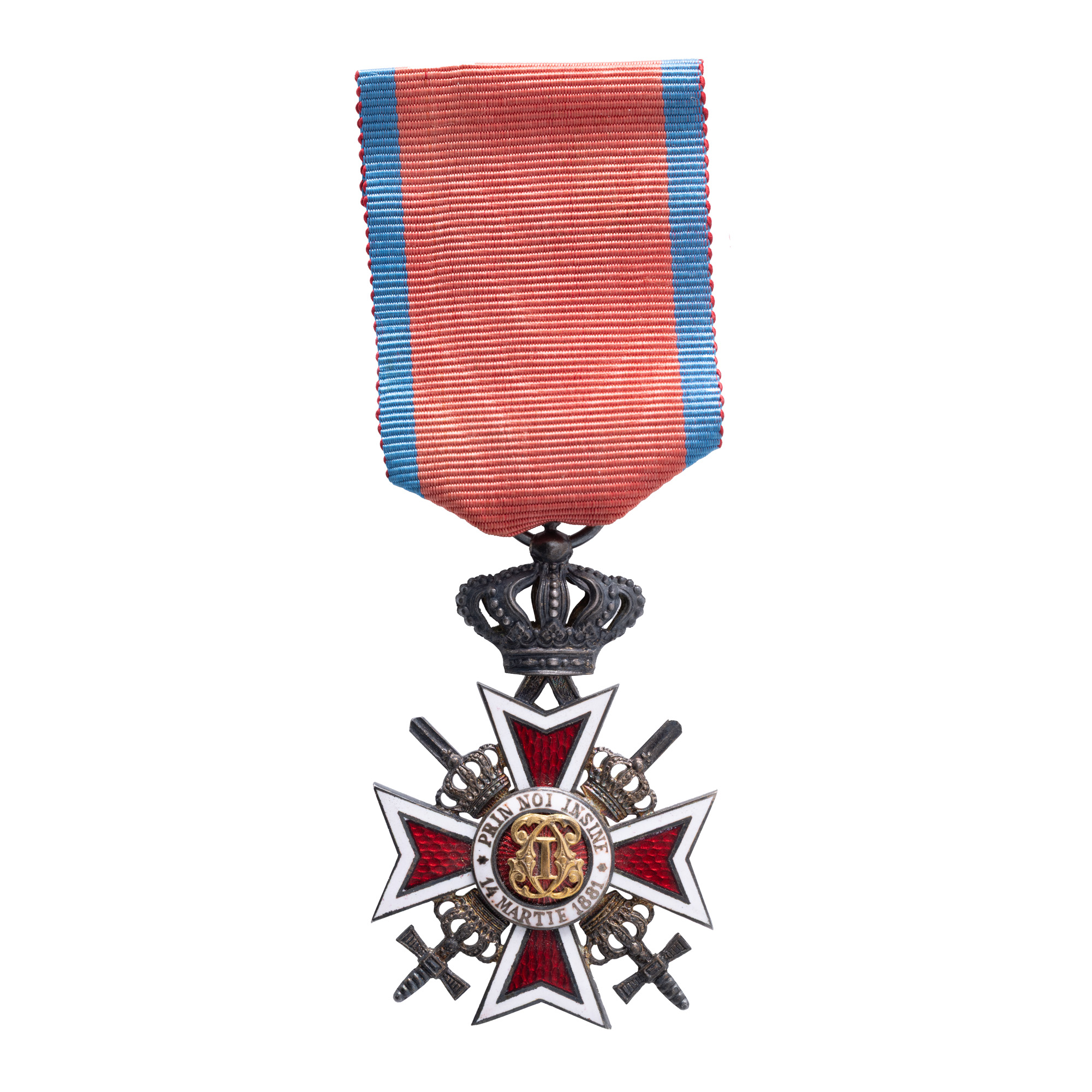
170. "The Order of the 'Crown of Romania', with swords, Military Virtue Ribbon"
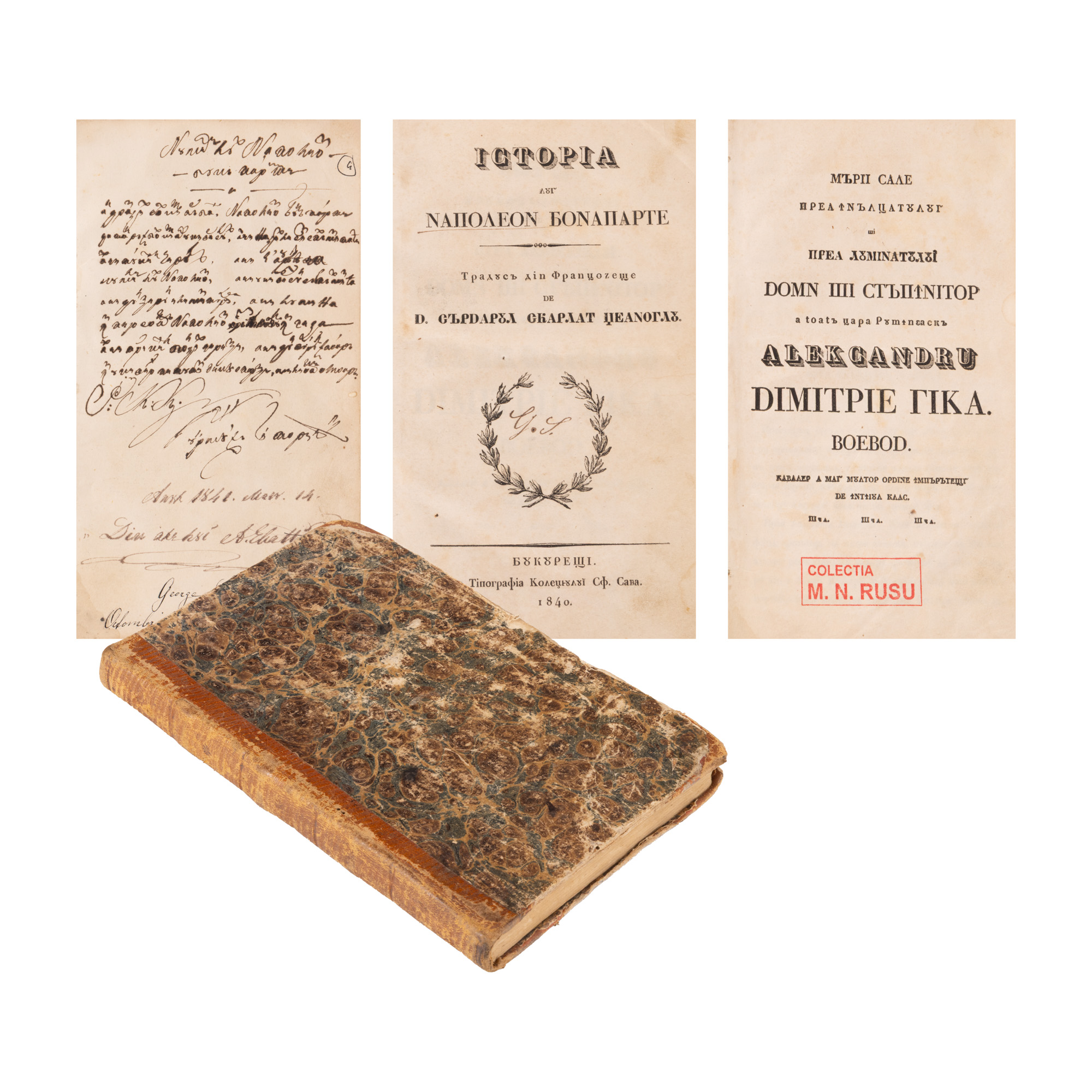
121. "History of Napoleon Bonaparte", translated from French by serdar Scarlat Geanoglu, Bucharest, 1840, with ex libris
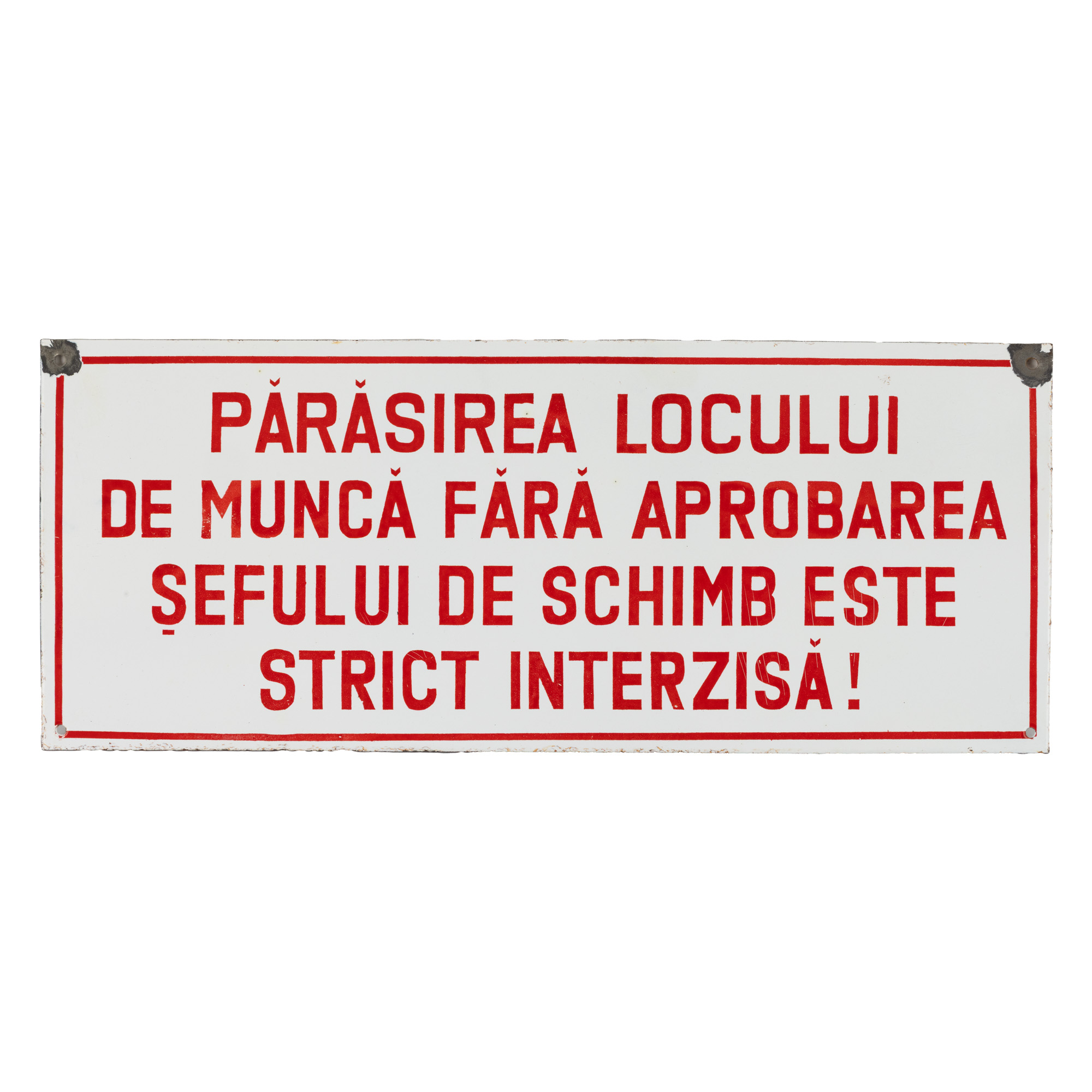
297. Enamelled board of work protection, "Leaving the workplace without the approval of the shift manager is strictly prohibited!", cca. 1980