
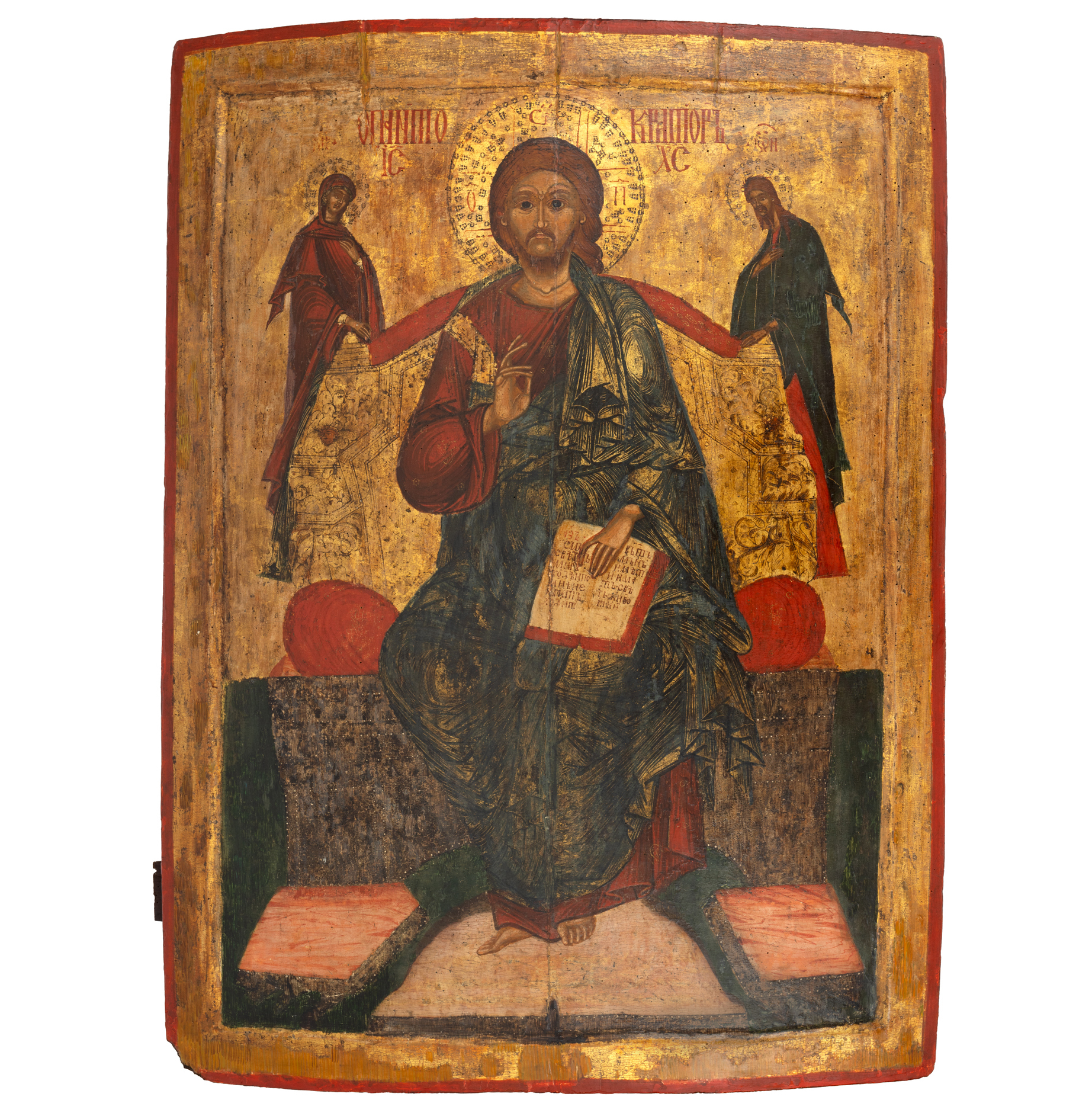
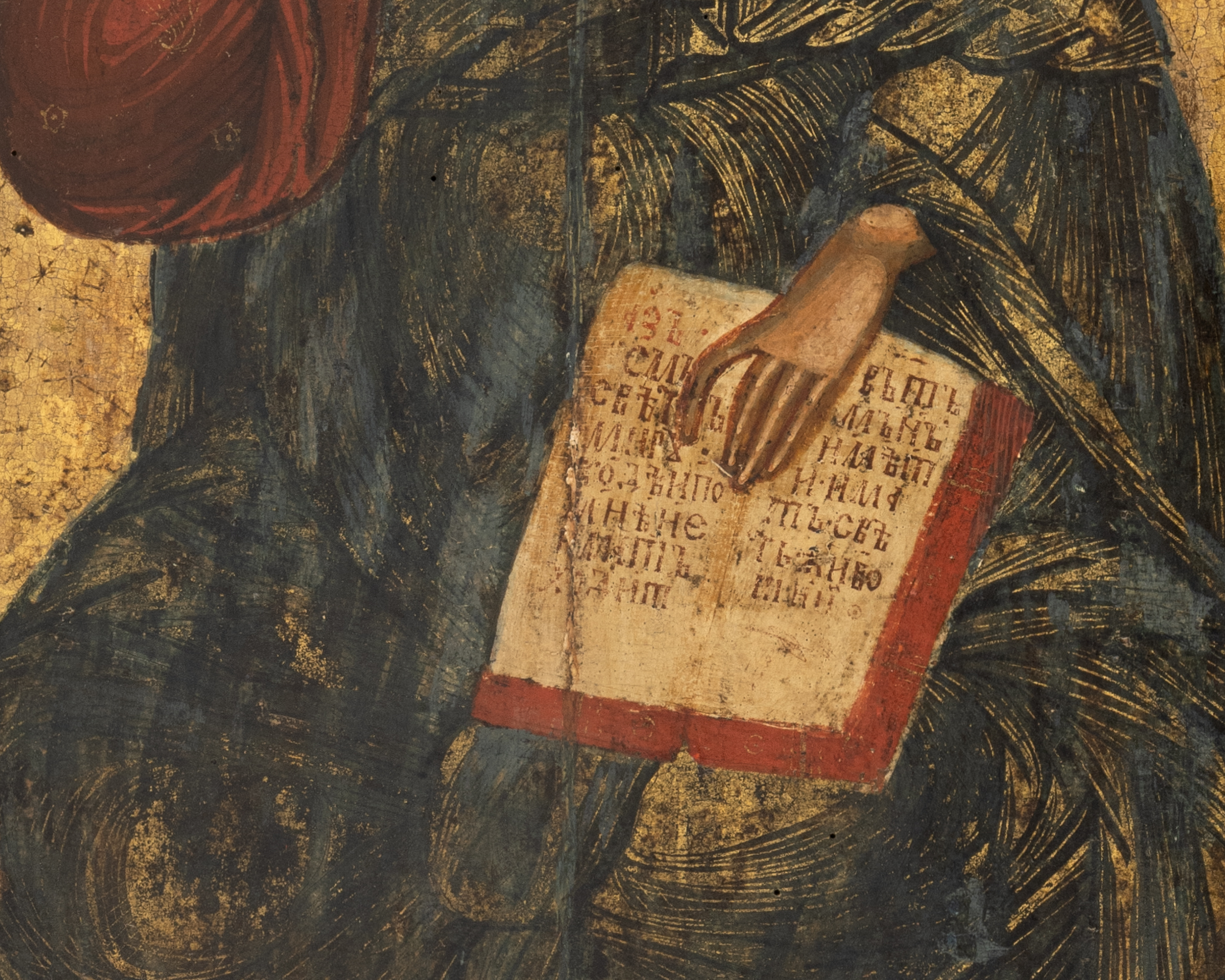
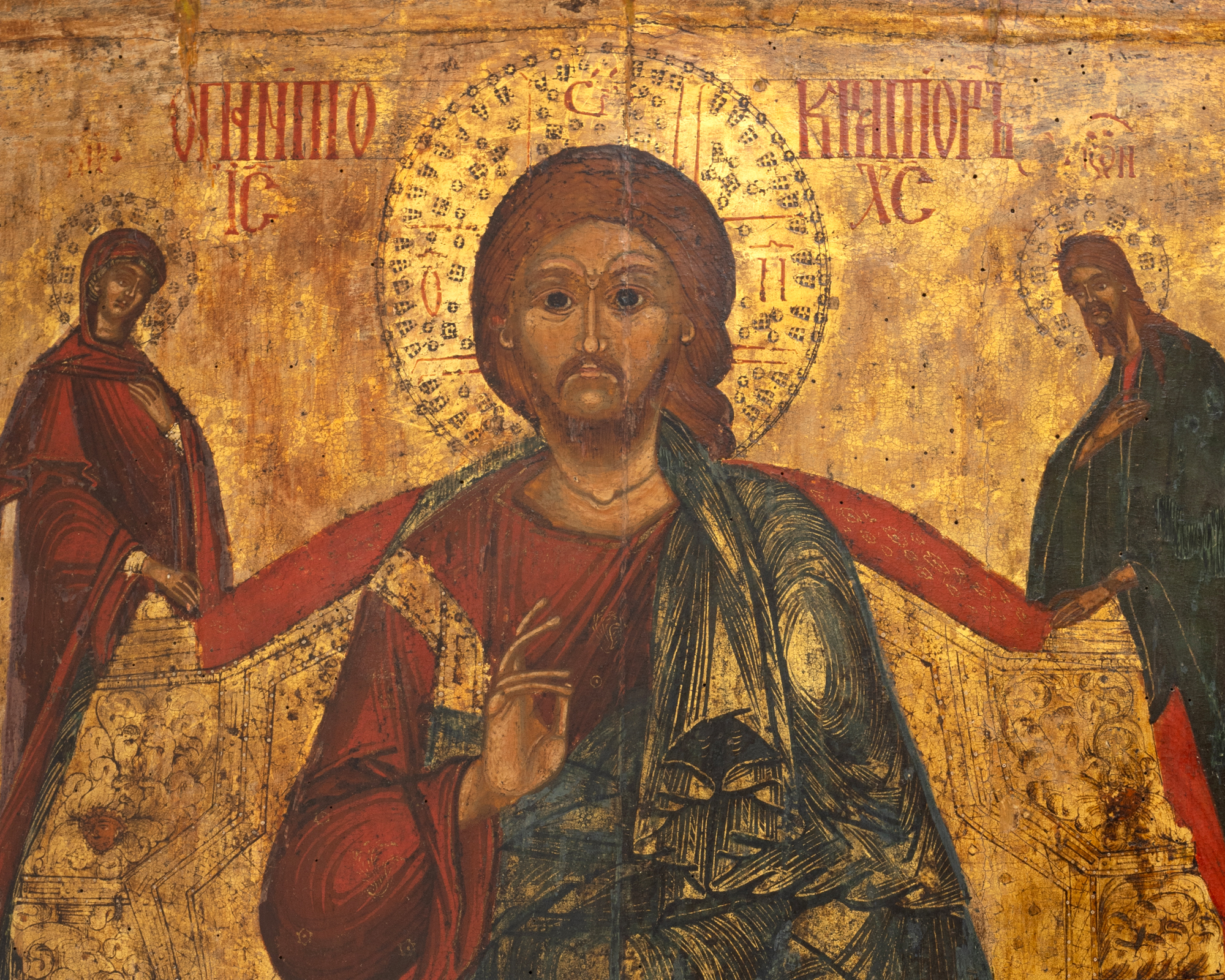
24. Imperial Icon on Wood, "Jesus Pantocrator", attributed to Costandin Zugravul, Wallachia, Brâncovenesc style, era of Constantin Brâncoveanu, last decade of the 17th century, museum piece
Начална цена
EUR 17.000
Продадено
EUR 30.000
Сесия
Сря, 16 април 2025 19:00
Размери
width 75 cm, height 102 cm
Описание
tempera and gold leaf on wood
Информация от изследване
Of high artistic value, the painting of the icon falls within the stylistic coordinates of the Brâncoveanu painting, and through its entire outfit, which expresses wealth, pageantry, and opulence, it can be considered a princely command. Constantinos, a Greek painter active in Wallachia between 1658 and 1720, played an essential role in the development of Brâncoveanu art. Brought in by Șerban Vodă Cantacuzino to paint the Lady's Church in Bucharest in 1683, his talent was quickly recognized, leading Constantin Brâncoveanu to appoint him "chief of painters" at Hurezi Monastery in 1692, where he created one of the most successful mural assemblies in all of Wallachian medieval art. Among his most important works are the frescoes at the Church of the Princely Court in Târgoviște (the first monument painted by the painters of the "Hurezi School" outside the Hurezi Monastery assembly, in 1698), the Monastery of the Wood (founded by Preda Brâncoveanu in 1635), Ostrov Hermitage in Călimănești (1701), Polovragi Monastery (1703) and the Church within the Brâncoveanu assembly at Mogoșoaia (1705). As for the painting of icons, until now, only six icons belonging to Constantinos are known, of which only one is signed, the rest being attributed to him. His distinctive style represents a synthesis between the art of Byzantine tradition and echoes of the late Renaissance and the Baroque. Thus, Constantinos significantly contributed to shaping the visual identity of the Brâncoveanu era, giving birth to the first national style. There are specialists who discuss the hypothesis that the painter Constantinos, toward the end of his career, appreciating the art of Russian icon painters, shows interest in their style of painting and transitions into producing icons close to the Russian spirit and stylistics of the period.
ДОПЪЛНИТЕЛНА ИНФОРМАЦИЯ
За разяснения относно процедурата по наддаване, разходите при спечелване, условията за гаранция, плащане и вземане на спечеления лот, препоръчваме внимателно четене/препрочитане на Правилника за наддаване.
За допълнителна информация относно лота и търга, моля свържете се с Отдела на арт консултантите.
Detalii
ДОПЪЛНИТЕЛНА ИНФОРМАЦИЯ
За разяснения относно процедурата по наддаване, разходите при спечелване, условията за гаранция, плащане и вземане на спечеления лот, препоръчваме внимателно четене/препрочитане на Правилника за наддаване.
За допълнителна информация относно лота и търга, моля свържете се с Отдела на арт консултантите.
Размери
width 75 cm, height 102 cm
Описание
tempera and gold leaf on wood
Информация от изследване
Of high artistic value, the painting of the icon falls within the stylistic coordinates of the Brâncoveanu painting, and through its entire outfit, which expresses wealth, pageantry, and opulence, it can be considered a princely command. Constantinos, a Greek painter active in Wallachia between 1658 and 1720, played an essential role in the development of Brâncoveanu art. Brought in by Șerban Vodă Cantacuzino to paint the Lady's Church in Bucharest in 1683, his talent was quickly recognized, leading Constantin Brâncoveanu to appoint him "chief of painters" at Hurezi Monastery in 1692, where he created one of the most successful mural assemblies in all of Wallachian medieval art. Among his most important works are the frescoes at the Church of the Princely Court in Târgoviște (the first monument painted by the painters of the "Hurezi School" outside the Hurezi Monastery assembly, in 1698), the Monastery of the Wood (founded by Preda Brâncoveanu in 1635), Ostrov Hermitage in Călimănești (1701), Polovragi Monastery (1703) and the Church within the Brâncoveanu assembly at Mogoșoaia (1705). As for the painting of icons, until now, only six icons belonging to Constantinos are known, of which only one is signed, the rest being attributed to him. His distinctive style represents a synthesis between the art of Byzantine tradition and echoes of the late Renaissance and the Baroque. Thus, Constantinos significantly contributed to shaping the visual identity of the Brâncoveanu era, giving birth to the first national style. There are specialists who discuss the hypothesis that the painter Constantinos, toward the end of his career, appreciating the art of Russian icon painters, shows interest in their style of painting and transitions into producing icons close to the Russian spirit and stylistics of the period.
Алтернативни лотове
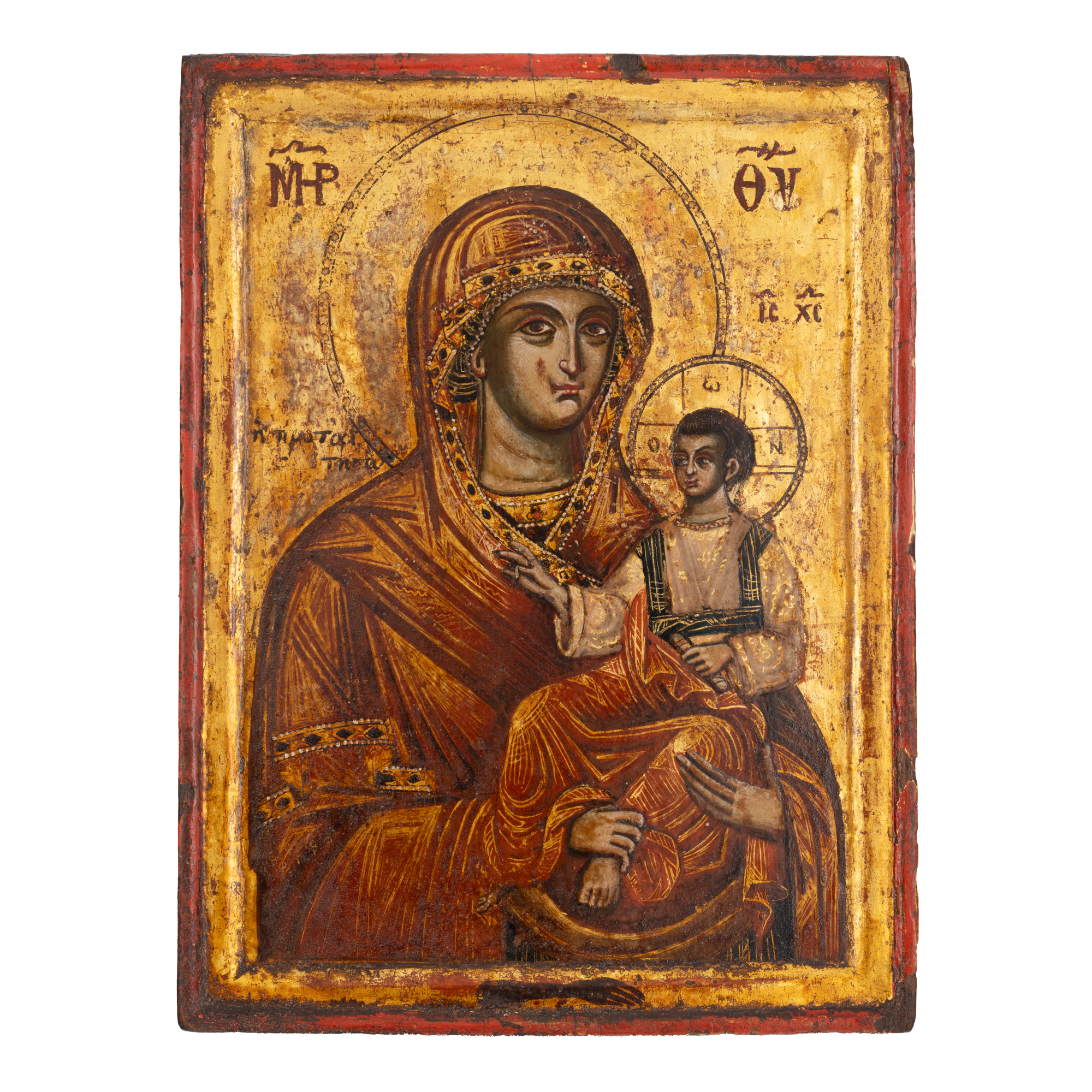
115. Icon on wood, "Mother of God with the Infant", Greek school, towards the end of the 16th century, rare, collectible piece