Снимките на лота са с информативен и илюстративен характер и не могат да предоставят изключително детайлен изглед на обекта от всички ъгли. Препоръчваме внимателен оглед на лота на място, преди да направите наддаване.
Снимките на лота са с информативен и илюстративен характер и не могат да предоставят изключително детайлен изглед на обекта от всички ъгли. Препоръчваме внимателен оглед на лота на място, преди да направите наддаване.
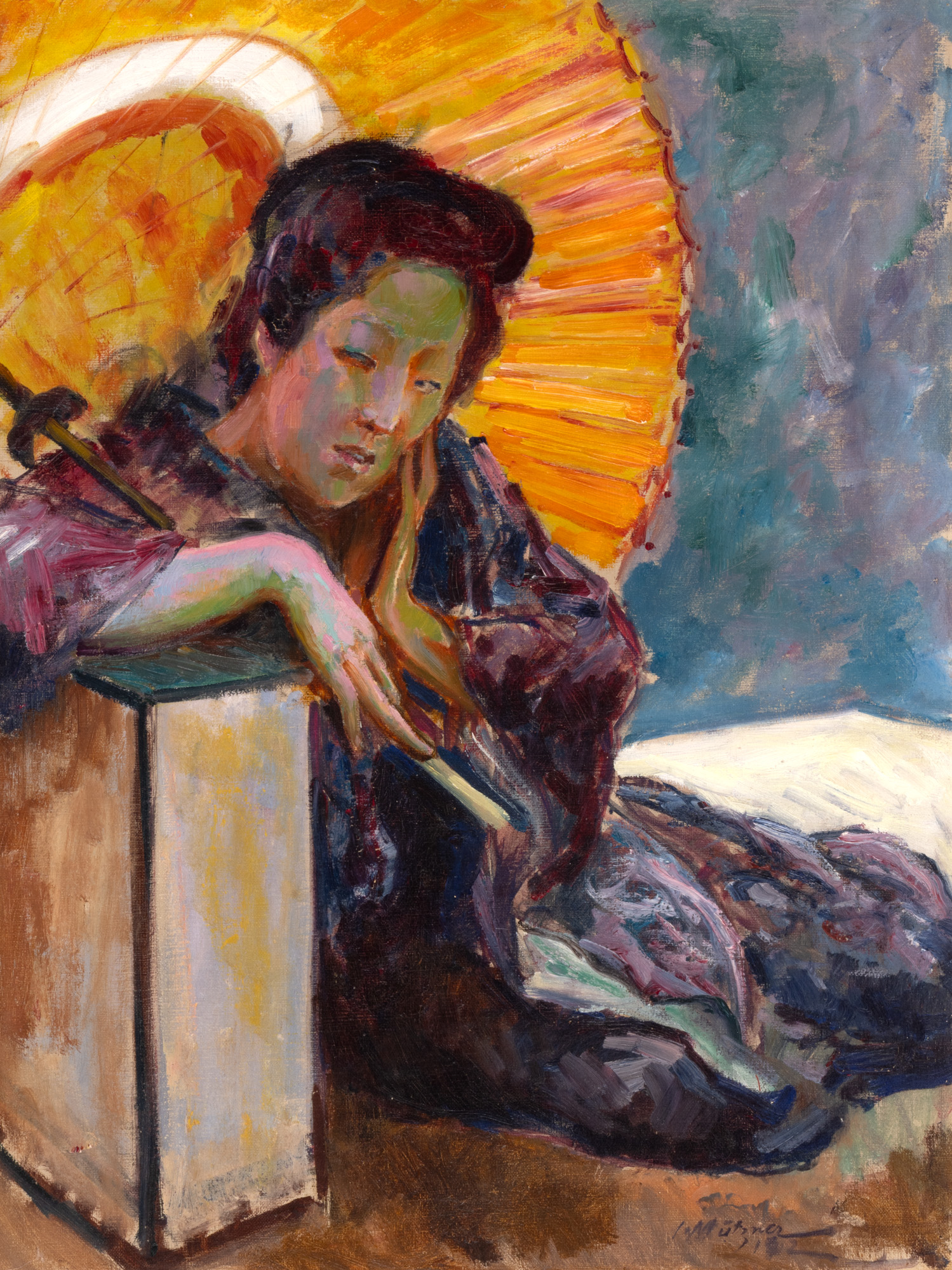
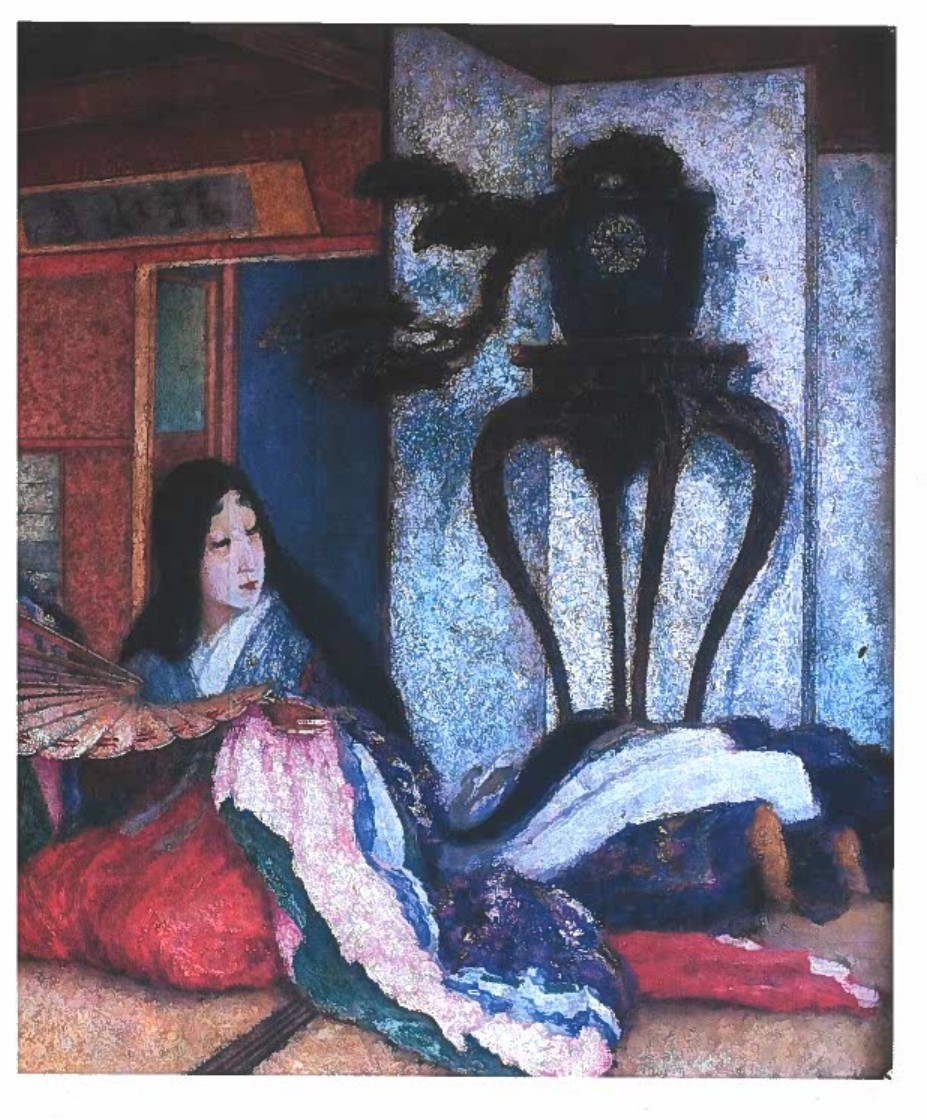
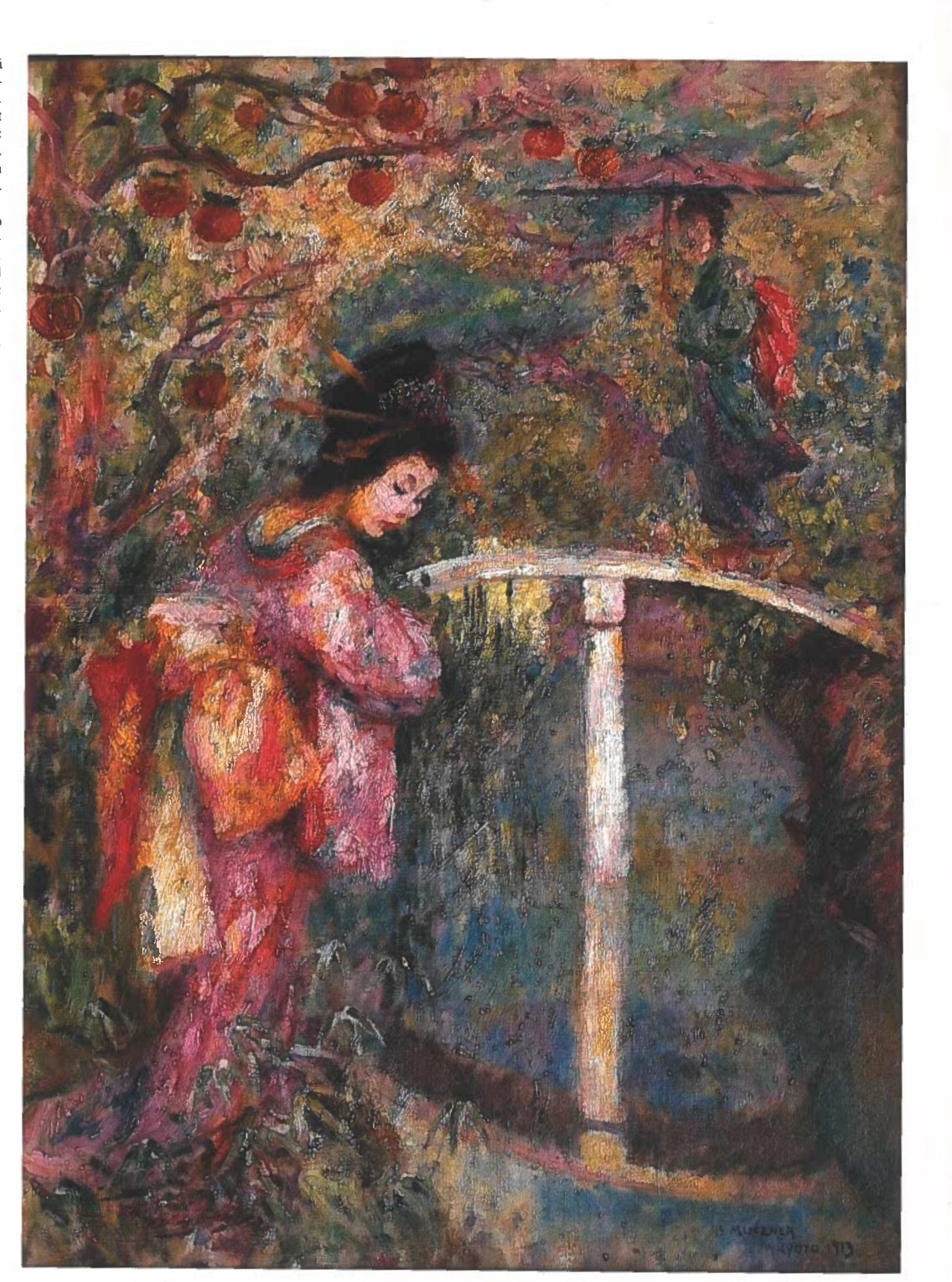
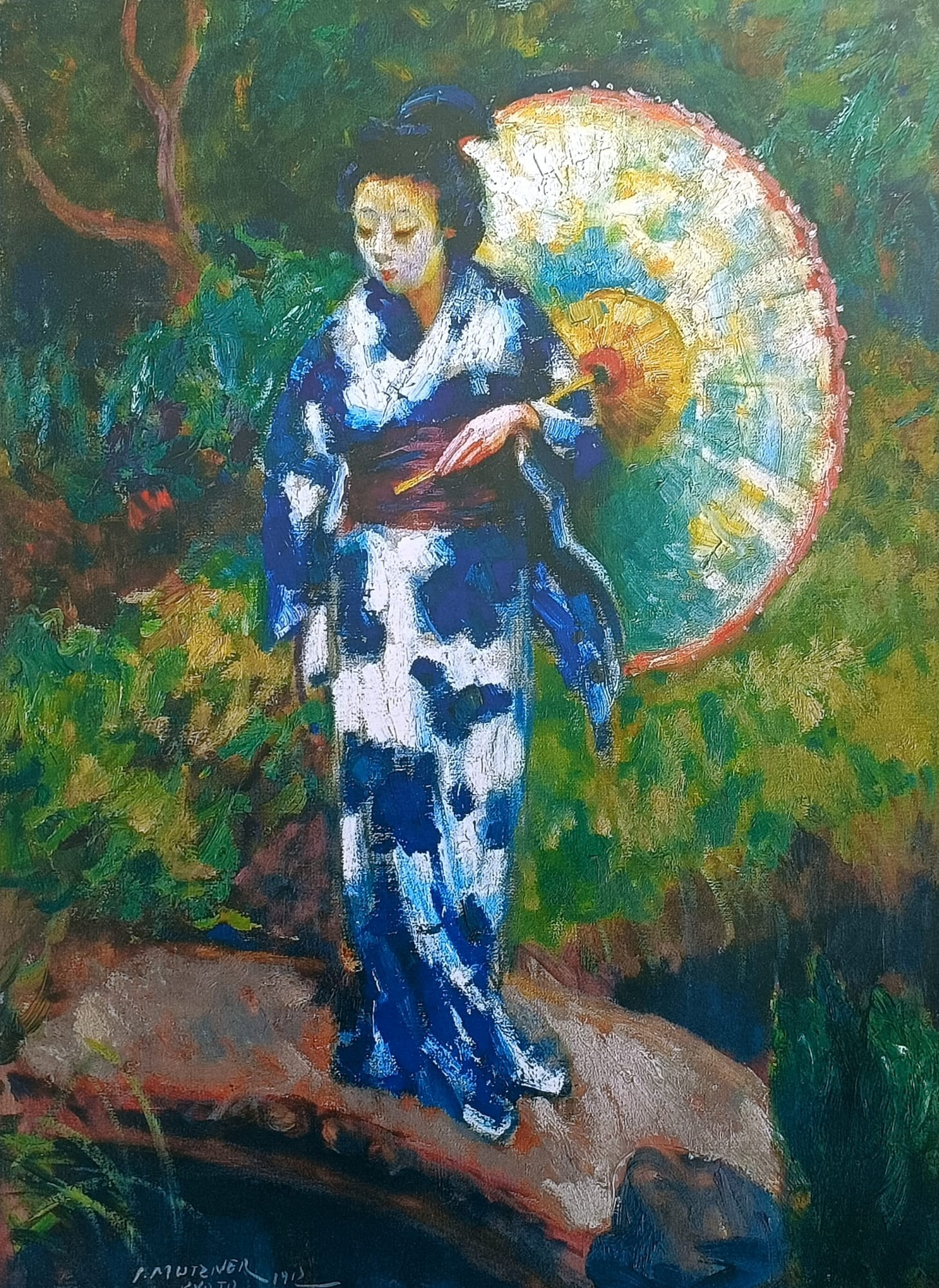
The theme of "geishas" appears in his creation during his travels to Japan, between 1912-1915, when he lived and painted in Kyoto and other Japanese cities. Fascinated by travel and Asian culture, Samuel Mützner created numerous compositions inspired by Japan, Tunisia, Algeria, and the Near East. The geisha is a symbol of Japanese elegance, refinement, and art, being a woman educated in music, dance, tea ceremony, and artistic conversation. In Mützner's painting, the character appears in a calm and meditative attitude, wearing a richly ornamented traditional kimono, rendered in vibrant tones of purple, with an orange umbrella held in her hand as an accessory. The artist follows not only the beauty of the costume but also the spiritual atmosphere of Japanese culture. Samuel Mützner's Japanese period began around 1912, after his artistic experiences in France and contact with Claude Monet's impressionism at Giverny. Influenced by impressionist light and European interest in oriental art, the painter developed a series of compositions inspired by everyday Japanese life. These scenes capture dancers, geishas, Japanese interiors, and ceremonial moments, where similar examples are: "Japanese with an umbrella", "Courtesans of Shimabara", "Bazaar", "Japanese dancer", "Landscape from Kairouan", "Geishas in Kyoto" or "Japanese interior" which can be found in the National Museum of Art of Romania or the Tulcea Art Museum. The theme of geishas holds a decorative and symbolic value for Mützner. The artist is attracted to the harmony of colors, the elegance of movement, and the peaceful atmosphere of Japanese culture. In these works, he seeks to render the beauty of the female and the balance between man and the oriental interior space. The richly decorated kimonos, fans, umbrellas, musical instruments, and Japanese decorations are elements that accentuate the character of his compositions.
His interest in cultural diversity led him to the Orient, North Africa, and Japan, profoundly influencing his artistic vision. At this stage, he developed a style inspired by the oriental and Japanese aesthetics, combining European impressionist technique with the sensitivity of Asian art.
Thus, through these compositions, the painter manages to combine the influences of European impressionism with the sensitivity of oriental art, rendering the elegance, harmony, and specific spiritual atmosphere of Japan. His works not only capture the beauty of costumes and decorations but also convey inner balance, refinement, and the delicacy of the Japanese world, contributing to the originality of his artistic style. (S.S)
oil on canvas, signed and dated bottom right, in blue, "S. Mutzner, (19)12"
Запознанства
1912
ДОПЪЛНИТЕЛНА ИНФОРМАЦИЯ
За разяснения относно процедурата по наддаване, разходите при спечелване, условията за гаранция, плащане и вземане на спечеления лот, препоръчваме внимателно четене/препрочитане на Правилника за наддаване.
The theme of "geishas" appears in his creation during his travels to Japan, between 1912-1915, when he lived and painted in Kyoto and other Japanese cities. Fascinated by travel and Asian culture, Samuel Mützner created numerous compositions inspired by Japan, Tunisia, Algeria, and the Near East. The geisha is a symbol of Japanese elegance, refinement, and art, being a woman educated in music, dance, tea ceremony, and artistic conversation. In Mützner's painting, the character appears in a calm and meditative attitude, wearing a richly ornamented traditional kimono, rendered in vibrant tones of purple, with an orange umbrella held in her hand as an accessory. The artist follows not only the beauty of the costume but also the spiritual atmosphere of Japanese culture. Samuel Mützner's Japanese period began around 1912, after his artistic experiences in France and contact with Claude Monet's impressionism at Giverny. Influenced by impressionist light and European interest in oriental art, the painter developed a series of compositions inspired by everyday Japanese life. These scenes capture dancers, geishas, Japanese interiors, and ceremonial moments, where similar examples are: "Japanese with an umbrella", "Courtesans of Shimabara", "Bazaar", "Japanese dancer", "Landscape from Kairouan", "Geishas in Kyoto" or "Japanese interior" which can be found in the National Museum of Art of Romania or the Tulcea Art Museum. The theme of geishas holds a decorative and symbolic value for Mützner. The artist is attracted to the harmony of colors, the elegance of movement, and the peaceful atmosphere of Japanese culture. In these works, he seeks to render the beauty of the female and the balance between man and the oriental interior space. The richly decorated kimonos, fans, umbrellas, musical instruments, and Japanese decorations are elements that accentuate the character of his compositions.
His interest in cultural diversity led him to the Orient, North Africa, and Japan, profoundly influencing his artistic vision. At this stage, he developed a style inspired by the oriental and Japanese aesthetics, combining European impressionist technique with the sensitivity of Asian art.
Thus, through these compositions, the painter manages to combine the influences of European impressionism with the sensitivity of oriental art, rendering the elegance, harmony, and specific spiritual atmosphere of Japan. His works not only capture the beauty of costumes and decorations but also convey inner balance, refinement, and the delicacy of the Japanese world, contributing to the originality of his artistic style. (S.S)
ДОПЪЛНИТЕЛНА ИНФОРМАЦИЯ
За разяснения относно процедурата по наддаване, разходите при спечелване, условията за гаранция, плащане и вземане на спечеления лот, препоръчваме внимателно четене/препрочитане на Правилника за наддаване.