Снимките на лота са с информативен и илюстративен характер и не могат да предоставят изключително детайлен изглед на обекта от всички ъгли. Препоръчваме внимателен оглед на лота на място, преди да направите наддаване.
Снимките на лота са с информативен и илюстративен характер и не могат да предоставят изключително детайлен изглед на обекта от всички ъгли. Препоръчваме внимателен оглед на лота на място, преди да направите наддаване.
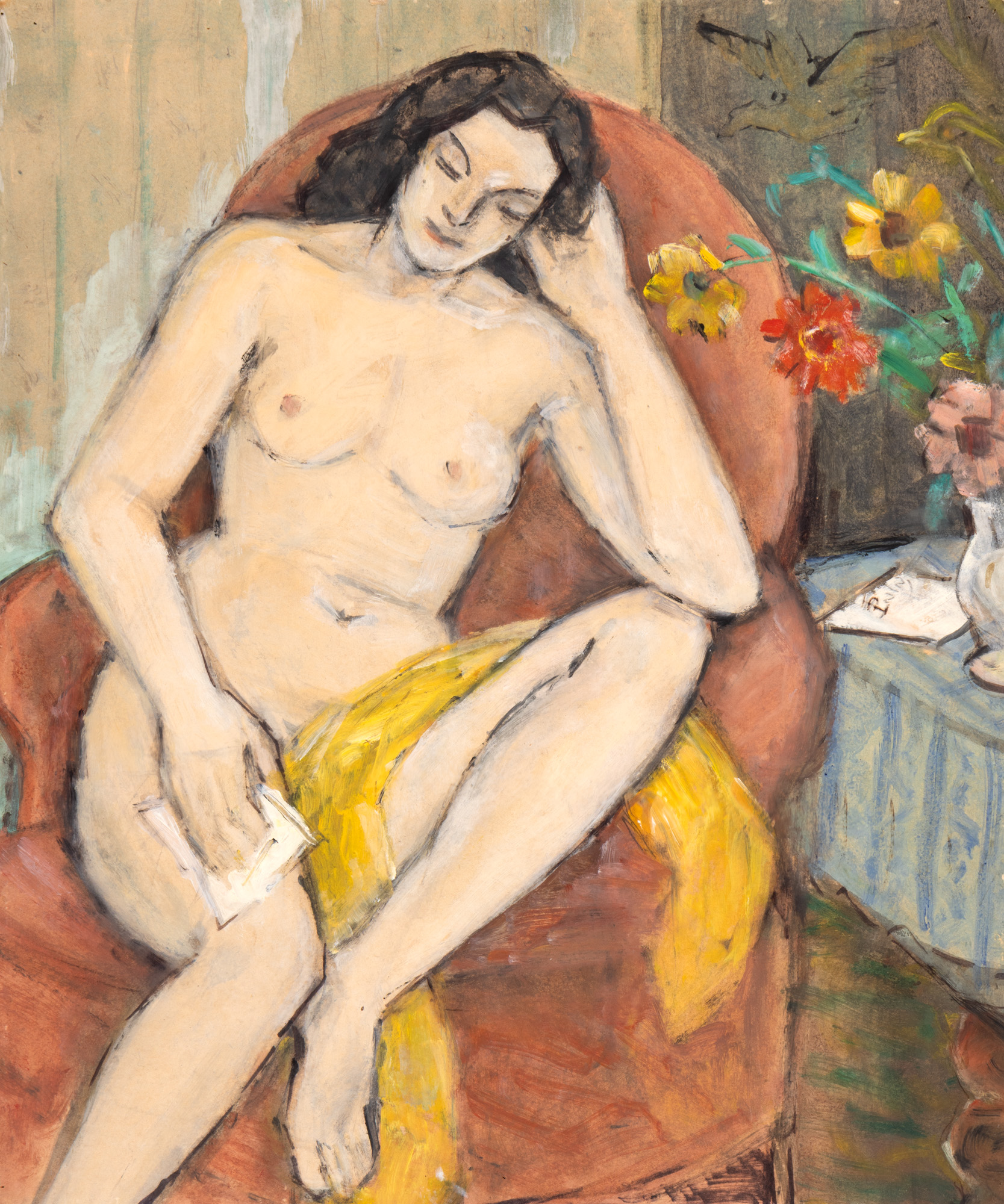
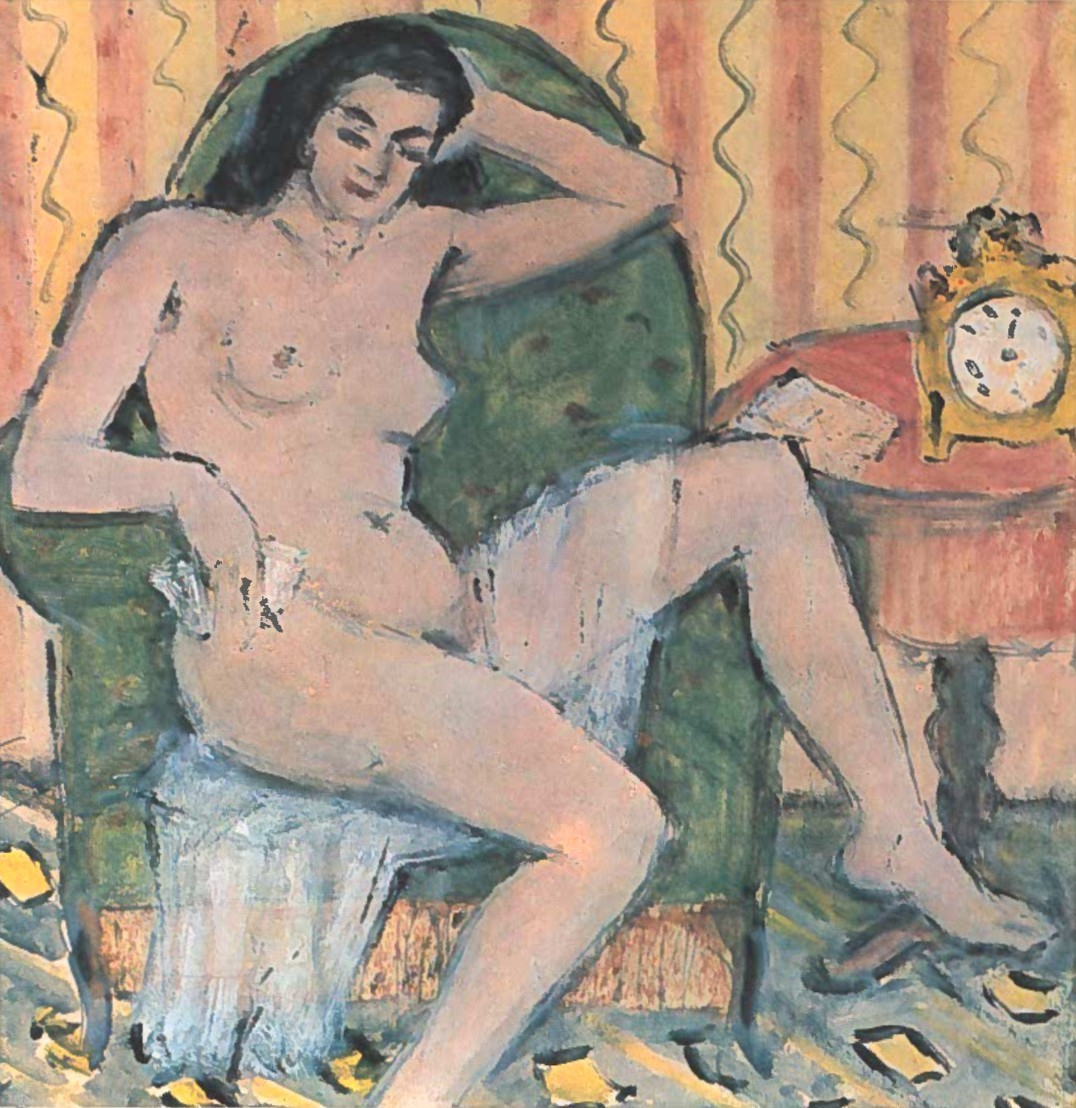
The female nude has a central place in Theodor Pallady's work, but for him, it never works as a spectacle. The artist deliberately refuses banal sensuality, dramatic contrasts of light and shadow, or flesh effects. Instead, he imposes his own grammar: clear tones, continuous and opaque line, simplified forms to the essence. The body is not studied anatomically - Pallady believed that anatomical rigor turns the human figure into a simple "plan," devoid of life or spirit. What remains in Pallady's nudes is the invisible emotion, emanated from the body as a vibration of the inner space. In the words of Jean Royère (1920), Pallady's nudes suggest neither the "native splendor", nor the "normal purity of flesh", but they reproduce an intimacy through the white of a bandage, the transparency of a makeup, the cynicism of an underlined black line. The model in Pallady's paintings is always sitting - on an armchair, couch, or divan - in a deliberately calculated posture. There are no surprised movements, no abandonment of the moment. The model poses, knows it is being watched, and yet does not look back. Her attention is captured by something else: a flower, a book, a cigarette, a letter. In this work, we notice the presence of the latter in the model's hand, while the envelope remains visibly signed by the artist on the table. Thus, Pallady constructs the narrative of the work: the woman is in a state of reverie or melancholy, brooding over what she has read. This interpretation is also reinforced by the symbolic presence of the caged bird in the upper right corner. The obvious proximity to the artist suggests a deliberate distancing from the viewer. Pallady constructs an intimate scene from which the spectator paradoxically remains excluded. Thus, in Pallady's vision, the female subject transcends the status of a pure object of desire and becomes a symbol of spiritualized, meditating love, passed through a filter of delicacy and elegance. The artist himself confessed that his personal feelings did not influence his work. And yet, the female presence is obsessive, recurring, almost necessary. She embodies the lyrical world of the painter. The evoked femininity is one of naturalness in the intimate setting: the woman observed in her space, without the constraint of clothing, in a suspended time of dreaming. Pallady consistently returned to the same faces. His most documented muse remains Yvonne Cousin, present in his life and work between 1924 and 1939; the initial "Y" is discreetly inserted on numerous works starting from 1930, a personal cipher transformed into an affective signature. And in this work the model is familiar to us. The black hair, the withdrawn posture, the slightly inclined line of the body return consistently, betraying a long-standing relationship between the artist and the model, recognizable from other compositions by Pallady, such as "Nude with guitar", "Nude with letter", "Cleopatra", or "Nude in green armchair". Often, she is accompanied by the letter "Z". Although we do not know her name for certain, through her recurring presence, she becomes a visual leitmotif that the artist consistently returns to in the intimate space of the studio. (L.M.)
oil and tempera on cardboard, signed on the right side, in black, "T. Pallady"
Запознанства
1930-1935
ДОПЪЛНИТЕЛНА ИНФОРМАЦИЯ
За разяснения относно процедурата по наддаване, разходите при спечелване, условията за гаранция, плащане и вземане на спечеления лот, препоръчваме внимателно четене/препрочитане на Правилника за наддаване.
The female nude has a central place in Theodor Pallady's work, but for him, it never works as a spectacle. The artist deliberately refuses banal sensuality, dramatic contrasts of light and shadow, or flesh effects. Instead, he imposes his own grammar: clear tones, continuous and opaque line, simplified forms to the essence. The body is not studied anatomically - Pallady believed that anatomical rigor turns the human figure into a simple "plan," devoid of life or spirit. What remains in Pallady's nudes is the invisible emotion, emanated from the body as a vibration of the inner space. In the words of Jean Royère (1920), Pallady's nudes suggest neither the "native splendor", nor the "normal purity of flesh", but they reproduce an intimacy through the white of a bandage, the transparency of a makeup, the cynicism of an underlined black line. The model in Pallady's paintings is always sitting - on an armchair, couch, or divan - in a deliberately calculated posture. There are no surprised movements, no abandonment of the moment. The model poses, knows it is being watched, and yet does not look back. Her attention is captured by something else: a flower, a book, a cigarette, a letter. In this work, we notice the presence of the latter in the model's hand, while the envelope remains visibly signed by the artist on the table. Thus, Pallady constructs the narrative of the work: the woman is in a state of reverie or melancholy, brooding over what she has read. This interpretation is also reinforced by the symbolic presence of the caged bird in the upper right corner. The obvious proximity to the artist suggests a deliberate distancing from the viewer. Pallady constructs an intimate scene from which the spectator paradoxically remains excluded. Thus, in Pallady's vision, the female subject transcends the status of a pure object of desire and becomes a symbol of spiritualized, meditating love, passed through a filter of delicacy and elegance. The artist himself confessed that his personal feelings did not influence his work. And yet, the female presence is obsessive, recurring, almost necessary. She embodies the lyrical world of the painter. The evoked femininity is one of naturalness in the intimate setting: the woman observed in her space, without the constraint of clothing, in a suspended time of dreaming. Pallady consistently returned to the same faces. His most documented muse remains Yvonne Cousin, present in his life and work between 1924 and 1939; the initial "Y" is discreetly inserted on numerous works starting from 1930, a personal cipher transformed into an affective signature. And in this work the model is familiar to us. The black hair, the withdrawn posture, the slightly inclined line of the body return consistently, betraying a long-standing relationship between the artist and the model, recognizable from other compositions by Pallady, such as "Nude with guitar", "Nude with letter", "Cleopatra", or "Nude in green armchair". Often, she is accompanied by the letter "Z". Although we do not know her name for certain, through her recurring presence, she becomes a visual leitmotif that the artist consistently returns to in the intimate space of the studio. (L.M.)
ДОПЪЛНИТЕЛНА ИНФОРМАЦИЯ
За разяснения относно процедурата по наддаване, разходите при спечелване, условията за гаранция, плащане и вземане на спечеления лот, препоръчваме внимателно четене/препрочитане на Правилника за наддаване.