Снимките на лота са с информативен и илюстративен характер и не могат да предоставят изключително детайлен изглед на обекта от всички ъгли. Препоръчваме внимателен оглед на лота на място, преди да направите наддаване.
Снимките на лота са с информативен и илюстративен характер и не могат да предоставят изключително детайлен изглед на обекта от всички ъгли. Препоръчваме внимателен оглед на лота на място, преди да направите наддаване.
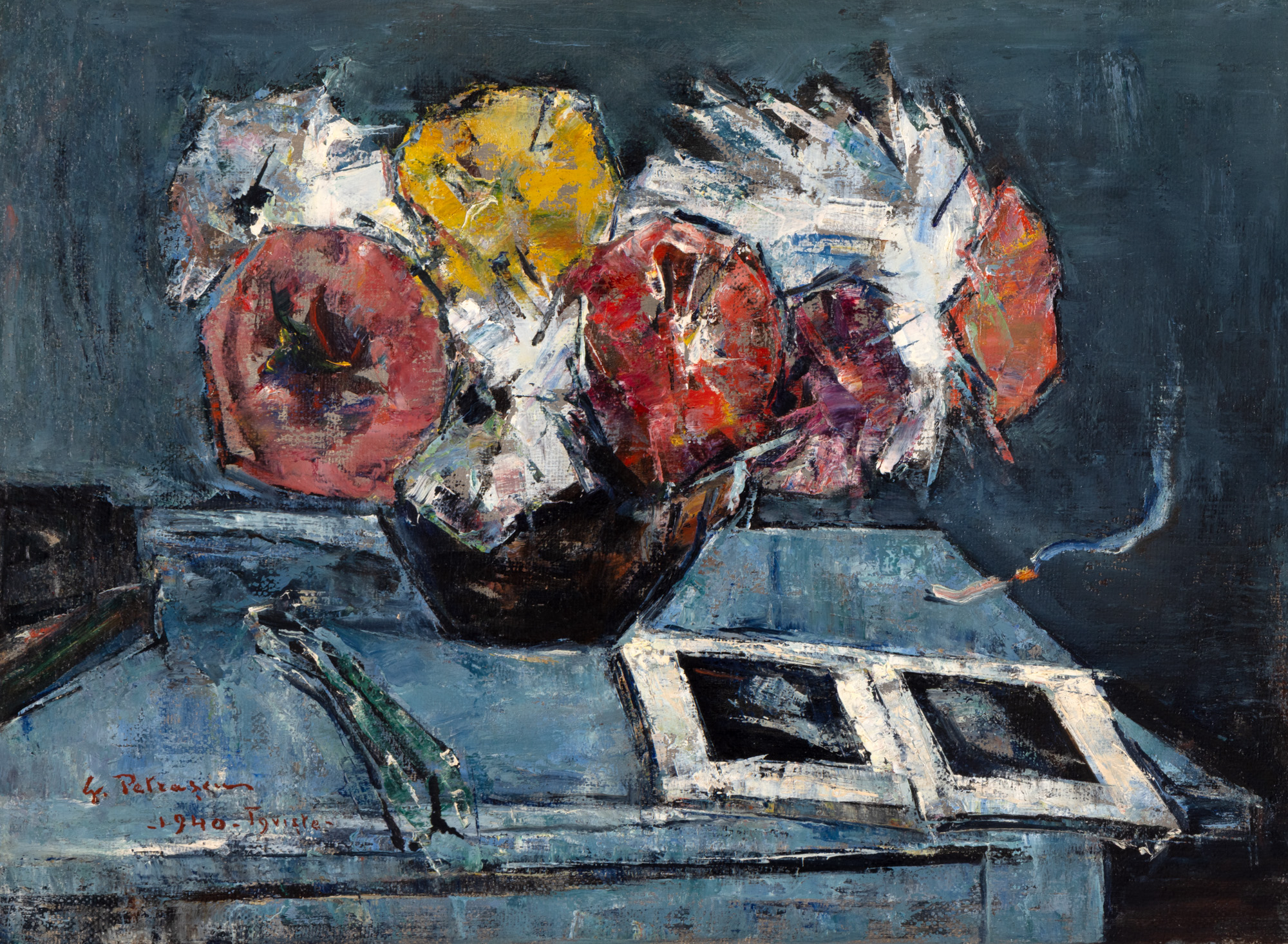
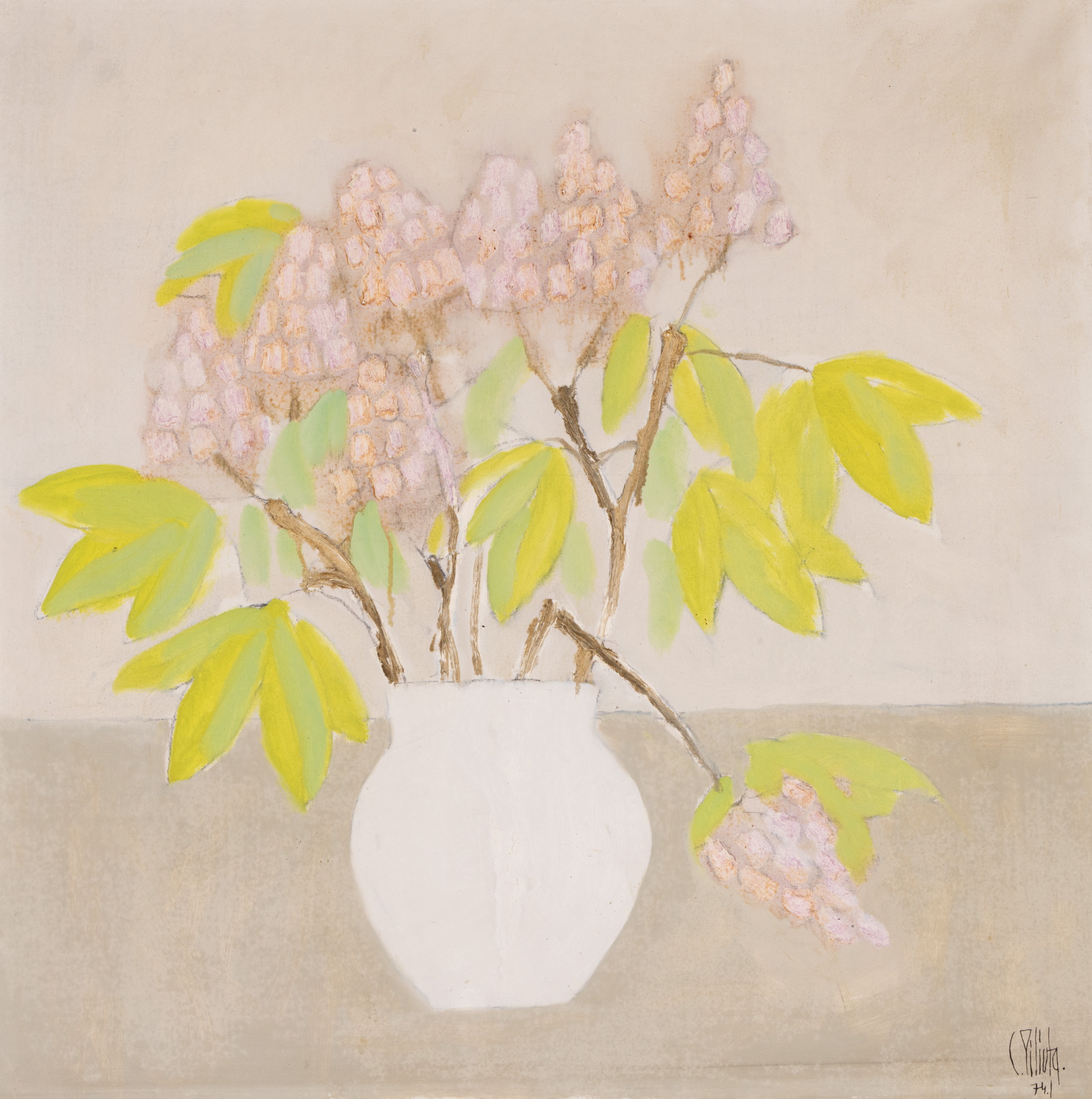
The work belongs to Petrașcu's period of artistic maturity, the 1940s, a stage during which the artist created numerous still lifes with flowers, vases and interior objects. The work represents a bouquet of flowers arranged in a vase, the composition being built in an interior and balanced space. The artist captures the natural beauty of the flowers and the relationship between color, light and the surrounding objects. The composition represents a bouquet of vividly colored anemone flowers arranged in a vase, alongside other elements specific to the artist's workshop such as the album, the lit cigarette or other recurring objects, often found in the artist's numerous still lifes from the last decades of activity. The flowers represented seem to be anemones which Petrașcu frequently paints in the later period of his work, alongside tulips, gladioli or the so-called "barmaids". These flowers repeatedly appear in his still lifes from the years 1925-1945, both due to the chromatic variety they offered the artist, and for the opportunity to build strong contrasts between color patches, dark or blue backgrounds. Examples of such works are: "White Flowers", "Tulips", "Vase with Flowers (Barmaids)", "Flowers" (1930) or "Vase with Flowers" (1920), now in the collections of the National Museum of Art of Romania, the Bucharest City Museum or the "Curtea Domnească" National Museum Complex in Târgoviște. In this artistic stage, Petrașcu frequently uses blue or dark blue backgrounds, especially after the 1920s, when his palette becomes denser and more focused on deep chromatic contrasts. Petrașcu uses this element in his works to emphasize the volume of the flowers and to create complementary oppositions between the cold tones of the background scenes. The theme of flowers occupies an important place in his work, because it allows the artist to explore several pictorial plans: the relationships between light and shadow, volume construction, effects of thick paste or relationships between complementary colors. Still lifes with flowers are not treated as simple decorative studies, but as exercises of composition and chromatic balance, in which each object contributes to the general structure of the image. For Petrașcu, the idea of an album can be understood as a collection of images and visual impressions that capture the world in a deeply personal and meditative manner. In the symbolism of his works, seemingly ordinary objects, books, vessels, windows, interiors or landscapes acquire an emotional and contemplative value over the works. Thus, anemones have a dual symbolism, oscillating between love, hope and anticipation and loss, fragility or suffering. Their name comes from the Greek anemos ("wind"), which is why they are also known as "wind flowers", because their delicate petals open at a simple breeze and close during rain. Petrașcu does not only seek to faithfully represent reality, but to transmit an inner state: silence, melancholy, the passage of time or the permanence of things, where the album becomes a visual memory of the world, in which each image functions as a symbol of reflection and interior sensitivity. This object is not chosen randomly: it suggests memory, culture, reflection and the dialogue between art and knowledge. In relation to the flowers, a symbol of fragility and the passage of time, the open album can be interpreted as a meditation on the permanence of the spirit and the memory preserved through art. (S.S)
oil on canvas, signed, dated and located on the bottom left in brown, "G. Petrașcu, 1940, T(âr)goviște"
Запознанства
1940
ДОПЪЛНИТЕЛНА ИНФОРМАЦИЯ
За разяснения относно процедурата по наддаване, разходите при спечелване, условията за гаранция, плащане и вземане на спечеления лот, препоръчваме внимателно четене/препрочитане на Правилника за наддаване.
The work belongs to Petrașcu's period of artistic maturity, the 1940s, a stage during which the artist created numerous still lifes with flowers, vases and interior objects. The work represents a bouquet of flowers arranged in a vase, the composition being built in an interior and balanced space. The artist captures the natural beauty of the flowers and the relationship between color, light and the surrounding objects. The composition represents a bouquet of vividly colored anemone flowers arranged in a vase, alongside other elements specific to the artist's workshop such as the album, the lit cigarette or other recurring objects, often found in the artist's numerous still lifes from the last decades of activity. The flowers represented seem to be anemones which Petrașcu frequently paints in the later period of his work, alongside tulips, gladioli or the so-called "barmaids". These flowers repeatedly appear in his still lifes from the years 1925-1945, both due to the chromatic variety they offered the artist, and for the opportunity to build strong contrasts between color patches, dark or blue backgrounds. Examples of such works are: "White Flowers", "Tulips", "Vase with Flowers (Barmaids)", "Flowers" (1930) or "Vase with Flowers" (1920), now in the collections of the National Museum of Art of Romania, the Bucharest City Museum or the "Curtea Domnească" National Museum Complex in Târgoviște. In this artistic stage, Petrașcu frequently uses blue or dark blue backgrounds, especially after the 1920s, when his palette becomes denser and more focused on deep chromatic contrasts. Petrașcu uses this element in his works to emphasize the volume of the flowers and to create complementary oppositions between the cold tones of the background scenes. The theme of flowers occupies an important place in his work, because it allows the artist to explore several pictorial plans: the relationships between light and shadow, volume construction, effects of thick paste or relationships between complementary colors. Still lifes with flowers are not treated as simple decorative studies, but as exercises of composition and chromatic balance, in which each object contributes to the general structure of the image. For Petrașcu, the idea of an album can be understood as a collection of images and visual impressions that capture the world in a deeply personal and meditative manner. In the symbolism of his works, seemingly ordinary objects, books, vessels, windows, interiors or landscapes acquire an emotional and contemplative value over the works. Thus, anemones have a dual symbolism, oscillating between love, hope and anticipation and loss, fragility or suffering. Their name comes from the Greek anemos ("wind"), which is why they are also known as "wind flowers", because their delicate petals open at a simple breeze and close during rain. Petrașcu does not only seek to faithfully represent reality, but to transmit an inner state: silence, melancholy, the passage of time or the permanence of things, where the album becomes a visual memory of the world, in which each image functions as a symbol of reflection and interior sensitivity. This object is not chosen randomly: it suggests memory, culture, reflection and the dialogue between art and knowledge. In relation to the flowers, a symbol of fragility and the passage of time, the open album can be interpreted as a meditation on the permanence of the spirit and the memory preserved through art. (S.S)
ДОПЪЛНИТЕЛНА ИНФОРМАЦИЯ
За разяснения относно процедурата по наддаване, разходите при спечелване, условията за гаранция, плащане и вземане на спечеления лот, препоръчваме внимателно четене/препрочитане на Правилника за наддаване.