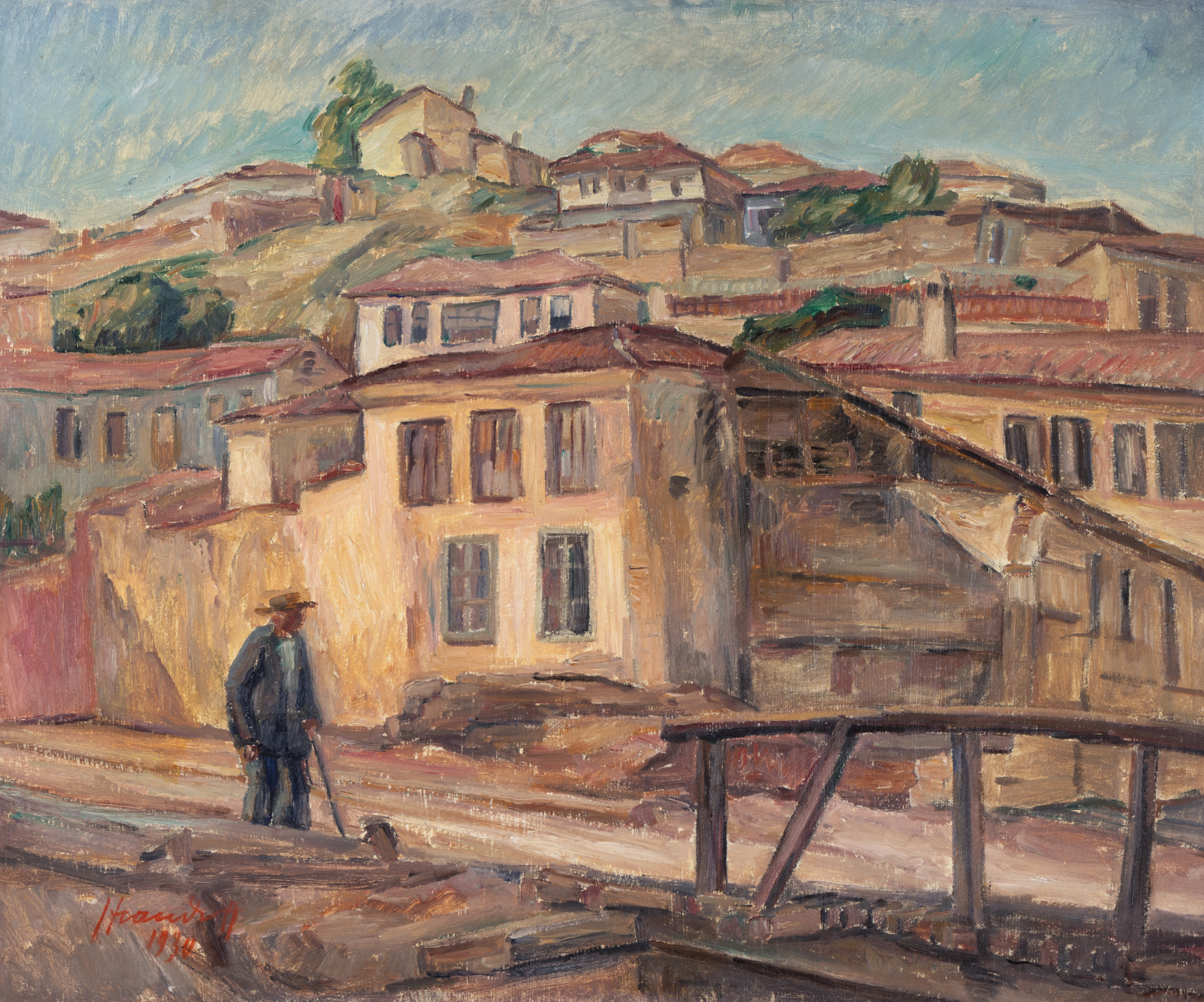
Снимките на лота са с информативен и илюстративен характер и не могат да предоставят изключително детайлен изглед на обекта от всички ъгли. Препоръчваме внимателен оглед на лота на място, преди да направите наддаване.
Снимките на лота са с информативен и илюстративен характер и не могат да предоставят изключително детайлен изглед на обекта от всички ъгли. Препоръчваме внимателен оглед на лота на място, преди да направите наддаване.
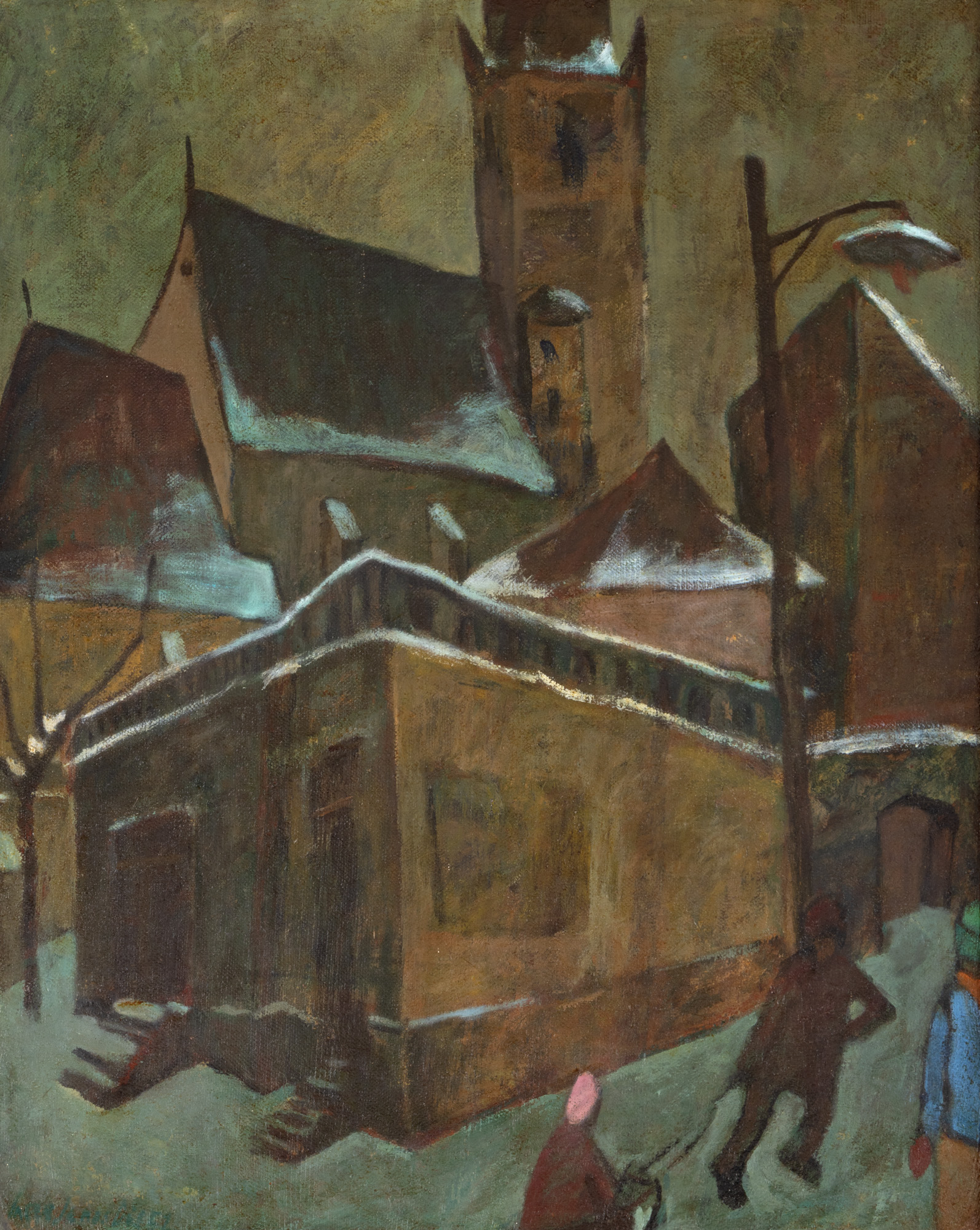
Incze János Dés was born in Satu Mare, where he gained his first artistic experiences in Aurel Popp's workshop, and later in Baia Mare, his master was Ziffer Sándor. After high school, in 1924, his journey to art wasn't a straight one: he worked as a gardener apprentice then as a grocer, until in 1926, the painting workshop of the Iris porcelain factory in Cluj opened a new perspective for him alongside his fellow craftsman Francisc Gall. Later, he attended courses in Cluj (1928-29), and between 1929 and 1934 he studied pedagogy at the Bethlen Gábor College in Aiud, subsequently working as a teacher in Zalău. During these years, he became a member of the National Association of Romanian Artists and the Barabás Miklós Guild - a sign that art remained his true calling. In 1935 he settled permanently in Dej, where he spent the rest of his life, also serving as cantor of the reformed church. The town won him over so profoundly that in the 1940s, he added its name as his first name, thus becoming Incze János Dés. Throughout his career, the old center dominated by the medieval church, the narrow winding streets, the square, the banks of the Someș river and the intimate atmosphere of the small city gave him an endless source of motifs and inspiration. The artist created works immortalizing his personal experiences reflected in the landscape of his beloved town, such as "Serpentine Street". From 1939 to 1967, Des Incze organized six personal exhibitions in Târgu Mureș, Cluj, Gheorgheni and Covasna, as well as abroad, in Budapest. Most recently, in 2024, a retrospective exhibition dedicated to the artist was held at the Transylvania Art Center. Created in 1952, this piece is one of the confessions of the artist's passion for Dej. Thus, the artist shows us a corner of the city in the dead of winter: in the background, the church watches silently, and in the foreground, a sleigh with a child is pulled by a mysterious silhouette outlined in black, seemingly coming out of a dream or memory. The palette of warm browns, with only splashes of white or pale blue imitating the reflection of the sky on the snow, does not freeze the scene, but wraps it in a gentle melancholy, in that mild chillness that only the provincial winter can offer. (L.M)
Размери
width 58.5 cm, height 69.5 cm
Описание
oil on canvas, signed and dated lower left, in green "Incze János Dés, (19)52"
Запознанства
1952
ДОПЪЛНИТЕЛНА ИНФОРМАЦИЯ
За разяснения относно процедурата по наддаване, разходите при спечелване, условията за гаранция, плащане и вземане на спечеления лот, препоръчваме внимателно четене/препрочитане на Правилника за наддаване.
Incze János Dés was born in Satu Mare, where he gained his first artistic experiences in Aurel Popp's workshop, and later in Baia Mare, his master was Ziffer Sándor. After high school, in 1924, his journey to art wasn't a straight one: he worked as a gardener apprentice then as a grocer, until in 1926, the painting workshop of the Iris porcelain factory in Cluj opened a new perspective for him alongside his fellow craftsman Francisc Gall. Later, he attended courses in Cluj (1928-29), and between 1929 and 1934 he studied pedagogy at the Bethlen Gábor College in Aiud, subsequently working as a teacher in Zalău. During these years, he became a member of the National Association of Romanian Artists and the Barabás Miklós Guild - a sign that art remained his true calling. In 1935 he settled permanently in Dej, where he spent the rest of his life, also serving as cantor of the reformed church. The town won him over so profoundly that in the 1940s, he added its name as his first name, thus becoming Incze János Dés. Throughout his career, the old center dominated by the medieval church, the narrow winding streets, the square, the banks of the Someș river and the intimate atmosphere of the small city gave him an endless source of motifs and inspiration. The artist created works immortalizing his personal experiences reflected in the landscape of his beloved town, such as "Serpentine Street". From 1939 to 1967, Des Incze organized six personal exhibitions in Târgu Mureș, Cluj, Gheorgheni and Covasna, as well as abroad, in Budapest. Most recently, in 2024, a retrospective exhibition dedicated to the artist was held at the Transylvania Art Center. Created in 1952, this piece is one of the confessions of the artist's passion for Dej. Thus, the artist shows us a corner of the city in the dead of winter: in the background, the church watches silently, and in the foreground, a sleigh with a child is pulled by a mysterious silhouette outlined in black, seemingly coming out of a dream or memory. The palette of warm browns, with only splashes of white or pale blue imitating the reflection of the sky on the snow, does not freeze the scene, but wraps it in a gentle melancholy, in that mild chillness that only the provincial winter can offer. (L.M)
ДОПЪЛНИТЕЛНА ИНФОРМАЦИЯ
За разяснения относно процедурата по наддаване, разходите при спечелване, условията за гаранция, плащане и вземане на спечеления лот, препоръчваме внимателно четене/препрочитане на Правилника за наддаване.