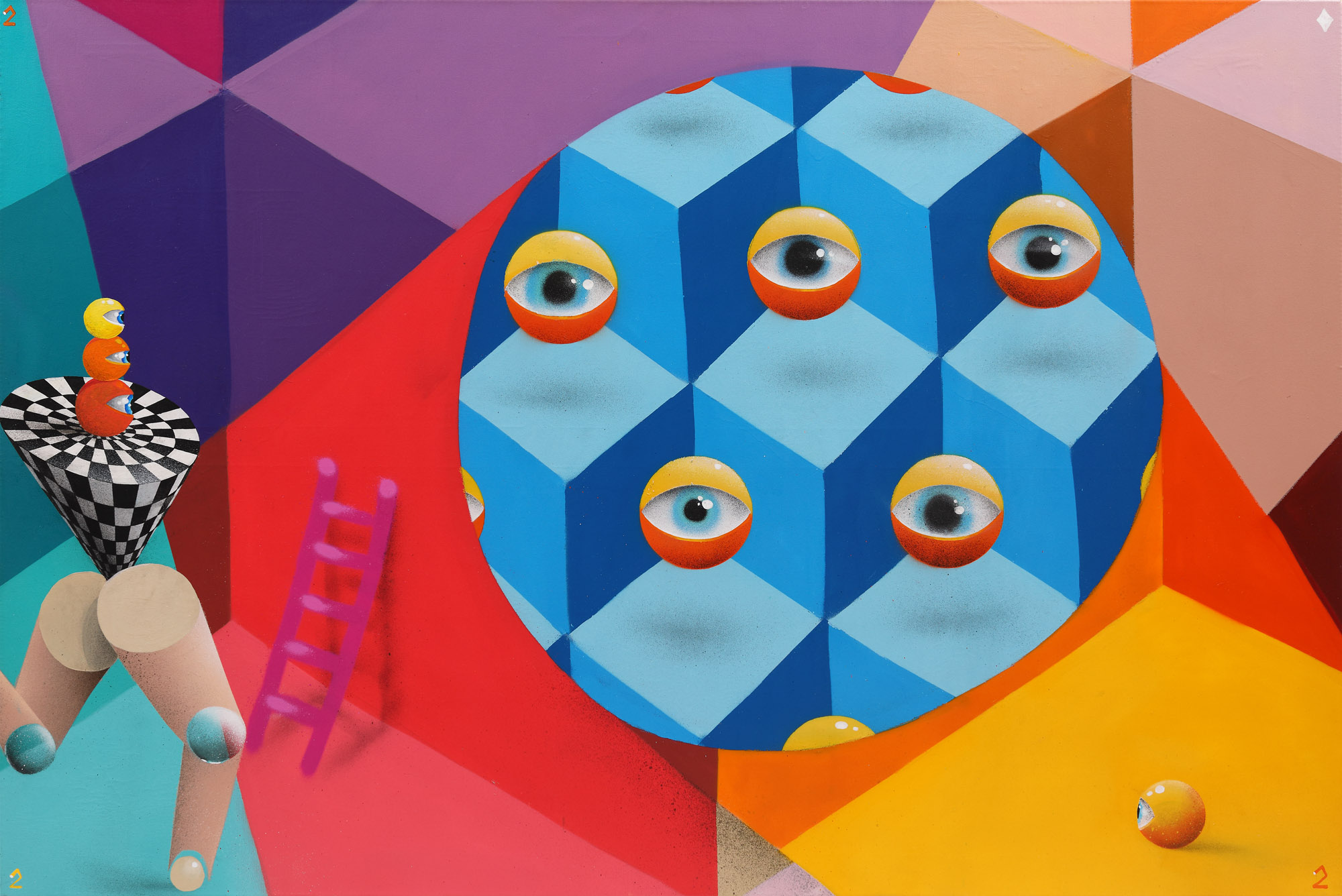
Снимките на лота са с информативен и илюстративен характер и не могат да предоставят изключително детайлен изглед на обекта от всички ъгли. Препоръчваме внимателен оглед на лота на място, преди да направите наддаване.
Снимките на лота са с информативен и илюстративен характер и не могат да предоставят изключително детайлен изглед на обекта от всички ъгли. Препоръчваме внимателен оглед на лота на място, преди да направите наддаване.
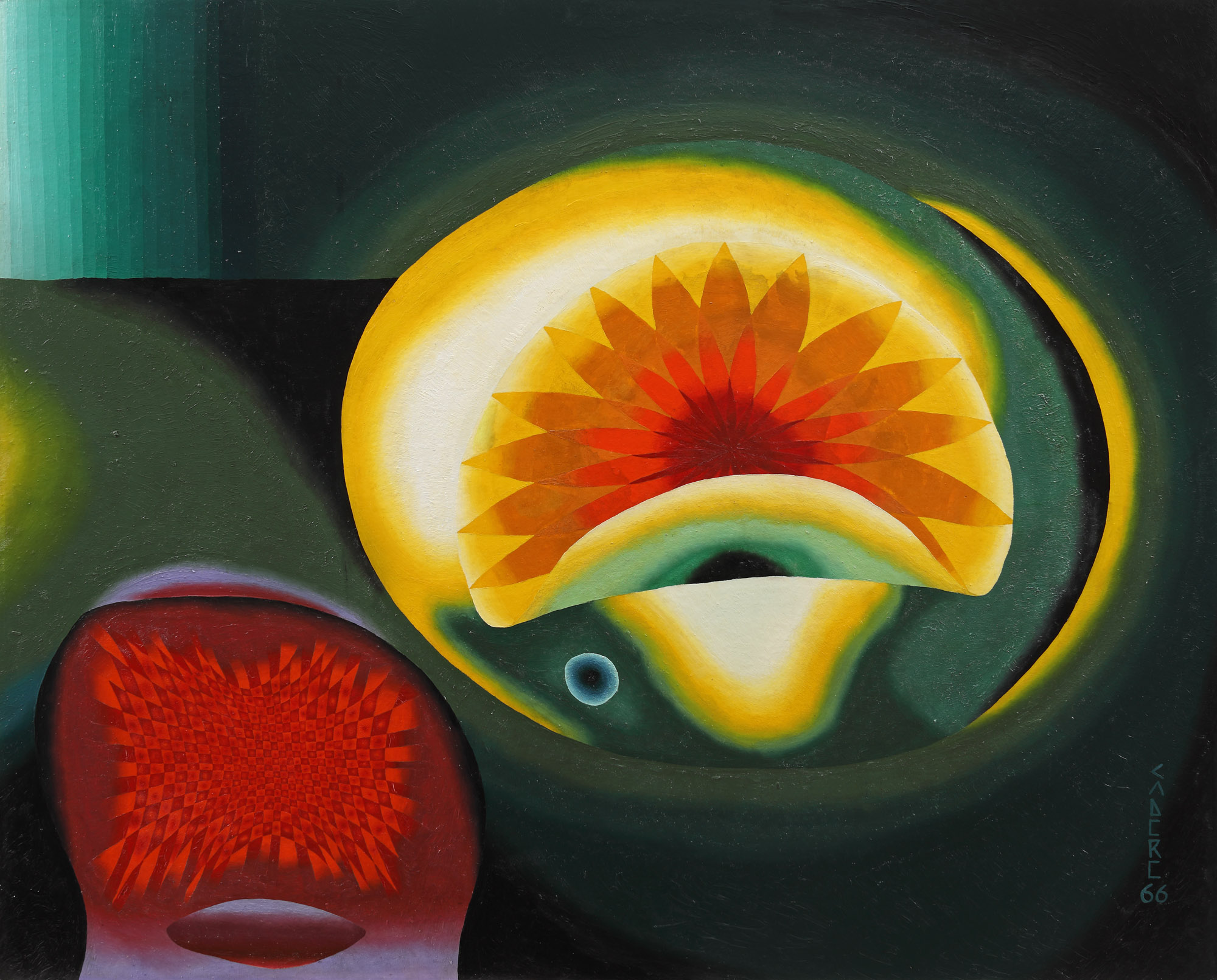
Being the son of a prominent Romanian diplomat, Andrei Cădere suffered after the installation of the Communist regime in Romania, leading a marginal existence and, among other things, posing as a model for Corneliu Baba. He leaves Romania in 1967 and settles in Paris, where he also dies, in 1978. Along with Piet Mondrian or Kazimir Malevich, Andrei Cădere was included in the great retrospective exhibition dedicated to abstract art and anti-figurative art held at Whitechapel Gallery, London, 2015.
"After Brâncuși, Cădere is the only artist of Romanian origin who matters in contemporary art", stated Erwin Kessler in an article published in "Revista 22", upon opening the retrospective exhibition "Peinture sans fin" from the National Museum of Contemporary Art in 2008. Whereas Brâncuși’s creation was confined to the paradigm of modern art history, Andrei Cădere’s influence has increased considerably in the last decades over artistic performances and contemporary abstract art. The artist is known for his tenacity in forcing institutional limits: at first he got free rides in the opening days and events where he was not invited, by placing his wooden bars, and then came into prominence with his own exhibitions.
In 2009, on the 53rd edition of the Venice Biennial, within the central exhibition "Making Worlds", curator Daniel Birnbaum relied on a selection of 90 artists who, ideally, would not perceive art as an object or as merchandise, but rather as a mode to reinterpret the world. The works that drew attention included the following: 200 suspended gymnast rings, by William Forsythe; a floating house by Mike Bouchet, the model city by Yona Friedman; Andrei Cădere’s mathematical and painted round wood staffs. Seemingly accidentally forgotten in various spaces, the artist’s performance from the 70s was thus reconstructed. For instance, one of Cădere’s works was inserted into a space dedicated to the German artist Öyvind Fahlström.
Having been insufficiently researched, his works created in Romania, before the time of his departure, constitute a bright and avant-garde enclave for artistic creation from that period, placing Romania coordinated with the occidental trends.
Размери
width 85 cm, height 70 cm
Описание
oil on cardboard, signed and dated bottom right, with blue, "CĂDERE, (19)66"
Запознанства
1966
ДОПЪЛНИТЕЛНА ИНФОРМАЦИЯ
За разяснения относно процедурата по наддаване, разходите при спечелване, условията за гаранция, плащане и вземане на спечеления лот, препоръчваме внимателно четене/препрочитане на Правилника за наддаване.
Being the son of a prominent Romanian diplomat, Andrei Cădere suffered after the installation of the Communist regime in Romania, leading a marginal existence and, among other things, posing as a model for Corneliu Baba. He leaves Romania in 1967 and settles in Paris, where he also dies, in 1978. Along with Piet Mondrian or Kazimir Malevich, Andrei Cădere was included in the great retrospective exhibition dedicated to abstract art and anti-figurative art held at Whitechapel Gallery, London, 2015.
"After Brâncuși, Cădere is the only artist of Romanian origin who matters in contemporary art", stated Erwin Kessler in an article published in "Revista 22", upon opening the retrospective exhibition "Peinture sans fin" from the National Museum of Contemporary Art in 2008. Whereas Brâncuși’s creation was confined to the paradigm of modern art history, Andrei Cădere’s influence has increased considerably in the last decades over artistic performances and contemporary abstract art. The artist is known for his tenacity in forcing institutional limits: at first he got free rides in the opening days and events where he was not invited, by placing his wooden bars, and then came into prominence with his own exhibitions.
In 2009, on the 53rd edition of the Venice Biennial, within the central exhibition "Making Worlds", curator Daniel Birnbaum relied on a selection of 90 artists who, ideally, would not perceive art as an object or as merchandise, but rather as a mode to reinterpret the world. The works that drew attention included the following: 200 suspended gymnast rings, by William Forsythe; a floating house by Mike Bouchet, the model city by Yona Friedman; Andrei Cădere’s mathematical and painted round wood staffs. Seemingly accidentally forgotten in various spaces, the artist’s performance from the 70s was thus reconstructed. For instance, one of Cădere’s works was inserted into a space dedicated to the German artist Öyvind Fahlström.
Having been insufficiently researched, his works created in Romania, before the time of his departure, constitute a bright and avant-garde enclave for artistic creation from that period, placing Romania coordinated with the occidental trends.
ДОПЪЛНИТЕЛНА ИНФОРМАЦИЯ
За разяснения относно процедурата по наддаване, разходите при спечелване, условията за гаранция, плащане и вземане на спечеления лот, препоръчваме внимателно четене/препрочитане на Правилника за наддаване.