Снимките на лота са с информативен и илюстративен характер и не могат да предоставят изключително детайлен изглед на обекта от всички ъгли. Препоръчваме внимателен оглед на лота на място, преди да направите наддаване.
Снимките на лота са с информативен и илюстративен характер и не могат да предоставят изключително детайлен изглед на обекта от всички ъгли. Препоръчваме внимателен оглед на лота на място, преди да направите наддаване.
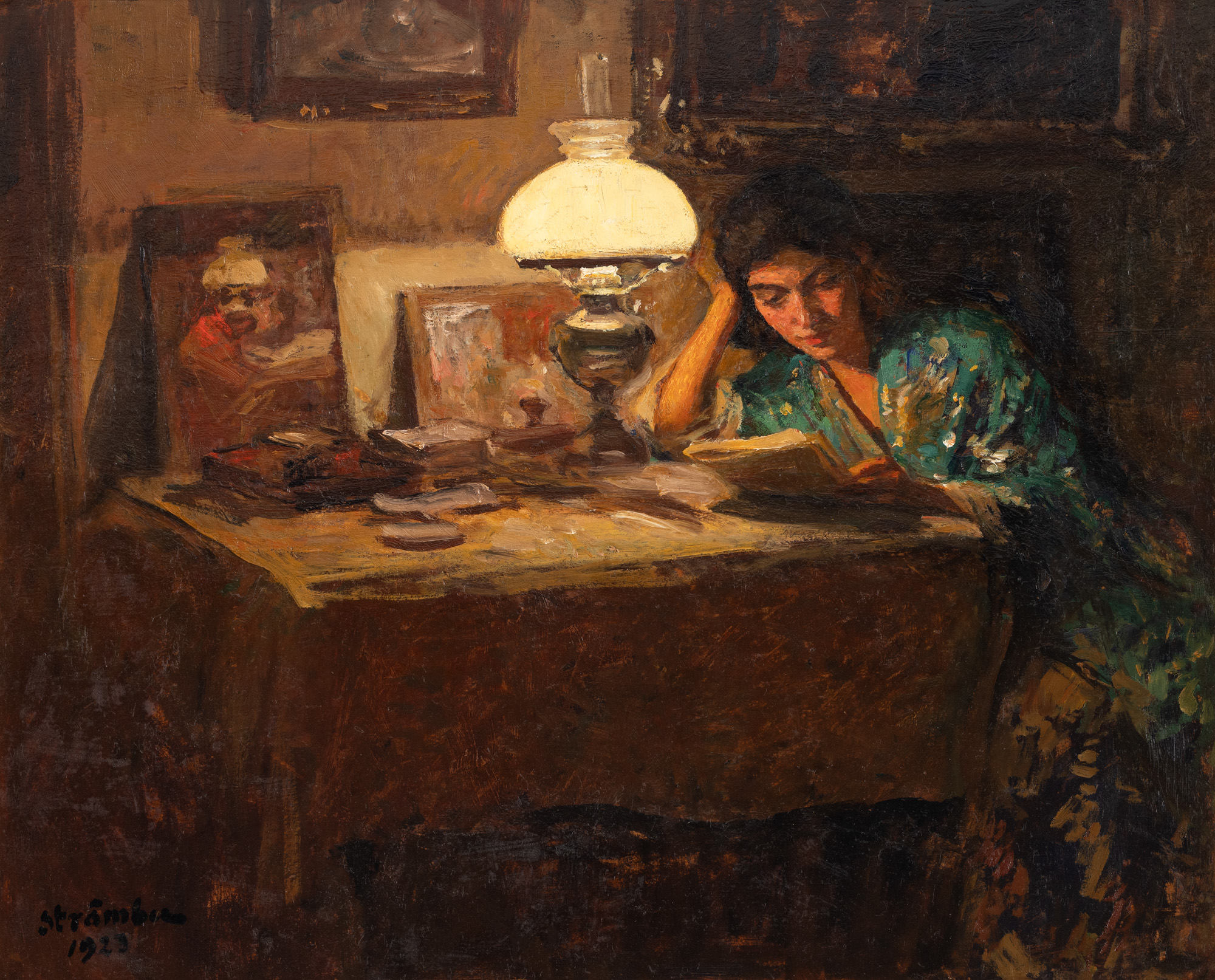
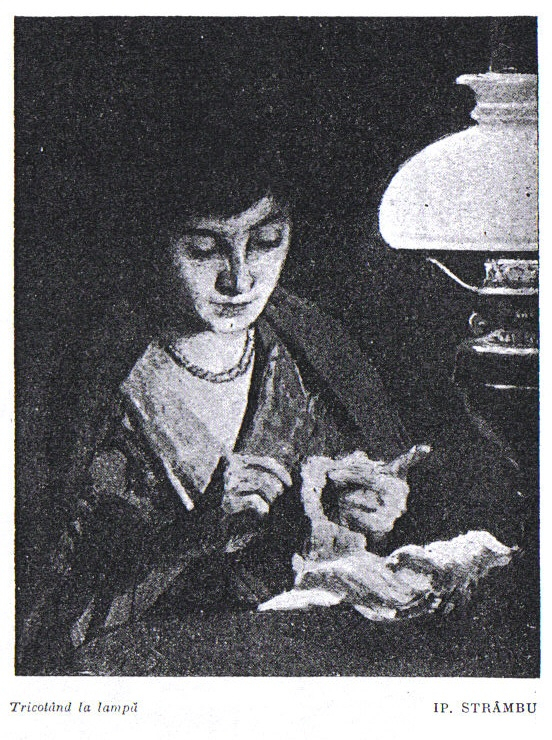
Undoubtedly, Ipolit Strâmbu is one of the painters who possesses genuine valuabilities in the matter of depicting light in art. He dedicates his creation almost entirely to the direct inscription of light in colors, and without mistake, he manages to recreate spectacular effects of light (be it natural - garden scenes; or from alternative sources - lamps, candles, tobacco). But sunlight also penetrates the interiors, allowing glimpses of zones with a dazzling shine and a fascinating interweaving of shadows on the faces and bodies of the characters. The study of light will begin from the student benches and continue throughout his artistic journey. Usually, we find the female character inserted in the landscape or interior scenes. Often, the model is represented solitary; but sometimes we also see groups of protagonists gathered around the lamp, at work, enjoying tea, or reading letters. Works such as "At the Lamp" (1913), "At Tea" (1916) or "Knitting at the Lamp" (1927) reiterate, in a plastic enumeration that extends over several decades, the same motifs of interest for Ipolit Strâmbu. The chromatic intensity of the whole composition is closely related to the degree of brightness produced by the artist's proposed light object - sometimes the small table lamp; other times the large, imposing lamp stand. Therefore, the colors darken or lighten taking into account these aspects. "To separate the general masses of shadow from those of light, I look at the motif in its entirety, with the background and all, - among genes, - and seeing how far the closed extends and where the open begins, I draw the edge of the shadow with an indecisive outline, made not with the sharp tip of charcoal but with the flat of its tip." the artist would declare. The work, an eloquent composition, reveals the artistic refinement of the artist. The young protagonist, a recurrent theme in the artist's work, is caught sitting at the table, reading by the light of the lamp. Her face is illuminated by the rays of light that traverse the finite space of the room, allowing the details in the foreground, placed in direct proximity to the light, to be easily deciphered in the future, while the corners of the room are veiled in shadow. Among the incandescent intricacies, the paintings on the walls stand out, but also the work on the table, a work that exactly illustrates the theme of the opera - the girl's reading in the lamp light. Therefore dominate the warm tones, ochre and orange, but there are also some color accents (especially in the green of the muse's robe).
Препратки
STRÂMBU, Ipolit, "Drawing and painting from nature", Mârvan Workshops, Bucharest.
Размери
width 61 cm, height 49.5 cm
Описание
oil on cardboard, signed and dated bottom left, in black, "Strâmbu, 1923"
Запознанства
1923
ДОПЪЛНИТЕЛНА ИНФОРМАЦИЯ
За разяснения относно процедурата по наддаване, разходите при спечелване, условията за гаранция, плащане и вземане на спечеления лот, препоръчваме внимателно четене/препрочитане на Правилника за наддаване.
Undoubtedly, Ipolit Strâmbu is one of the painters who possesses genuine valuabilities in the matter of depicting light in art. He dedicates his creation almost entirely to the direct inscription of light in colors, and without mistake, he manages to recreate spectacular effects of light (be it natural - garden scenes; or from alternative sources - lamps, candles, tobacco). But sunlight also penetrates the interiors, allowing glimpses of zones with a dazzling shine and a fascinating interweaving of shadows on the faces and bodies of the characters. The study of light will begin from the student benches and continue throughout his artistic journey. Usually, we find the female character inserted in the landscape or interior scenes. Often, the model is represented solitary; but sometimes we also see groups of protagonists gathered around the lamp, at work, enjoying tea, or reading letters. Works such as "At the Lamp" (1913), "At Tea" (1916) or "Knitting at the Lamp" (1927) reiterate, in a plastic enumeration that extends over several decades, the same motifs of interest for Ipolit Strâmbu. The chromatic intensity of the whole composition is closely related to the degree of brightness produced by the artist's proposed light object - sometimes the small table lamp; other times the large, imposing lamp stand. Therefore, the colors darken or lighten taking into account these aspects. "To separate the general masses of shadow from those of light, I look at the motif in its entirety, with the background and all, - among genes, - and seeing how far the closed extends and where the open begins, I draw the edge of the shadow with an indecisive outline, made not with the sharp tip of charcoal but with the flat of its tip." the artist would declare. The work, an eloquent composition, reveals the artistic refinement of the artist. The young protagonist, a recurrent theme in the artist's work, is caught sitting at the table, reading by the light of the lamp. Her face is illuminated by the rays of light that traverse the finite space of the room, allowing the details in the foreground, placed in direct proximity to the light, to be easily deciphered in the future, while the corners of the room are veiled in shadow. Among the incandescent intricacies, the paintings on the walls stand out, but also the work on the table, a work that exactly illustrates the theme of the opera - the girl's reading in the lamp light. Therefore dominate the warm tones, ochre and orange, but there are also some color accents (especially in the green of the muse's robe).
ДОПЪЛНИТЕЛНА ИНФОРМАЦИЯ
За разяснения относно процедурата по наддаване, разходите при спечелване, условията за гаранция, плащане и вземане на спечеления лот, препоръчваме внимателно четене/препрочитане на Правилника за наддаване.