Снимките на лота са с информативен и илюстративен характер и не могат да предоставят изключително детайлен изглед на обекта от всички ъгли. Препоръчваме внимателен оглед на лота на място, преди да направите наддаване.
Снимките на лота са с информативен и илюстративен характер и не могат да предоставят изключително детайлен изглед на обекта от всички ъгли. Препоръчваме внимателен оглед на лота на място, преди да направите наддаване.
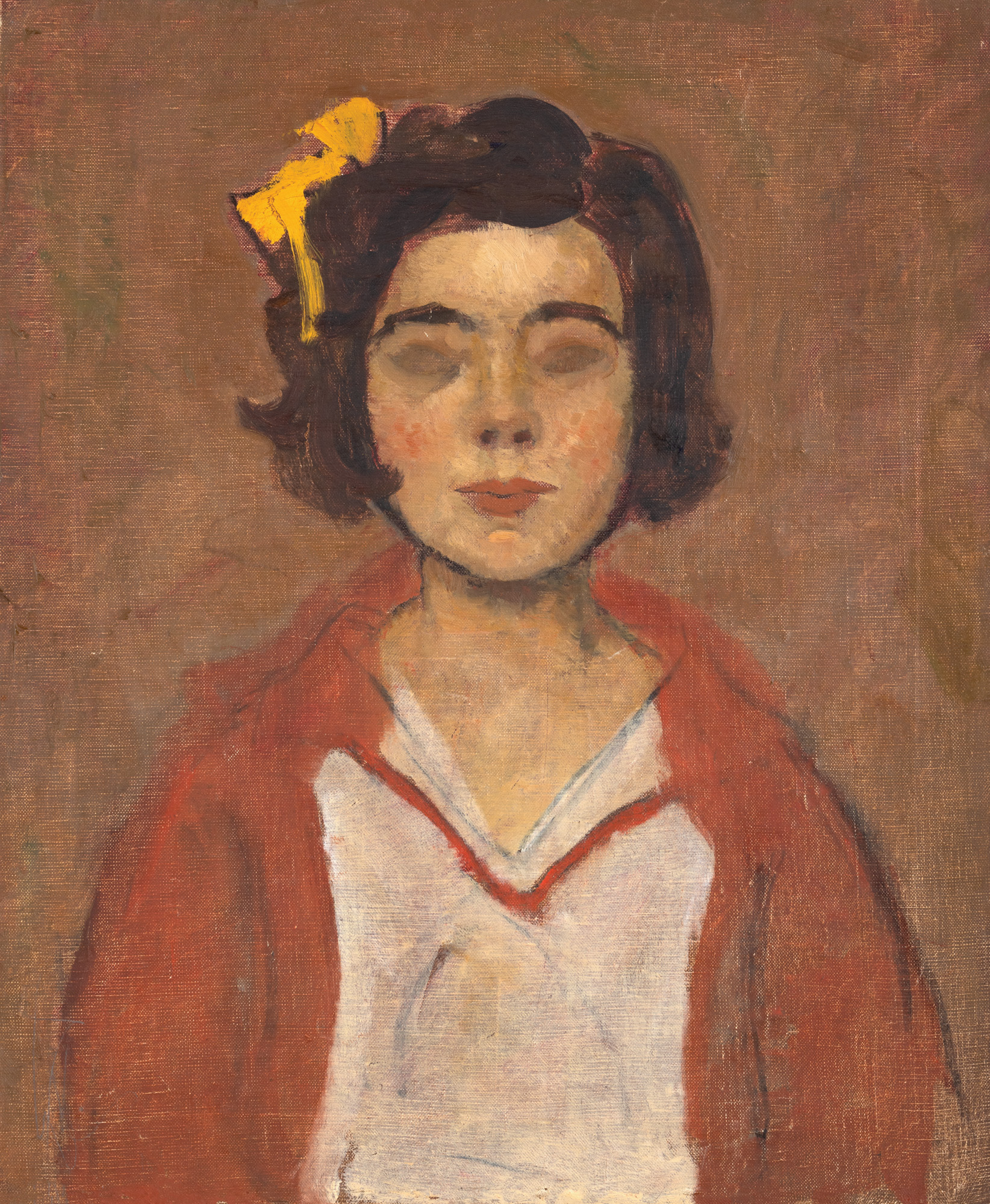
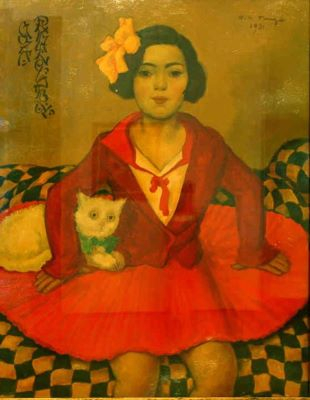
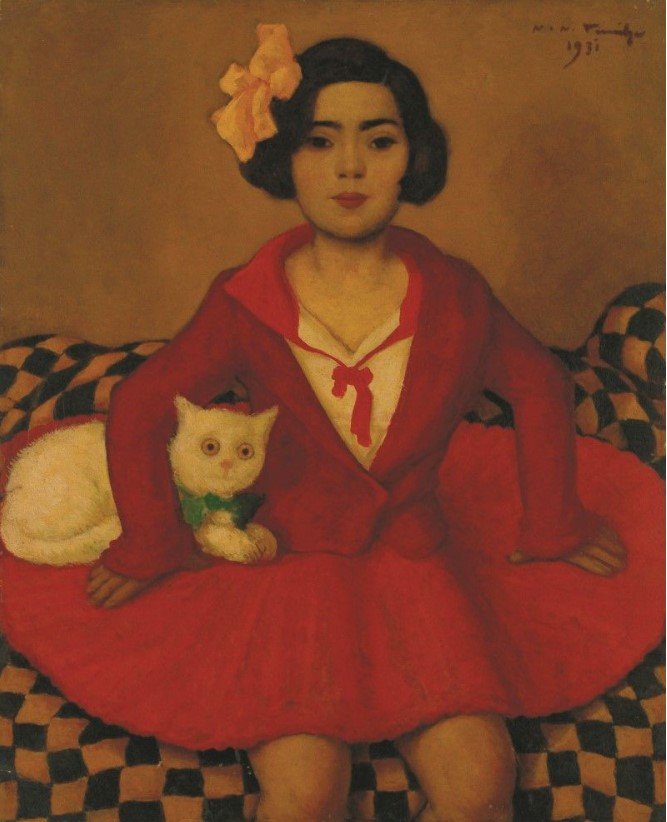
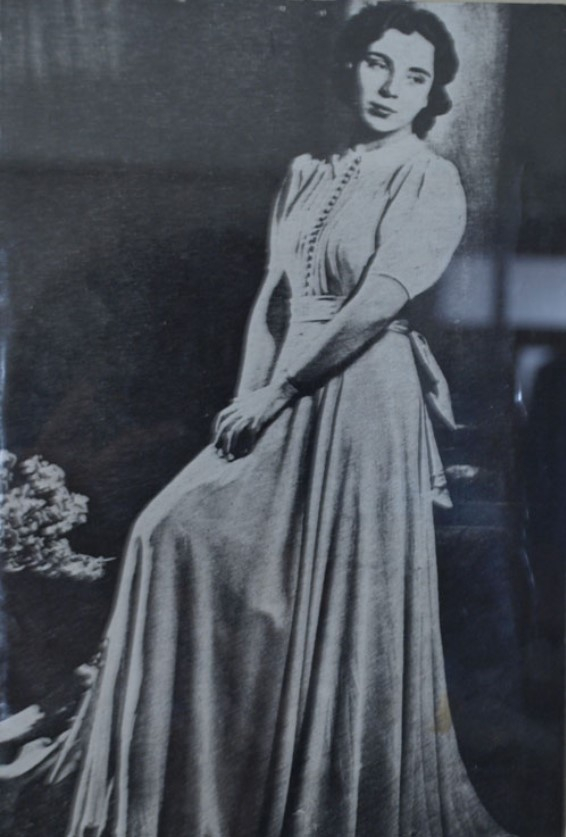
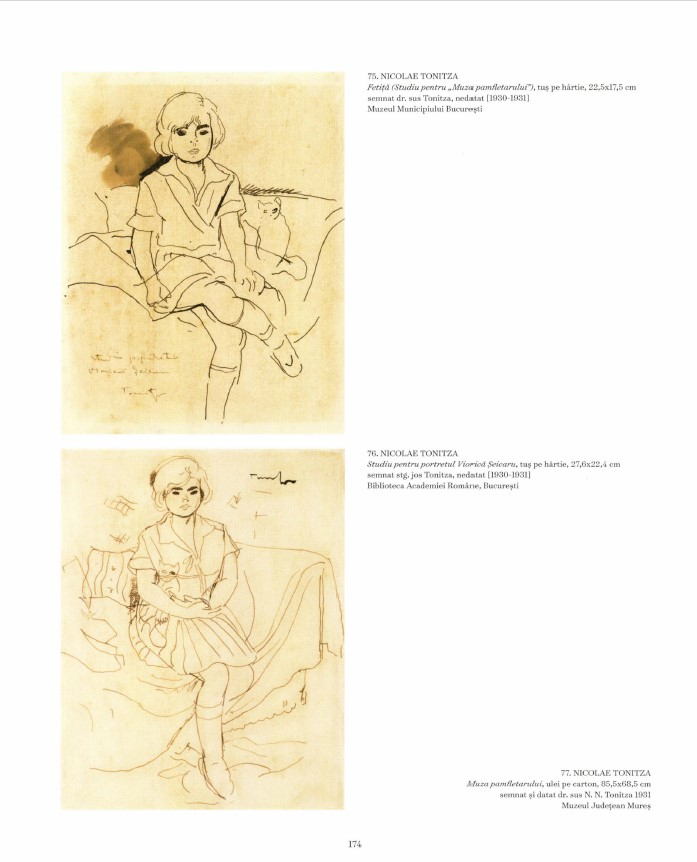
This work likely represents a preliminary study for the imposing creation "The Pamphleteer's Muse," which we find in two versions in the collections of two renowned museums: the Art Museum of Târgu Mureș and the Museum of the Cris Country in Oradea. Among the remarkable differences between the two works, we identify the Japanized writing, inserted in the upper left corner - signifying the title of the work - in the version present in the collection of the Oradea museum. The two museums find their creative act's genesis in the same year, 1931, and over time will expose their artworks together or separately. The work's protagonist is Viorela Șeicaru (1923-1981), the daughter of Pamfil Șeicaru, one of the great journalists of the interwar period. Having a law degree, he was at the head of the "Curentul" trust, which included the newspapers "Evenimentul" or "Rapid" and the weekly supplements "Curentul's family", "Curentul Magazin" and "Curentul for children and youth", the latter managed until 1941, when she left for studies, by Ana-Viorela, the journalist's daughter. However, Pamfil Șeicaru's collaborations and directories have also extended to other publications, one of which is “The Political-Literary Polemics Magazine”, a magazine in which Nicolae Tonitza was present with drawings and articles. A true lover of Romanian art, Pamfil Șeicaru held in his Madrid apartment, which Govora had taken over, numerous works done by Nicolae Tonitza, Francisc Șirato, Ștefan Dimitrescu or Nicolae Dărăscu. In the portrait gallery created by Tonitza, we also find a work entitled "The Pamphleteer", a sign that the relationship between the two personalities has reached the ecstatic heights of pictorial transposition. Married to Cișmigiu and remarried to Vergne, Ana-Viorela thus followed the professional path of her father, but established herself abroad when she left for studies.
The 1930s may be one of the richest periods in Tonitza's work. A stage stands out now influenced by the clear oriental art, highlighted especially by Ornamentalism. The work "The Japanese", located today in the collection of the "Ion Ionescu-Quintus" Prahova County Art Museum in Ploiești, is also exponential for this thematic cycle. The arabesques and the wavy lines are especially outstanding, and so are the flat chromatic approach or the almond eyes of the characters. Also in 1931, the painter obtained the work of the Saint George Church in Constanta, a project that he will undertake with C. Bacalu and Jean C. Buluk. He also participated in exhibitions: “Drawing and Engraving Salon”, “Modern Romanian Art Exhibition” or “International Child Exhibition.” In the present portrait, depicted in the foreground - unlike the much wider perspective of the two versions found in the museum's repertoires in the country, the protagonist is depicted in the same manner, with a sober look, with short cut hair from which the yellow bow emerges, wearing the same red garments and white shirt. The work is, therefore, a preparatory portrait of the work, in which the child poses according to the adults' wishes. The artist declared, at one point: "I've known kids in rich clothes, kids fed with abundance and refinement, kids pampered with permanent attention and coddles, perfectly healthy kids, but in whose prematurely aged souls suppressed pains matured and piercing agonies grew.” Unlike other child portraits, we note, inevitably, a more biased social status of the character, accompanied, however, by a more moderate attitude. "Childhood? Of course: childhood! But in a child's scuffle there is always something serious that very rarely the mature ones can touch - in their serious acts. Especially in art ..., " confessed Tonitza.
Препратки
TONITZA, Nicolae, "Writings on Art", Meridiane Publishing House, Bucharest, 1964.
Exhibition catalog "Tonitza. Images of Childhood", Târgu Mureș, 2019.
Размери
width 47 cm, height 58 cm
Описание
oil on canvas
Запознанства
1930-1931
ПРОИЗХОД
Zamphiropol-Dall's painter collection.
ДОПЪЛНИТЕЛНА ИНФОРМАЦИЯ
За разяснения относно процедурата по наддаване, разходите при спечелване, условията за гаранция, плащане и вземане на спечеления лот, препоръчваме внимателно четене/препрочитане на Правилника за наддаване.
This work likely represents a preliminary study for the imposing creation "The Pamphleteer's Muse," which we find in two versions in the collections of two renowned museums: the Art Museum of Târgu Mureș and the Museum of the Cris Country in Oradea. Among the remarkable differences between the two works, we identify the Japanized writing, inserted in the upper left corner - signifying the title of the work - in the version present in the collection of the Oradea museum. The two museums find their creative act's genesis in the same year, 1931, and over time will expose their artworks together or separately. The work's protagonist is Viorela Șeicaru (1923-1981), the daughter of Pamfil Șeicaru, one of the great journalists of the interwar period. Having a law degree, he was at the head of the "Curentul" trust, which included the newspapers "Evenimentul" or "Rapid" and the weekly supplements "Curentul's family", "Curentul Magazin" and "Curentul for children and youth", the latter managed until 1941, when she left for studies, by Ana-Viorela, the journalist's daughter. However, Pamfil Șeicaru's collaborations and directories have also extended to other publications, one of which is “The Political-Literary Polemics Magazine”, a magazine in which Nicolae Tonitza was present with drawings and articles. A true lover of Romanian art, Pamfil Șeicaru held in his Madrid apartment, which Govora had taken over, numerous works done by Nicolae Tonitza, Francisc Șirato, Ștefan Dimitrescu or Nicolae Dărăscu. In the portrait gallery created by Tonitza, we also find a work entitled "The Pamphleteer", a sign that the relationship between the two personalities has reached the ecstatic heights of pictorial transposition. Married to Cișmigiu and remarried to Vergne, Ana-Viorela thus followed the professional path of her father, but established herself abroad when she left for studies.
The 1930s may be one of the richest periods in Tonitza's work. A stage stands out now influenced by the clear oriental art, highlighted especially by Ornamentalism. The work "The Japanese", located today in the collection of the "Ion Ionescu-Quintus" Prahova County Art Museum in Ploiești, is also exponential for this thematic cycle. The arabesques and the wavy lines are especially outstanding, and so are the flat chromatic approach or the almond eyes of the characters. Also in 1931, the painter obtained the work of the Saint George Church in Constanta, a project that he will undertake with C. Bacalu and Jean C. Buluk. He also participated in exhibitions: “Drawing and Engraving Salon”, “Modern Romanian Art Exhibition” or “International Child Exhibition.” In the present portrait, depicted in the foreground - unlike the much wider perspective of the two versions found in the museum's repertoires in the country, the protagonist is depicted in the same manner, with a sober look, with short cut hair from which the yellow bow emerges, wearing the same red garments and white shirt. The work is, therefore, a preparatory portrait of the work, in which the child poses according to the adults' wishes. The artist declared, at one point: "I've known kids in rich clothes, kids fed with abundance and refinement, kids pampered with permanent attention and coddles, perfectly healthy kids, but in whose prematurely aged souls suppressed pains matured and piercing agonies grew.” Unlike other child portraits, we note, inevitably, a more biased social status of the character, accompanied, however, by a more moderate attitude. "Childhood? Of course: childhood! But in a child's scuffle there is always something serious that very rarely the mature ones can touch - in their serious acts. Especially in art ..., " confessed Tonitza.
ДОПЪЛНИТЕЛНА ИНФОРМАЦИЯ
За разяснения относно процедурата по наддаване, разходите при спечелване, условията за гаранция, плащане и вземане на спечеления лот, препоръчваме внимателно четене/препрочитане на Правилника за наддаване.