
Снимките на лота са с информативен и илюстративен характер и не могат да предоставят изключително детайлен изглед на обекта от всички ъгли. Препоръчваме внимателен оглед на лота на място, преди да направите наддаване.
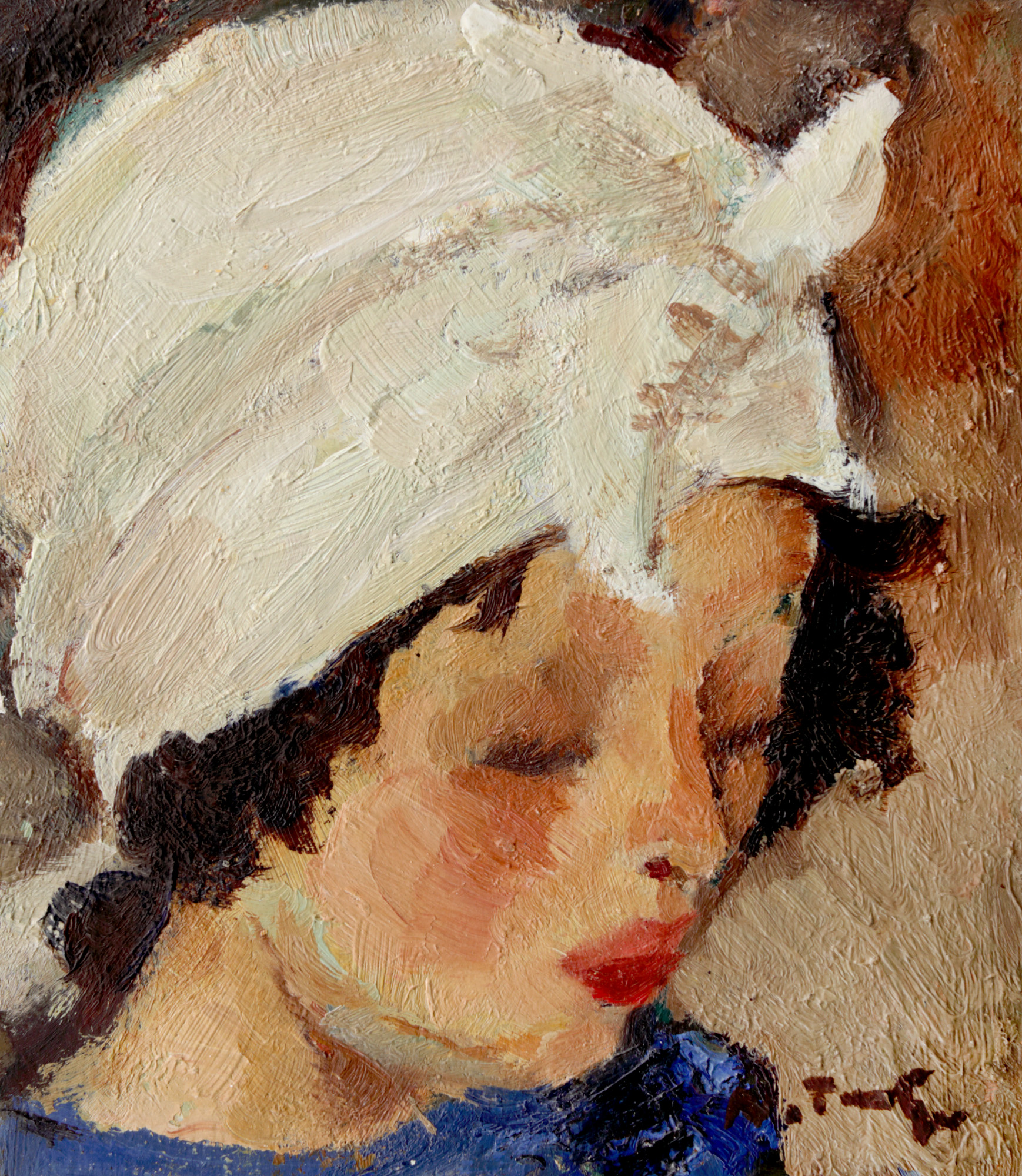
Nicolae Tonitza believes that art's role consists of training the human psyche and educating its sensitivity. His preference for drawing is thoroughly explored during the Munich school years, but he would acquire pictorial qualities following his enrolment at the Paris Academy of Art. He learns how to use colour to his own advantage and acquires the necessary knowledge, in order to help him assign space and form in favour of chromatics. In the graphics he adopts the attitude of the accuser willing to undo injustice. However, in painting, he would focus on rendering the elements that fill them affectively in a positive way: the woman, the child, the home, workers, flowers or landscapes. The painting style he adopts represents the result of a thorough study and a continuous exercise of harmoniously combining shapes and colours. He prefers to work from memories, only after completing a preliminary study of the real element. He executes a painting of a sentimental nature, similar to the one of French impressionists, so that he would never be able to associate with Academist ideas, which were rather flat and void of any emotional aspects. Childhood appears both as a symbol and as a central motif of his creation. Portraits of children are executed starting from 1924 in particular. Tonitza would not stop at representing his family environment, but he tends to extend his gallery of children's portraits, by taking over painting commissions both from his acquaintances and from the public. He often places his models on a neutral background. He uses some brightly coloured accents and sometimes gives his little characters various accessories: a colourful sash, a patterned ribbon or a headscarf that makes a direct reference to the arid world of Dobrogea. This time the artist no longer draws the two large, dark, expressive points that once made up the character's gaze, but points to an external focal point, which goes beyond the limits of the canvas, to which the little peasant girl directs her attention. The chromatic mosaic is limited to only a few shades - the white of the handkerchief, the blue of the coat and the red of the lips, but Tonitza will also introduce here the brown of the hair that is spilling out from under the handkerchief. Therefore, he does not focus solely on native inspiration but fills his canvases with Dutch, Tartar, Russian, or Italian female subjects. Sometimes, the title suggested by the artist indicates the profession of the child's parent: 'The Clown's Daughter', 'The Lumberjack's Daughter', 'The Magnate's Little Girl' or 'The Florist's Son' are just a few examples. Other times, he indicates the model's social status both by representation, as well as by name - he paints orphan children, healthy or ill children, children wearing fancy clothing or traditional costumes. The pre-school age is mainly represented by female portraits. The artist focuses mostly on a single human face, allowing himself enough time to capture both the model's features, as well as their entire psychology.
oil on cardboard, signed bottom right, in brown, 'N. Tonitza'
Запознанства
1924-1926
ДОПЪЛНИТЕЛНА ИНФОРМАЦИЯ
За разяснения относно процедурата по наддаване, разходите при спечелване, условията за гаранция, плащане и вземане на спечеления лот, препоръчваме внимателно четене/препрочитане на Правилника за наддаване.
Nicolae Tonitza believes that art's role consists of training the human psyche and educating its sensitivity. His preference for drawing is thoroughly explored during the Munich school years, but he would acquire pictorial qualities following his enrolment at the Paris Academy of Art. He learns how to use colour to his own advantage and acquires the necessary knowledge, in order to help him assign space and form in favour of chromatics. In the graphics he adopts the attitude of the accuser willing to undo injustice. However, in painting, he would focus on rendering the elements that fill them affectively in a positive way: the woman, the child, the home, workers, flowers or landscapes. The painting style he adopts represents the result of a thorough study and a continuous exercise of harmoniously combining shapes and colours. He prefers to work from memories, only after completing a preliminary study of the real element. He executes a painting of a sentimental nature, similar to the one of French impressionists, so that he would never be able to associate with Academist ideas, which were rather flat and void of any emotional aspects. Childhood appears both as a symbol and as a central motif of his creation. Portraits of children are executed starting from 1924 in particular. Tonitza would not stop at representing his family environment, but he tends to extend his gallery of children's portraits, by taking over painting commissions both from his acquaintances and from the public. He often places his models on a neutral background. He uses some brightly coloured accents and sometimes gives his little characters various accessories: a colourful sash, a patterned ribbon or a headscarf that makes a direct reference to the arid world of Dobrogea. This time the artist no longer draws the two large, dark, expressive points that once made up the character's gaze, but points to an external focal point, which goes beyond the limits of the canvas, to which the little peasant girl directs her attention. The chromatic mosaic is limited to only a few shades - the white of the handkerchief, the blue of the coat and the red of the lips, but Tonitza will also introduce here the brown of the hair that is spilling out from under the handkerchief. Therefore, he does not focus solely on native inspiration but fills his canvases with Dutch, Tartar, Russian, or Italian female subjects. Sometimes, the title suggested by the artist indicates the profession of the child's parent: 'The Clown's Daughter', 'The Lumberjack's Daughter', 'The Magnate's Little Girl' or 'The Florist's Son' are just a few examples. Other times, he indicates the model's social status both by representation, as well as by name - he paints orphan children, healthy or ill children, children wearing fancy clothing or traditional costumes. The pre-school age is mainly represented by female portraits. The artist focuses mostly on a single human face, allowing himself enough time to capture both the model's features, as well as their entire psychology.
ДОПЪЛНИТЕЛНА ИНФОРМАЦИЯ
За разяснения относно процедурата по наддаване, разходите при спечелване, условията за гаранция, плащане и вземане на спечеления лот, препоръчваме внимателно четене/препрочитане на Правилника за наддаване.