
26. World as Theatre [1999]
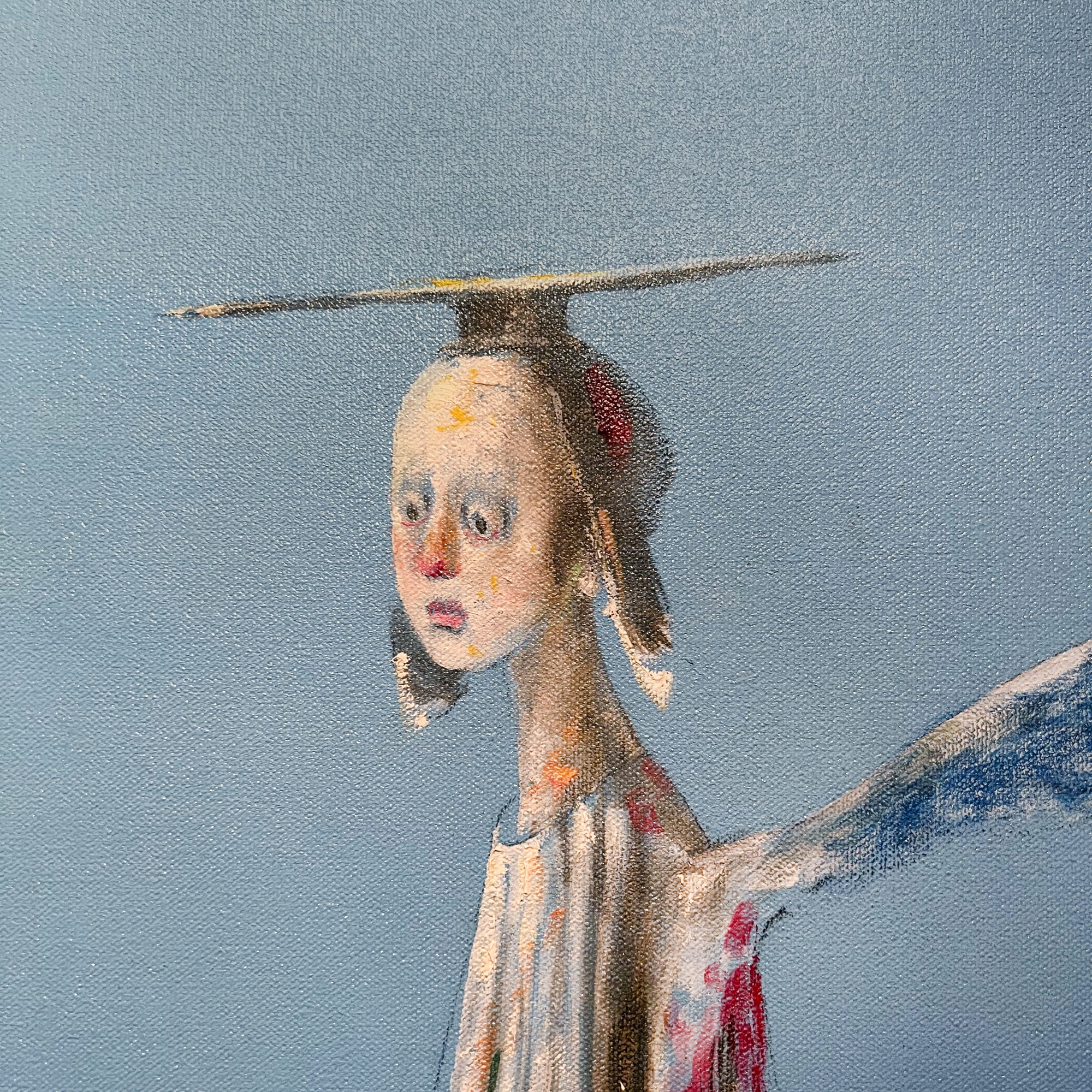
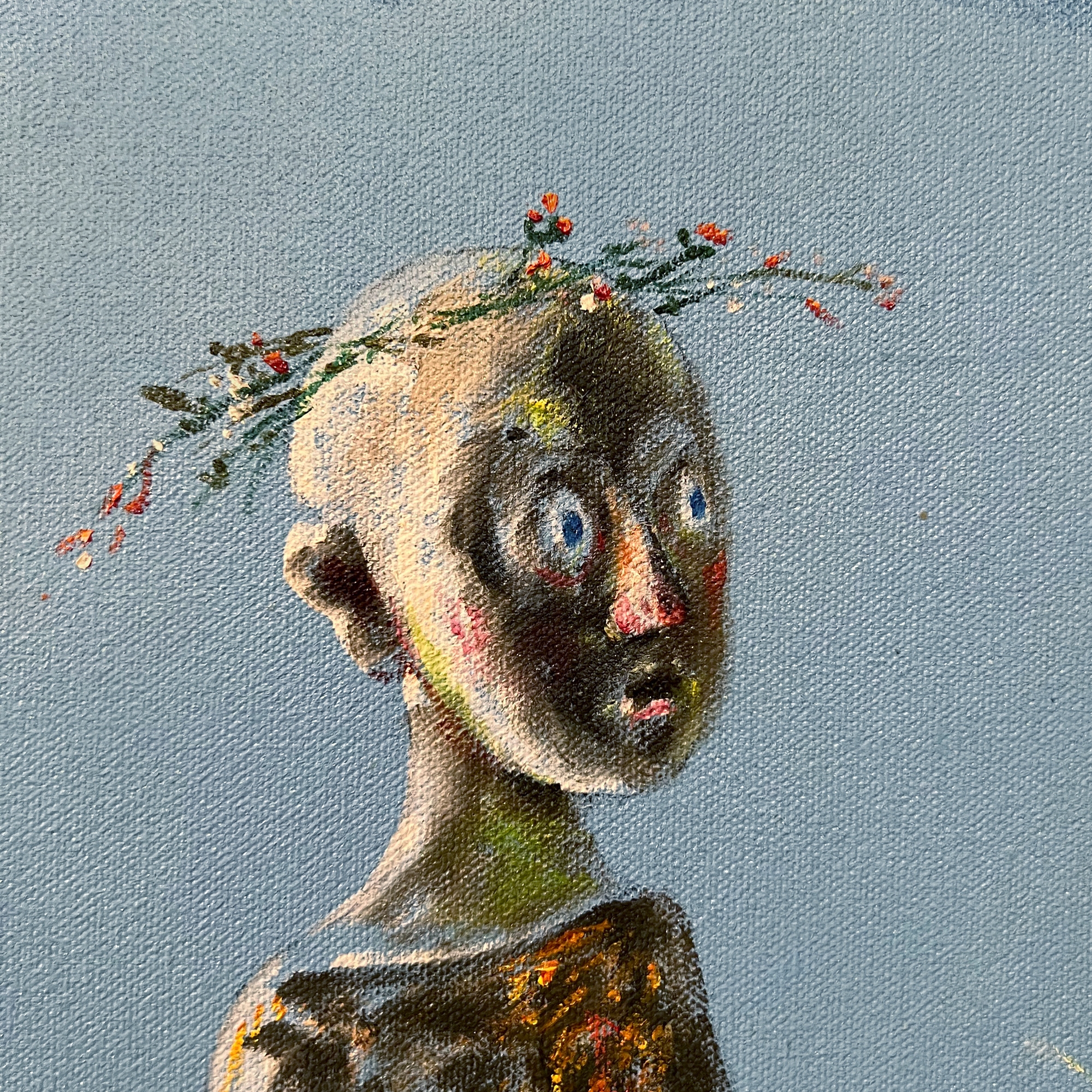
The photos of the lot are informative and indicative, and cannot provide a highly detailed view of the object from all angles. We recommend a careful physical inspection of the lot before bidding.
26. World as Theatre [1999]
1942, Braşov
Estimate:
EUR 35.000 - 55.000
Sold
EUR 75.000
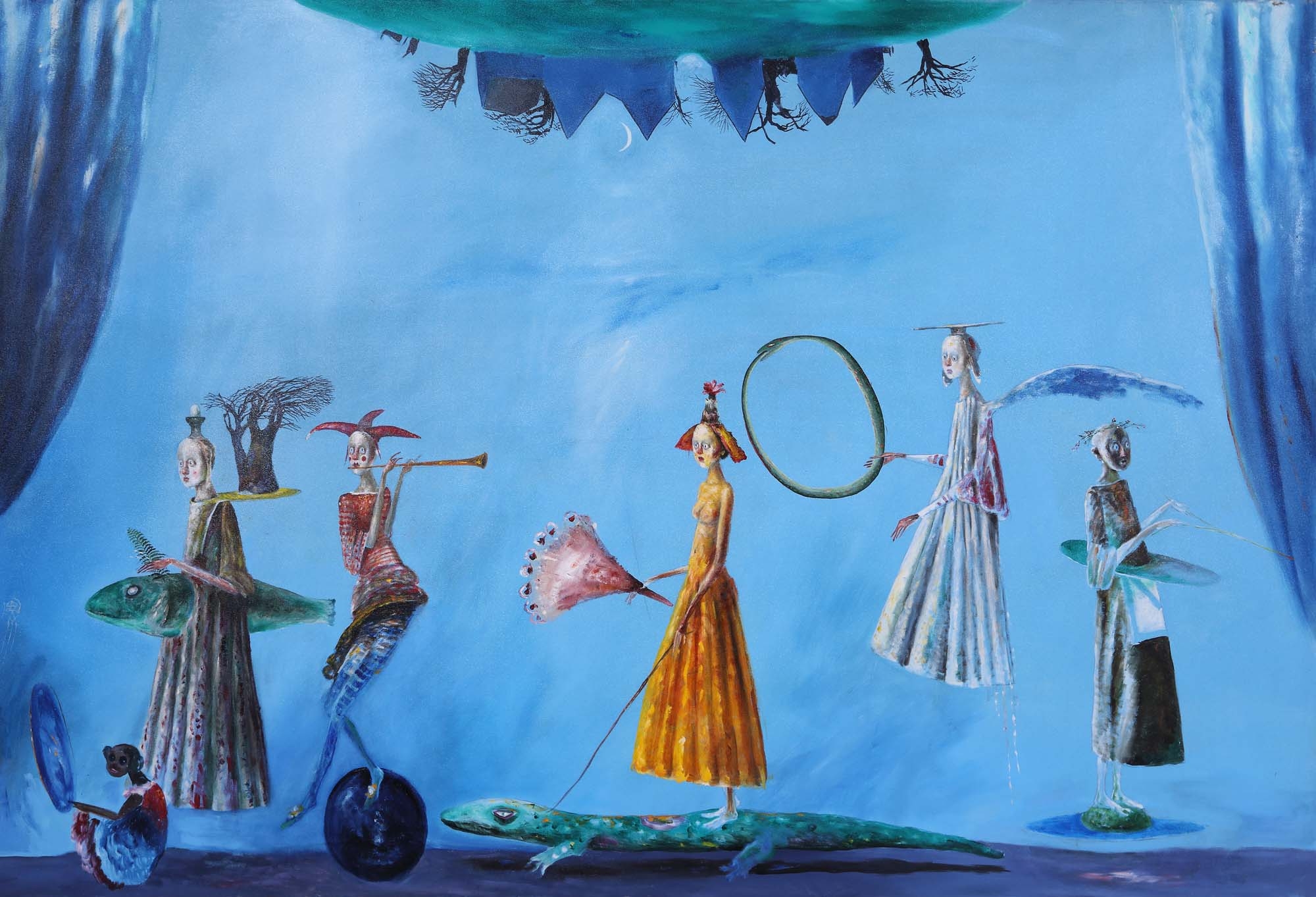
oil on canvas, 150 x 220 cm, 150 Ã 220 cm, signed and dated left side, with white, "Câlția, (1)999"
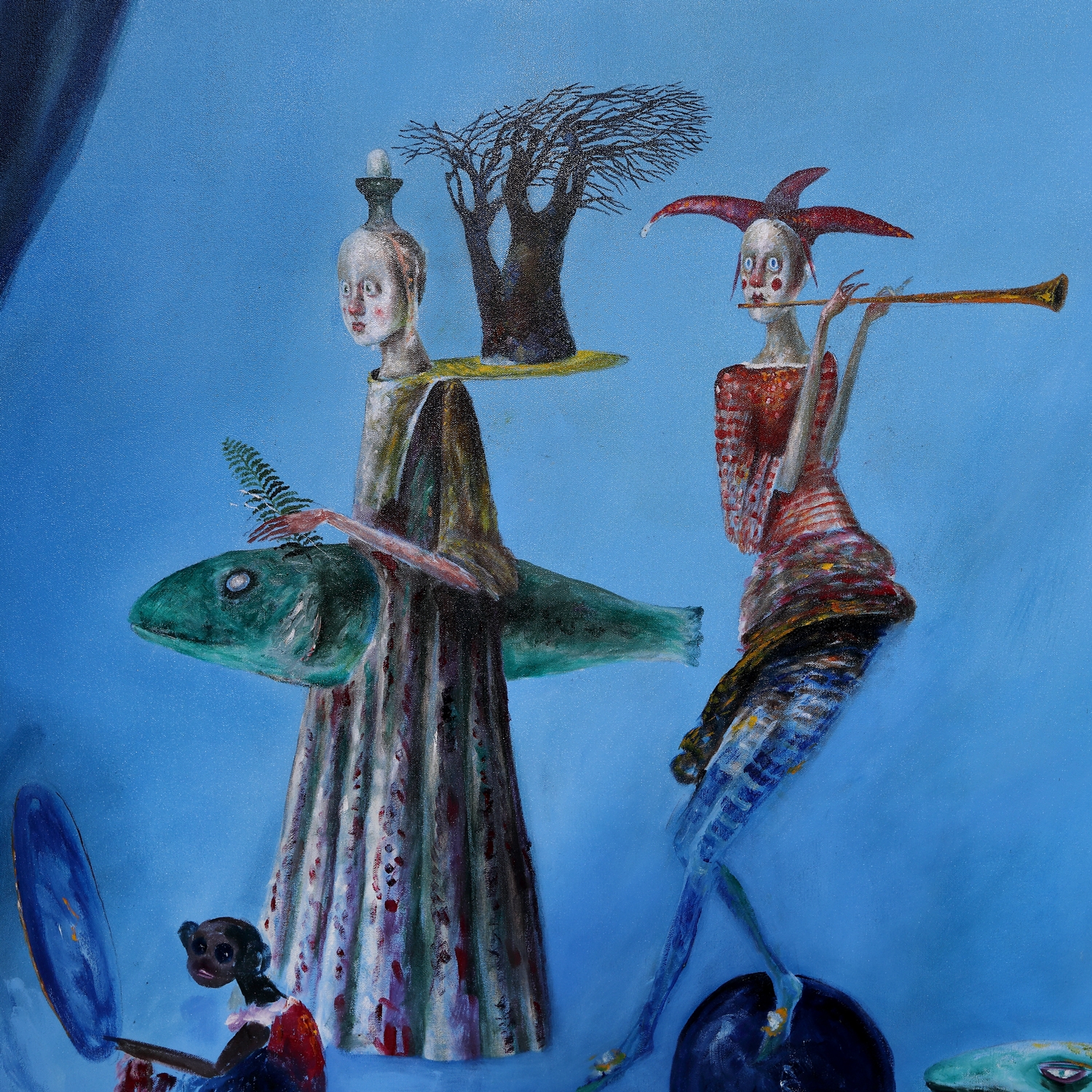
Ștefan Câlția's vision of the world starts from multiple cultural ramifications, which intertwine and give rise to these specific works, which mark the viewer by atmosphere and emotional tone. We have, on the one hand, the archaic world of Romanian folk tales, of fantastic characters; we have traces of ancient, traditional performances with masks and corteges. On the other hand, the viewer observes the imprint left by the values of life in the Transylvanian village where the artist was born and raised (represented in the upside-down village in the upper plane of the work), respectively the influences left by the years of study under Julius Podlipny.
As in most of Ștefan Câlția's works, the sun is not represented, the light comes from nowhere, like a velvety glow that enhances the painting's chromaticism.
The horizon line is placed in the lower plane of the work, as the sovereign on the page is the sky. Beneath the celestial space, the stage unfolds with its all-encompassing vastness.
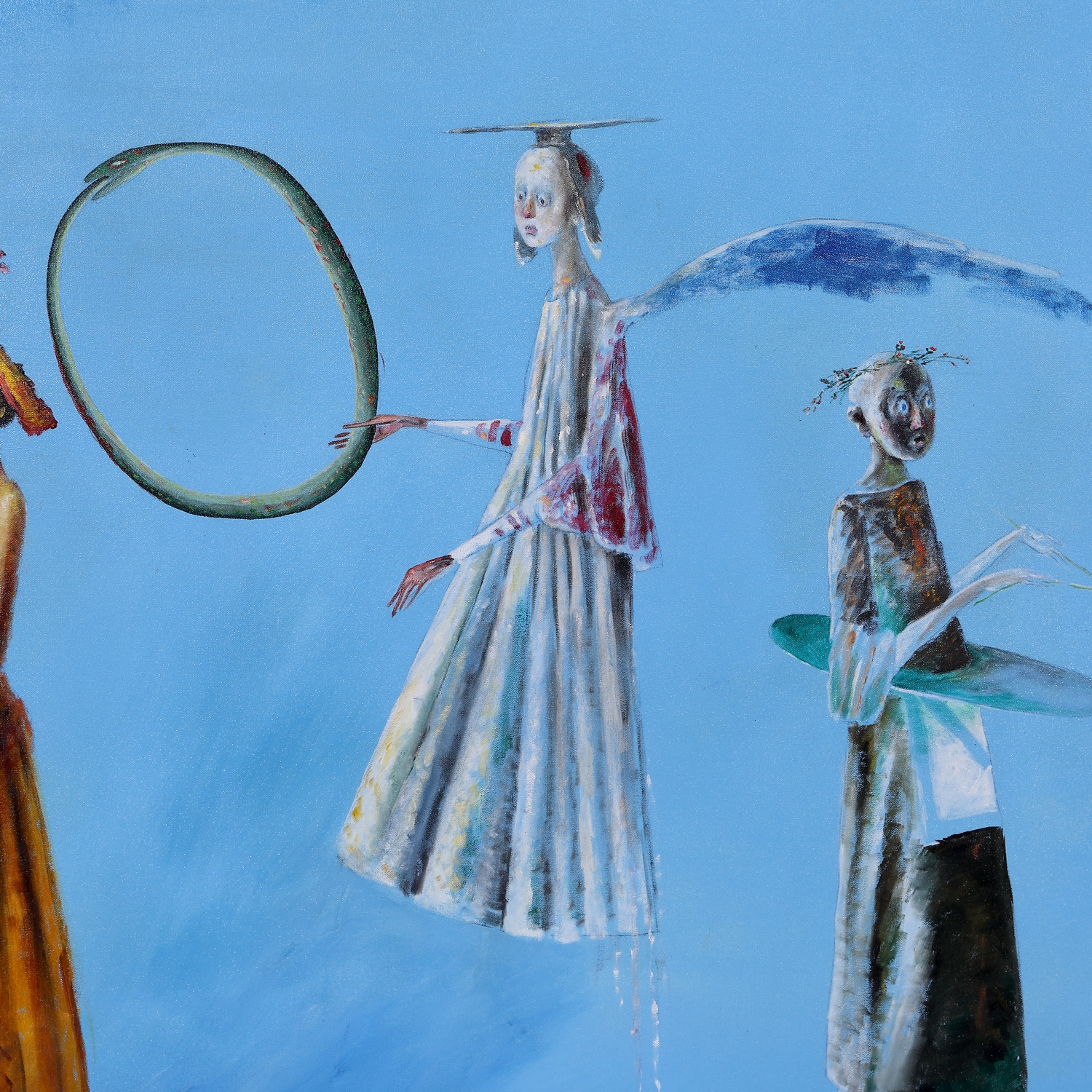
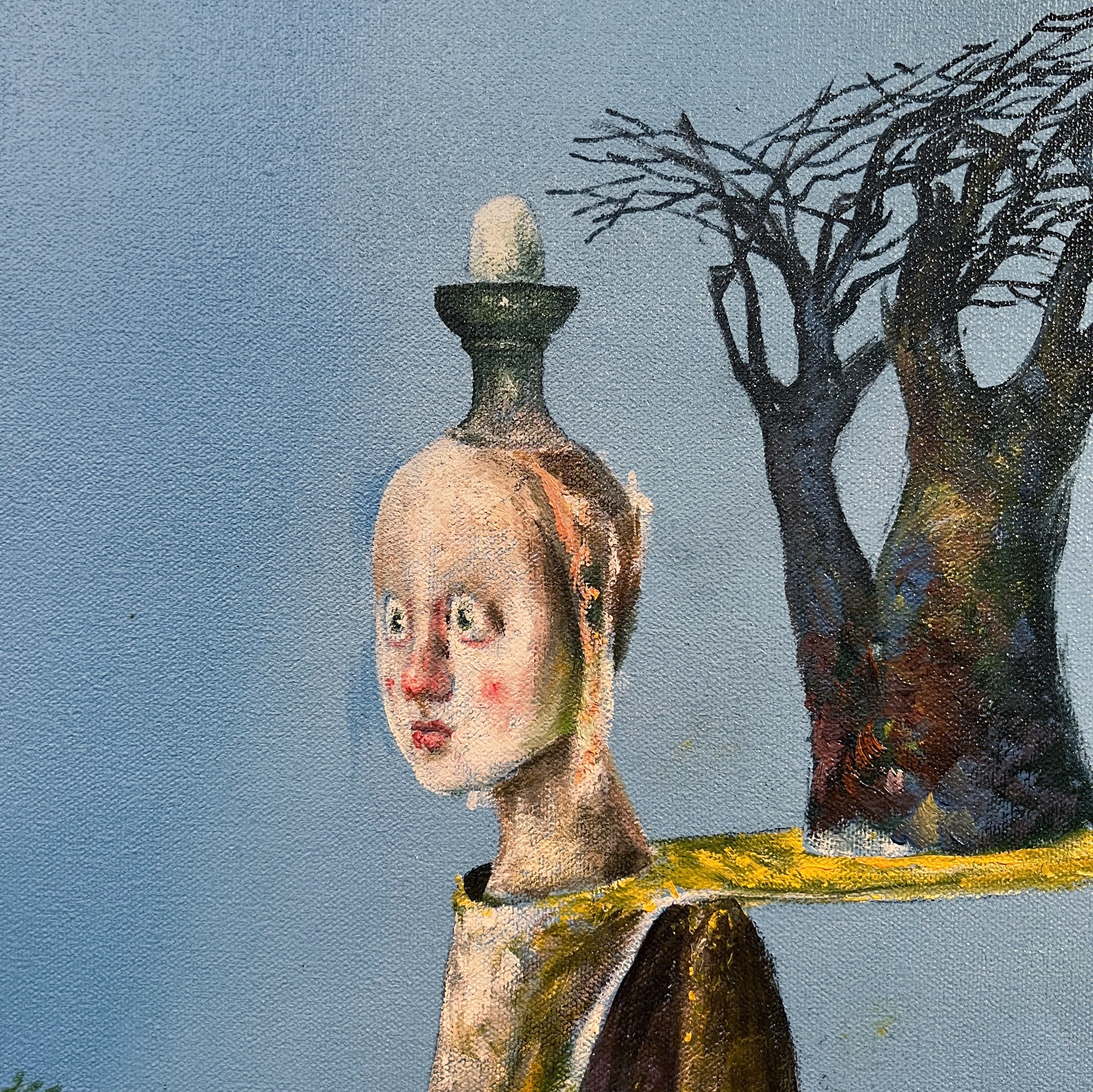
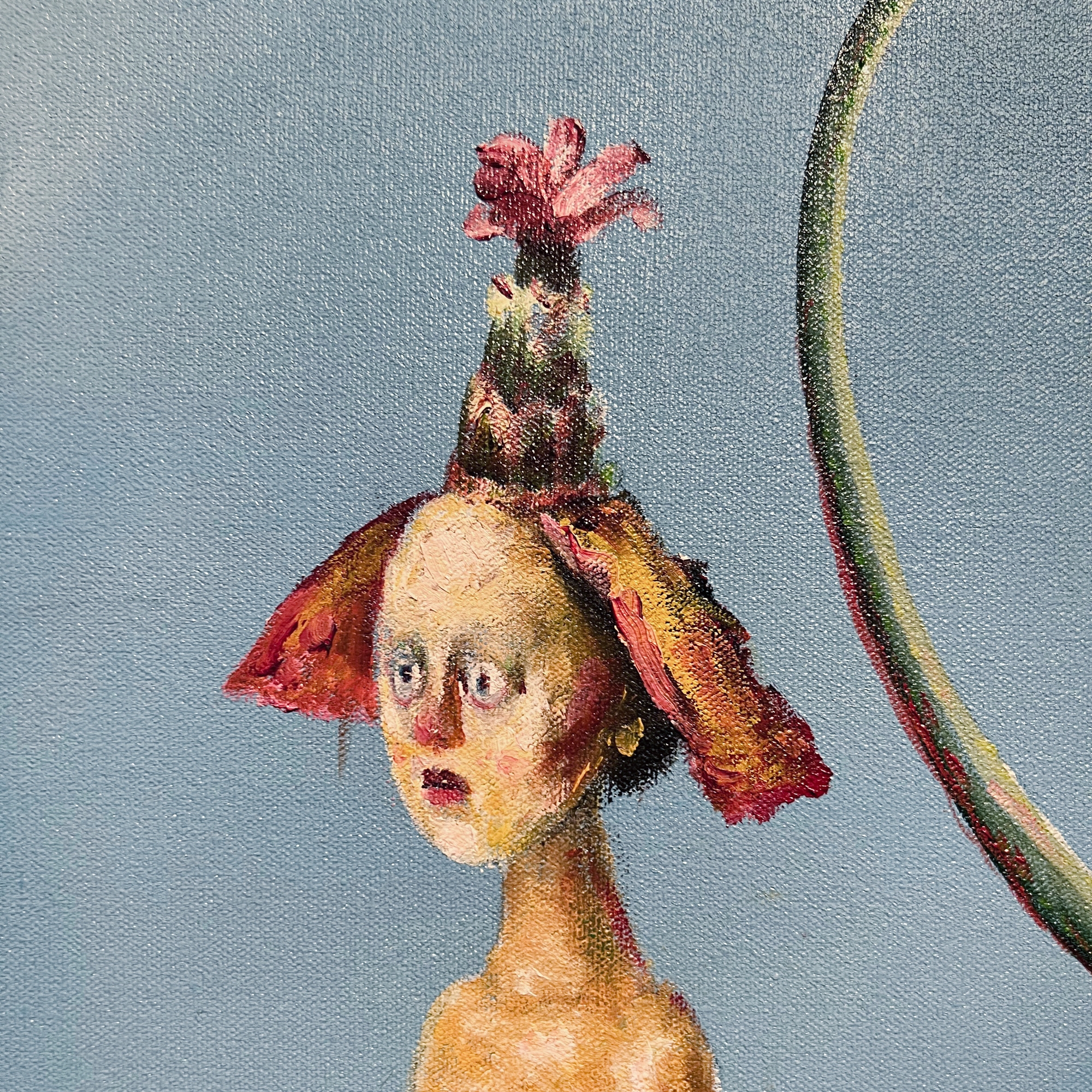
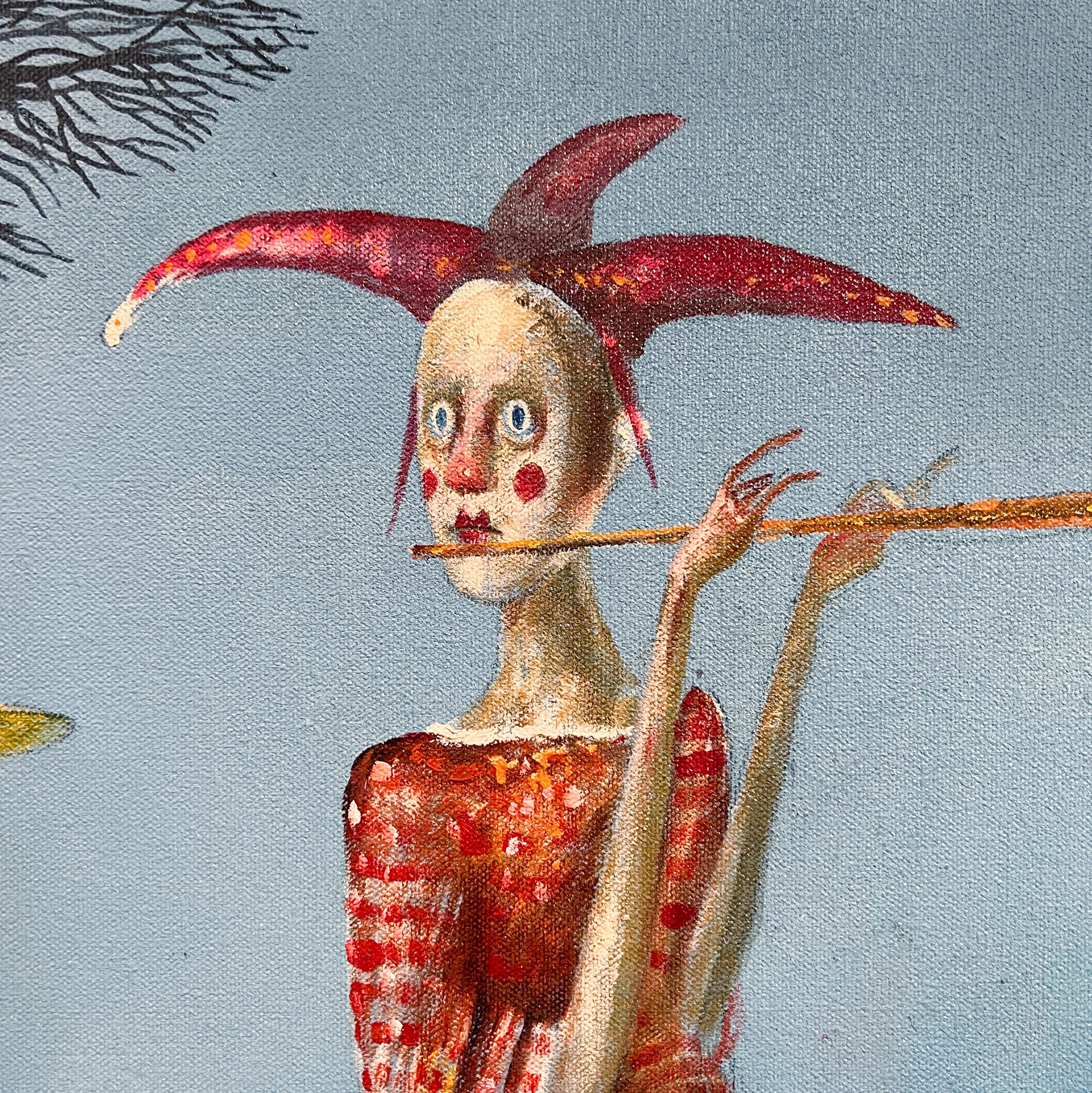
The artist reveals a small "theatre of the world" in the current work, a theatre full of symbols, a universe of life filtered through reason and culture, with characters captured in the interpretation of the role assigned by the Creator. The cultural ramifications that bring life to this setting are multiple: the values of life in the Transylvanian village, the collective memory of Romanian folk tales, the world of puppet theatre, folk games with procession, etc.
In Ștefan Câlția's work the function of the character is crucial. The characters concentrate the main significance of the figure, enhancing its sense of fable. The costumes remind of carnival processions, with an emphasis on the playful and dreamlike character of the scene. There are two iconographic types: on the one hand, the human characters, with their hieratic figures like earthly angels, and the animal character, embodied by the fish motif. The fish motif is not only one of the most common in the master's work, but also one of the first symbols of humanity, used in the most diverse combinations. "In Ștefan Câlția's compositions, the symbolism of the fish is closer to the interpretations given to this motif by some modern artists, especially from the area of German expressionism: Max Beckmann, Paul Klee, Marc Chagall. In their work, the image of the carnival, of the puppet game has a prominent place, and the fish has magical-mystical meanings, a meeting point between life and death" (Amelia Pavel). The atmosphere of the image simultaneously suggests fun, mystery, but also a certain melancholy, far from the joy of a festive atmosphere.
For clarifications regarding the bidding procedure, hammer price costs, guarantee, payment, and collection terms for the winning lot, we recommend carefully reading/re-reading the Bidding Regulations.
For additional information regarding the lot and the auction, please contact the Art Consultants Department.
SESSION
Similar lots