


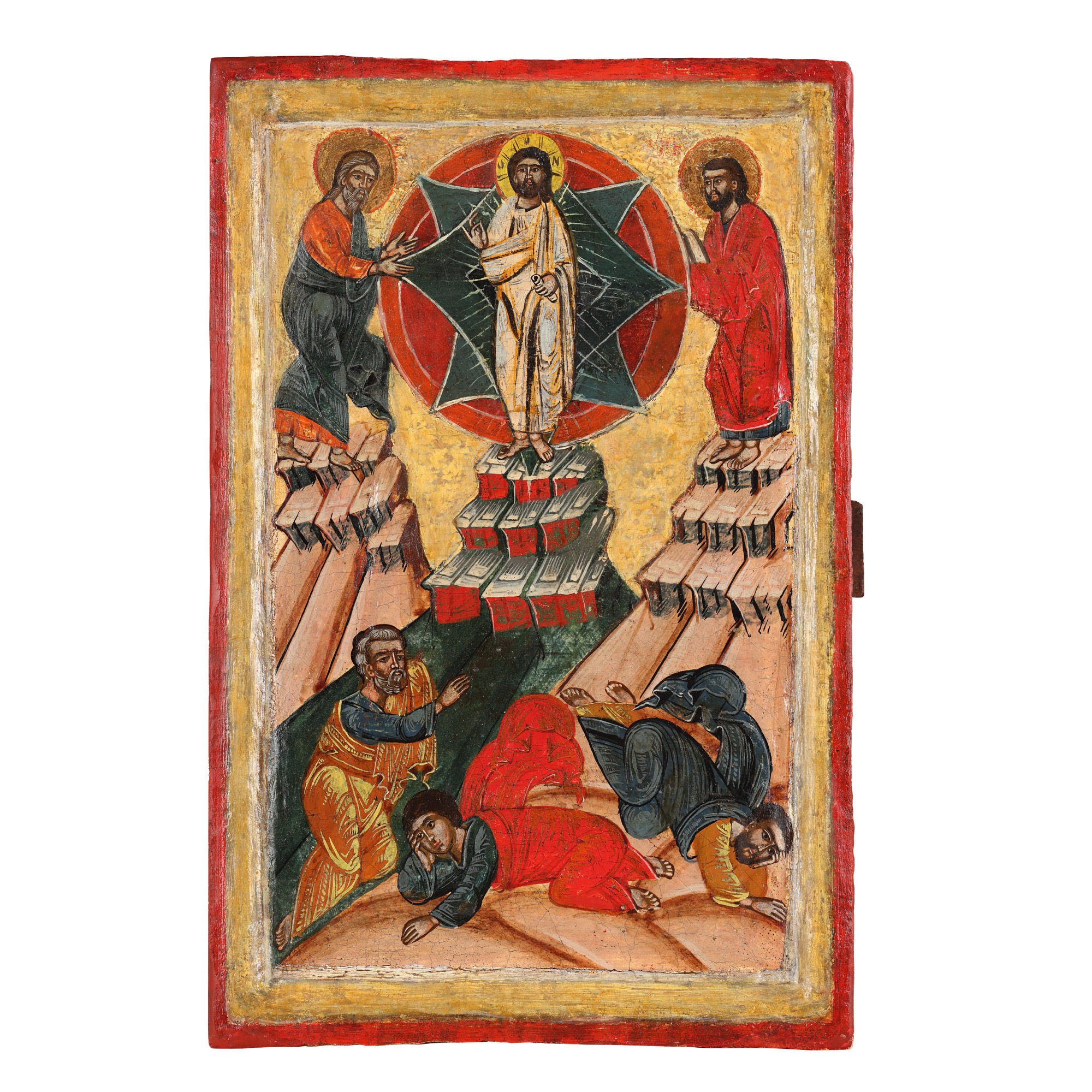
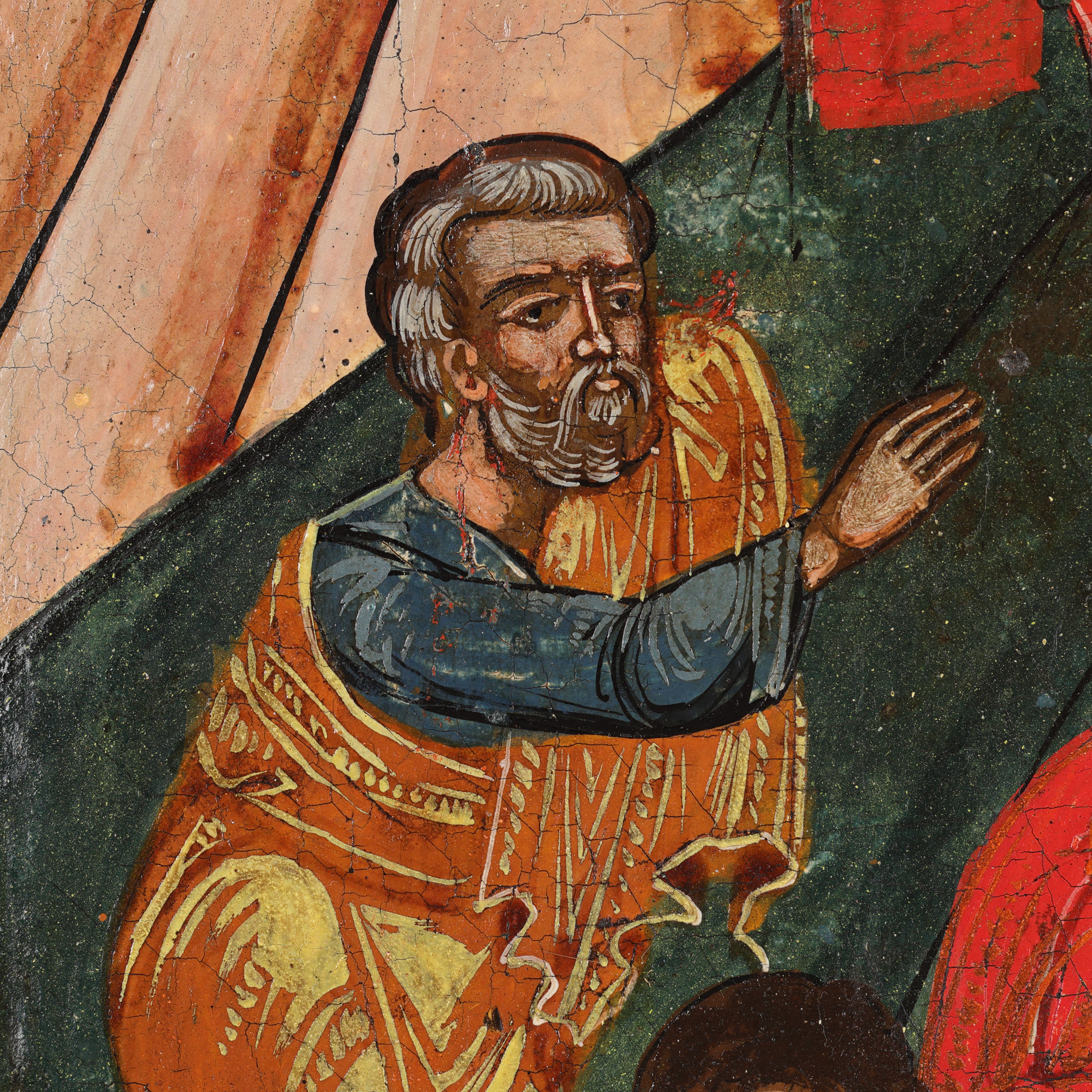
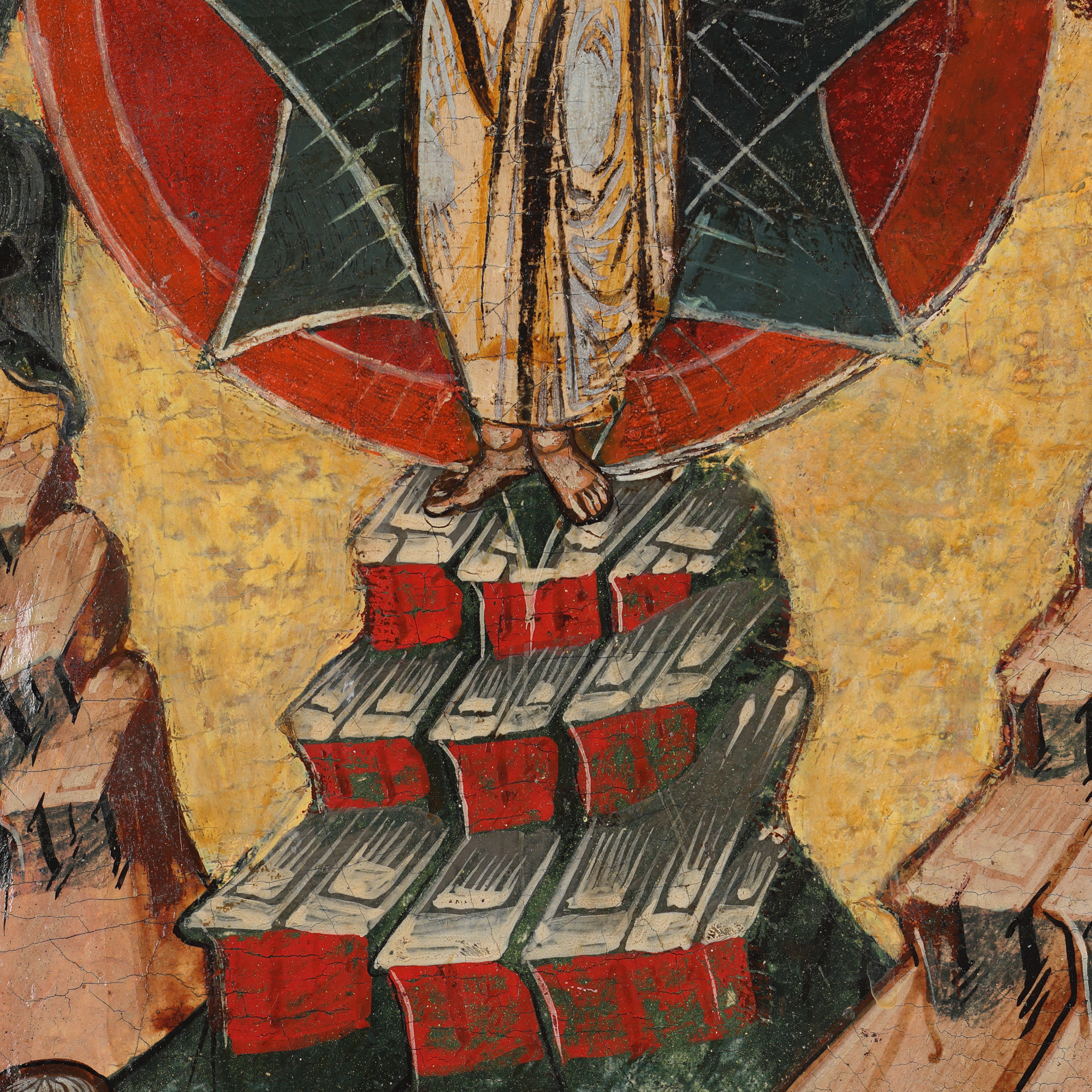
160. Icon on wood, "Transfiguration", Wallachia, Brâncoveanu school, era of Constantin Brâncoveanu, beginning of the 18th century, very rare, collectible piece
The photos of the lot are informative and indicative, and cannot provide a highly detailed view of the object from all angles. We recommend a careful physical inspection of the lot before bidding.
160. Icon on wood, "Transfiguration", Wallachia, Brâncoveanu school, era of Constantin Brâncoveanu, beginning of the 18th century, very rare, collectible piece
Starting price:
EUR 1.400
Sold
EUR 2.250
tempera and gold leaf on wood, 38 x 25.5 cm
Research information
The Transfiguration of the Lord is celebrated on August 6th. This holiday recalls the miracle that took place on Mount Tabor, where Christ revealed His divinity through the human nature He assumed. The Evangelist Matthew says "And His face shone like the sun, and His garments became white as light" (Matthew 17, 2), while the Evangelist Mark says that His garments became white as snow (Mark 9.3). The holiday dates back to the beginning of the 4th century, when the Holy Empress Helena built a church on Mount Tabor. This holiday begins to be mentioned in documents from the first half of the 5th century. In the West, the feast of the Transfiguration became more widespread later, by the decision taken by Pope Callist III as a thank you for the victory of the Christians over the Turks at Belgrade, in 1456.
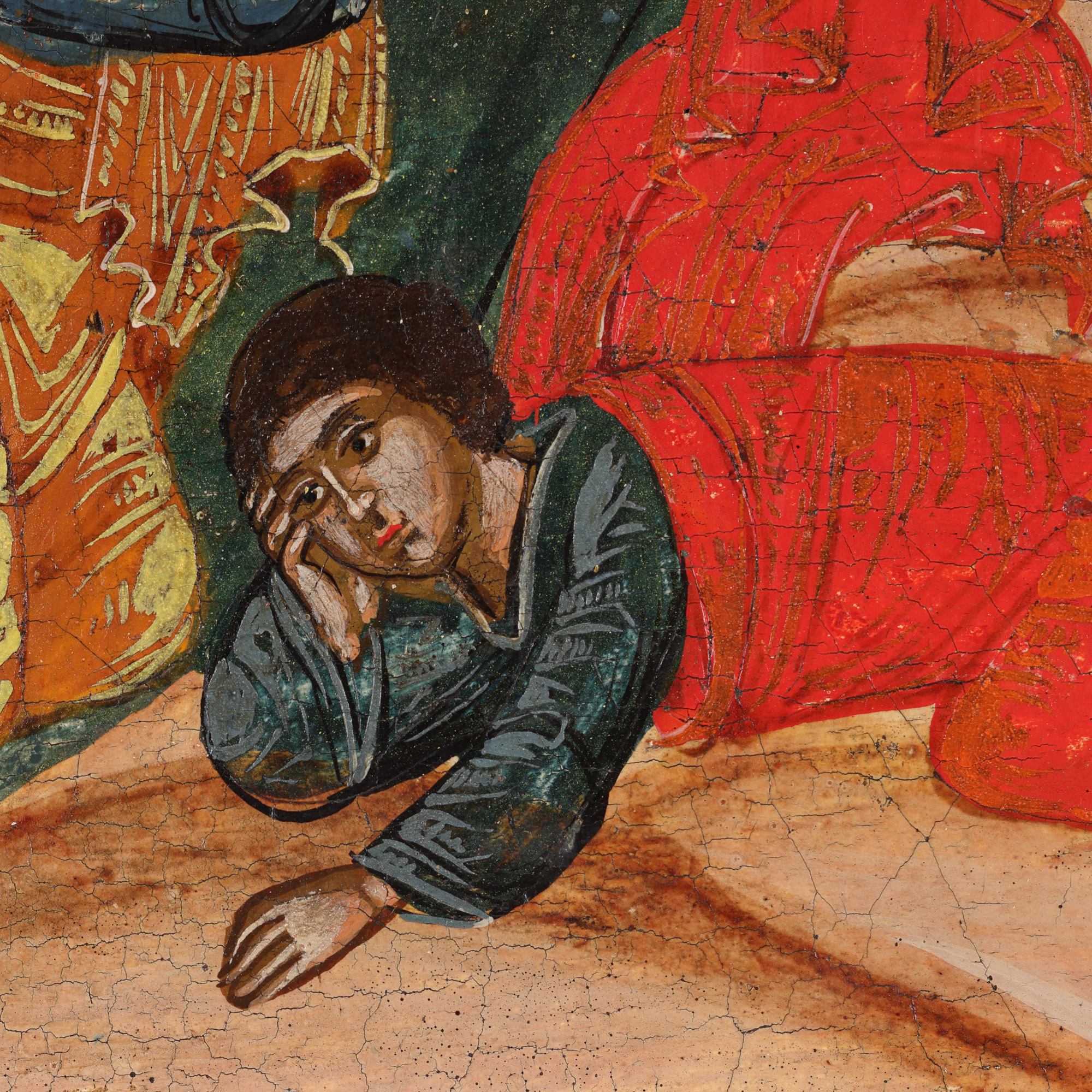
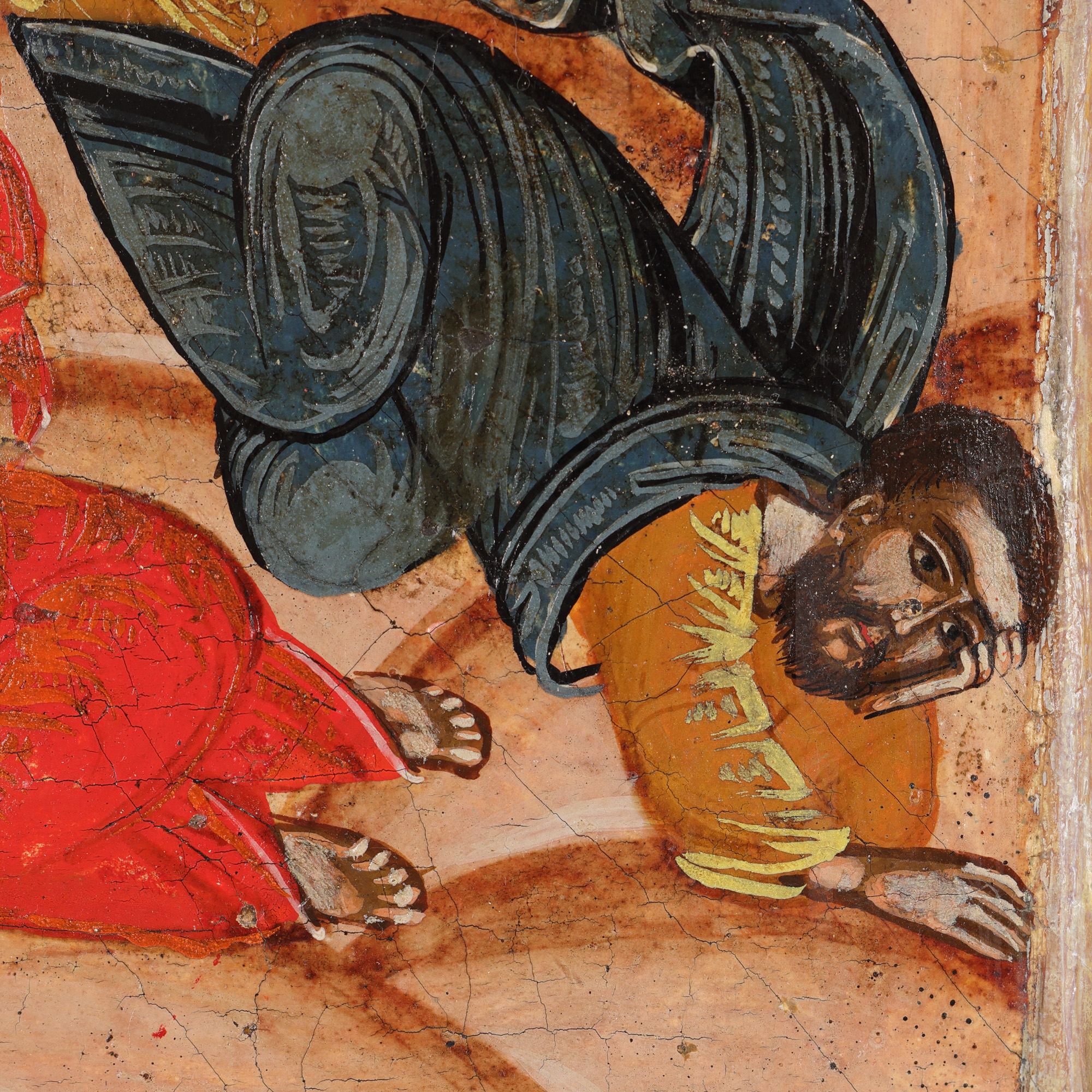
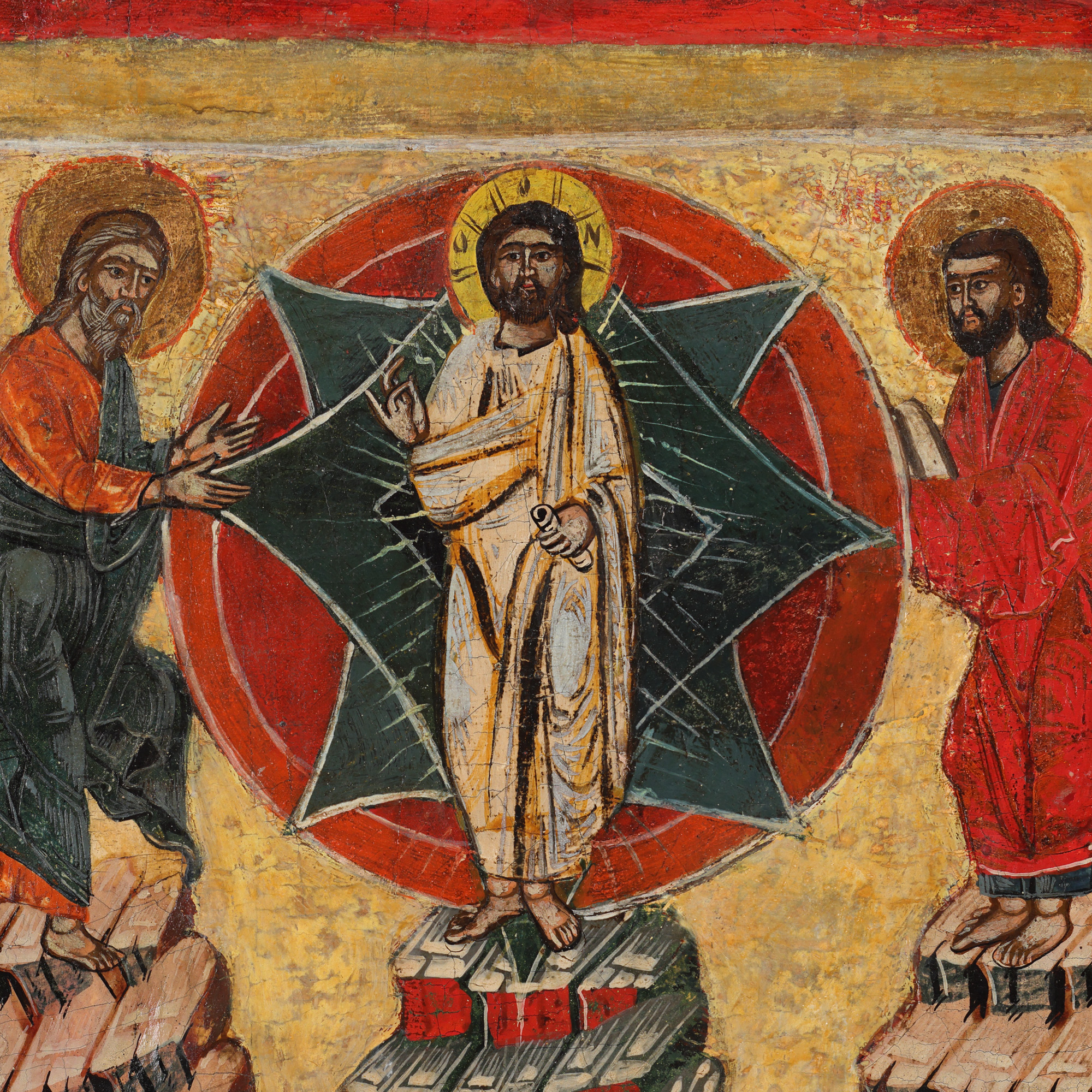
The compositional scheme is according to Erminia. On an ochre-gold background, at the top, and a stylized mountain landscape, at the bottom of the icon, Jesus Christ is depicted in the center of the composition, standing in shining vestments and surrounded by a mandorla. He blesses with his right hand and holds with his left the rotulus. He is flanked by Prophet Elijah and Prophet Moses (with the Tablets of the Law), depicted standing on the crest of stylized mountains. At the bottom of the composition are depicted the three Apostles who accompanied Jesus to Mount Tabor - Peter, John and James, who at the moment of His Transfiguration, were cast down to the ground. The heightened frame of the icon is painted on the edge in ochre-red and gold. The composition is balanced, the harmonious movement is marked by an intense experience of the moment. The characters are depicted in accordance with the style of Brâncovenesc painting regarding the typology of the faces and the drapery of the clothes. The chromatics dominated by red, blue and ochre which vibrates on the gold of the background gives the painting a note of splendor and wealth specific to the Brâncovenesc style, practiced in Wallachia at the beginning of the 18th century. (A.D.)
For clarifications regarding the bidding procedure, hammer price costs, guarantee, payment, and collection terms for the winning lot, we recommend carefully reading/re-reading the Bidding Regulations.
For additional information regarding the lot and the auction, please contact the Art Consultants Department.
SESSION
Brought to you by
Similar lots
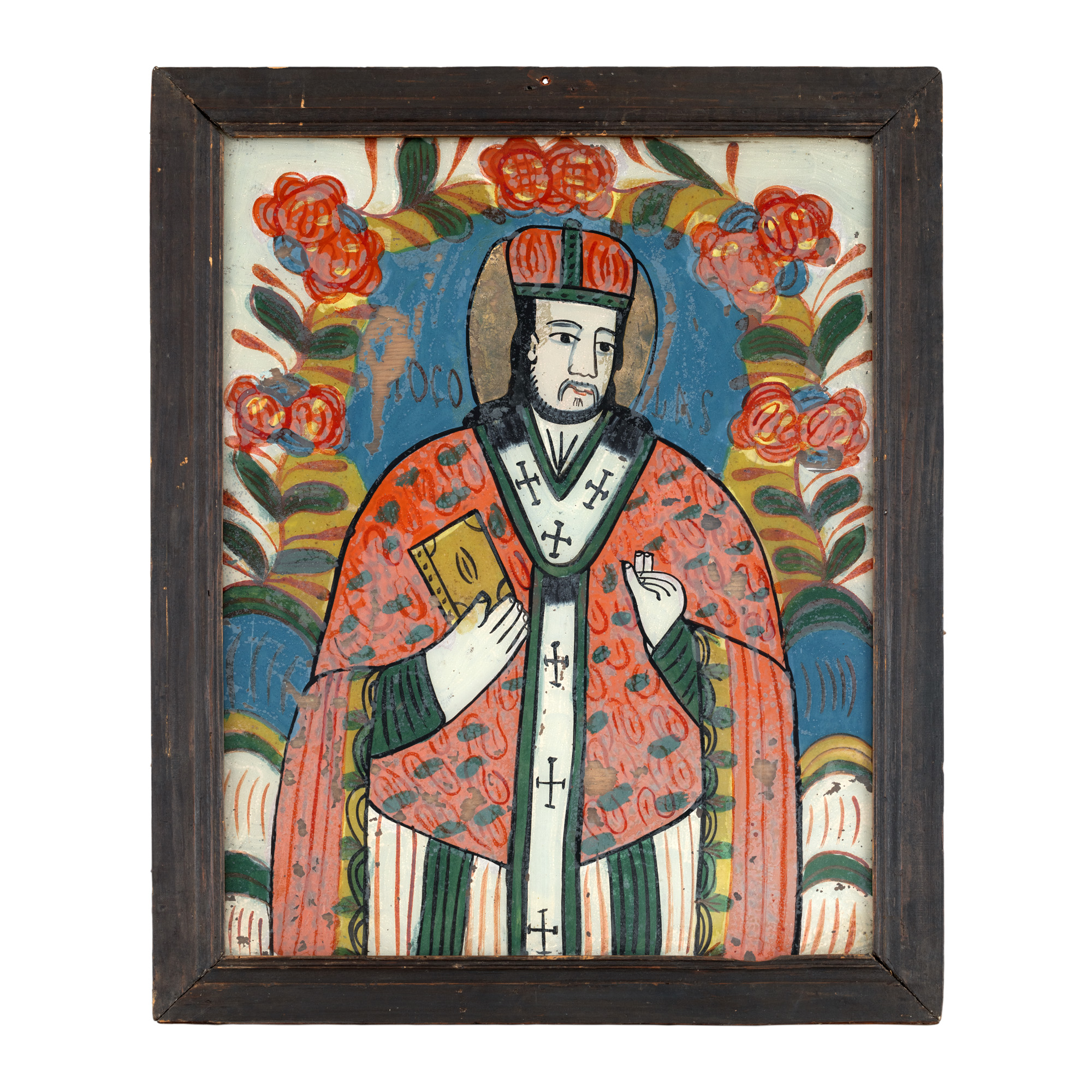
64. Icon on glass, "Saint Nicholas", Gherla workshop, second half of the 19th century
Starting price:
EUR 150
Sold
EUR 150
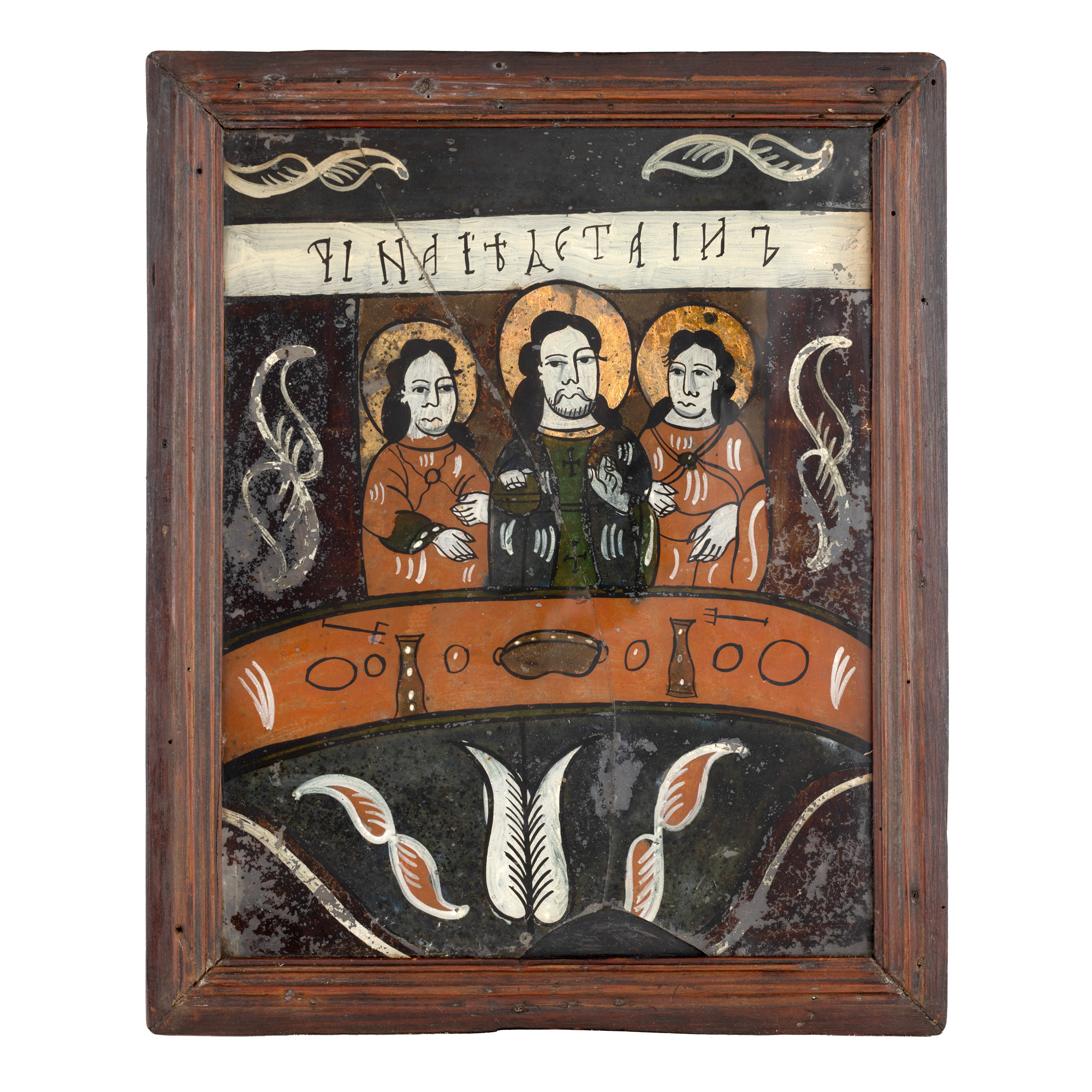
45. Icon on glass, "The Mystical Supper", Nicula workshop, first half of the 19th century, from collection
Starting price:
EUR 150
Sold
EUR 250