
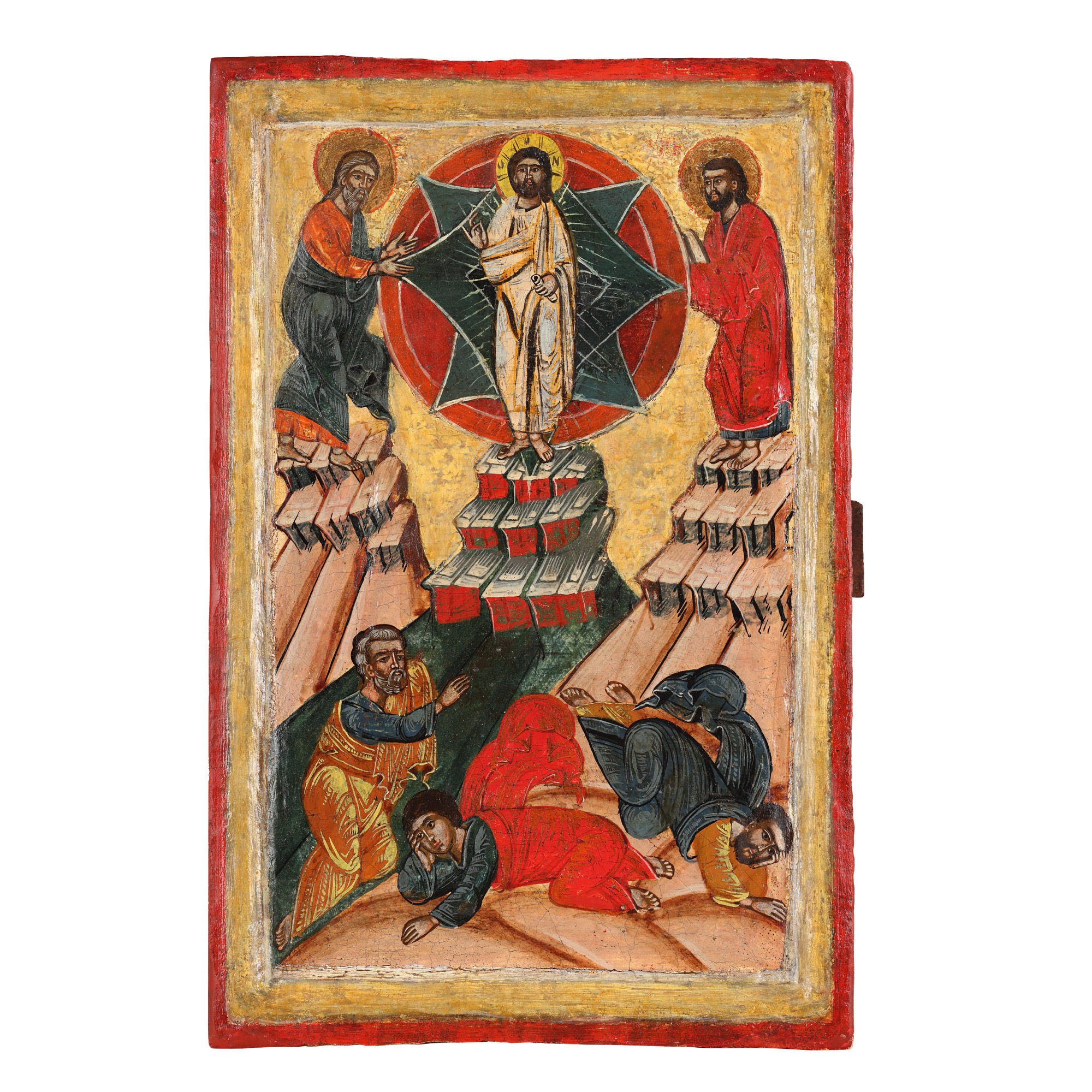
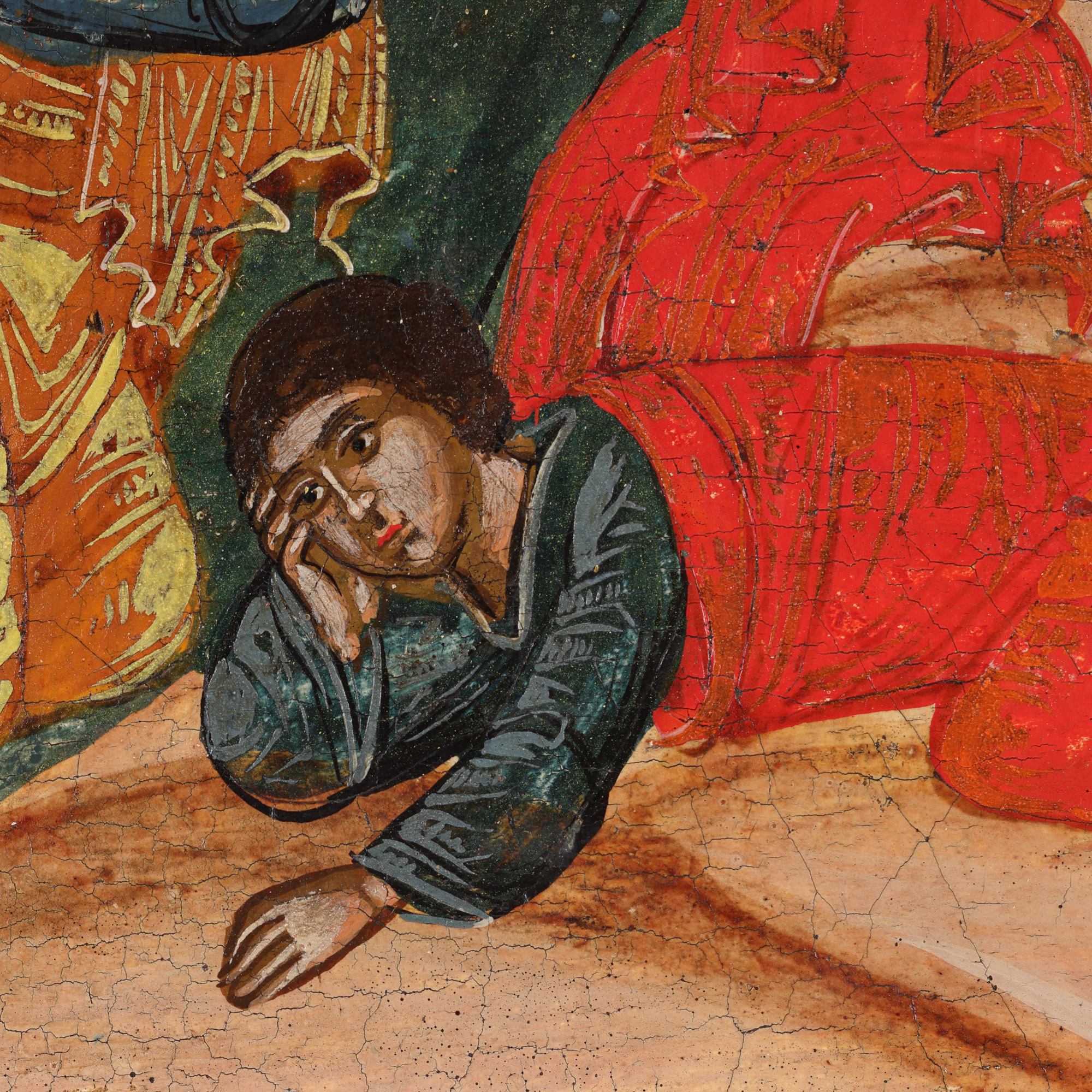
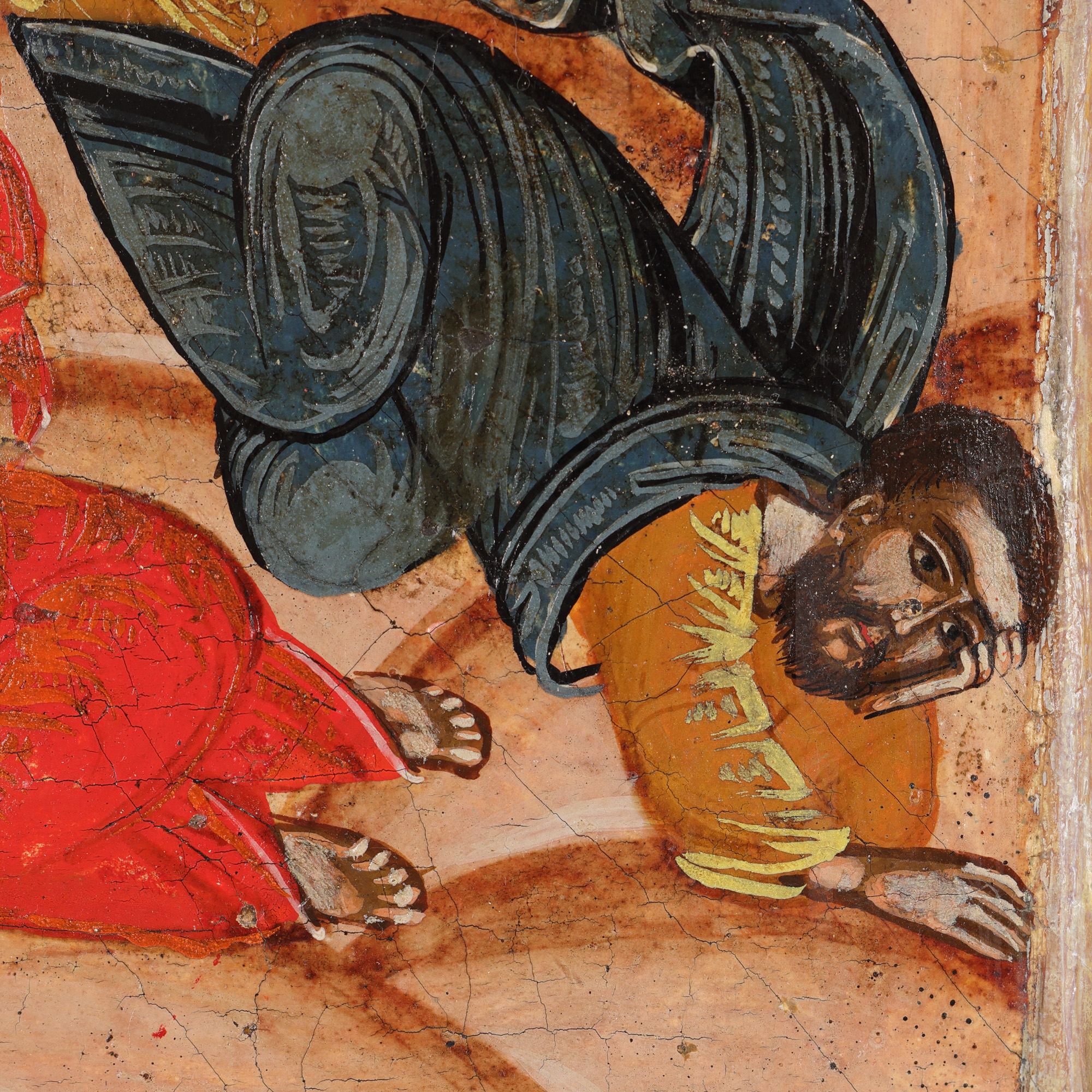
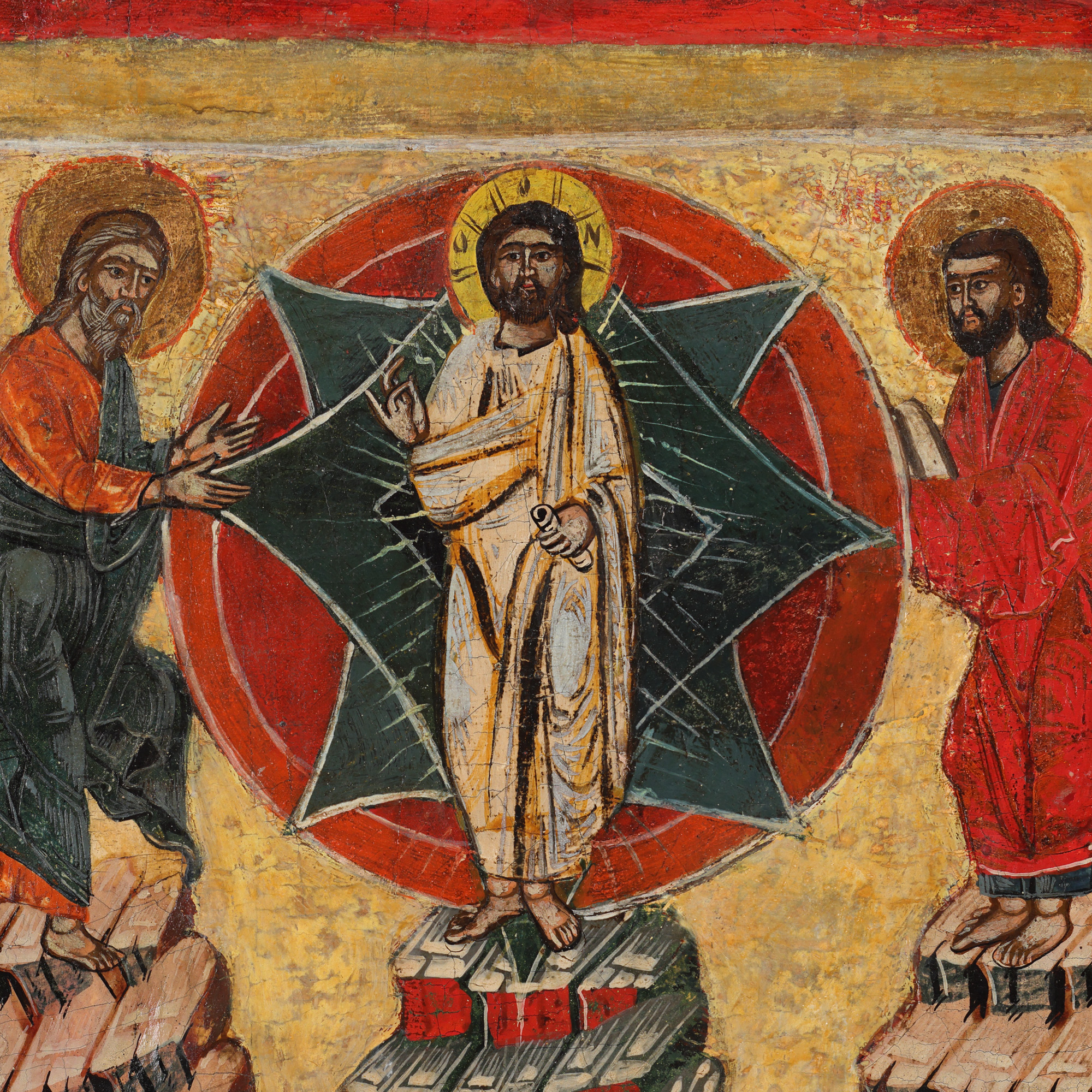
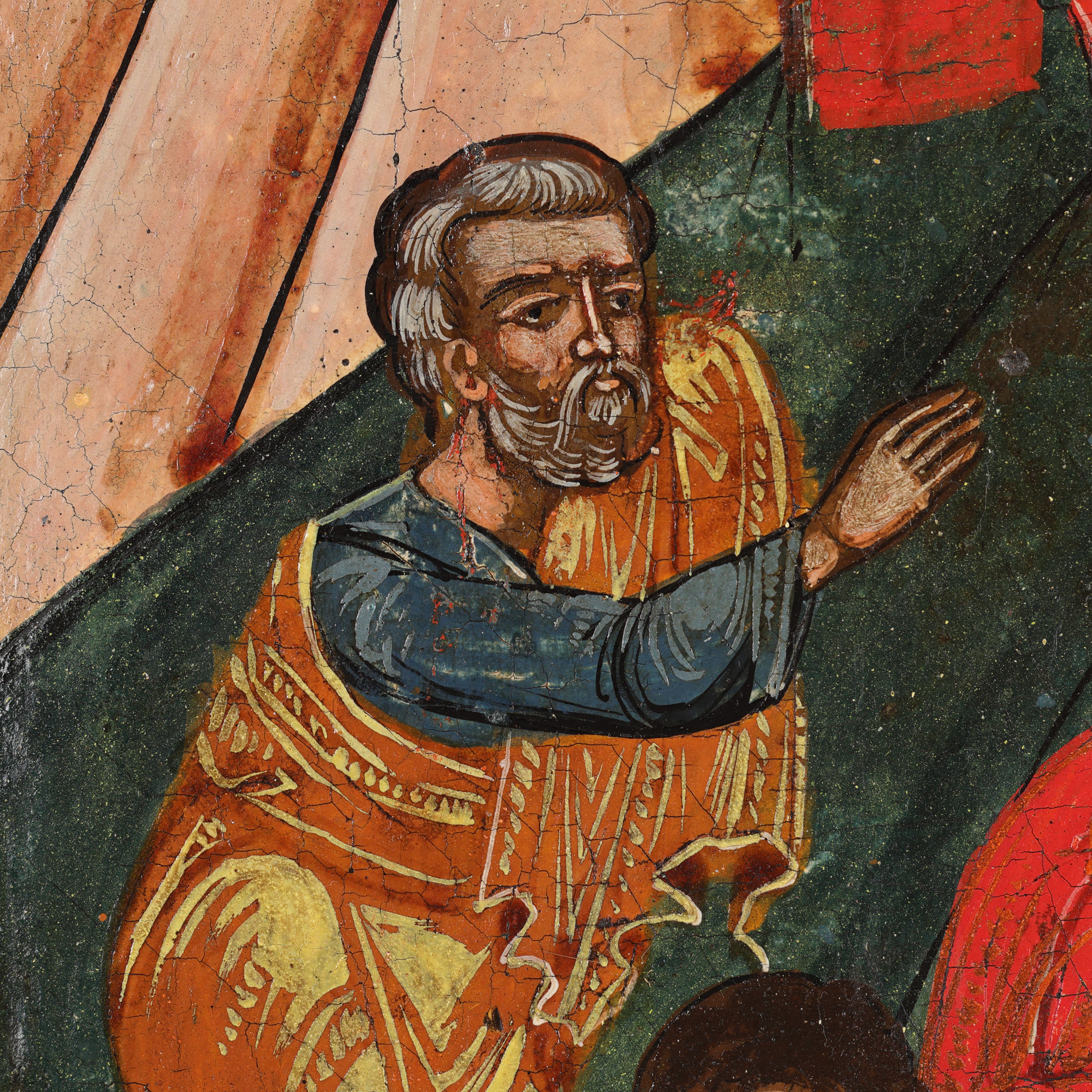
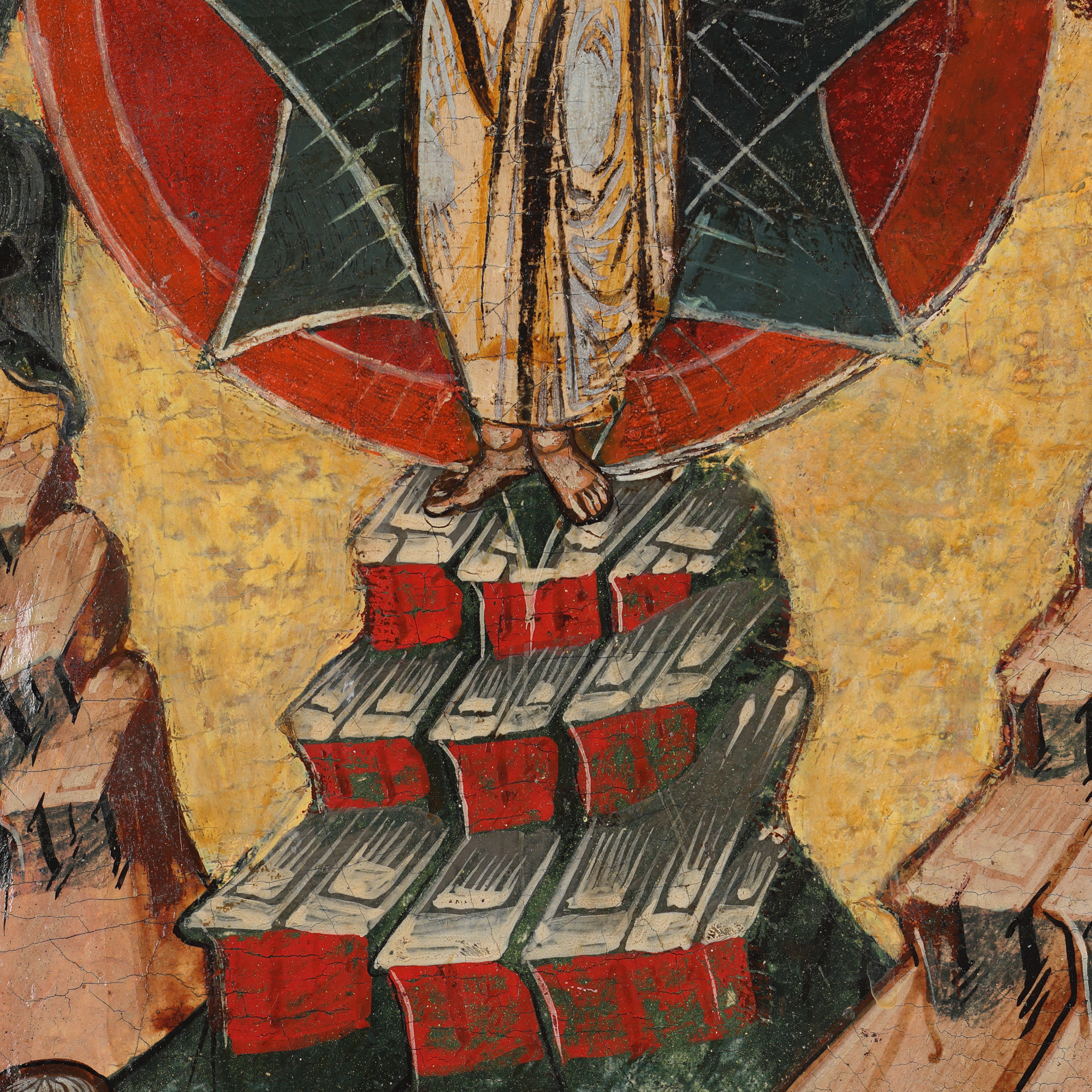
160. Icon on wood, "Transfiguration", Wallachia, Brâncoveanu school, era of Constantin Brâncoveanu, beginning of the 18th century, very rare, collectible piece
Начална цена
EUR 1.400
Продадено
EUR 2.250
Сесия
Сря, 11 декември 2024 18:00
Размери
width 25.5 cm, height 38 cm
Описание
tempera and gold leaf on wood
Информация от изследване
The Transfiguration of the Lord is celebrated on August 6th. This holiday recalls the miracle that took place on Mount Tabor, where Christ revealed His divinity through the human nature He assumed. The Evangelist Matthew says "And His face shone like the sun, and His garments became white as light" (Matthew 17, 2), while the Evangelist Mark says that His garments became white as snow (Mark 9.3). The holiday dates back to the beginning of the 4th century, when the Holy Empress Helena built a church on Mount Tabor. This holiday begins to be mentioned in documents from the first half of the 5th century. In the West, the feast of the Transfiguration became more widespread later, by the decision taken by Pope Callist III as a thank you for the victory of the Christians over the Turks at Belgrade, in 1456.
ДОПЪЛНИТЕЛНА ИНФОРМАЦИЯ
За разяснения относно процедурата по наддаване, разходите при спечелване, условията за гаранция, плащане и вземане на спечеления лот, препоръчваме внимателно четене/препрочитане на Правилника за наддаване.
За допълнителна информация относно лота и търга, моля свържете се с Отдела на арт консултантите.
Detalii
ДОПЪЛНИТЕЛНА ИНФОРМАЦИЯ
За разяснения относно процедурата по наддаване, разходите при спечелване, условията за гаранция, плащане и вземане на спечеления лот, препоръчваме внимателно четене/препрочитане на Правилника за наддаване.
За допълнителна информация относно лота и търга, моля свържете се с Отдела на арт консултантите.
Размери
width 25.5 cm, height 38 cm
Описание
tempera and gold leaf on wood
Информация от изследване
The Transfiguration of the Lord is celebrated on August 6th. This holiday recalls the miracle that took place on Mount Tabor, where Christ revealed His divinity through the human nature He assumed. The Evangelist Matthew says "And His face shone like the sun, and His garments became white as light" (Matthew 17, 2), while the Evangelist Mark says that His garments became white as snow (Mark 9.3). The holiday dates back to the beginning of the 4th century, when the Holy Empress Helena built a church on Mount Tabor. This holiday begins to be mentioned in documents from the first half of the 5th century. In the West, the feast of the Transfiguration became more widespread later, by the decision taken by Pope Callist III as a thank you for the victory of the Christians over the Turks at Belgrade, in 1456.
Алтернативни лотове
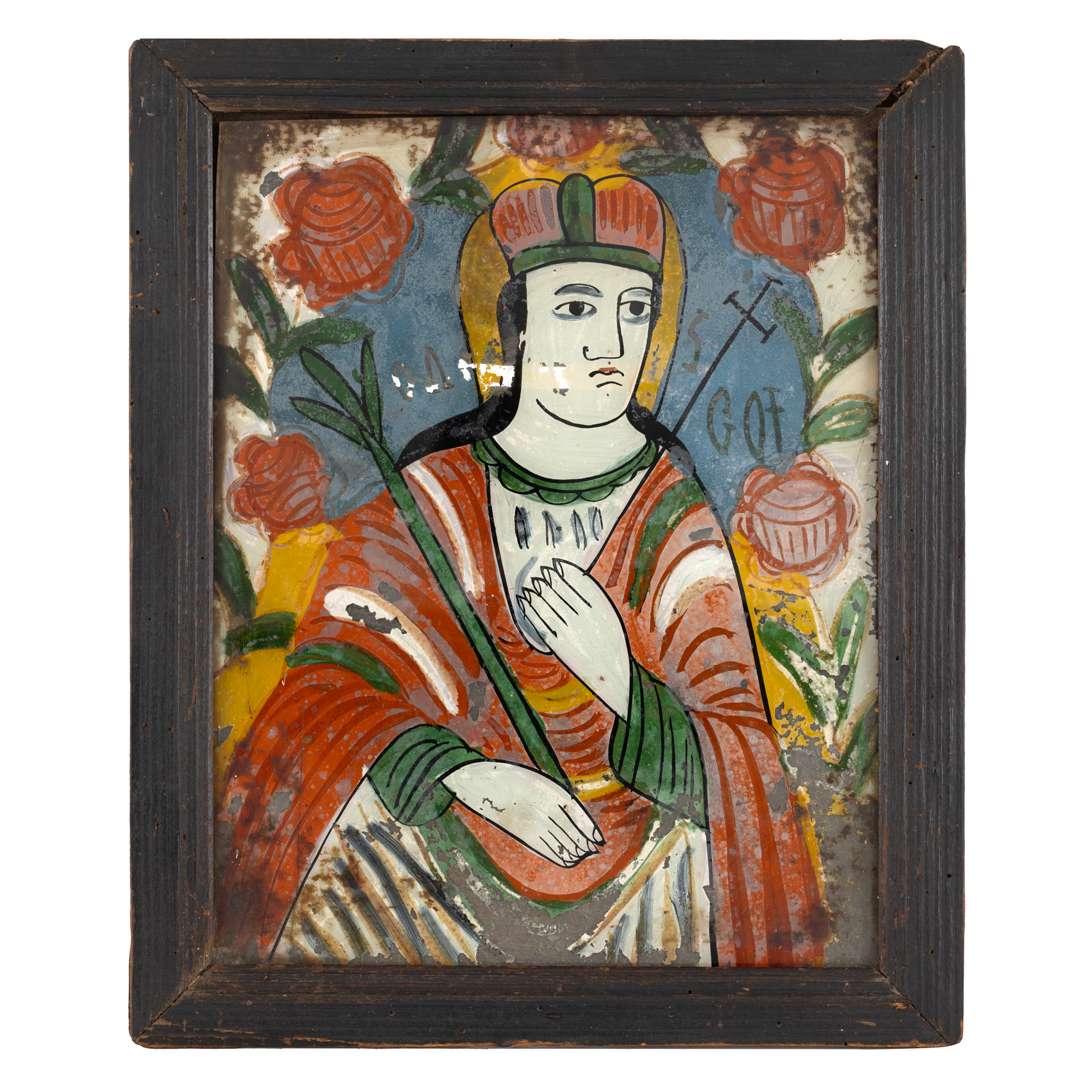
61. Icon on glass, "Saint Parascheva", Gherla workshop, end of the 19th century