
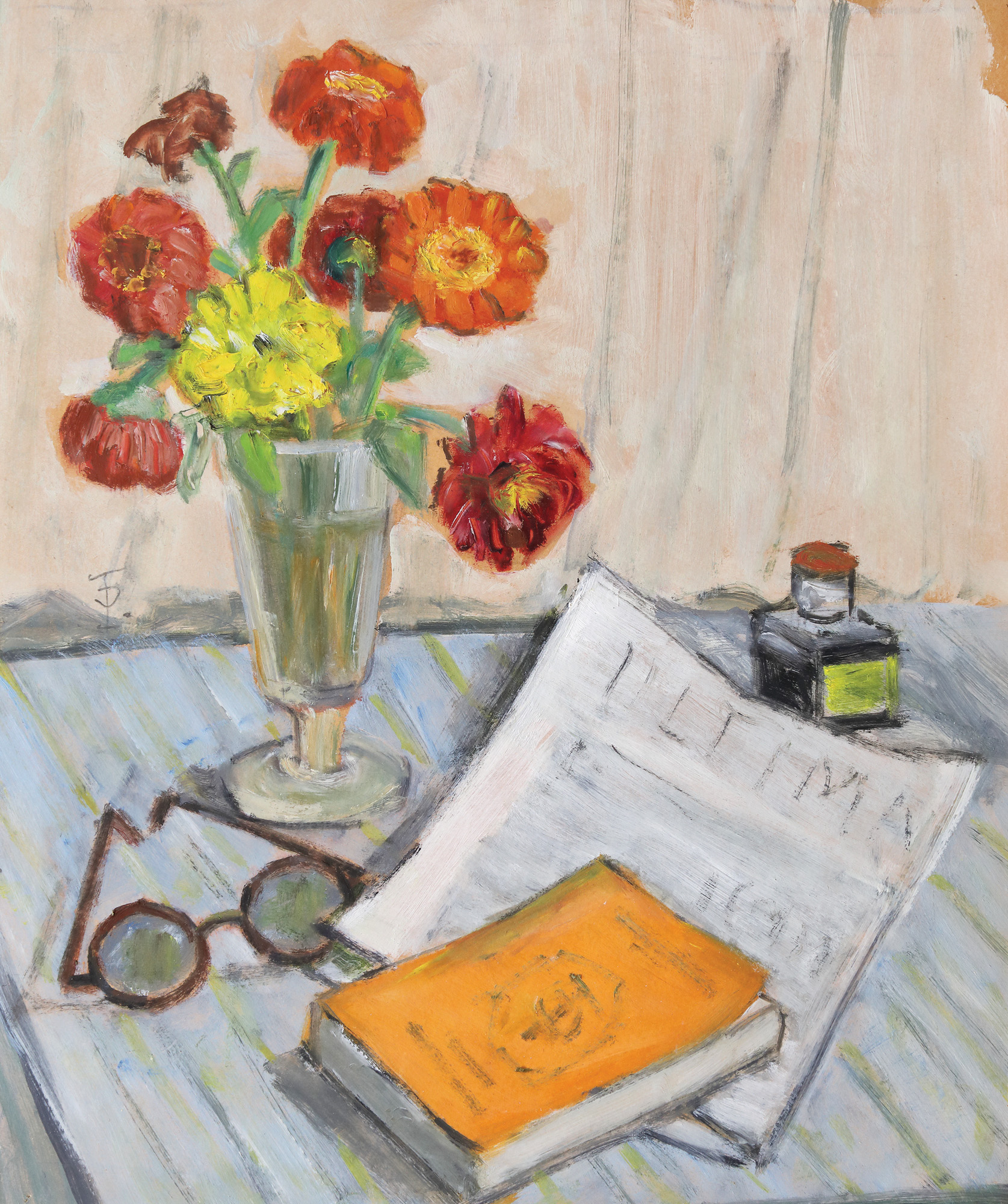
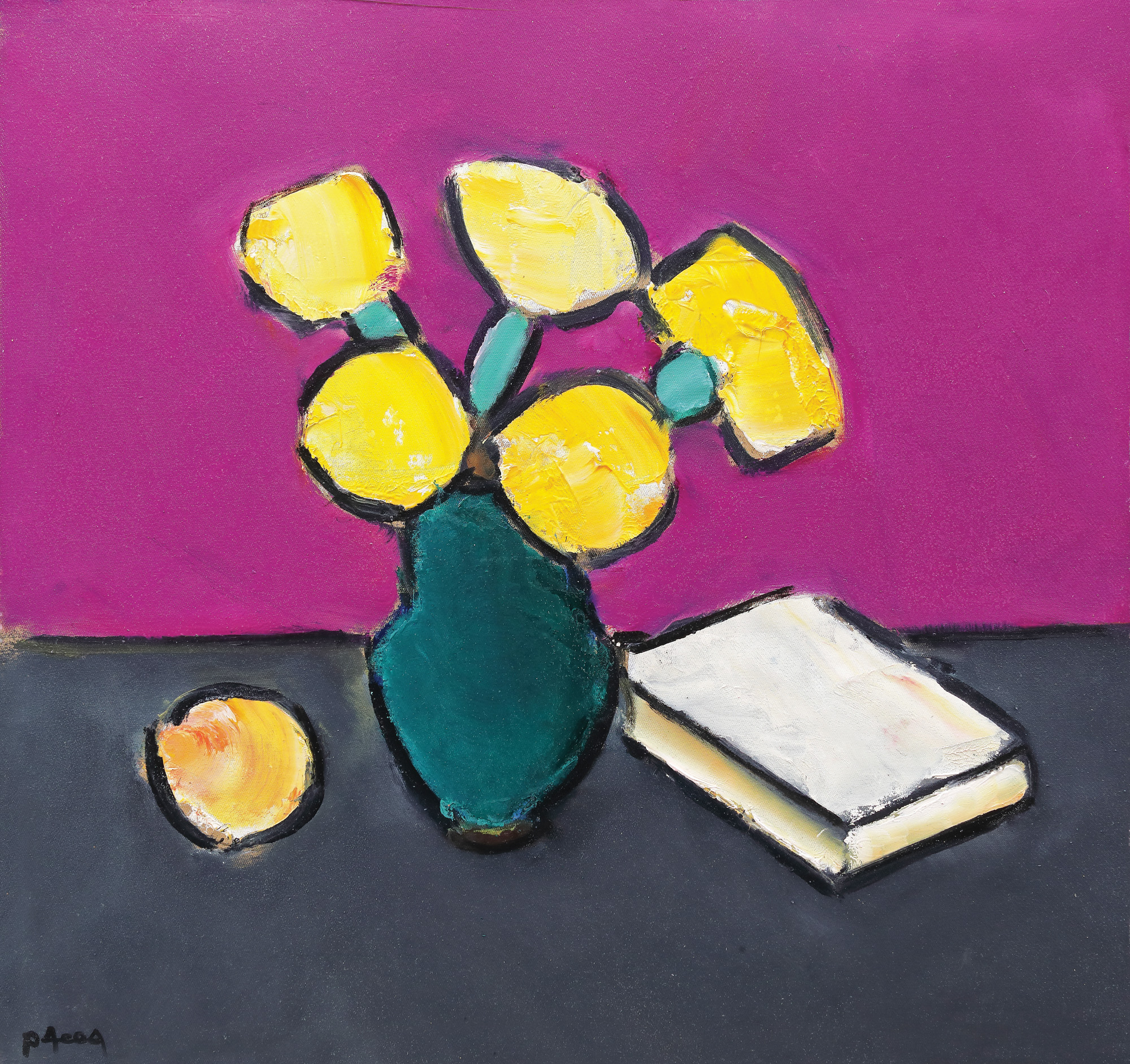
68. Still Life with Glasses and Zinnias
1871, Iaşi - 1956, Bucureşti

Estimate

EUR 12.000 - 18.000

Sold

EUR 18.500

Session

Tue, 20 June 2023 19:00

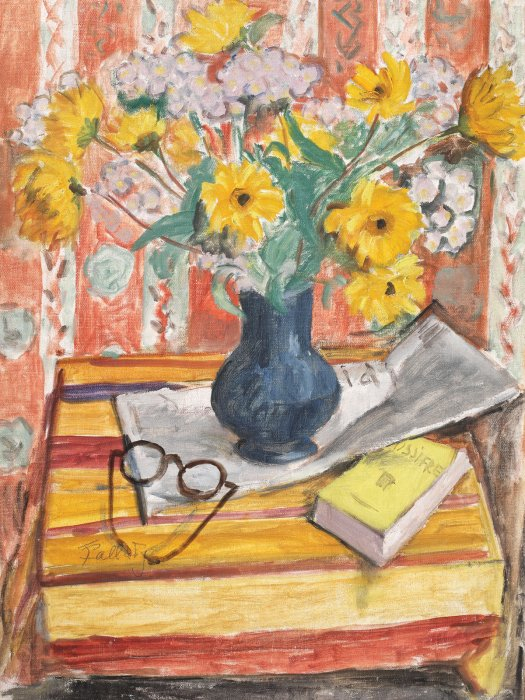
Building his entire creation around three key principles: conception-construction-execution, Theodor Pallady tends to go beyond the creation of a simple painting and proposes his works as works of art. The artist focuses on going beyond suggestion and empirical sensory in an attempt to transpose deeper meanings onto canvas. Still life represents a recurrent theme in his creation, and its message is usually encoded in more or less conventional combinations of objects. Pallady realises an intimist painting, inspired by the everyday, revealing himself to the public. He builds true pictorial poems in which the subjects are decoded harmoniously through rhythms and colours. Whether there are vessels with flowers, victuals, vessel, newspapers or books; whether they are even elements of his usual props: glasses or the cane, Pallady's subjects are most often inspired by immediate reality. In the artist's works, the incisive line of the drawing takes precedence. The importance of the graphic duct is taken from Degas. The latter used to constantly reiterate the primacy of form over brushstrokes and chromatics. The perfect master of composition, Pallady excels in ordering the subjects that make up his still lives. Usually, the books that crown the tables of his compositions make references to volumes that form the painter's literary core: Baudelaire, Proust or Nietzsche. We can therefore translate the literary, poetic or philosophical rhythms of his creation into the translation of the meanings of universal masterpieces. The musicality of his works is profoundly influenced by the solemnity that the artist takes from Beethoven's scores. We can confirm, thus, the fact that Pallady ingeniously rendered the beauty of forms that generally appear meaningless and excelled at encoding symbols in most of his canvases.

References

ȘORBAN, Raoul, "Theodor Pallady", Meridiane Publishing House, Bucharest, 1975. CEBUC, Alexandru, "Pallady", Monitorul Oficial R. A. Publishing House, Bucharest, 2008. "Desene de Theodor Pallady din Colecția Muzeului Țării Crișurilor" ("Drawings by Theodor Pallady from the Criș Country Museum Collection"), in "Biharea", 1980, p. 291-322. Florin Rogneanu, "Theodor Pallady și tentația absolutului" ("Theodor Pallady and the Temptation of the Absolute"), in "Oltenia. Studii și comunicări" ("Oltenia. Studies and Communications"), no. V-VI, 1986, p. 205-209.

Dimensions

width 42 cm, height 52 cm

Description

oil on cardboard, signed on the left-centred side, with pencil, "TP"

PROVENANCE

the collection of Dr. Valeriu Tempea.

ADDITIONAL INFORMATION

For clarifications regarding the bidding procedure, hammer price costs, guarantee, payment, and collection terms for the winning lot, we recommend carefully reading/re-reading the Bidding Regulations.

For additional information regarding the lot and the auction, please contact the Art Consultants Department.
Similar lots