
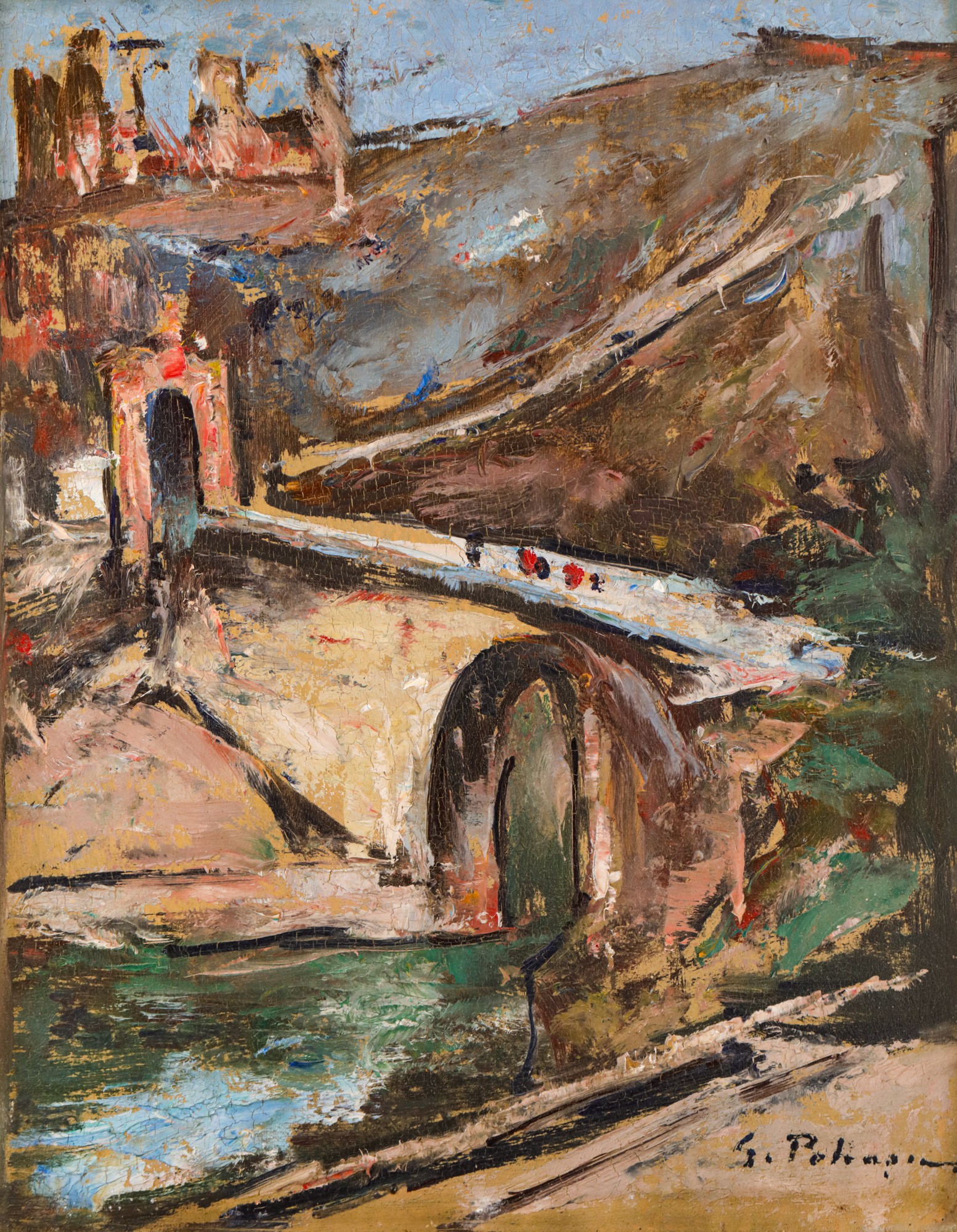
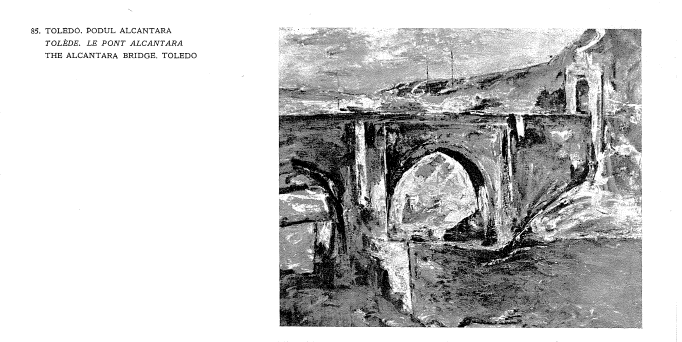
83. Alcántara Bridge (Toledo) [1929]
Selling price
EUR 16.884
Session
Thu, 21 March 2024 19:00
References
OPRESCU, George, "Gheorghe Petrașcu", Meridiane Publishing House, Bucharest, 1963. FLOREA, Vasile, "Gheorghe Petrașcu", Meridiane Publishing House, Bucharest, 1989.
Dimensions
width 18.5 cm, height 24 cm
Description
oil on canvas glued on cardboard, signed lower right, in black, "G. Petrașcu"
Research information
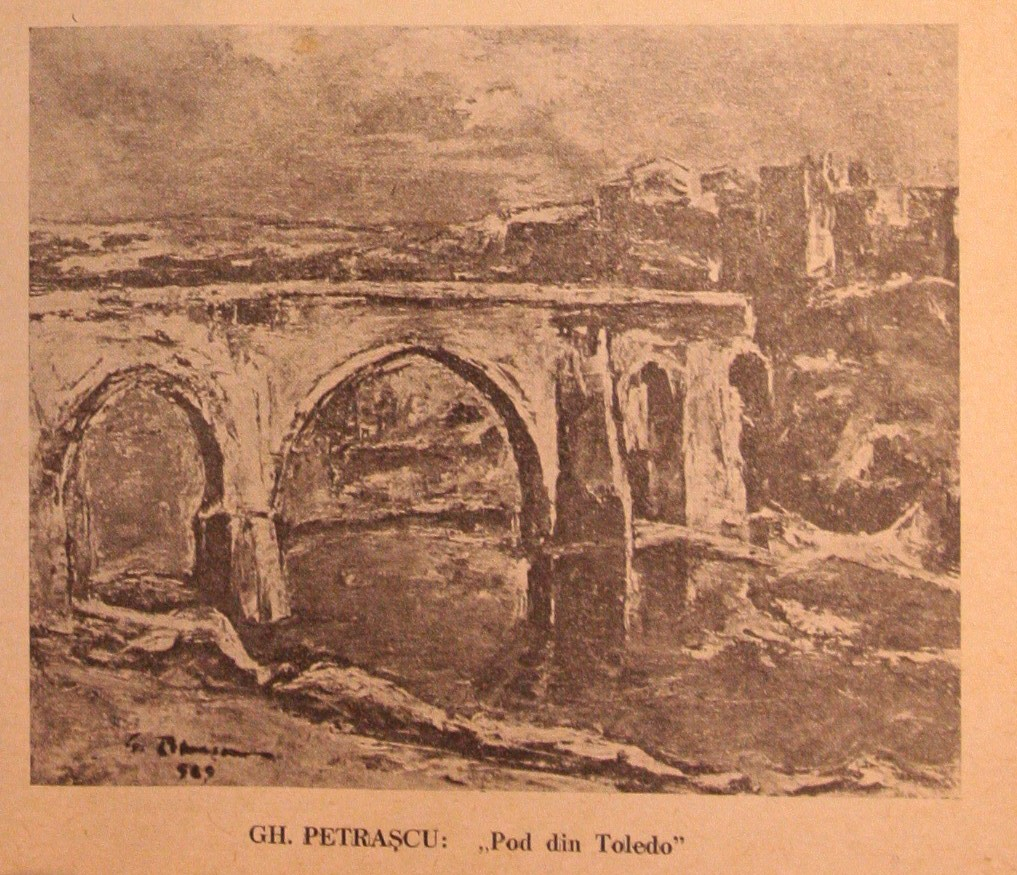
The artwork is reproduced in the album "Petrașcu", Aurel Vladimir Diaconu, Royal Foundation for Literature and Art, Bucharest, 1946, p. 25 (dimensions erroneously reported, possibly including the passe-partout). The artwork is reproduced in the monograph "Gheorghe Petrașcu", Vasile Florea, Meridiane Publishing House, Bucharest, 1989, cat. 93 (dimensions erroneously reported, possibly including the passe-partout). The artwork is reproduced in the magazine "Arta", no. 8-9, 1972, on page 15.
Dating
1929
PROVENANCE
Av. Vladimir Diaconu Collection
ADDITIONAL INFORMATION
For clarifications regarding the bidding procedure, hammer price costs, guarantee, payment, and collection terms for the winning lot, we recommend carefully reading/re-reading the Bidding Regulations.
For additional information regarding the lot and the auction, please contact the Art Consultants Department.
Detalii
ADDITIONAL INFORMATION
For clarifications regarding the bidding procedure, hammer price costs, guarantee, payment, and collection terms for the winning lot, we recommend carefully reading/re-reading the Bidding Regulations.
For additional information regarding the lot and the auction, please contact the Art Consultants Department.
References
OPRESCU, George, "Gheorghe Petrașcu", Meridiane Publishing House, Bucharest, 1963. FLOREA, Vasile, "Gheorghe Petrașcu", Meridiane Publishing House, Bucharest, 1989.
Dimensions
width 18.5 cm, height 24 cm
Description
oil on canvas glued on cardboard, signed lower right, in black, "G. Petrașcu"
Research information
The artwork is reproduced in the album "Petrașcu", Aurel Vladimir Diaconu, Royal Foundation for Literature and Art, Bucharest, 1946, p. 25 (dimensions erroneously reported, possibly including the passe-partout). The artwork is reproduced in the monograph "Gheorghe Petrașcu", Vasile Florea, Meridiane Publishing House, Bucharest, 1989, cat. 93 (dimensions erroneously reported, possibly including the passe-partout). The artwork is reproduced in the magazine "Arta", no. 8-9, 1972, on page 15.
Dating
1929
PROVENANCE
Av. Vladimir Diaconu Collection