
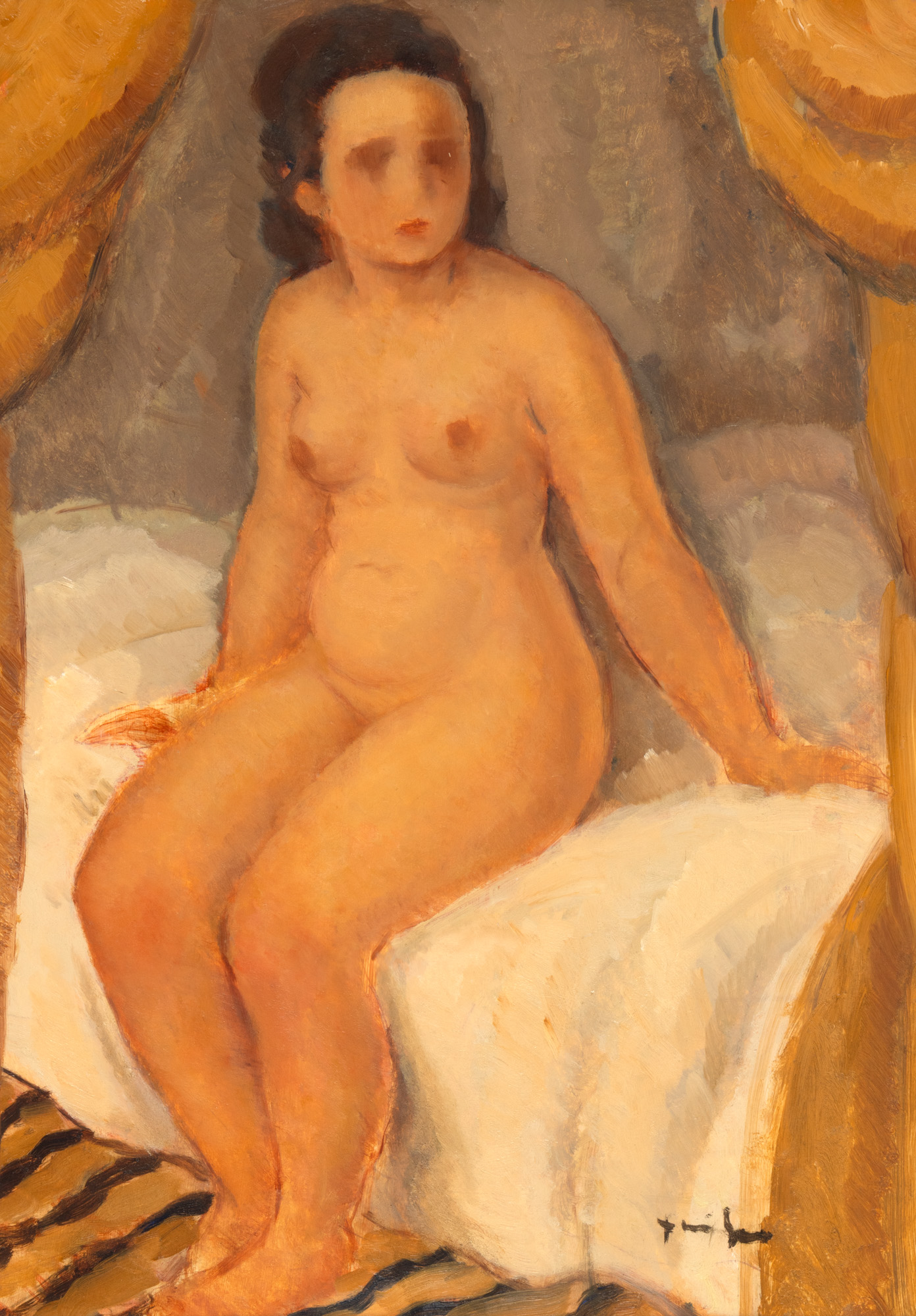
63. Nude [1929-1930]

The photos of the lot are informative and indicative, and cannot provide a highly detailed view of the object from all angles. We recommend a careful physical inspection of the lot before bidding.

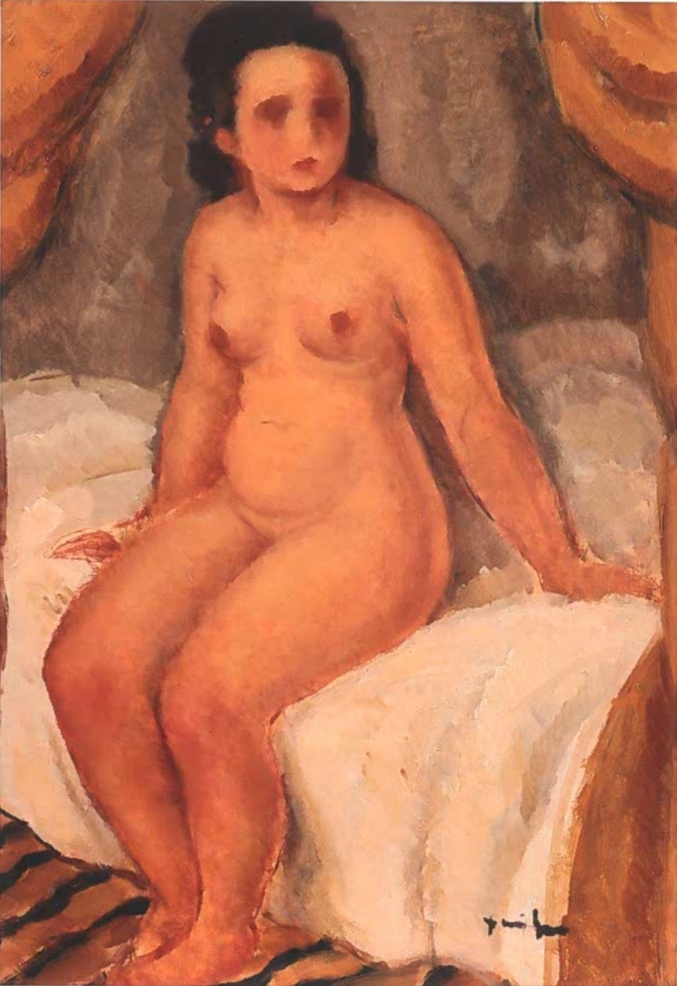
63. Nude [1929-1930]
1886, Bârlad - 1940, Bucureşti

Estimate:
EUR 65.000 - 95.000
Sold
EUR 95.000

References

BREZIANU, Barbu, ”N.N.Tonitza”, Ed. Academy, Bucharest, 1967 BREZIANU, Barbu, “N.N.Tonitza”, Ed. Meridiane, Bucharest, 1986 CIUCĂ, Valentin, “On the footsteps of Tonitza”, Ed. Sport-Tourism, Bucharest, 1984 COMARNESCU, Petru, “N.N.Tonitza”, Ed. Youth, Bucharest, 1962 JIANU, Ionel, “Tonitza”, Ed. Art Home, Bucharest, 1945 PELEANU, Georgeta, “N.N.Tonitza Exhibition”[catalog], Art Museum of R.P.R., Bucharest, 1964 ȘORBAN, Raoul, “Tonitza”, Ed. Meridiane, Bucharest, 1973

oil on cardboard, 69 x 49.5 cm, signed bottom right, in black, "Tonitza"

Research information

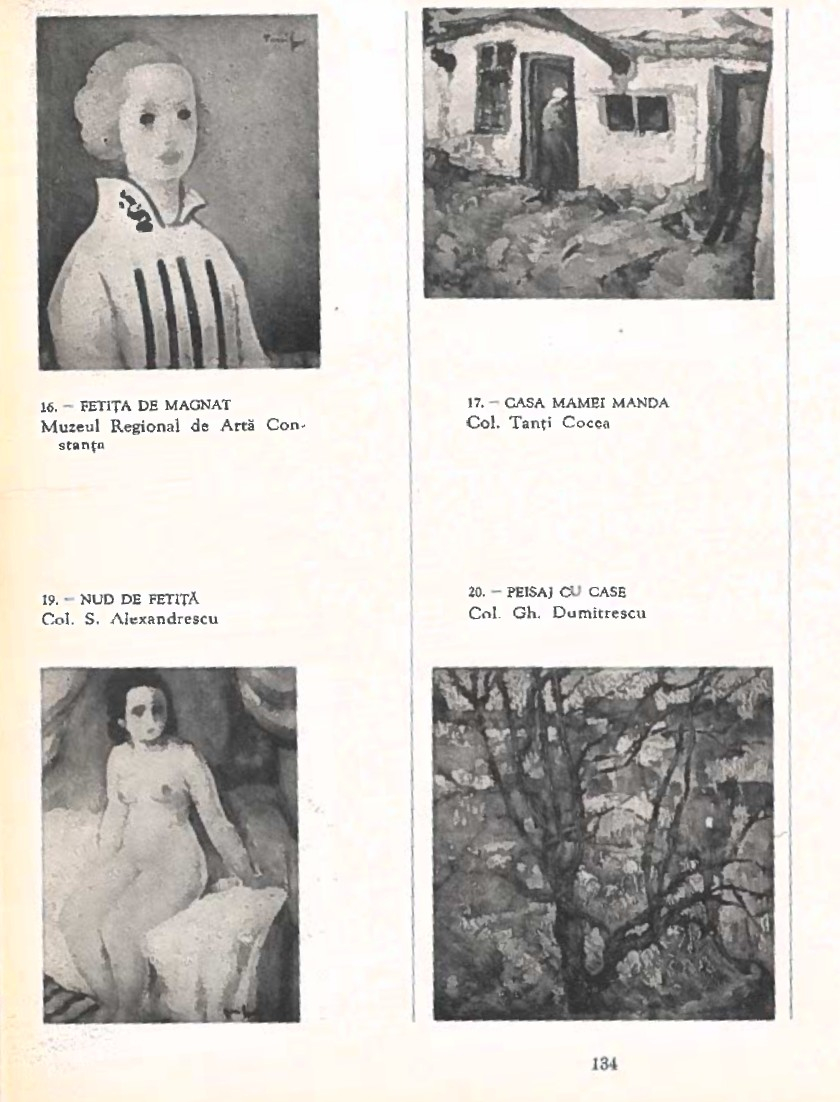
The work is reproduced in the exhibition catalogue "N.N.Tonitza", the Art Museum of the R.P.R., Bucharest, 1964 on page 134, cat. 19, under the title "Nude girl". The work was part of the exhibition "Tonitza and the Genius of Childhood", Art Safari Bucharest, 201 and is reproduced in the exhibition catalogue "Tonitza and the Genius of Childhood", Zoltan Soos, Art Safari, 2019, page 207.

PROVENANCE

director Sică Alexandrescu's collection.

Starting from 1926, nudity becomes an increasingly frequent theme in Nicolae Tonitza's creation. The interest in this theme has its roots in his formative years at the School of Fine Arts in Iasi, where the artist practiced the study of nudity in the studio - a lesson that the Italians call "accademia". Tonitza saw nudity as a "subtle brotherhood between color and light". What defines him as an artist is the abandonment of color in favor of drawing: color does not construct form on its own, but fills it, being applied within rigorously traced contours. Ionel Jianu captures this precisely: "above all, he will remain a draughtsman, the color being applied within precisely traced contours, as a substance that fills the space between the boundaries of the lines". Numerous pen and pencil studies from this period confirm his constant concern for form, especially for the anatomy of the female body, with its specific modeling. The artist has the ability to expressively represent the body regardless of the pose of his model. Most of the time, however, he captures the intimate atmosphere and warmth of interiors. He becomes a careful observer, faithfully synthesizing the features of his muses, reinterpreting them through elegant lines. He captures distinct attitudes and gives the body a symbolic construction. His characters are often presented in stark contrast to the background. Although he usually opts for a neutral chromatic, he uses strong tones and contours in dark shades. Another defining element of his nudes is the intimate scenography. Tonitza does not overload the frame with decorations, but creates a specific atmosphere through draperies, beds, sofas, chair backs or various props, which complete the composition without distracting attention from the model. Nicolae Tonitza is among the painters who "dominated the first half of the XX century and who made nude paintings an independent genre of painting," as stated by Mircea Deac; alongside Theodor Pallady, Gheorghe Petras and Camil Ressu. In their works, we will identify the figure of the beloved being, a model or a renowned personality. In his writings about art, Tonitza discusses the issue of receiving nudity in native art, referring to the reluctance and puritanism shown by some viewers. "Whoever is conquered in front of a nude by the voluptuousness of the flesh and not by the voluptuousness of painting – misses out," the artist would remark, so after learning the precepts of Munich academism and the teachings of Fine Arts in Iasi, he mastered human anatomy and took up the theme in his creation. The present work, created in the 1930s, illustrates the above-mentioned principles. Tonitza chooses to depict the model from the front, highlighting the anatomical qualities of the body: smoothness, plasticity and transparency of the flesh, treated with an emotional sensitivity characteristic of the artist. The pictorial frame and the chromatic register closely relate it to other works from the same period, among which we mention "Nude with pink shirt" from the collection of the Art Museum Constanta. As in the case of "Nude in the attic" from 1926, the intimacy of the boudoir serves as a background, integrating the nude into a familiar setting.

For clarifications regarding the bidding procedure, hammer price costs, guarantee, payment, and collection terms for the winning lot, we recommend carefully reading/re-reading the Bidding Regulations.

For additional information regarding the lot and the auction, please contact the Art Consultants Department.

SESSION
Thu, 18 June 2026 19:00

Similar lots

The Harlequin's Family

117. The Harlequin's Family [1968]

Corneliu Baba

    Estimate: EUR 1.000 - 1.800
    Sold EUR 3.000
Boyar Interior

16. Boyar Interior [anii '20]

George Catargi

    Estimate: EUR 300 - 500
    Sold EUR 800
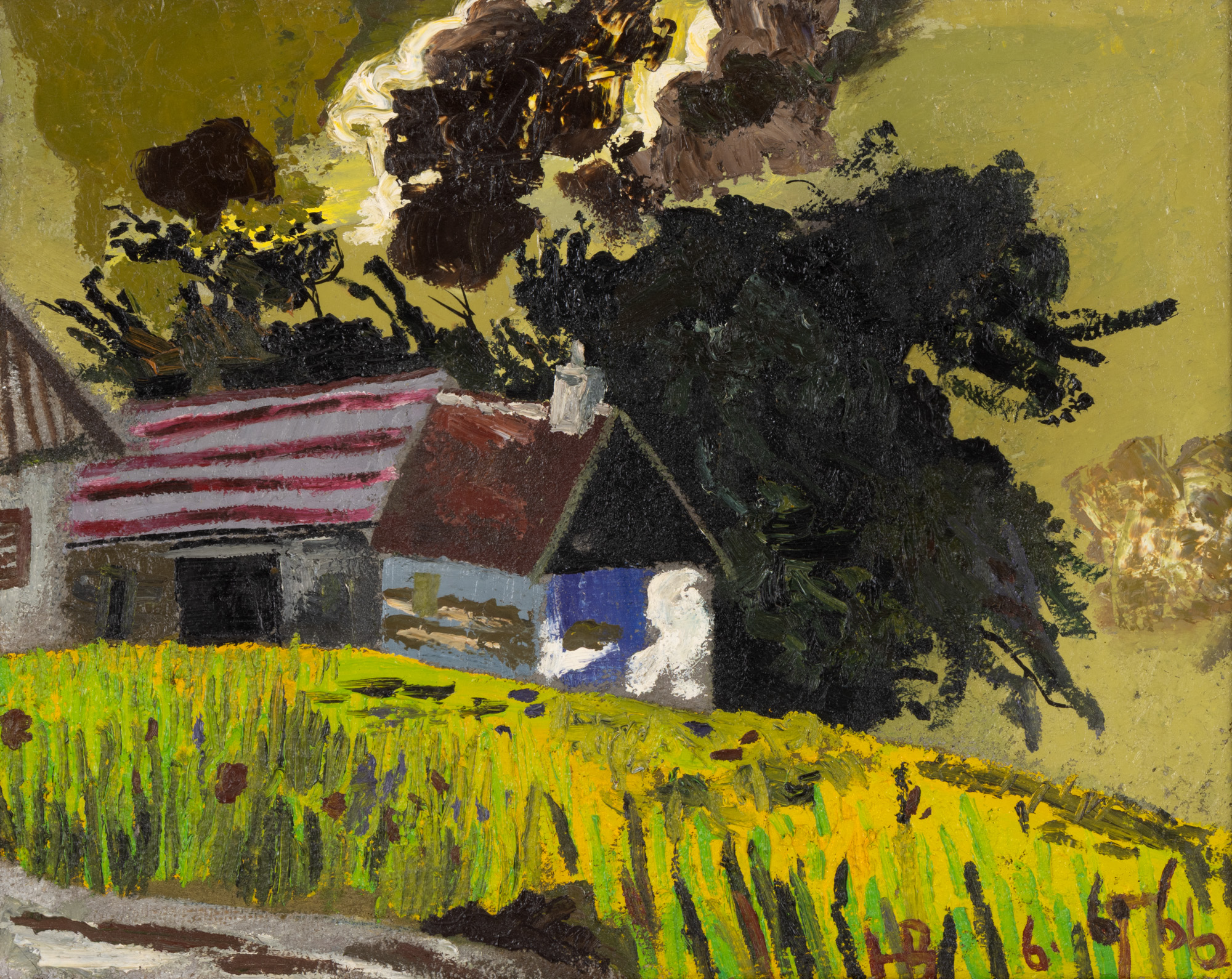
Apple Orchard

112. Apple Orchard [1966]

Horia Bernea

    Estimate: EUR 2.500 - 3.500
    Sold EUR 3.000