The photos of the lot are informative and indicative, and cannot provide a highly detailed view of the object from all angles. We recommend a careful physical inspection of the lot before bidding.
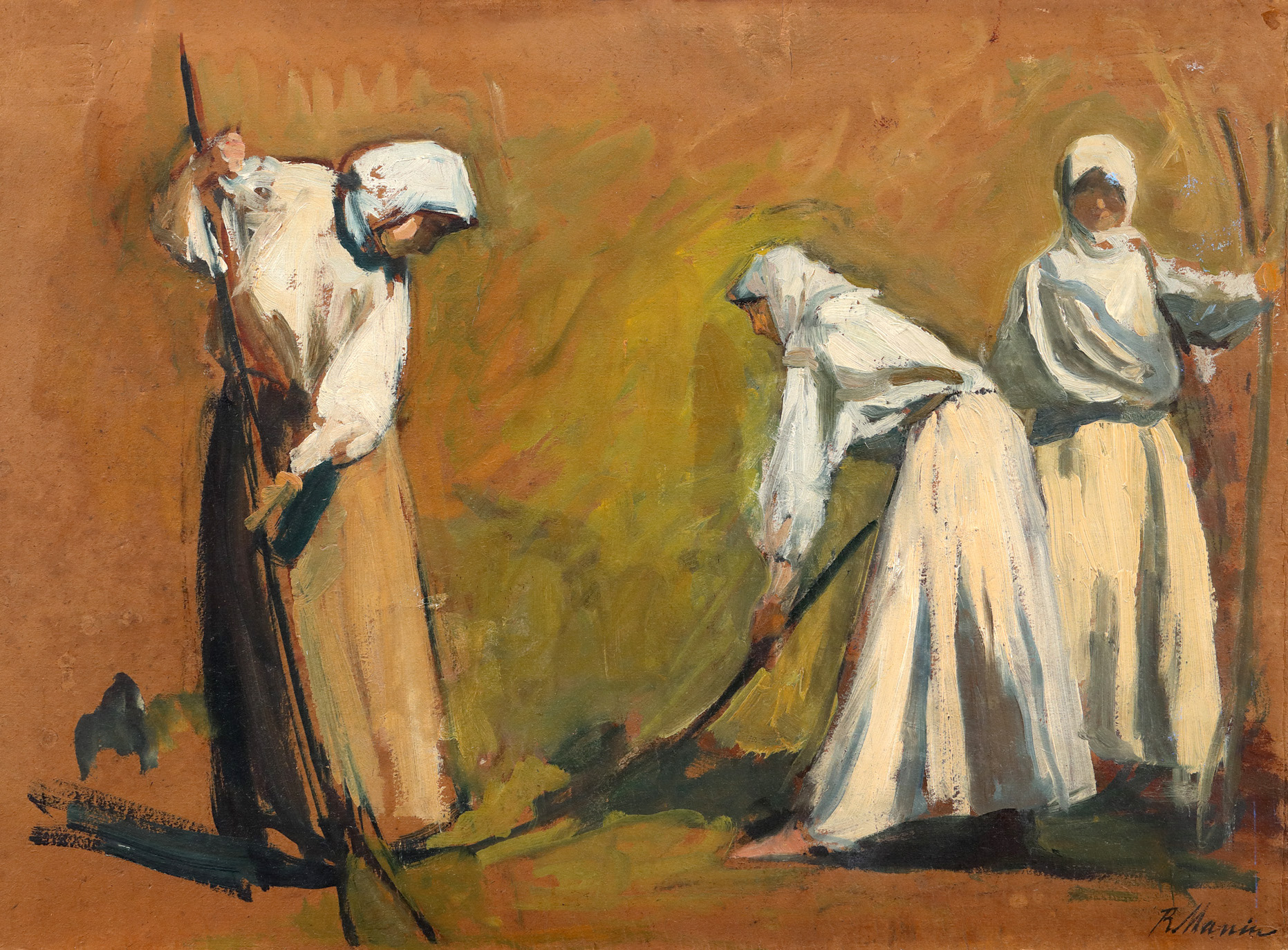
Alongside Cecilia Cuțescu-Storck, Olga Greceanu, or Nina Arbore, Rodica Maniu is one of the representative female figures of art of the last century. Her grandfather, Vasile Maniu, would gather the great writers of the time around him - Odobescu, Hașdeu or Alecsandri. During one of their meetings, Alecsandri told him he would like to baptize his granddaughter, but the poet died before he could accomplish this. However, he managed to send a letter to Vasile Maniu which also included the poem "Rodica". In appreciation of the great poet's work and the proposal in his letter, the family decided to name the child Rodica. Her grandfather was a lawyer and historian, participant in the 1848 Revolution, and collaborator of N. Balcescu. Her father, Grigore Maniu, was also a lawyer, intellectual and supporter of the idea of national unity. Her brother was the great poet Adrian Maniu, and her mother, Mimi Maniu, studied music. Recipient of this propitious environment to develop her intellectual abilities and artistic talent, Rodica Maniu confidently began her journey in the world of art. Her imposing father, a member of high societal circles, sought the opinion of Nicolae Grigorescu on his daughter's talent. The master encouraged and approved of the child's talent, advising her to practice as much as possible and study under Nicolae Vermont's guidance. Guided by him, the artist cultivated her penchant for watercolor works. Her first exhibition, bringing together a host of rural frescoes in which the artist transcribes on Romanian soil the seaports she knew in Brittany, was praised by personalities such as B. Brănișteanu or Tudor Arghezi. She exhibited in Bucharest in 1916 alongside other female representatives of the local art and participated in the genesis of the Painters and Sculptors Women's movement. She will also embrace the status of a painter of rural life and will consistently create works inspired by village life. Her childhood spent at Șopârlița, where the family had a vacation home, opens the way for her first encounters with the rural area. She will rediscover the beauty of the Romanian village later when spending her summers in the small village in Olt county with her husband, Samuel Mützner. The present work focuses on feminine characters, with kerchiefs, white shirts, and long skirts, engaged in fieldwork. We will thus become familiar with the daily rural livelihood. Another key moment in her formation as an artist was the discovery of Brittany. As an exhibitor at the Salon of the Fine Arts Society in Paris, Rodica Maniu will enjoy laudative appreciation from the French critique. Whether she paints boats anchored in ports, or focuses on canvases through which gusts of wind seep; whether she is painting Douarnenez, the Danube Delta, Șopârlița or Agapia, Rodica Maniu creates true compositions, carefully studied, for which she will be rewarded with prizes in Paris or Barcelona.
oil on cardboard, signed lower right, in black, "R. Maniu"
Research information
The work participated in the exhibition "Rodica Maniu. Watercolors/Oils. Unpublished Works", Dialog Gallery, Bucharest, October - November 2007 and is reproduced in the exhibition catalog.
ADDITIONAL INFORMATION
For clarifications regarding the bidding procedure, hammer price costs, guarantee, payment, and collection terms for the winning lot, we recommend carefully reading/re-reading the Bidding Regulations.
For additional information regarding the lot and the auction, please contact the Art Consultants Department.

Detalii
Alongside Cecilia Cuțescu-Storck, Olga Greceanu, or Nina Arbore, Rodica Maniu is one of the representative female figures of art of the last century. Her grandfather, Vasile Maniu, would gather the great writers of the time around him - Odobescu, Hașdeu or Alecsandri. During one of their meetings, Alecsandri told him he would like to baptize his granddaughter, but the poet died before he could accomplish this. However, he managed to send a letter to Vasile Maniu which also included the poem "Rodica". In appreciation of the great poet's work and the proposal in his letter, the family decided to name the child Rodica. Her grandfather was a lawyer and historian, participant in the 1848 Revolution, and collaborator of N. Balcescu. Her father, Grigore Maniu, was also a lawyer, intellectual and supporter of the idea of national unity. Her brother was the great poet Adrian Maniu, and her mother, Mimi Maniu, studied music. Recipient of this propitious environment to develop her intellectual abilities and artistic talent, Rodica Maniu confidently began her journey in the world of art. Her imposing father, a member of high societal circles, sought the opinion of Nicolae Grigorescu on his daughter's talent. The master encouraged and approved of the child's talent, advising her to practice as much as possible and study under Nicolae Vermont's guidance. Guided by him, the artist cultivated her penchant for watercolor works. Her first exhibition, bringing together a host of rural frescoes in which the artist transcribes on Romanian soil the seaports she knew in Brittany, was praised by personalities such as B. Brănișteanu or Tudor Arghezi. She exhibited in Bucharest in 1916 alongside other female representatives of the local art and participated in the genesis of the Painters and Sculptors Women's movement. She will also embrace the status of a painter of rural life and will consistently create works inspired by village life. Her childhood spent at Șopârlița, where the family had a vacation home, opens the way for her first encounters with the rural area. She will rediscover the beauty of the Romanian village later when spending her summers in the small village in Olt county with her husband, Samuel Mützner. The present work focuses on feminine characters, with kerchiefs, white shirts, and long skirts, engaged in fieldwork. We will thus become familiar with the daily rural livelihood. Another key moment in her formation as an artist was the discovery of Brittany. As an exhibitor at the Salon of the Fine Arts Society in Paris, Rodica Maniu will enjoy laudative appreciation from the French critique. Whether she paints boats anchored in ports, or focuses on canvases through which gusts of wind seep; whether she is painting Douarnenez, the Danube Delta, Șopârlița or Agapia, Rodica Maniu creates true compositions, carefully studied, for which she will be rewarded with prizes in Paris or Barcelona.
ADDITIONAL INFORMATION
For clarifications regarding the bidding procedure, hammer price costs, guarantee, payment, and collection terms for the winning lot, we recommend carefully reading/re-reading the Bidding Regulations.
For additional information regarding the lot and the auction, please contact the Art Consultants Department.

oil on cardboard, signed lower right, in black, "R. Maniu"
Research information
The work participated in the exhibition "Rodica Maniu. Watercolors/Oils. Unpublished Works", Dialog Gallery, Bucharest, October - November 2007 and is reproduced in the exhibition catalog.