




Снимките на лота са с информативен и илюстративен характер и не могат да предоставят изключително детайлен изглед на обекта от всички ъгли. Препоръчваме внимателен оглед на лота на място, преди да направите наддаване.
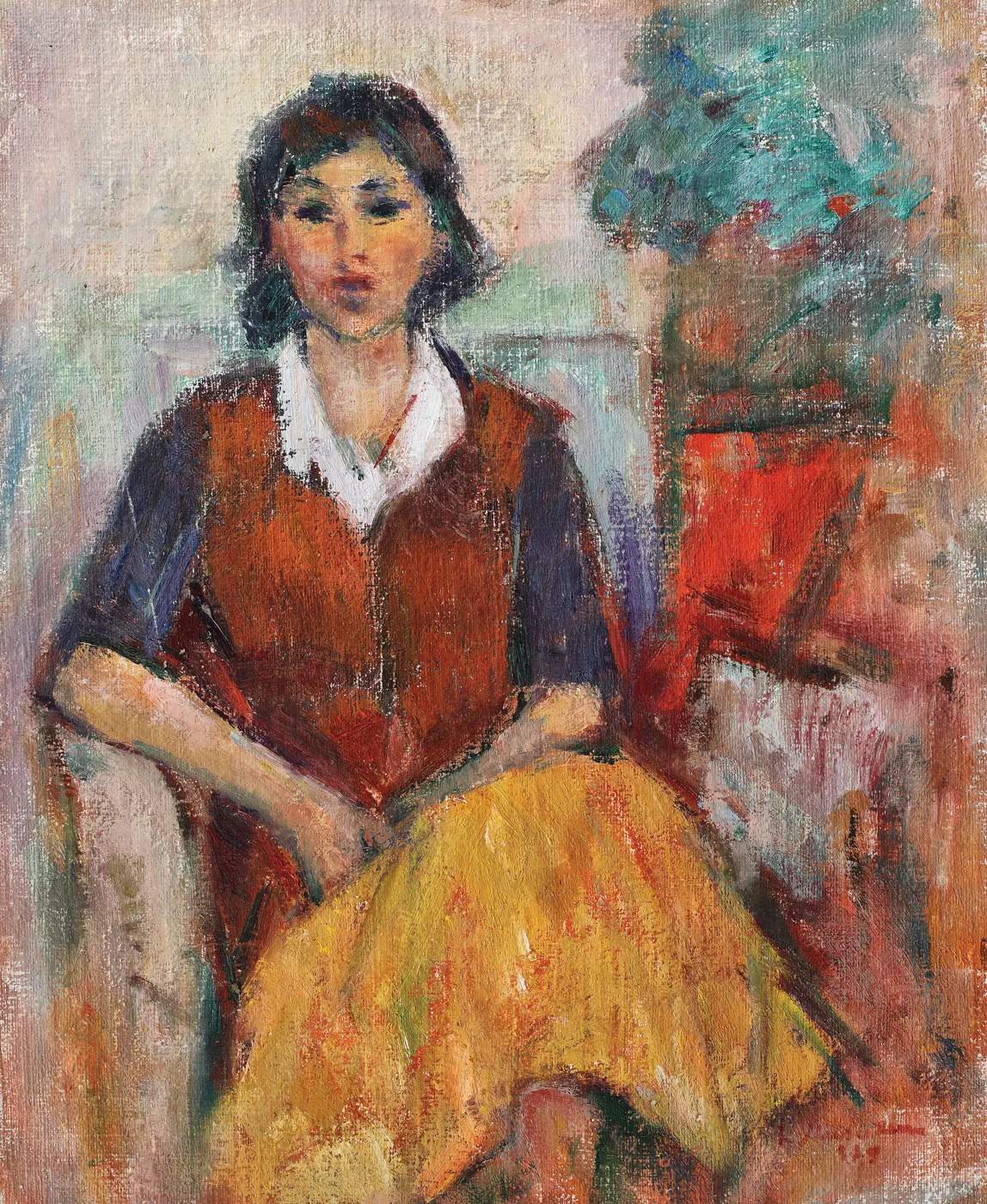
Sanda Șaramat's initiation in the visual arts took place under the careful guidance of Master Alexandru Ciucurencu, at the "Nicolae Grigorescu" Institute in Bucharest. Unlike her peers who adhere to the principle of mimesis, directly borrowing elements from the master's art, Sanda Șaramat disavows Ciucurencu's specific characteristics and gleans necessary knowledge from him to perfect her own pictorial language. Her first solo exhibition took place in 1959 in Bucharest, and in 1971 she opened her first solo exhibition in Rome at the Mariani Gallery. Following this event, Sanda Șaramat received acclamation from the Italian press, with Toni Buonavita acknowledging that the artist possesses "an exacerbated sensitivity, a sense of color in lyrical notes, which gives Sanda Șaramat's works a tone and a finesse that makes her particularly enjoyable". The same year, she was awarded the Cup of the city of Naples, as a result of her participation in the International Painting Competition "Italy 2000". She has taken part in numerous group exhibitions in cities such as Athens, Lisbon, São Paulo, Beijing, Moscow, or Berlin; and her works are found in the collections of museums at home and private collections abroad. In 1972, the artist inaugurated her second solo exhibition in Italy, at the Romanian Academy in Rome.
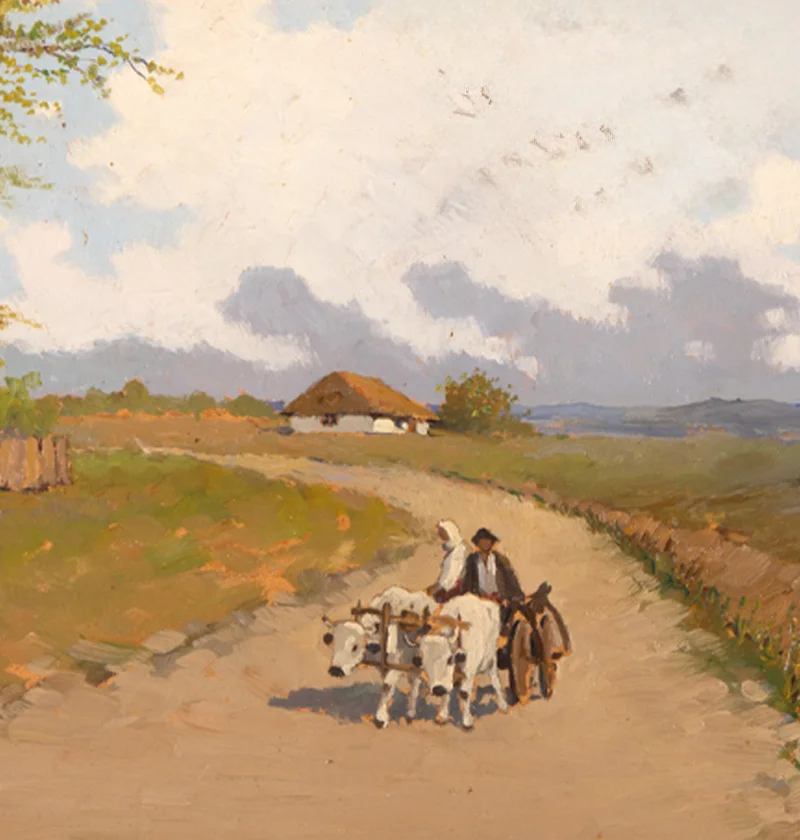
The village's life remains one of her favorite themes. Starting from 1968, Sanda Șaramat began her journey through the Romanian rural settlements, intuitively traverse the lives of peasants in Maramureș - keepers of ancient customs, dress, language, and religion. Impressed by their traditional costumes, the artist will enrich her personal collection with such clothing items. She paints either on the spot or later, in the tranquility of home, moved by a peasant's movement or gesture. Among her most cordial memories are visits to fairs, where the simple man from the village meets with domestic animals, food, or the pots necessary for the house. Her travels in the rural world are kept by the artist in a vast collection that includes icons painted on wood or glass, old ceramics, or traditional costumes. Places like Iza Valley, Oașul, or Baia Mare frequently appear in Sanda Șaramat's canvases, as an eternal remembrance of an archaic space, of a timeless cradle from which the artist extracts her creative sap. However, Sanda Șaramat also excelled in the creation of still lifes or compositions with flowers, where she focuses on portraying a space furrowed by sinuous and mobile lines. The suggestive sketched drawing and harmonious, velvety tones that retain the author's delicacy and refinement are notable. In these works, there is an orderly play of geometric figures and an evident attempt towards abstraction of forms.
The work is reproduced in the monograph "Sanda Șărămăt", Marina Preutu, Papirus Media, Bucharest, 2010, on page 75.
Запознанства
1972
ДОПЪЛНИТЕЛНА ИНФОРМАЦИЯ
За разяснения относно процедурата по наддаване, разходите при спечелване, условията за гаранция, плащане и вземане на спечеления лот, препоръчваме внимателно четене/препрочитане на Правилника за наддаване.
Sanda Șaramat's initiation in the visual arts took place under the careful guidance of Master Alexandru Ciucurencu, at the "Nicolae Grigorescu" Institute in Bucharest. Unlike her peers who adhere to the principle of mimesis, directly borrowing elements from the master's art, Sanda Șaramat disavows Ciucurencu's specific characteristics and gleans necessary knowledge from him to perfect her own pictorial language. Her first solo exhibition took place in 1959 in Bucharest, and in 1971 she opened her first solo exhibition in Rome at the Mariani Gallery. Following this event, Sanda Șaramat received acclamation from the Italian press, with Toni Buonavita acknowledging that the artist possesses "an exacerbated sensitivity, a sense of color in lyrical notes, which gives Sanda Șaramat's works a tone and a finesse that makes her particularly enjoyable". The same year, she was awarded the Cup of the city of Naples, as a result of her participation in the International Painting Competition "Italy 2000". She has taken part in numerous group exhibitions in cities such as Athens, Lisbon, São Paulo, Beijing, Moscow, or Berlin; and her works are found in the collections of museums at home and private collections abroad. In 1972, the artist inaugurated her second solo exhibition in Italy, at the Romanian Academy in Rome.
The village's life remains one of her favorite themes. Starting from 1968, Sanda Șaramat began her journey through the Romanian rural settlements, intuitively traverse the lives of peasants in Maramureș - keepers of ancient customs, dress, language, and religion. Impressed by their traditional costumes, the artist will enrich her personal collection with such clothing items. She paints either on the spot or later, in the tranquility of home, moved by a peasant's movement or gesture. Among her most cordial memories are visits to fairs, where the simple man from the village meets with domestic animals, food, or the pots necessary for the house. Her travels in the rural world are kept by the artist in a vast collection that includes icons painted on wood or glass, old ceramics, or traditional costumes. Places like Iza Valley, Oașul, or Baia Mare frequently appear in Sanda Șaramat's canvases, as an eternal remembrance of an archaic space, of a timeless cradle from which the artist extracts her creative sap. However, Sanda Șaramat also excelled in the creation of still lifes or compositions with flowers, where she focuses on portraying a space furrowed by sinuous and mobile lines. The suggestive sketched drawing and harmonious, velvety tones that retain the author's delicacy and refinement are notable. In these works, there is an orderly play of geometric figures and an evident attempt towards abstraction of forms.
ДОПЪЛНИТЕЛНА ИНФОРМАЦИЯ
За разяснения относно процедурата по наддаване, разходите при спечелване, условията за гаранция, плащане и вземане на спечеления лот, препоръчваме внимателно четене/препрочитане на Правилника за наддаване.