




Meniu

Продай / Продай
Контакт
Моят профил
Български

Открийте

Арт консултанти

Отдели търгове


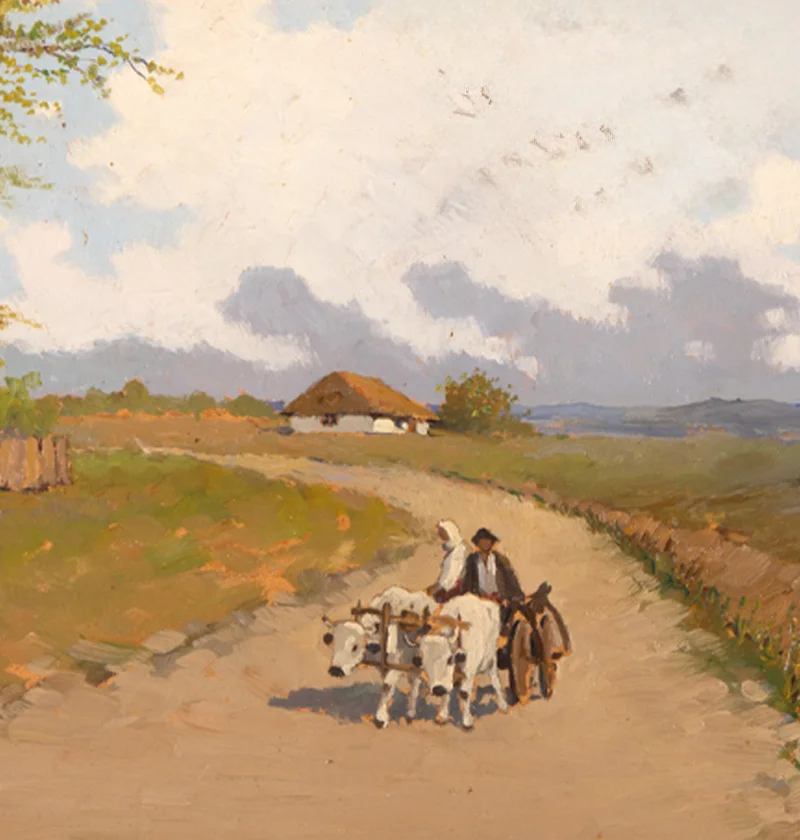
116. Spring at Câmpina [1885-1890]

1838, Pitaru, Dâmboviţa - 1907, Câmpina

Оценка

EUR 70.000 - 120.000

Продадено

EUR 95.000

Сесия

Вто, 22 март 2022 19:00

A lover of nature and its lyrical metaphors, artist Nicolae Grigorescu was to complete his education as a plein-air artist at Barbizon, where he remained for eight years. Alongside young Grigorescu, the painters Jean-François Millet, Narcisse Virgilio Diaz de la Peña, Théodore Rousseau, Jean-Baptiste Camille Corot, Charles Jacques, Jules Dupré, Constant Troyon, Paul Huet, Charles-François Daubigny, Gustave Courbet and others worked at Barbizon. It was here, beneath the huge canopies of shade of the Fontainebleau forest - a place of encounter with nature and the search for the eternal moment - that the first landscape painters of the 19th century found themselves. In Barbizon, his artistic repertoire would be enriched with subjects such as everyday scenes of local life, forest edges, solitary trees, streams or foliage, which were to be some of his most repeated landscape subjects on his return home. Back in the country, the working technique assimilated in Barbizon can be seen in the landscapes created in Rucăr, Dâmbovicioara, Lunca Siretului, Câmpulung-Muscel or Târgoviște, places that the artist will visit continuously during the summer. From 1868 onwards we often meet him in the area of Câmpulung-Rucăr, enjoying the hilly and harmonious relief, which is in keeping with his meditative spirit. The landscapes and fairs created in these places will be strongly influenced by his stay in Barbizon, illustrating his deep relationship with nature. The lessons learnt from the Impressionist painters of Fontainebleau can also be seen in the technical issues, in the free way of painting, in the brightness of the tones and in the expressiveness of the brushstrokes. His direct observation of nature in its incessant change, accentuated by his sensitivity and receptivity to the beauty of the surrounding world will determine the modulation of his pictorial language within the realistic approach. Visually above all, both by the manner of execution, by clarity, and by the bright and truthful colouring, Grigorescu will portray himself as a believer in nature, which he will dress in unparalleled plastic expressions. Around it, subjects such as peasants ploughing the fields, going up and down country roads, peasants toasting at the gate, young shepherds and shepherdesses guarding flocks of sheep, old peasant huts or forest edges will offer a vast picturesque repertoire. "La marginea crângului" ("At the edge of the grove"), a motif also practised at Barbizon, was to be illustrated in 1910 in the first monograph dedicated to the artist - "The life and work of the painter N. I. Grigorescu" by Alexandru Vlahuță. In 1942, the work "At the edge of the grove", along with a series of thematic works, was also illustrated in the volume "Poezii populare ale românilor" ("Romanian Folk Poems") by Vasile Alecsandri. (G.M.)

Препратки

VLAHUȚĂ, Alexandru, "Pictorul Nicolae Grigorescu. Viața și opera lui" ("The painter Nicolae Grigorescu. His life and work"), Casa Școalelor Publishing House, Bucharest, 1910. VIDA, Mariana, "Grigorescu pictor al naturii=Grigorescu peintre de la nature: (1838-1907)", Publishing House of the Art Museum of the Socialist Republic of Romania, Bucharest, 2007.

Размери

width 43 cm, height 62.5 cm

Описание

oil on canvas, signed bottom centred, with brown, "Grigorescu"

Информация от изследване

The artwork is reproduced in the monograph "Viața și opera pictorului N. I. Grigorescu" ("The life and work of the painter N. I. Grigorescu"), Alexandru Vlahuță, SOCEC, Bucharest, 1910 at p. 44, under the title "La marginea crângului" ("At the edge of the grove"). The artwork is reproduced in "N. Grigorescu", by Nicolae Petrașcu, Bucovina Printing House, Bucharest, 1930, at cat. 68, p. 181, under the title "În marginea crângului" ("At the edge of the grove"). The artwork is the first illustration in the volume "Poezii populare ale românilor" ("Folk poems of the Romanians") by Vasile Alecsandri, Casa Școalelor, Bucharest, 1942 at p. 32, under the title "La marginea dumbrăvii" ("At the edge of the woods").

Запознанства

1885-1890

ПРОИЗХОД

the historical collection of banker Ernest Edmond Goodwin (1848-1931). Ernest Goodwin, a native Englishman and deputy director of the Banque de Roumanie, married to Maria (Mița) Șuțu, was known for the skill with which he assembled some of the master's best paintings, his collection competing in number and value with those of Eugeniu Carada and Alexandru Vlahuță. Over a period of twenty years he purchased works by Grigorescu, which he chose after repeated visits to his studio and less frequently from exhibitions. At least until 1910 the work was in the collection of the banker, who after that year decided to sell it and return to the UK.

ДОПЪЛНИТЕЛНА ИНФОРМАЦИЯ

За разяснения относно процедурата по наддаване, разходите при спечелване, условията за гаранция, плащане и вземане на спечеления лот, препоръчваме внимателно четене/препрочитане на Правилника за наддаване.

За допълнителна информация относно лота и търга, моля свържете се с Отдела на арт консултантите.

Алтернативни лотове

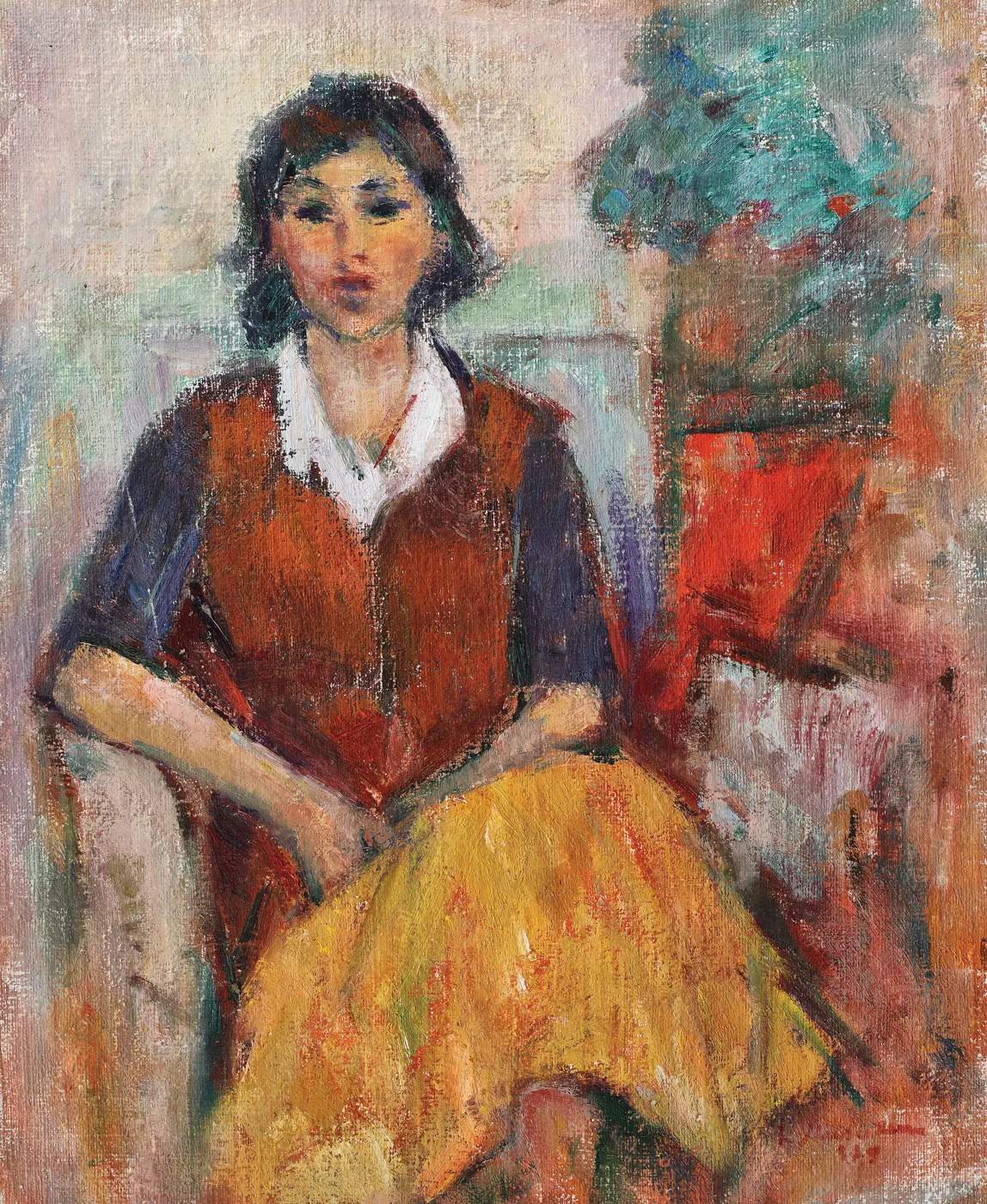
Pot with Geraniums

96. Pot with Geraniums [1971]

Maria Brateş Pillat

    Оценка EUR 350 - 550
    Продадено EUR 700
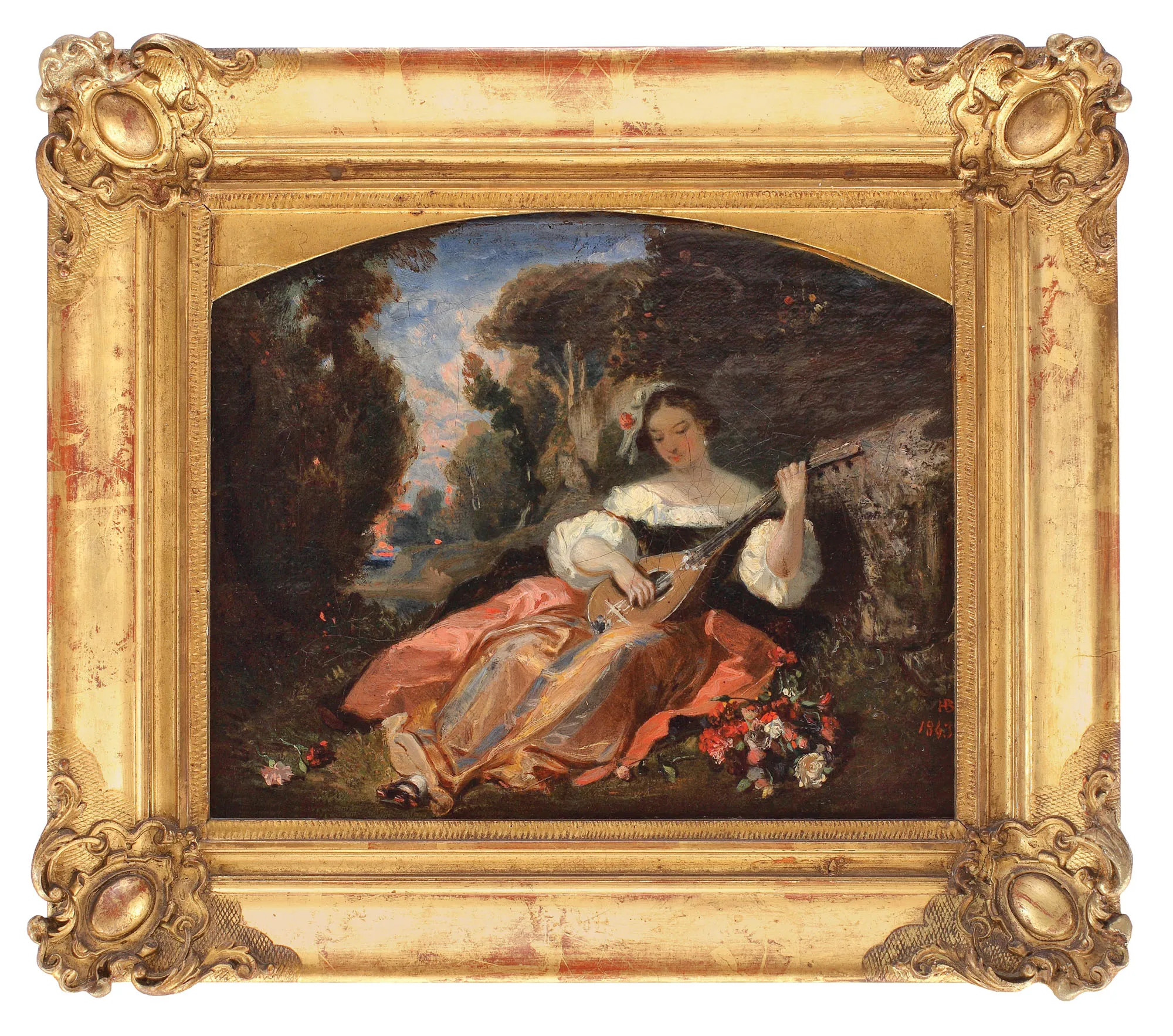
In the Garden

58. In the Garden

Theodor Aman

    Оценка EUR 25.000 - 35.000
    Продадено EUR 25.000
Early Fall

134. Early Fall

Paul Scorţescu

    Оценка EUR 1.500 - 2.500
    Продадено EUR 1.500
Cișmigiu

126. Cișmigiu

Micaela Eleutheriade

    Оценка EUR 800 - 1.500
    Продадено EUR 800