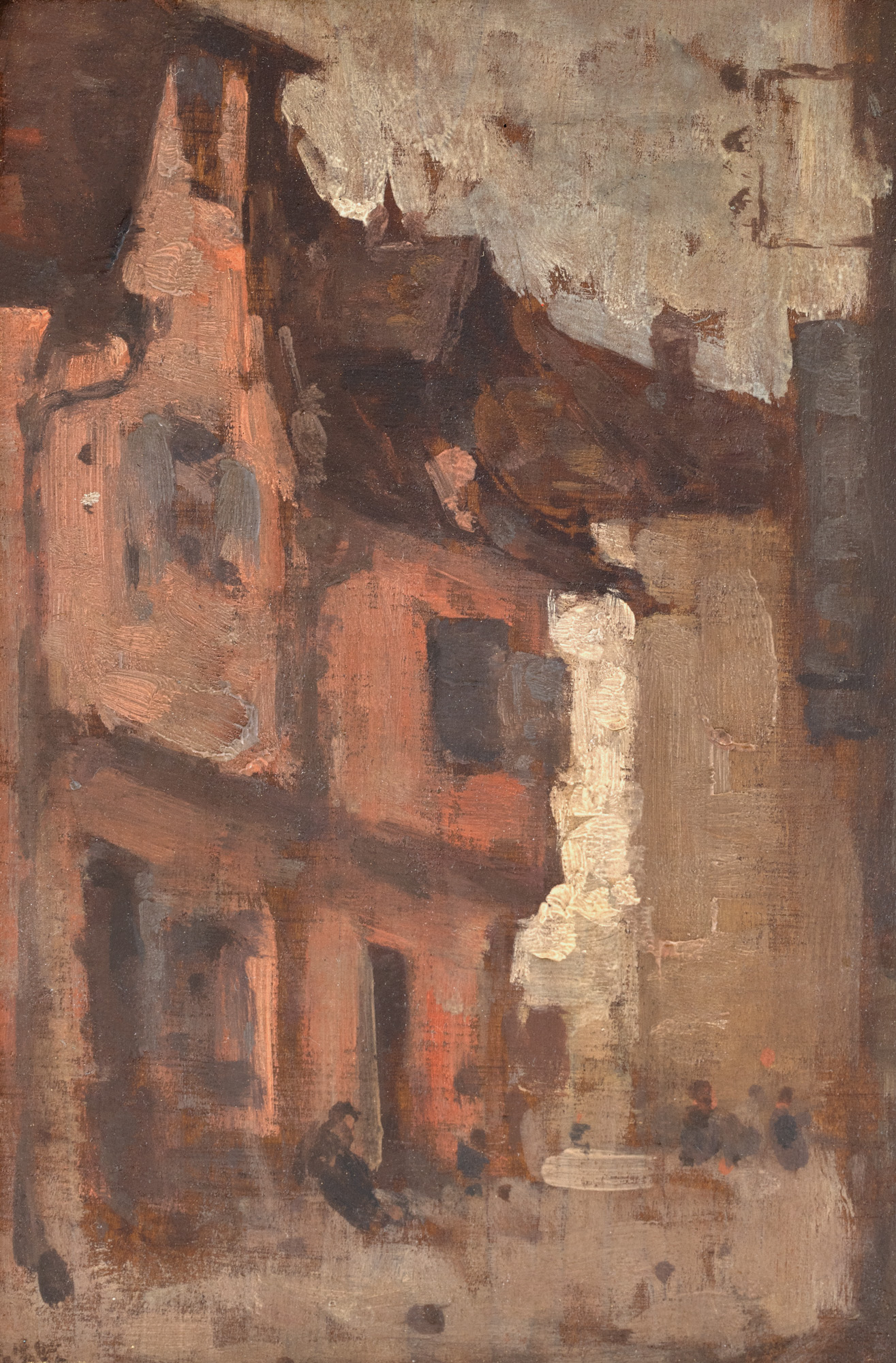
Снимките на лота са с информативен и илюстративен характер и не могат да предоставят изключително детайлен изглед на обекта от всички ъгли. Препоръчваме внимателен оглед на лота на място, преди да направите наддаване.
Снимките на лота са с информативен и илюстративен характер и не могат да предоставят изключително детайлен изглед на обекта от всички ъгли. Препоръчваме внимателен оглед на лота на място, преди да направите наддаване.
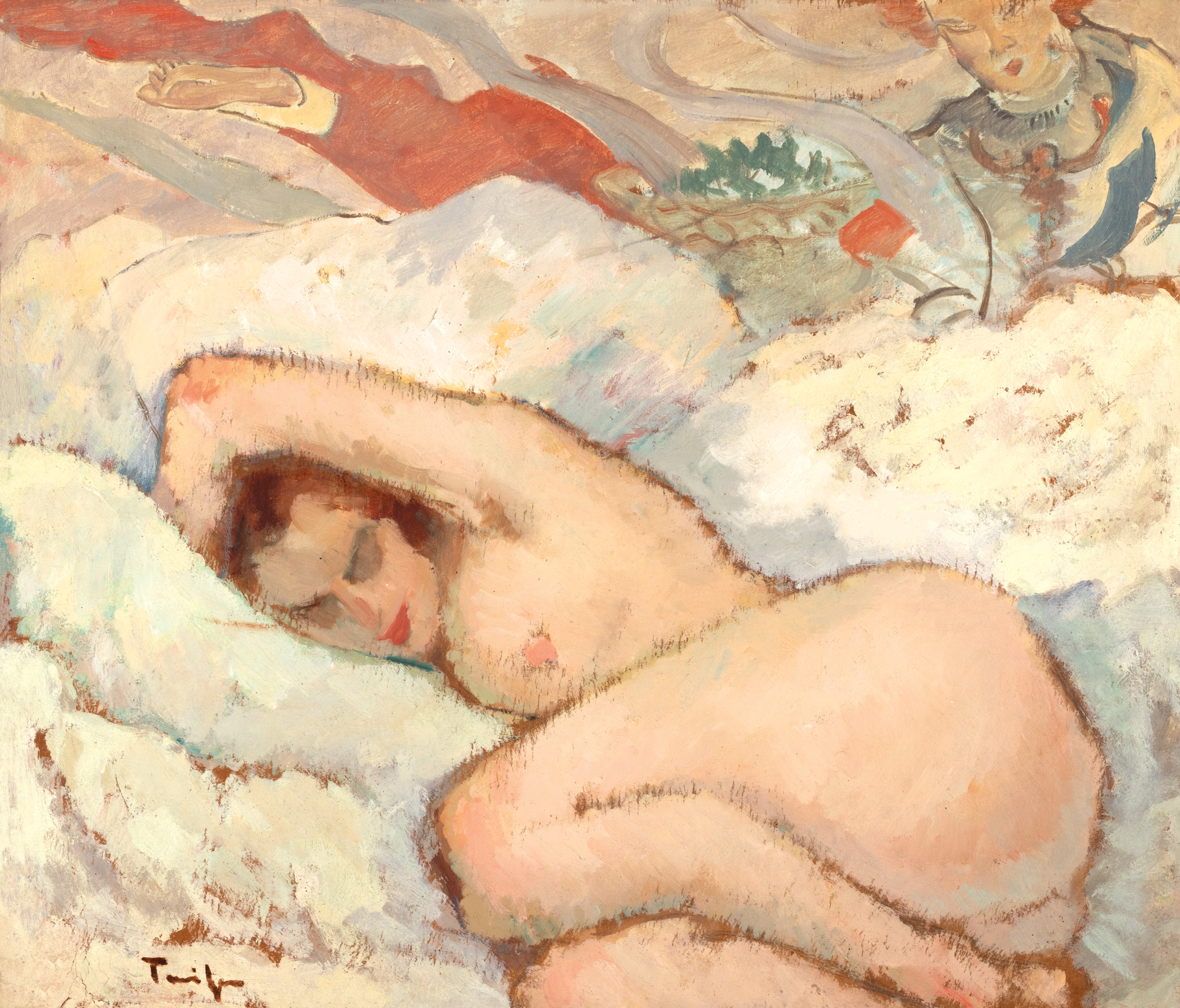
Nicolae Tonitza, a remarkable presence in the history of Romanian art, developed an original stylistic repertoire and an unmistakable visual language. His work mirrors the transition from post-impressionism to the modernist tendencies characteristic of his times. Painter Tonitza represents his subjects in a schematic, simplified manner, eliminating unnecessary details, leaving room for expressiveness and inner experiences. Like Pierre Laprade, he prefers a synthetic approach, simultaneously resorting to a decorative, sometimes even flat treatment of his compositions.
His special interest in the nude theme is well known. He believed that nowhere were skills "more intensively tested than in the study of nudes.” Numerous studies in Iasi or Munich after antique models provided young Tonitza with a solid grounding in understanding artistic anatomy. However, he yearned for more, wanting to overcome “the parasitic stage of academia” towards asserting his own vision. He often found his models via newspaper advertisements, demonstrating particular selectiveness and meticulousness.
The analyzed nude, by its position and angle, presents a major problem for decorative art - the perspective. A courageous choice for the artist, the perspective runs contrary to the decorative logic, which favors the most representative angles. However, Tonitza manages to solve these compositional difficulties through firm contours and blurred volumes, with subtle transitions, where stylization becomes a means of expression, not limitation. A sketch from 1922 (reproduced in catalog 48 in Tonitza's album, 1945, text by Ionel Jianu) showcases the artist's interest in perspectives and refinement of forms. Chromatically, Tonitza's nude falls within his warm, balanced register, with shades of ochre, blurred pinks, and muted hues, often filtered through a diffuse light, without intense value contrasts.
From a compositional point of view, Tonitza complements coloristic tranquility with a dynamic approach to the frame. This dynamism is given by the oblique, descending disposition of the character. Echoes of this direction are felt up to the upper layer, where effects of red and blue smoke seem to ascend towards the top left corner. This upper zone of the frame, occupying the latter third of the image, works as a register for dream and fantasy, sharply contrasting both plastic treatment and symbolic content with the rest of the composition. This is unusual for Tonitza, known for his nudes situated on backgrounds with decorative hues, without references to the plane of fantasy. A classic example of nude against a decorative backdrop is reproduced at cat. 105 in the album Tonitza, published by Meridiane Publishing House in 1965, with a preface by Corneliu Baba. In that work, the female figure is depicted vertically, imparting stability to the ensemble. The dynamic of the composition is suggested only by the face's plane, lightly turned to the right, contrasting with the body's left orientation.
Rear-view nudes constitute a recurring motif in Tonitza's work. One such example appears at cat. 22 in the same album, where the character is captured in a powerful contrapposto, more emphasized than in previous works. Additionally, the nude is portrayed fully, from head to toe, in a richly detailed interior, easier to decipher than other compositions. These three works highlight the diversity with which Tonitza approached the theme of the female nude: from vertical stability to the tension of oblique positions, from decorative to fantastical, from suggested to explicit, offering a nuanced and coherent perspective on this favorite theme in his work.
Also unusual for Tonitza is the chosen perspective - the angle from which the model is seen, in a lying down position, with a slight contrapposto. The artist does not often resort to this compositional solution, however, a comparable example can be found in the same album, at cat. 104. Although differing in limb placement, that study maintains a similar angle in representing the volumes of the torso and the pelvis. This resemblance indicates Tonitza's careful concern for depicting this type of position, difficult from a constructive viewpoint.
Препратки
BREZIANU, Barbu, "Tonitza", ed. Academy of the Socialist Republic of Romania, Bucharest, 1967.
Размери
width 59 cm, height 50 cm
Описание
oil on cardboard, signed bottom left, in brown, "Tonitza"
Запознанства
anii '20
ПРОИЗХОД
Tiberiu Puica historical collection.
ДОПЪЛНИТЕЛНА ИНФОРМАЦИЯ
За разяснения относно процедурата по наддаване, разходите при спечелване, условията за гаранция, плащане и вземане на спечеления лот, препоръчваме внимателно четене/препрочитане на Правилника за наддаване.
Nicolae Tonitza, a remarkable presence in the history of Romanian art, developed an original stylistic repertoire and an unmistakable visual language. His work mirrors the transition from post-impressionism to the modernist tendencies characteristic of his times. Painter Tonitza represents his subjects in a schematic, simplified manner, eliminating unnecessary details, leaving room for expressiveness and inner experiences. Like Pierre Laprade, he prefers a synthetic approach, simultaneously resorting to a decorative, sometimes even flat treatment of his compositions.
His special interest in the nude theme is well known. He believed that nowhere were skills "more intensively tested than in the study of nudes.” Numerous studies in Iasi or Munich after antique models provided young Tonitza with a solid grounding in understanding artistic anatomy. However, he yearned for more, wanting to overcome “the parasitic stage of academia” towards asserting his own vision. He often found his models via newspaper advertisements, demonstrating particular selectiveness and meticulousness.
The analyzed nude, by its position and angle, presents a major problem for decorative art - the perspective. A courageous choice for the artist, the perspective runs contrary to the decorative logic, which favors the most representative angles. However, Tonitza manages to solve these compositional difficulties through firm contours and blurred volumes, with subtle transitions, where stylization becomes a means of expression, not limitation. A sketch from 1922 (reproduced in catalog 48 in Tonitza's album, 1945, text by Ionel Jianu) showcases the artist's interest in perspectives and refinement of forms. Chromatically, Tonitza's nude falls within his warm, balanced register, with shades of ochre, blurred pinks, and muted hues, often filtered through a diffuse light, without intense value contrasts.
From a compositional point of view, Tonitza complements coloristic tranquility with a dynamic approach to the frame. This dynamism is given by the oblique, descending disposition of the character. Echoes of this direction are felt up to the upper layer, where effects of red and blue smoke seem to ascend towards the top left corner. This upper zone of the frame, occupying the latter third of the image, works as a register for dream and fantasy, sharply contrasting both plastic treatment and symbolic content with the rest of the composition. This is unusual for Tonitza, known for his nudes situated on backgrounds with decorative hues, without references to the plane of fantasy. A classic example of nude against a decorative backdrop is reproduced at cat. 105 in the album Tonitza, published by Meridiane Publishing House in 1965, with a preface by Corneliu Baba. In that work, the female figure is depicted vertically, imparting stability to the ensemble. The dynamic of the composition is suggested only by the face's plane, lightly turned to the right, contrasting with the body's left orientation.
Rear-view nudes constitute a recurring motif in Tonitza's work. One such example appears at cat. 22 in the same album, where the character is captured in a powerful contrapposto, more emphasized than in previous works. Additionally, the nude is portrayed fully, from head to toe, in a richly detailed interior, easier to decipher than other compositions. These three works highlight the diversity with which Tonitza approached the theme of the female nude: from vertical stability to the tension of oblique positions, from decorative to fantastical, from suggested to explicit, offering a nuanced and coherent perspective on this favorite theme in his work.
Also unusual for Tonitza is the chosen perspective - the angle from which the model is seen, in a lying down position, with a slight contrapposto. The artist does not often resort to this compositional solution, however, a comparable example can be found in the same album, at cat. 104. Although differing in limb placement, that study maintains a similar angle in representing the volumes of the torso and the pelvis. This resemblance indicates Tonitza's careful concern for depicting this type of position, difficult from a constructive viewpoint.
ДОПЪЛНИТЕЛНА ИНФОРМАЦИЯ
За разяснения относно процедурата по наддаване, разходите при спечелване, условията за гаранция, плащане и вземане на спечеления лот, препоръчваме внимателно четене/препрочитане на Правилника за наддаване.