
The photos of the lot are informative and indicative, and cannot provide a highly detailed view of the object from all angles. We recommend a careful physical inspection of the lot before bidding.
113. "Slavo-Romanian Octoich", work edited by the Spatharios of Wallachia, Mihai Cantacuzino, during the time of Constantin Brâncoveanu, Râmnic, 1706, with a handwritten note by Cantacuzino and a ring seal, rare collectible piece.
Starting price
Pretul de pornire si cel estimat nu sunt preturi de vanzare efective
EUR 1.500
Sold
Pretul de pornire si cel estimat nu sunt preturi de vanzare efective
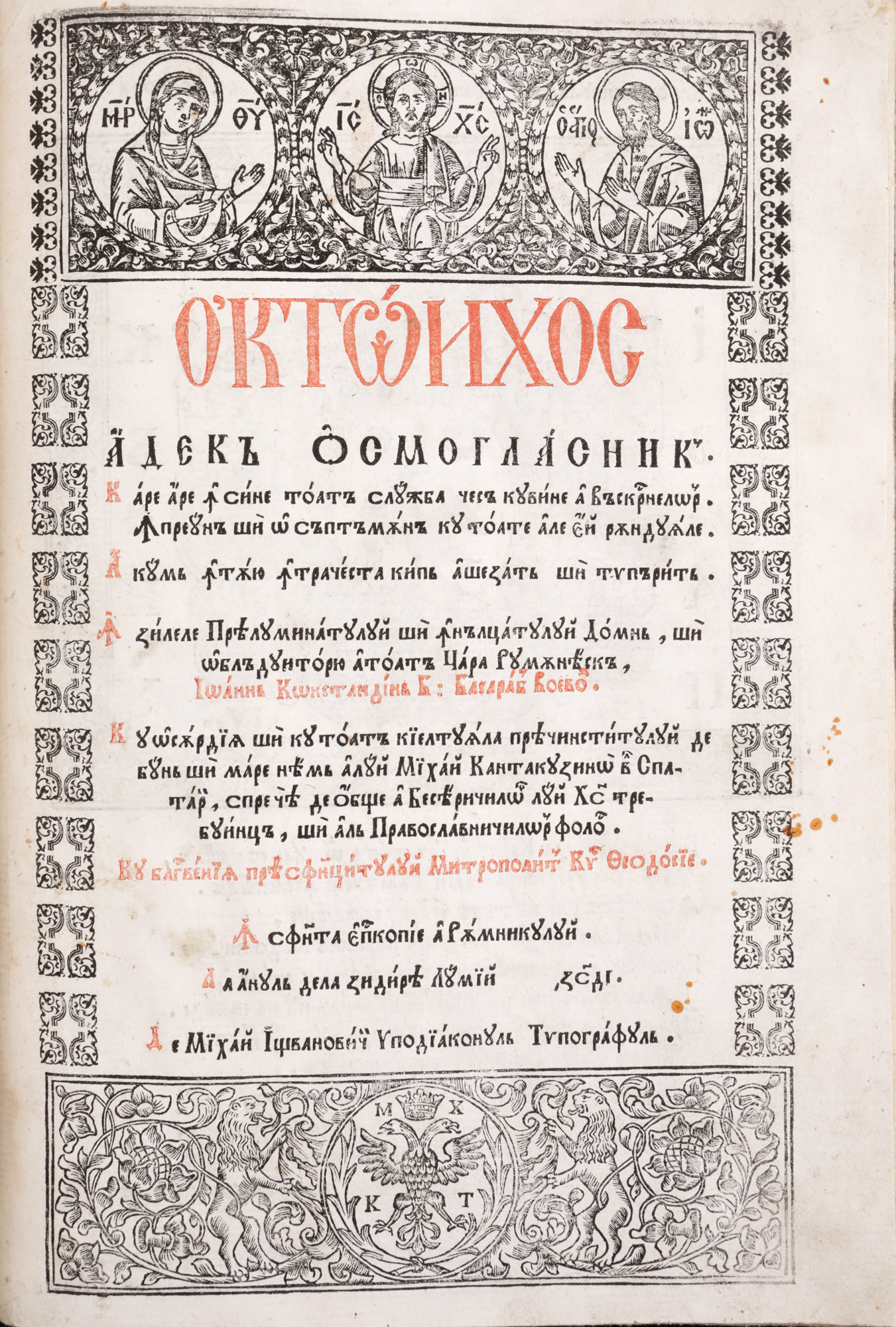
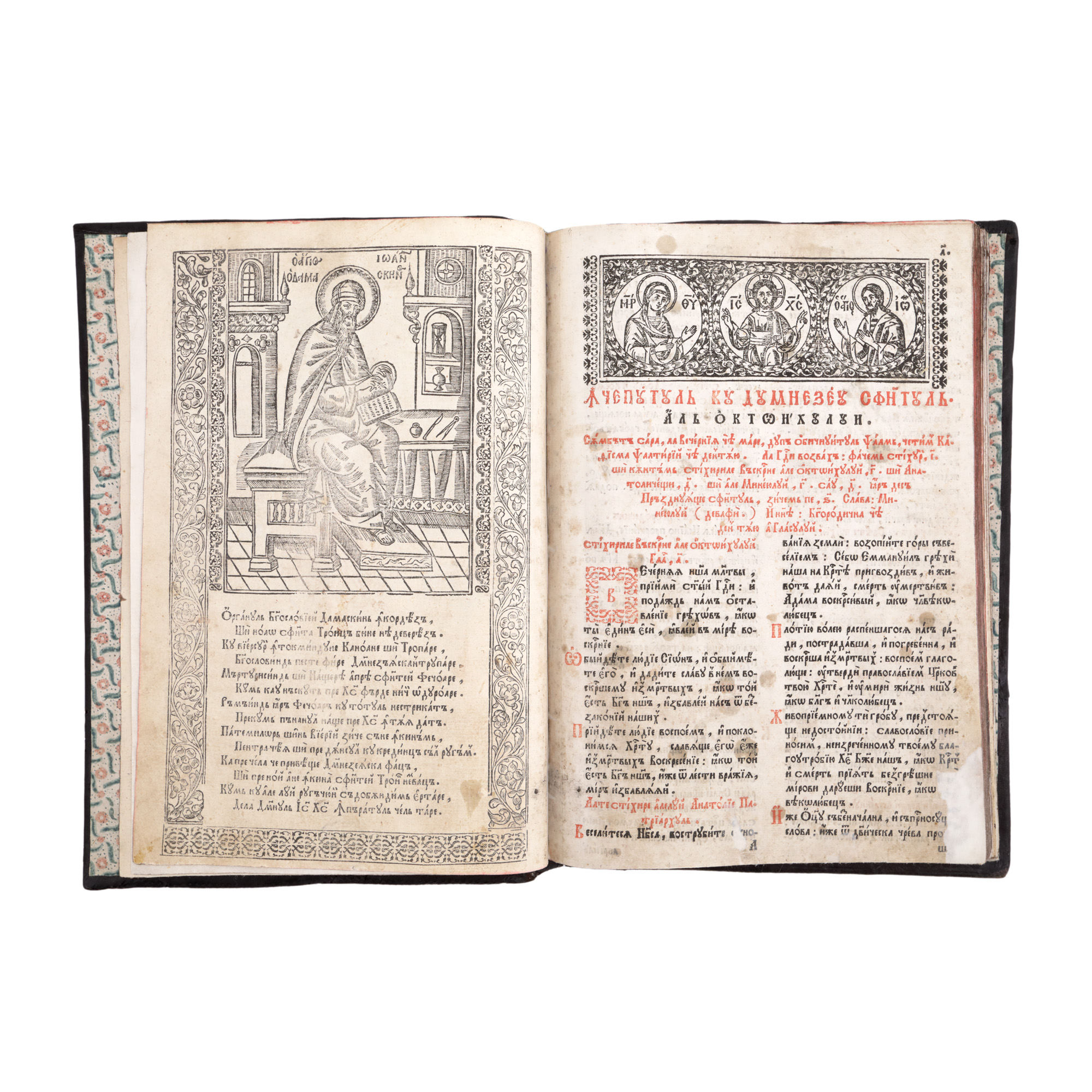
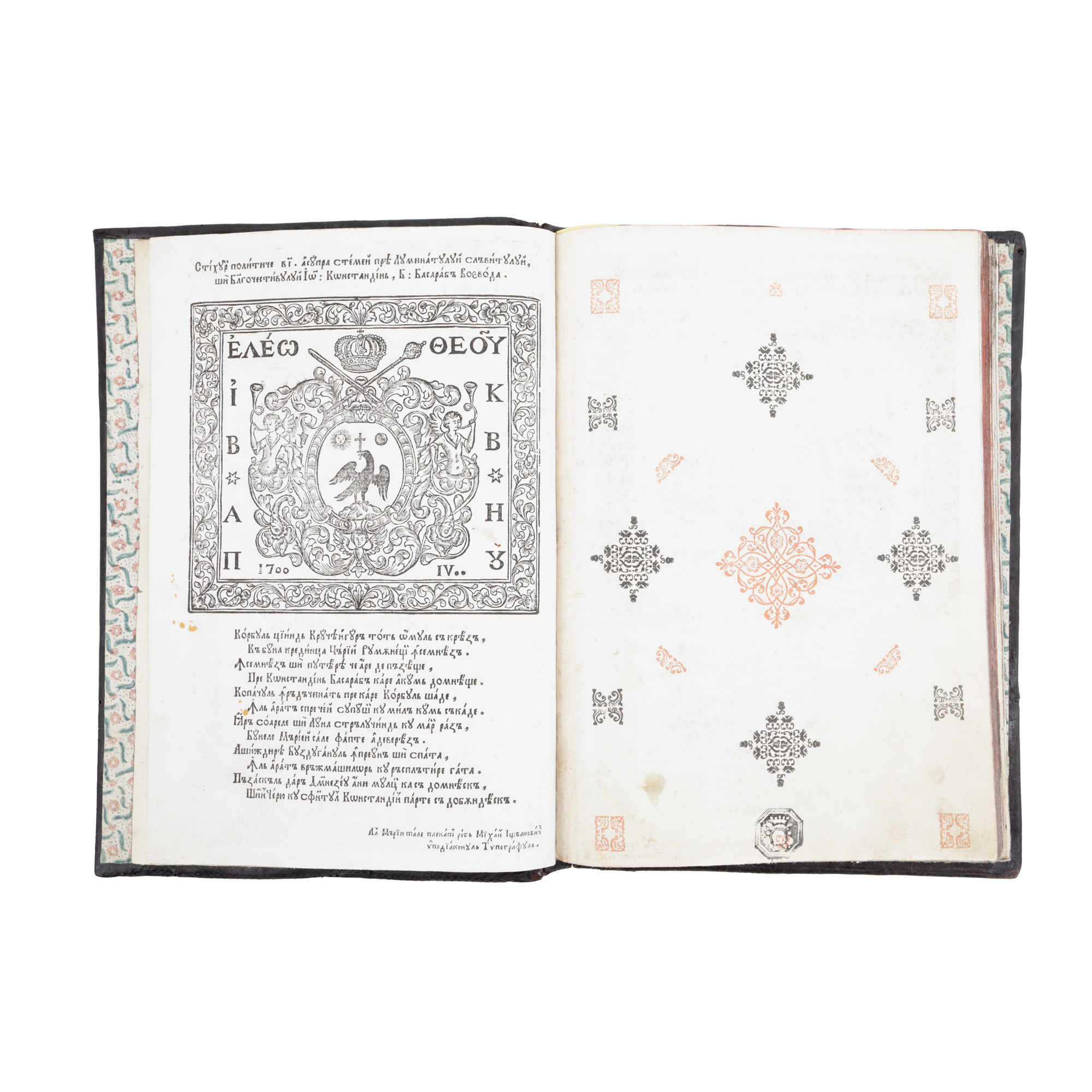
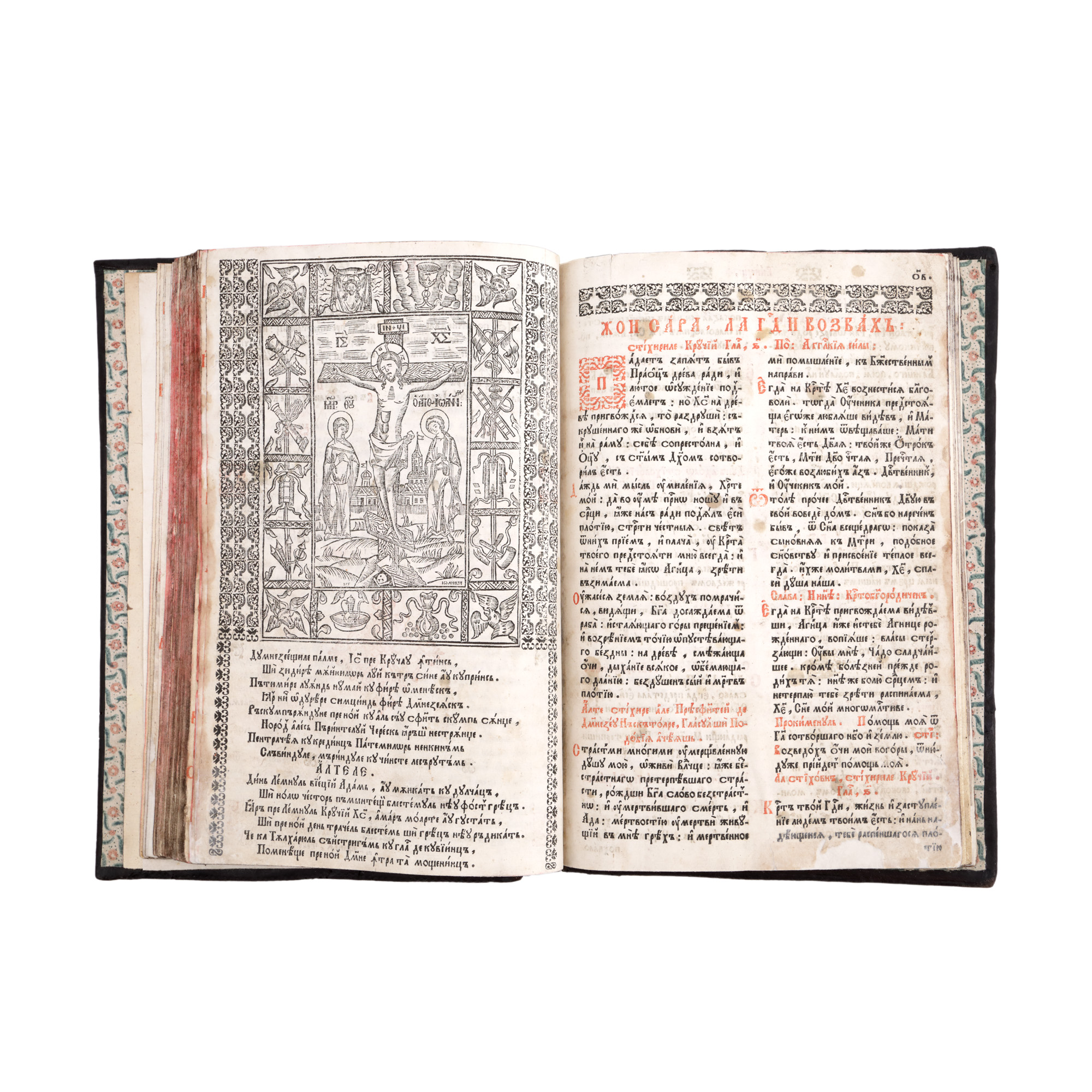
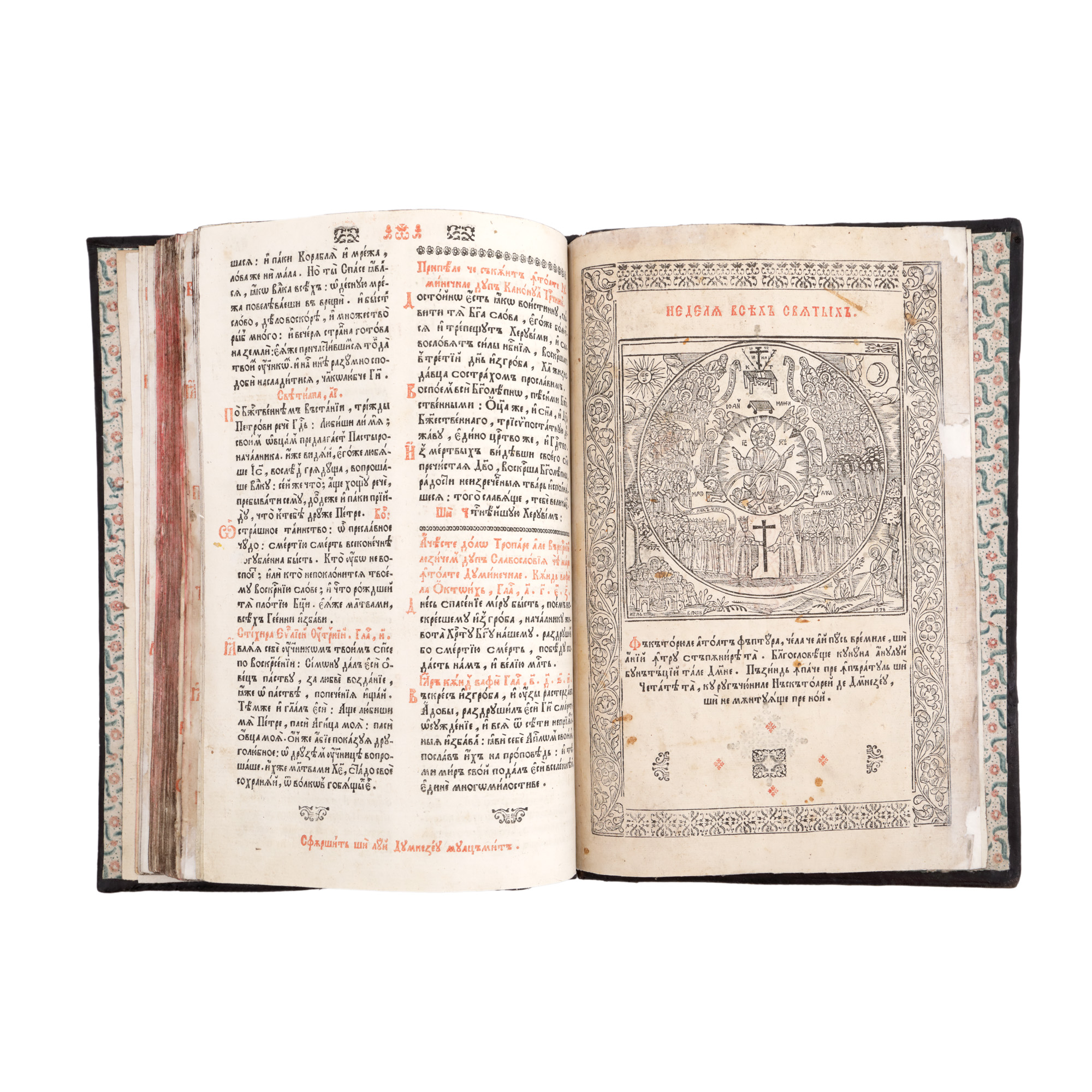
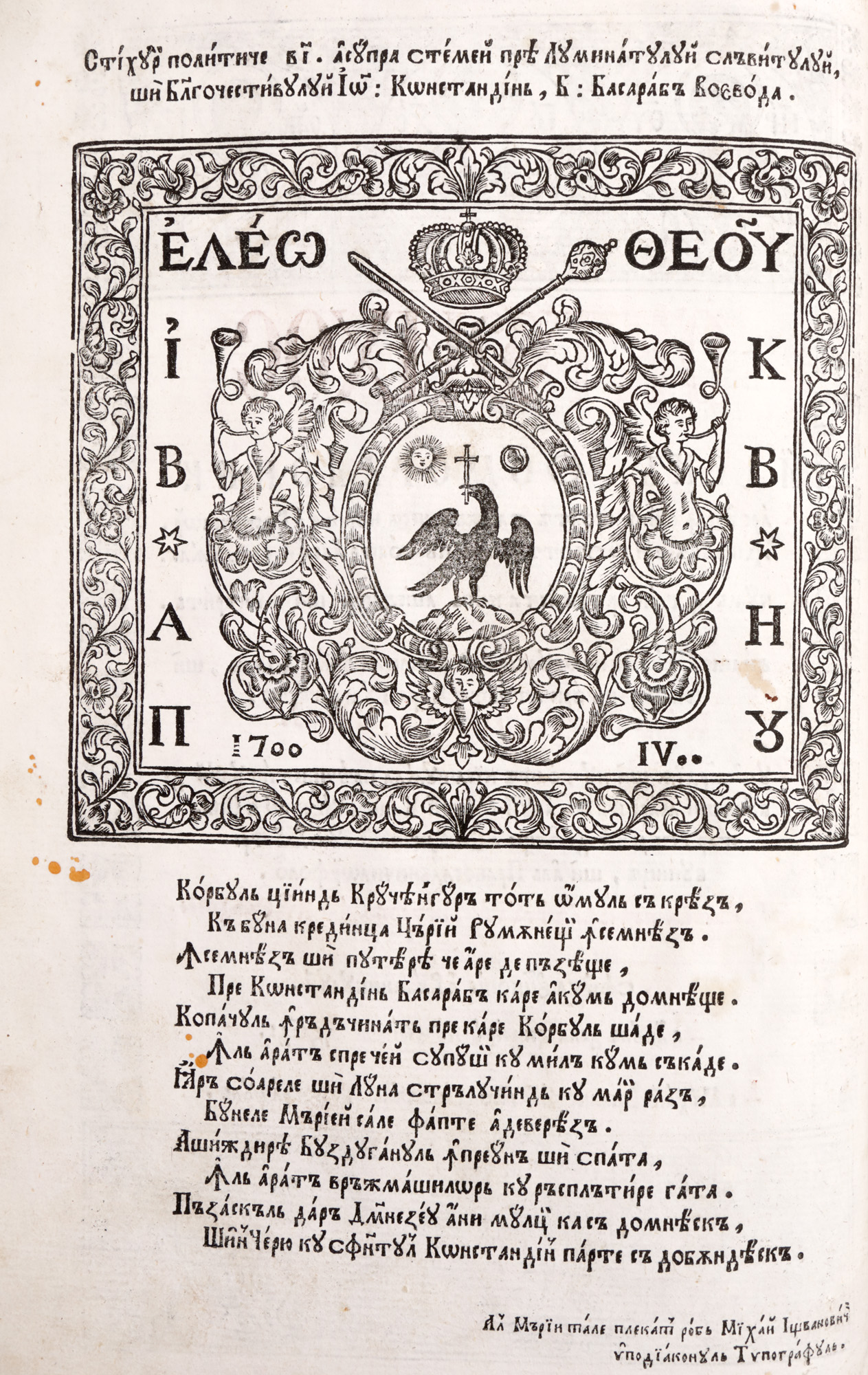
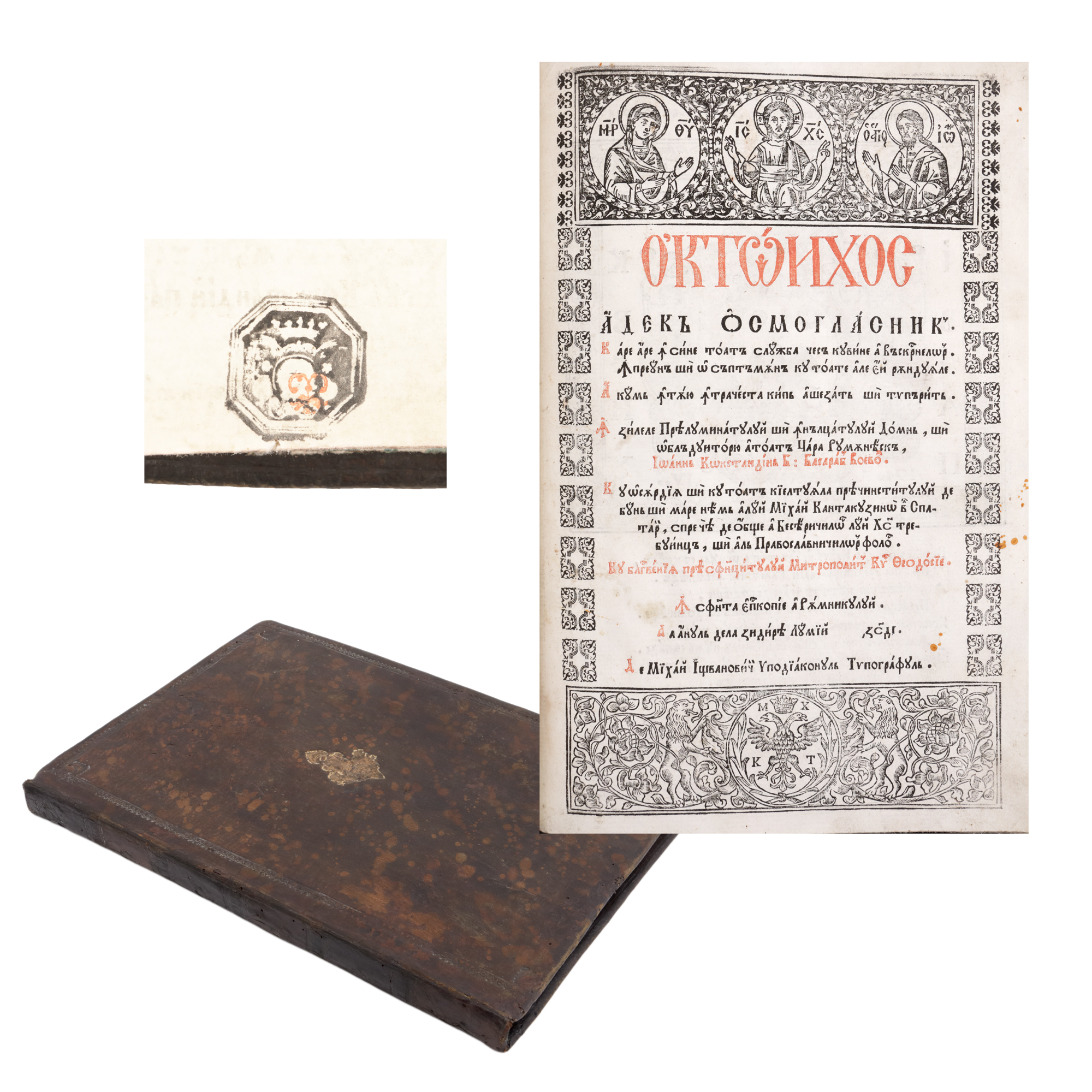
This print is part of the written monuments series of the Brâncoveanu Epoch. The title page is framed in the upper field by an engraving with the Deisis scene, and in the lower field, a second frontispiece can be seen, with wreaths and lions, that frame the princely coat of arms or blazon of the Spătar Mihai Cantacuzino. On the verso of the title page is printed one of the most beautiful Brâncoveanu coats of arms, dated "1700 IV", accompanied by 12 political verses, signed by the printer scholar Mihai Ștefan, dedicated to the ruler Constantin Brâncoveanu. Other verses accompany in the book two other significant engravings, extremely valuable. One includes the representation of St. John Damascene (on p. (2v). The engraving from p. 81v, with the Crucifixion scene, is signed by the renowned engraver Ioanichie Bacov and dated 1705. At the end of the book there is another engraving, exceptionally interesting, depicting the Right Judgment of God, first used in the book "Cheia Înțelesului" printed in Bucharest in 1678.
The print, in its complete form, has (2) + 84 + (1) pages, printed in black and red, in two columns, the text being adorned with frontispieces, initials, and vignettes.
The base text of the writing is Church Slavonic, and the titles and tipicon indications are in Romanian.
The small print run and large folio format, but especially the edition's old Slavonic-Romanian form, explains, more than three centuries after the appearance, the rareness of the book.
The present copy is complete.
The book binding is old, from boards wrapped in marbled brown leather, adorned with a simple frame, and in the central field of the first cover, with a gilded floral wreath.
The documentary evidence preserved by this book are few, yet exceptionally valuable.
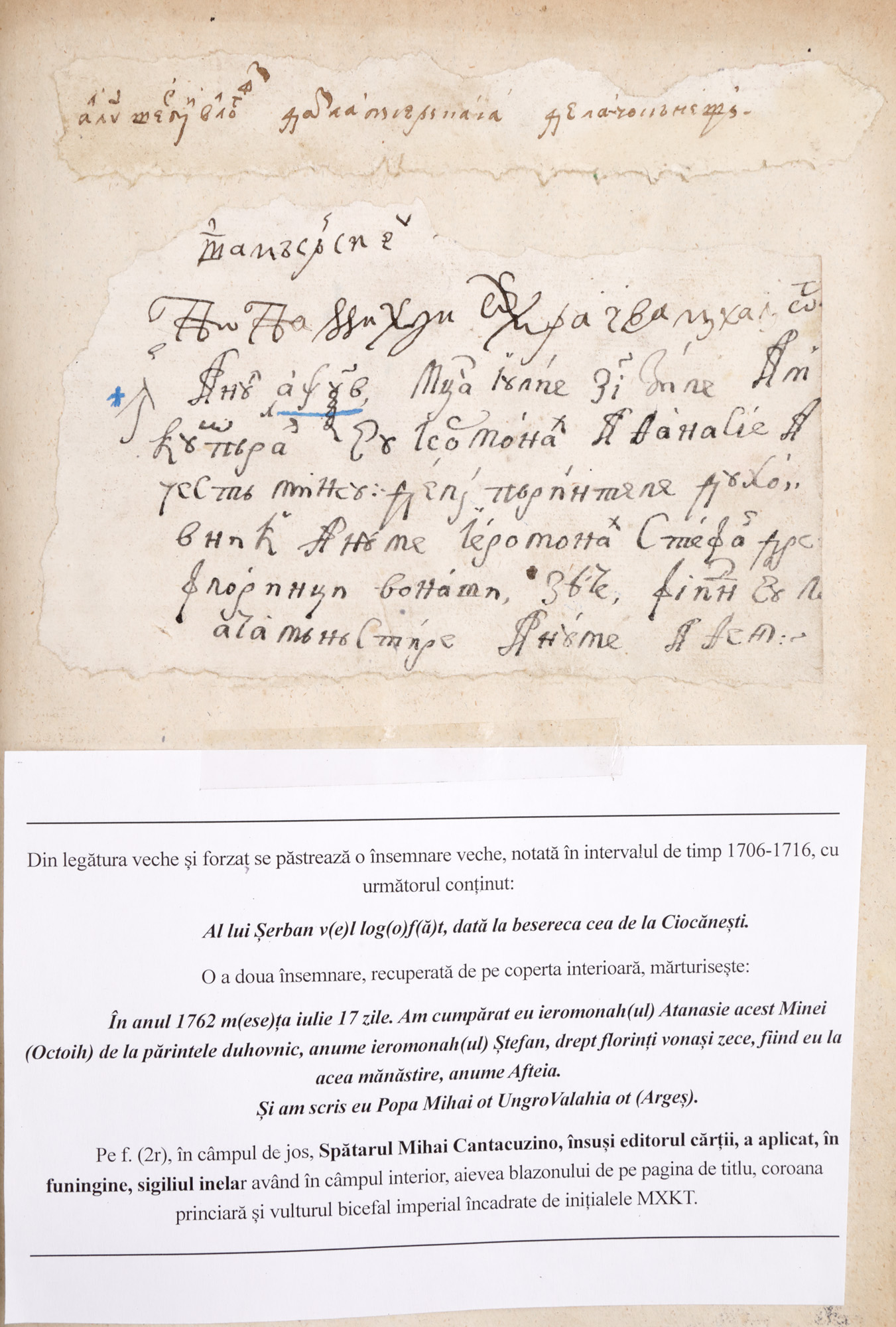
From the old binding and forces, an old annotation remains, noted shortly after the book’s appearance, which contains the following:
"It belongs to Serban v(e) l log(o)f(a)t, given to the church in Ciocânesti".
A second entry, recovered from the inside cover, reveals:
"In the year 1762 m(ese)ta iulie 17 days. I, Hieromonk Atanasie, purchased this Minei (Octoih) from the spiritual father, namely Hieromonk Ștefan, for ten florins, while I was at that monastery, namely Afteia. And I, Priest Mihai from Ungro Valahia from (Arges), wrote this".
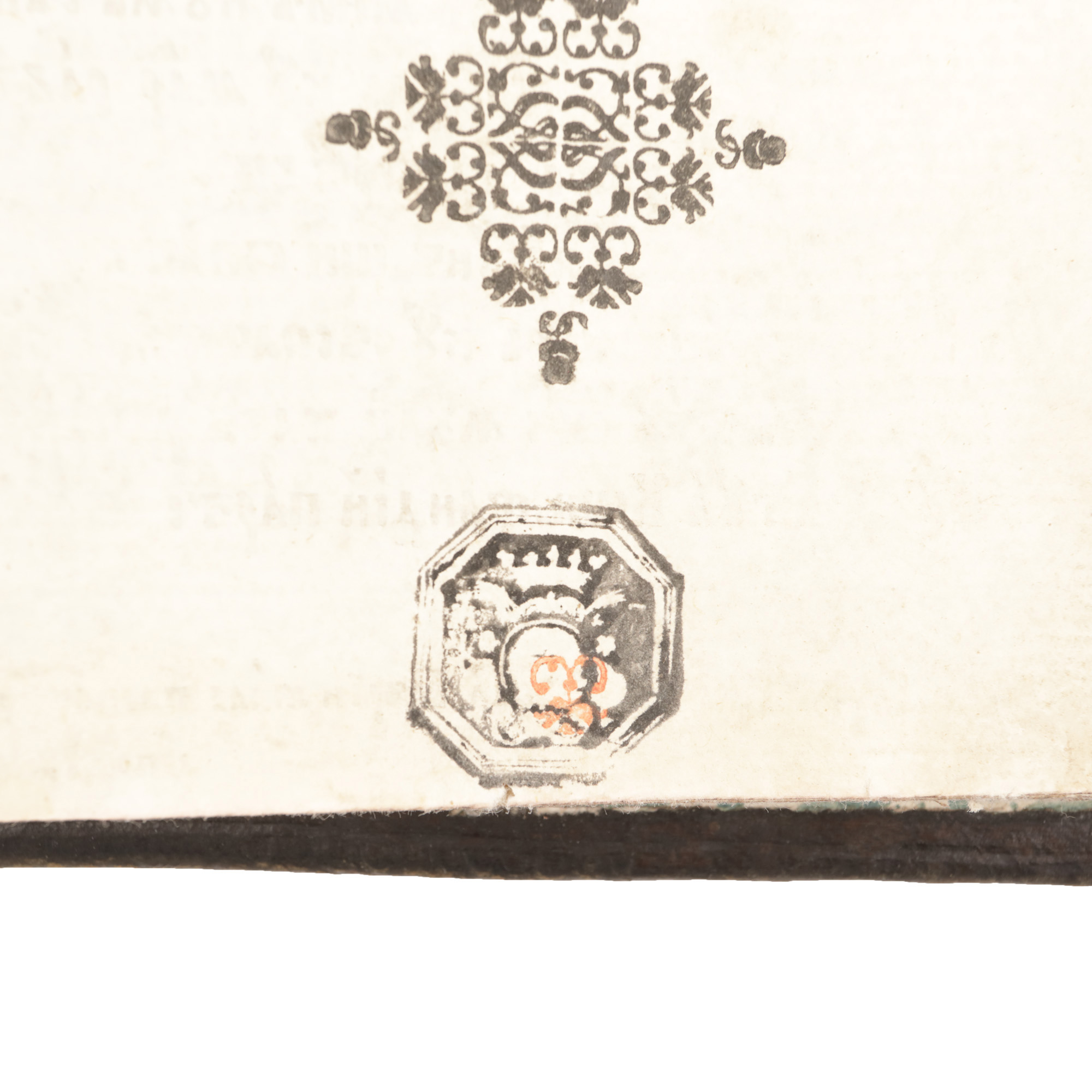
On p. (2r), in the lower field, there is the ring seal.
The above data attest that this copy belonged, shortly after the book’s publication, to the Spătar of Wallachia and the book's editor, Mihai Cantacuzino, located within the court of Constantin Brâncoveanu. Spătar Mihai Cantacuzino (1640-1716), along with his brother, the high steward Constantin Cantacuzino, played a significant role in the election of Constantin Brâncoveanu to the throne. The two had significant influence on Brâncoveanu's policy, until frictions between the two families caused a rift in 1707. Mihai was removed from the position of grand sword bearer, so that it could later be entrusted to another Cantacuzin. The reign of Ștefan Cantacuzino, Mihai's nephew, represented only a brief return of the Cantacuzino family, an episode that ended with the execution of the voivode, his father (the high steward Constantin), and Mihai Cantacuzino. Spătar Mihai Cantacuzino left behind a number of foundations, including the monasteries of Sinaia and Coltea.
According to the above annotation, the accompanying copy from the Octoih of 1706 was acquired through purchase or donation by the great chancellor Șerban, to be donated on behalf of the church from the village of Ciocănesti (Călărași). Șerban was the brother of Radu Greceanu (b. approx. 1655/1660 - d. ante 9 July 1725), the Wallacian chronicler, author of the 1711 chronicle "Life of Constantin Brâncoveanu" and the manuscript "Letopisețul de la descălecarea cea dintâiu a românilor și asezarea lor în Țara Românească", which has been lost. Chancellor Radu Greceanu, together with his brother, Chancellor Șerban Greceanu, took part, along with the high steward Constantin Cantacuzino and with the support of Bishop Ghermanos of Nyssa (director of the Greek Academy in Constantinople) and Sevastos Kymenites (director of the Greek school in Bucharest), in the translation of the Bucharest Bible - the first full edition in Romanian of the Holy Scripture text.
Half a century later, the book was owned by a certain Hieromonk Ștefan, who, in the summer of 1762, sold it for the sum of 10 florins, to Hieromonk Atanasie, residing at the Afteia monastery, a fact certified in writing - on the spot - by the itinerant priest and book binder Mihai Popovici. He was a native of Curtea de Arges, known to have distributed numerous Romanian publications appeared in Wallachia in various localities in Western Transylvania, especially in Banat, Zărand, and Bihor, and in 1784 he was involved in Horea's Rebellion. Afteia Monastery at Cioara (Alba, in Transylvania) had as abbot the Holy Venerable Sofronie, also known as "The Confessor from Cioara", who devoted his whole life to the fight for the defense of Orthodoxy in Transylvania. During his term as abbot, the monastery became the main center of fight for the defense of the ancestral faith. It is known that, because he incited the people to revolt, Sofronie was put on trial and sentenced to five years in prison, but even before he was arrested, he managed to escape to Wallachia, where he had many supporters. He continued to dedicate himself to orthodox monasticism, being a monk at the monasteries in Robaia (1764-1766) and Vieroși (1766-1771), and then abbot at Curtea de Arges. Certainly, the presence in the summer of 1762, of the wandering colporteur Priest Mihai Popovici, originally from Curtea de Arges, at the monastery of Cioara was not accidental.
Subsequently, this book has been used in multiple localities in Banat.
References
Old Romanian Bibliography, I (151), p. 467-468.
Old Romanian Bibliography, IV (151), p. 220.
Anton-Maria del Chiaro, History of the Modern Revolutions of Wallachia, Venice, 1718.
Dimitrie Cantemir, Brief tale about the extermination of the families of Brâncoveanu and Cantacuzino, edition, introductory study, notes and comments by Paul Cernovodeanu, Bucharest, 1995.
Nicolae Iorga, About Cantacuzini, Bucharest, 1902.
I.M. Cantacuzino, A thousand years in the Balkans. A chronicle of the Cantacuzinos in the whirl of centuries, Bucharest, 1996.
Catalina Opaschi, An unpublished genealogy of the Cantacuzino Family and Cantacuzino heraldry, in "Numismatic Research" (Bucharest), XII-XIII, 2006-2007.
Florian Dudaș, Old Romanian Traveller Books, Bucharest, 1987.
Florian Dudaș, Scholars and artists from Muntenia and Moldova pilgrims in Crișana (Sec. XVI-XVII), Timișoara, 2003.
Dimensions
width 20 cm, height 29.5 cm
Research information
BRV I. p. 151
ADDITIONAL INFORMATION
For clarifications regarding the bidding procedure, hammer price costs, guarantee, payment, and collection terms for the winning lot, we recommend carefully reading/re-reading the Bidding Regulations.
For additional information regarding the lot and the auction, please contact the Art Consultants Department.
Detalii
This print is part of the written monuments series of the Brâncoveanu Epoch. The title page is framed in the upper field by an engraving with the Deisis scene, and in the lower field, a second frontispiece can be seen, with wreaths and lions, that frame the princely coat of arms or blazon of the Spătar Mihai Cantacuzino. On the verso of the title page is printed one of the most beautiful Brâncoveanu coats of arms, dated "1700 IV", accompanied by 12 political verses, signed by the printer scholar Mihai Ștefan, dedicated to the ruler Constantin Brâncoveanu. Other verses accompany in the book two other significant engravings, extremely valuable. One includes the representation of St. John Damascene (on p. (2v). The engraving from p. 81v, with the Crucifixion scene, is signed by the renowned engraver Ioanichie Bacov and dated 1705. At the end of the book there is another engraving, exceptionally interesting, depicting the Right Judgment of God, first used in the book "Cheia Înțelesului" printed in Bucharest in 1678.
The print, in its complete form, has (2) + 84 + (1) pages, printed in black and red, in two columns, the text being adorned with frontispieces, initials, and vignettes.
The base text of the writing is Church Slavonic, and the titles and tipicon indications are in Romanian.
The small print run and large folio format, but especially the edition's old Slavonic-Romanian form, explains, more than three centuries after the appearance, the rareness of the book.
The present copy is complete.
The book binding is old, from boards wrapped in marbled brown leather, adorned with a simple frame, and in the central field of the first cover, with a gilded floral wreath.
The documentary evidence preserved by this book are few, yet exceptionally valuable.
From the old binding and forces, an old annotation remains, noted shortly after the book’s appearance, which contains the following:
"It belongs to Serban v(e) l log(o)f(a)t, given to the church in Ciocânesti".
A second entry, recovered from the inside cover, reveals:
"In the year 1762 m(ese)ta iulie 17 days. I, Hieromonk Atanasie, purchased this Minei (Octoih) from the spiritual father, namely Hieromonk Ștefan, for ten florins, while I was at that monastery, namely Afteia. And I, Priest Mihai from Ungro Valahia from (Arges), wrote this".
On p. (2r), in the lower field, there is the ring seal.
The above data attest that this copy belonged, shortly after the book’s publication, to the Spătar of Wallachia and the book's editor, Mihai Cantacuzino, located within the court of Constantin Brâncoveanu. Spătar Mihai Cantacuzino (1640-1716), along with his brother, the high steward Constantin Cantacuzino, played a significant role in the election of Constantin Brâncoveanu to the throne. The two had significant influence on Brâncoveanu's policy, until frictions between the two families caused a rift in 1707. Mihai was removed from the position of grand sword bearer, so that it could later be entrusted to another Cantacuzin. The reign of Ștefan Cantacuzino, Mihai's nephew, represented only a brief return of the Cantacuzino family, an episode that ended with the execution of the voivode, his father (the high steward Constantin), and Mihai Cantacuzino. Spătar Mihai Cantacuzino left behind a number of foundations, including the monasteries of Sinaia and Coltea.
According to the above annotation, the accompanying copy from the Octoih of 1706 was acquired through purchase or donation by the great chancellor Șerban, to be donated on behalf of the church from the village of Ciocănesti (Călărași). Șerban was the brother of Radu Greceanu (b. approx. 1655/1660 - d. ante 9 July 1725), the Wallacian chronicler, author of the 1711 chronicle "Life of Constantin Brâncoveanu" and the manuscript "Letopisețul de la descălecarea cea dintâiu a românilor și asezarea lor în Țara Românească", which has been lost. Chancellor Radu Greceanu, together with his brother, Chancellor Șerban Greceanu, took part, along with the high steward Constantin Cantacuzino and with the support of Bishop Ghermanos of Nyssa (director of the Greek Academy in Constantinople) and Sevastos Kymenites (director of the Greek school in Bucharest), in the translation of the Bucharest Bible - the first full edition in Romanian of the Holy Scripture text.
Half a century later, the book was owned by a certain Hieromonk Ștefan, who, in the summer of 1762, sold it for the sum of 10 florins, to Hieromonk Atanasie, residing at the Afteia monastery, a fact certified in writing - on the spot - by the itinerant priest and book binder Mihai Popovici. He was a native of Curtea de Arges, known to have distributed numerous Romanian publications appeared in Wallachia in various localities in Western Transylvania, especially in Banat, Zărand, and Bihor, and in 1784 he was involved in Horea's Rebellion. Afteia Monastery at Cioara (Alba, in Transylvania) had as abbot the Holy Venerable Sofronie, also known as "The Confessor from Cioara", who devoted his whole life to the fight for the defense of Orthodoxy in Transylvania. During his term as abbot, the monastery became the main center of fight for the defense of the ancestral faith. It is known that, because he incited the people to revolt, Sofronie was put on trial and sentenced to five years in prison, but even before he was arrested, he managed to escape to Wallachia, where he had many supporters. He continued to dedicate himself to orthodox monasticism, being a monk at the monasteries in Robaia (1764-1766) and Vieroși (1766-1771), and then abbot at Curtea de Arges. Certainly, the presence in the summer of 1762, of the wandering colporteur Priest Mihai Popovici, originally from Curtea de Arges, at the monastery of Cioara was not accidental.
Subsequently, this book has been used in multiple localities in Banat.
ADDITIONAL INFORMATION
For clarifications regarding the bidding procedure, hammer price costs, guarantee, payment, and collection terms for the winning lot, we recommend carefully reading/re-reading the Bidding Regulations.
For additional information regarding the lot and the auction, please contact the Art Consultants Department.
References
Old Romanian Bibliography, I (151), p. 467-468.
Old Romanian Bibliography, IV (151), p. 220.
Anton-Maria del Chiaro, History of the Modern Revolutions of Wallachia, Venice, 1718.
Dimitrie Cantemir, Brief tale about the extermination of the families of Brâncoveanu and Cantacuzino, edition, introductory study, notes and comments by Paul Cernovodeanu, Bucharest, 1995.
Nicolae Iorga, About Cantacuzini, Bucharest, 1902.
I.M. Cantacuzino, A thousand years in the Balkans. A chronicle of the Cantacuzinos in the whirl of centuries, Bucharest, 1996.
Catalina Opaschi, An unpublished genealogy of the Cantacuzino Family and Cantacuzino heraldry, in "Numismatic Research" (Bucharest), XII-XIII, 2006-2007.
Florian Dudaș, Old Romanian Traveller Books, Bucharest, 1987.
Florian Dudaș, Scholars and artists from Muntenia and Moldova pilgrims in Crișana (Sec. XVI-XVII), Timișoara, 2003.